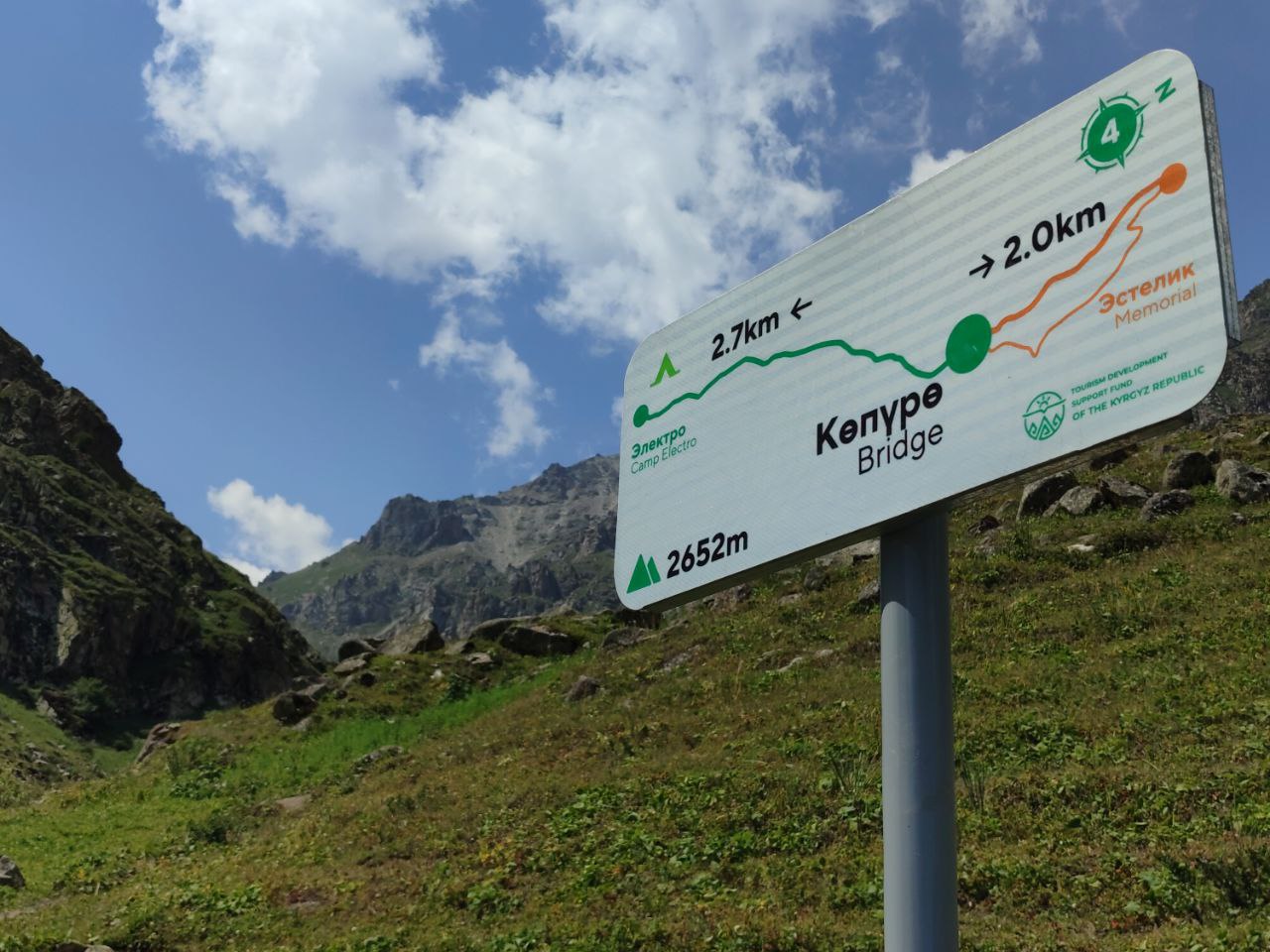
The “Improving the economic well-being of women through digital tourism platforms” project has been launched in Kyrgyzstan

ISOC Kyrgyz Chapter, with the support of the American Embassy in the Kyrgyz Republic, is launching a project aimed at strengthening rural entrepreneurship and developing small businesses in Kyrgyzstan.

The main goal of the Sanarip Insan project is to expand the knowledge and skills of women in the field of digital platforms related to tourism to improve their economic well-being.

Solving the problems faced by women in Kyrgyzstan is important for their social and economic empowerment. The SDGs emphasize the importance of full and productive employment, especially for vulnerable groups such as youth and women, to eradicate poverty and promote inclusive growth. Rural women do not use digital technologies and online platforms, which hinders their ability to reach a wider audience and take advantage of the growth of the industry. In addition, limited access to education, especially in areas related to the use of ICT, also prevents women from starting their own businesses. By solving these problems and providing real employment opportunities, it is possible to strengthen social and political stability in Kyrgyzstan.

The main goal of the “Sanarip Insan” project is to expand the knowledge and skills of women in the field of digital platforms related to tourism to enhance their economic well-being. Within the project, training will be conducted on a wide range of digital skills, including working with digital tourism platforms. They will be taught to create and promote tourism services and products online, allowing them to actively participate in the development of tourism in their regions and increase their income through digital opportunities. By providing women in rural areas with digital skills and entrepreneurial support, the project will contribute to the expansion of their rights and opportunities and improve their overall quality of life.

This project was funded by the U.S. Embassy in the Kyrgyz Republic. The opinions, conclusions or recommendations expressed here represent the opinions of the authors and do not necessarily reflect the views of the U.S. Department

Myrzakulova Baktykan: Sanarip Insan project helped us to increase our income by 50%

The village of Arstanbap in the Jalal-Abad region in Kyrgyzstan is the center of attraction for tourists from all over the world – a unique relict walnut forest stretching over 600 thousand hectares, waterfalls, places of pilgrimage for Muslims.

Baktykan Myrzakulova is a resident of Arstanbap, formerly a secretary in the village administration, now engaged in tourism business with her family. She is a participant of the Sanarip Insan project, aimed at developing digital skills and improving the economic well-being of women and youth living in the regions of Kyrgyzstan. After the trainings, she was able to increase her profit by 50%.

Baktykan heard about the project from the villagers and decided to participate.
“We have included large and small waterfalls, the inner part of the forest on the map. It can be viewed from a mobile phone and you can walk for a long time without the help of a guide. Booking requires responsibility, it should be opened and viewed regularly. Facebook Instagram and Facebook are used by local tourists, and Booking and Google are used by foreigners. It is convenient for us to work with pre-orders. Since I started applying my knowledge with trainings in business, the number of tourists has increased by 50%.”

Now her Happy Family Guesthouse can accommodate 20 people.

She plans to further improve her knowledge by taking part in projects organized for women. There are plans to build large guest houses, improve service and create comfortable conditions for tourists.
The project is implemented with the financial support of the European Union and is implemented by the European Neighborhood Council and ISOC Kyrgyz Chapter

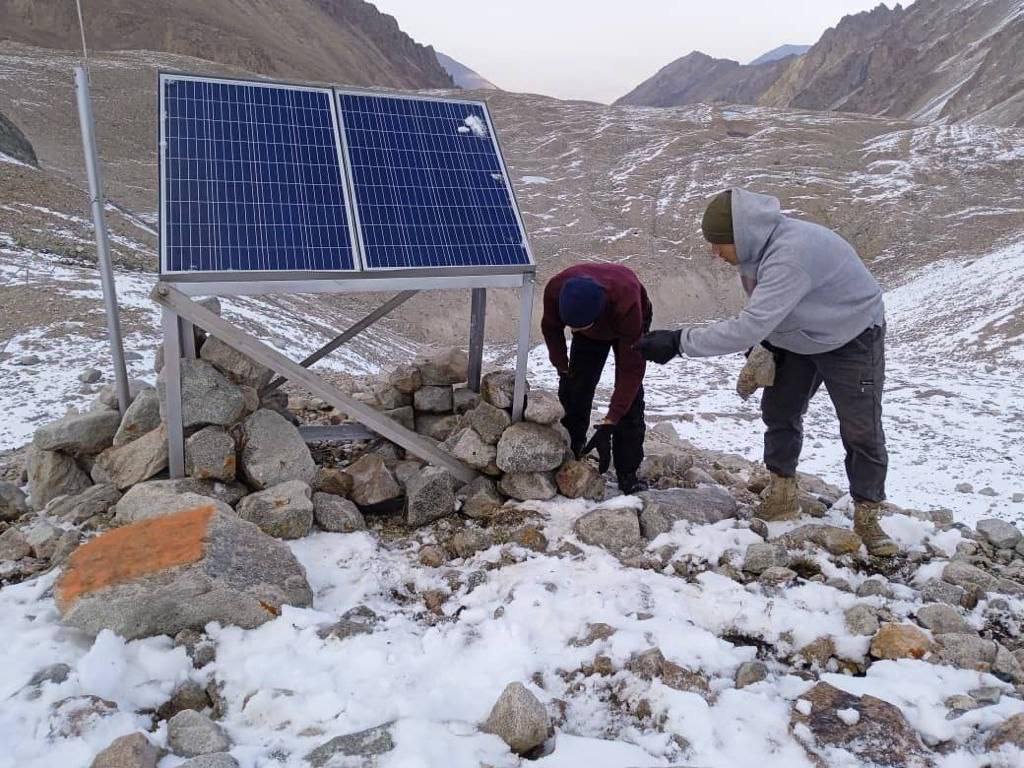
Installation works on Adygene lake pilot location finalized

The review of installation works conducted on August and feedback from the installation team revealed that proposed scheme was not sustainable to weather conditions in the altitude of 3600m.

Based on consultations with the experts from CAIAG, Institute of Water Problems as well as ICTP, some changes had been proposed in carcass of the composition to keep photovoltaics as well as its location.

The installation team moved the structure from one hill to another, conducted welding and strengthening works on Adygene high mountain glacial lake.

Due to the delayed installation works, the research team were unable to setup Lorawan gateway and sensors this year. The cold weather conditions and expedition difficulties. We hope to finalize work by May, 2024.

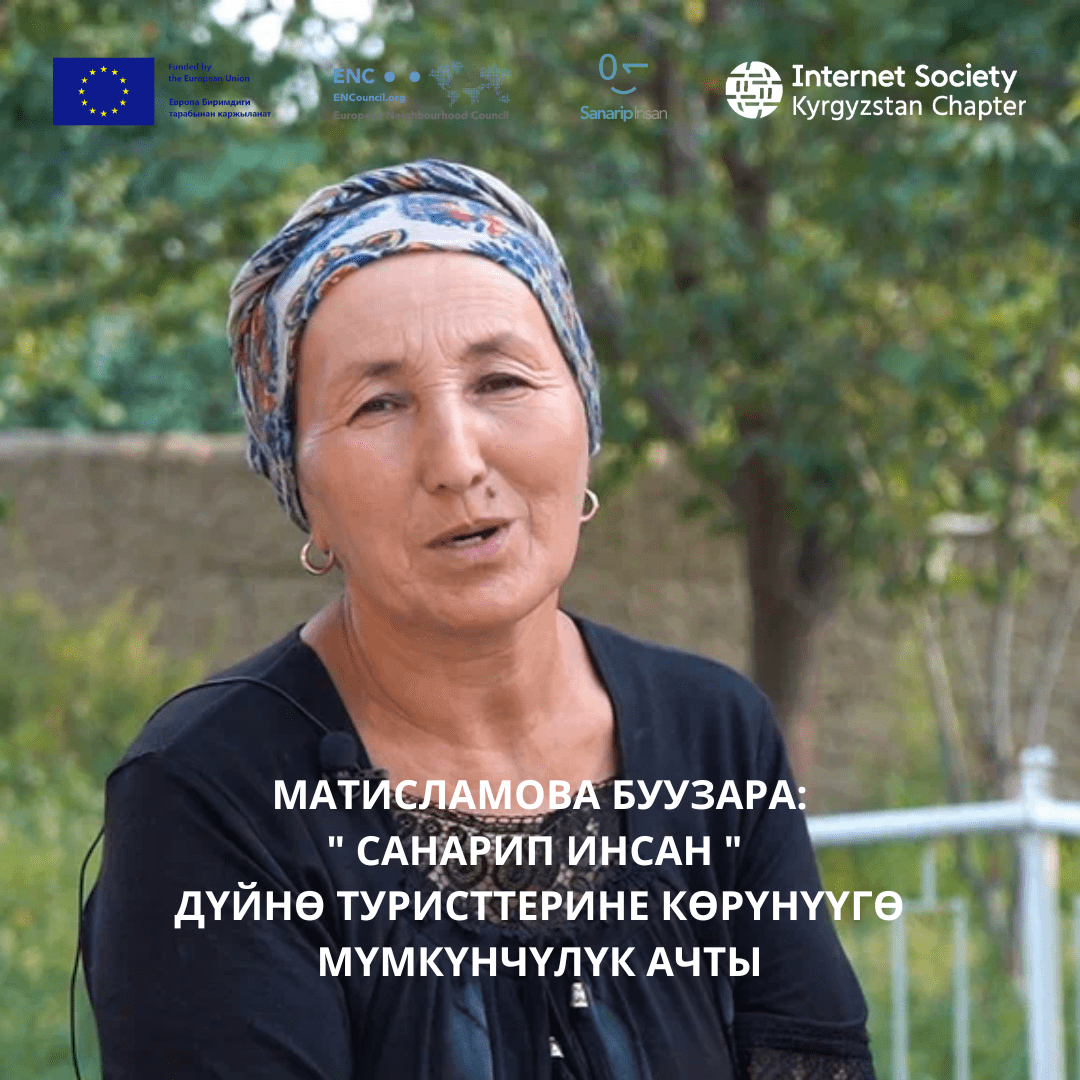
Matislamova Buuzara: “Sanarip Insan” makes us visible to the whole world via the Internet

Kyrgyzstan, being a mountainous country located far from the main routes for laying underwater fiber-optic cables, faces a number of problems in terms of providing access, including cost, quality and speed of Internet connection. All this is accompanied by a low level of digital skills of ordinary citizens and leadership in the digital sphere, the lack of modern digital infrastructure. Nevertheless, Kyrgyzstan is on the eighth line in the global ranking on the cheapness of mobile Internet. This makes it possible for Kyrgyzstanis, even in the most remote rural areas, to connect to the Internet and be in touch with the whole world.

The ability to use the Internet is one of the key needs of every resident of Kyrgyzstan. But there is a limited understanding of the opportunities provided by modern technologies, which leads to the non-use of social networks, Internet resources, mobile applications and other digital tools.

Buuzara is a participant of the Sanarip Insan project, aimed at developing digital skills and improving the economic well–being of women and youth living in the regions of Kyrgyzstan.

Batken region in Kyrgyzstan, where Buuzara lives, is the least developed region in terms of economic indicators, communications. The existing digital divide exacerbates social inequality and constrains economic growth in the region. But thanks to the trainings within the framework of the Sanarip Insan project, participants have more opportunities to improve their digital literacy, competencies on industry digital platforms. 

Buuzara is a former teacher with 30 years of work experience, now she is on a well-deserved vacation, and is taking her first steps in the tourism business. The village of Bujum in the Batken district of the eponymous region, where she lives, is located near the border with Tajikistan. She joined Sanarip Insan because she understands the importance of digital skills in her work.

“During the two-day training, we learned about digital skills, social networks, and got acquainted with guest houses abroad. That’s when the idea came to me: empty houses can be turned into guest houses. I have registered in booking.com in March 2023, without spending money, creating living conditions for tourists, as in an ordinary Kyrgyz house. We started working in April. Through booking.com the information reaches not only the population of Kyrgyzstan, but also foreign businessmen and travelers. They set the date of arrival, book seats. It has become much more convenient and easier for us to find new customers. Today we have good connections, there are enough customers,” Buuzara says.

Buuzara is glad that thanks to the project, she can make the most of the possibilities of the Internet to work with clients via phone. She admits that all residents of the regions should be trained in digital skills, because the Internet is the most convenient way to facilitate their work and increase incomes in rural areas. Since the opening of the guest house, registration on booking.com tourists from other regions began to come. Soon she is expecting guests from Latin America. Today, she plans to turn a double guest house into a two-storey eight-bed house with the proceeds.

“During the trainings, I noticed that ordinary women in our country have many opportunities. We can make a profit by providing our products and services. Digital commerce saves time and improves the quality of service. If we learn how to use the Internet correctly, young people will grow and develop here. Sanarip Insan has opened the opportunity to become visible to tourists from all over the world,” Buuzara rejoices.

Within the framework of the project, 500 people were trained in all 7 regions of the country. Thanks to trainings on digital tourism, participants learned how to work on such platforms as Booking, Google Business, Google Maps, Airbnb, Shelter, Fidelio PMS, Edelweiss PMS. As part of the e-commerce trainings, participants learned how to use social networks Instagram, Facebook, messengers Whatsapp Business, Telegram to promote goods and services. Today they are successfully developing their businesses.

There are a lot of residents of rural areas of Kyrgyzstan who are as motivated as Buuzara, who dream of creating new things, earning money through the Internet and being able to tell the whole world about themselves. Each of them dreams of economic well-being within the country, so as not to go abroad to work anymore.

The Internet and digital skills give this opportunity to everyone.

The project is implemented with the financial support of the European Union and is implemented by the European Neighborhood Council and ISOC Kyrgyz Chapter
In the remote settlement of Kyrchyn in the Naryn region, wired internet has become available

As part of the global Internet Society initiative to promote community internet networks, we are pleased to announce that wired internet has become available in the remote mountainous settlement of Kyrchyn in the Naryn region. All the necessary technical work for laying optical fiber networks to the settlement has been completed. 

Kyrchyn is a settlement consisting of 18 houses located in the Jumgal district, with approximately 100 residents. Today, high-speed internet has been introduced in every household in Kyrchyn, allowing residents to fully access internet services, and children to engage in remote learning when needed.

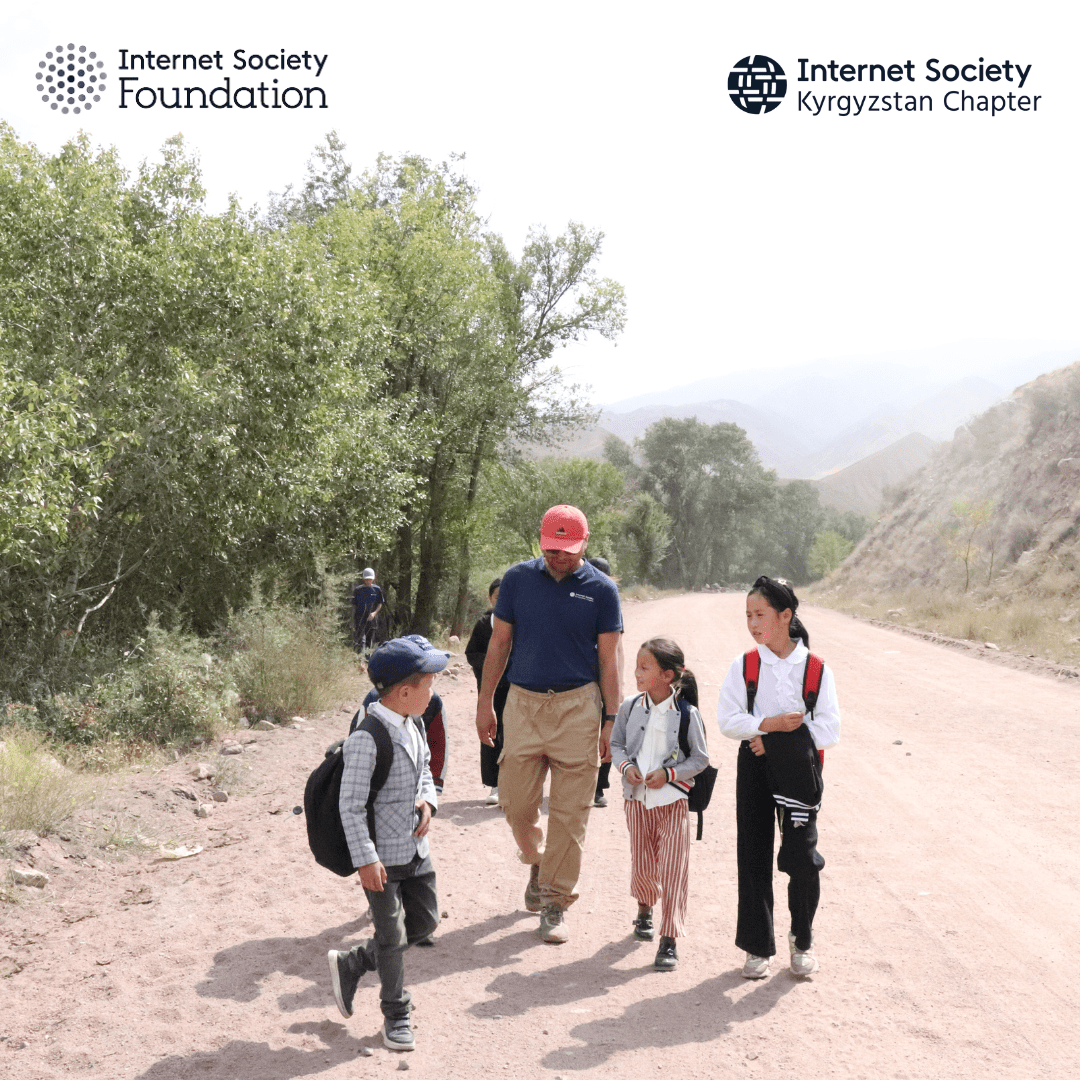
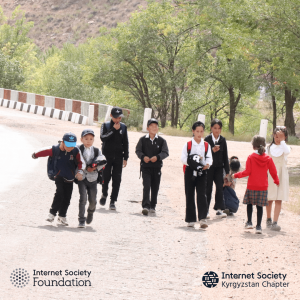
For 22 schoolchildren in Kyrchyn, who walk 3 km to school in neighbouring Aral, the arrival of the Internet was a great joy. While spring and autumn go to school without obstacles, winter conditions are severely frosty. The road to school follows a winding and uninhabited route, where wolves and wild animals have been observed. During the pandemic, everyone climbed the nearest mountain to catch the signal and download the necessary materials.

“Since the Internet became available, it has become much easier to learn. Because of the lack of books, we had to go to each other’s houses to do our homework. Nowadays, we can simply take a photo and send it through WhatsApp. My mom works and lives in Bishkek, and we missed her, but we couldn’t talk to her. Now we talk to her every day. And it has become easier for my brother, who has been working in Moscow for 5 years. Now we can talk to him at any time, and he can send money through the internet faster.”- said fifteen-year-old resident of the village of Kyrchyn Tahmina.

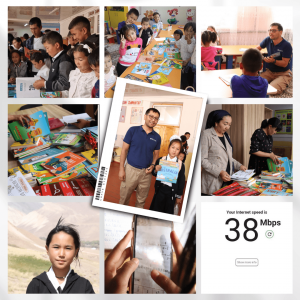
We visited the school in the village of Aral, where the children from Kyrchyn attend. As part of the “IlmBox” project, 100 books on ecology, IT, geography, inspirational literature, and books on improving mobile literacy using the GSMA Foundation Mobile Internet Skills Training Toolkit methodology were donated to the local library. This initiative aims to ensure that students and residents can derive maximum benefit and advantages from internet access.

The mission of the Internet Society Kyrgyzstan Chapter is to promote a healthy internet for all. ISOC Kyrgyz Chapter actively establishes and showcases sustainable models of community internet connections in Kyrgyzstan.  We have already installed internet for communities in the Suusamyr Valley, where winter temperatures can drop to -50 degrees, and in Zardaly, a village in the Batken region, where people have to travel by foot and on donkeys for 5-8 hours, and where there is no electricity as well.

The project is funded by the Internet Society Foundation.

Installation works on Adygene lake pilot location completed

The construction team had built masts, photovoltaics on established locations on Adygene lake.

A month ago, the joint research team had visited high glacier mountain lake, collected initial data. The desk analysis of the data showed that there are some spots that could be feasible for establishing connection between lora-enabled devices and nearest cellular tower located in a distance of about 25 and 40km from the lake in Chuy valley.

Considering that pilot location is located in high altitudes, where harsh winter conditions and regularly windy, the team built design of construction masts and tower.

The construction team prepared all ready-to-built parts and materials, carried all materials on foot to the base and finished construction of tower and solar panel for the communication device as well as towers for environment monitoring internet of things.

We expect to setup and connect it on September, 2023.

Partnering with Ilbirs Foundation

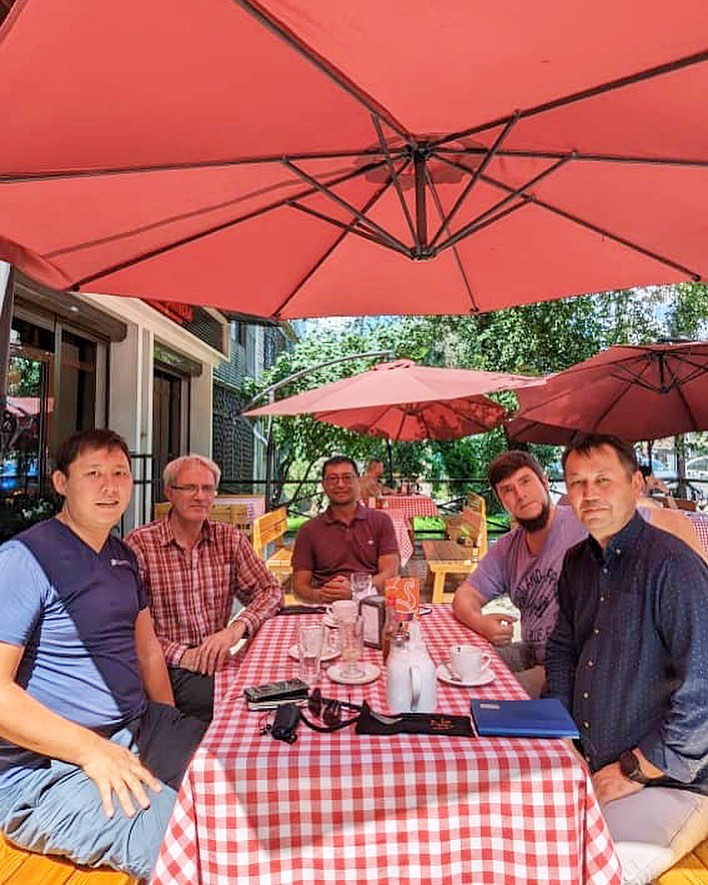
On August 11, 2023, ISOC Kyrgyzstan Chapter – Aziz Soltobaev and Talant Sultanov – teamed up with representatives from the Ilbirs Foundation and SMART consultant Michael Hotte for a crucial meeting about protecting nature and wildlife.
The main decision from their discussion was to use Lorawan technology for better wildlife monitoring. This advanced technology can transmit data even in places without cell service, making it easier to react quickly to environmental changes.
We proposed to consider use of lora-enabled devices with machine learning tools to use as camera traps as well as to fight poachers. We hope to find innovative solutions to enable Ilbirs Foundation with practical technological solutions to reach their mission: keeping nature safe and ensuring a better, safer future.
ilbirs foundation

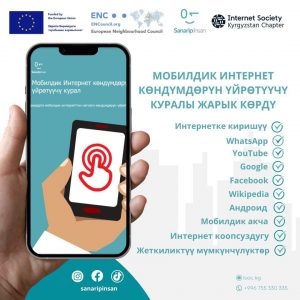
Mobile Internet Skills Training Toolkit released in Kyrgyz and Russian languages

The Sanarip Insan project aimed to address the critical issue of low digital literacy rates, particularly among rural youth and women in the Kyrgyz Republic. Despite the high mobile phone penetration rate in the country, many individuals lacked the skills to effectively use mobile devices beyond basic communication. Recognizing the significance of a mobile-first approach, Sanarip Insan partnered with international platforms to adapt their expertise to local needs and realities.

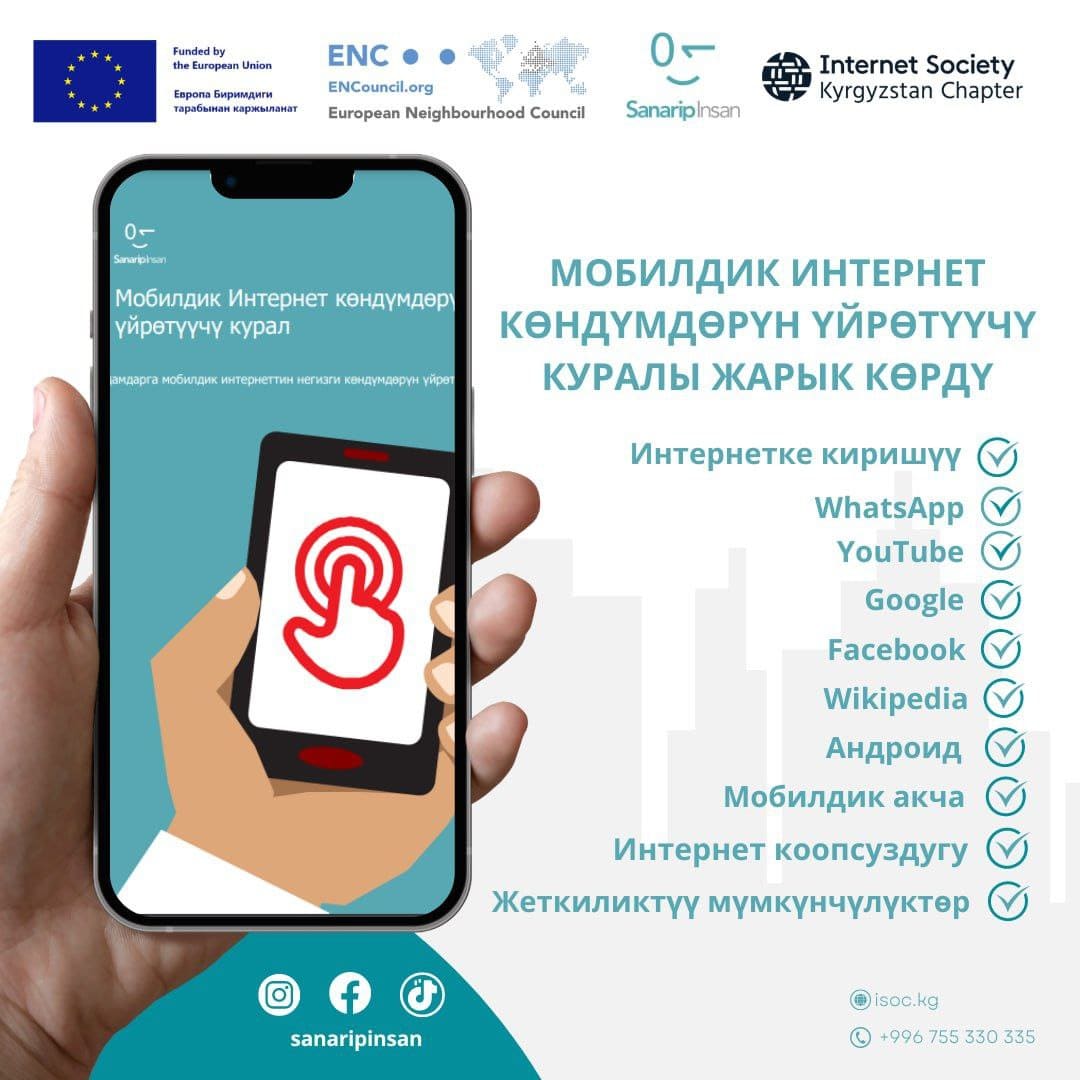
To promote digital inclusion and economic development in the region, the project successfully localized the GSMA Foundation’s Mobile Internet Skills Toolkit (MIST) into Kyrgyz and Russian languages. Training sessions based on the MISST Framework were conducted in all regions of the country. This approach proved instrumental in advancing mobile literacy skills among rural populations with limited access to fixed broadband infrastructure and desktop computers.

As of the beginning of 2023, the total population of Kyrgyzstan was 7.37 million, with 62.3 percent residing in rural areas. Given the high mobile phone penetration rates and the increasing usage of mobile internet in the country, it is crucial for development organizations to adopt a mobile-first approach in their interventions.

In its efforts to promote digital literacy skills among rural youth and women, Sanarip Insan organized offline training sessions for over 250 participants. These training served as valuable opportunities to test the mobile literacy toolkit in real-world settings. Through these sessions, participants were able to enhance their digital literacy skills, gain a better understanding of mobile platforms and applications, and acquire hands-on experience in using mobile devices.

In addition to the training, Sanarip Insan collaborated with the Presidential Administration and the Ministry of Youth, Culture, and Information to broadcast bite-sized videos about digital platforms and basic digital literacy skills on national and regional TV channels. These videos were produced in both Kyrgyz and Russian languages to maximize their reach. Through this partnership, Sanarip Insan successfully reached 4 million people, accounting for 55% of the country’s total population, particularly those residing in rural areas.

By combining offline training and national TV channels, Sanarip Insan made a significant impact on improving digital literacy skills among rural populations in the Kyrgyz Republic. This approach not only promoted digital inclusion but also empowered individuals to participate in the global digital economy. Through these efforts, Sanarip Insan demonstrated how targeted interventions, developed in collaboration with international partners and adapted to local contexts, can effectively promote sustainable development and contribute to the achievement of the Sustainable Development Goals.