In the remote settlement of Kyrchyn in the Naryn region, wired internet has become available

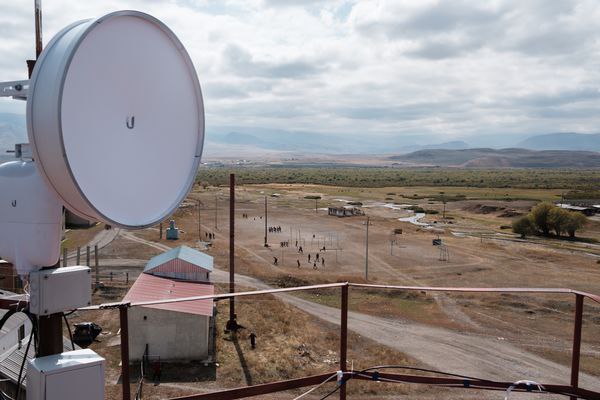
As part of the global Internet Society initiative to promote community internet networks, we are pleased to announce that wired internet has become available in the remote mountainous settlement of Kyrchyn in the Naryn region. All the necessary technical work for laying optical fiber networks to the settlement has been completed. 

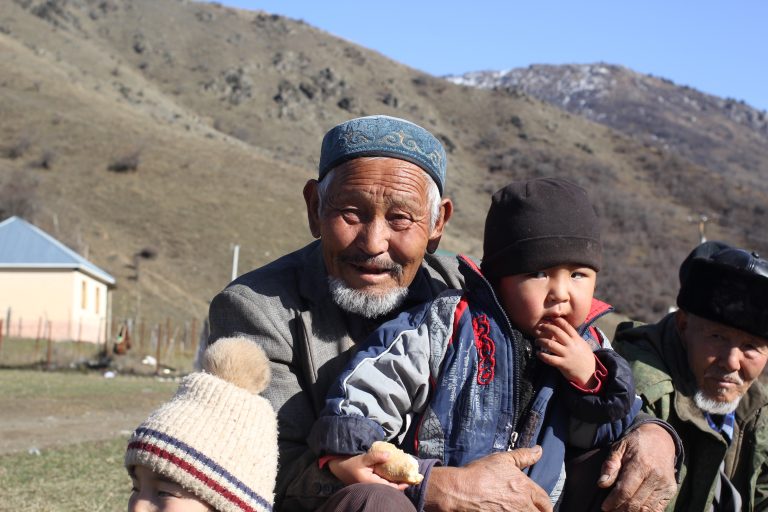
Kyrchyn is a settlement consisting of 18 houses located in the Jumgal district, with approximately 100 residents. Today, high-speed internet has been introduced in every household in Kyrchyn, allowing residents to fully access internet services, and children to engage in remote learning when needed.

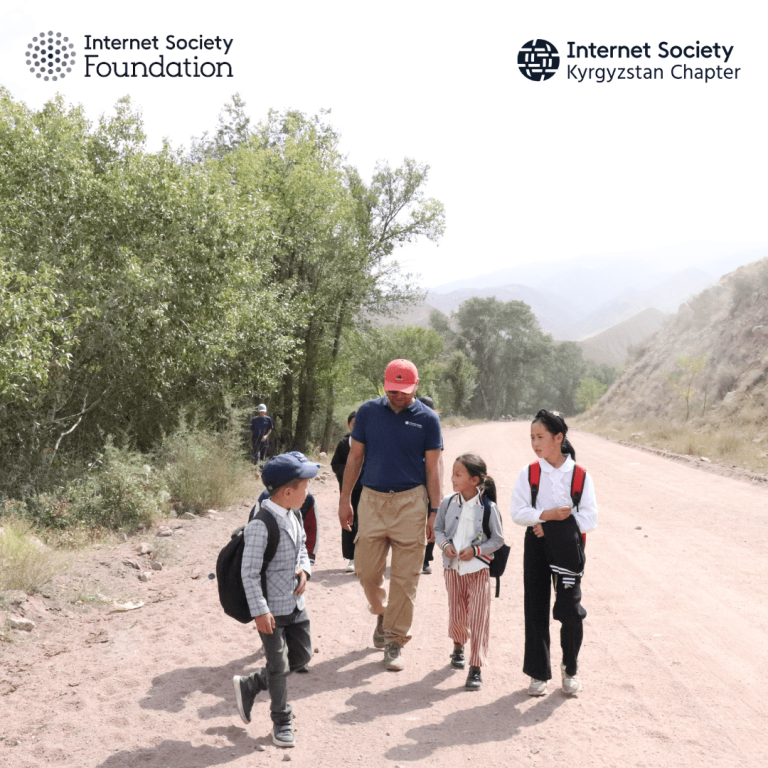
For 22 schoolchildren in Kyrchyn, who walk 3 km to school in neighbouring Aral, the arrival of the Internet was a great joy. While spring and autumn go to school without obstacles, winter conditions are severely frosty. The road to school follows a winding and uninhabited route, where wolves and wild animals have been observed. During the pandemic, everyone climbed the nearest mountain to catch the signal and download the necessary materials.

“Since the Internet became available, it has become much easier to learn. Because of the lack of books, we had to go to each other’s houses to do our homework. Nowadays, we can simply take a photo and send it through WhatsApp. My mom works and lives in Bishkek, and we missed her, but we couldn’t talk to her. Now we talk to her every day. And it has become easier for my brother, who has been working in Moscow for 5 years. Now we can talk to him at any time, and he can send money through the internet faster.”- said fifteen-year-old resident of the village of Kyrchyn Tahmina.

We visited the school in the village of Aral, where the children from Kyrchyn attend. As part of the “IlmBox” project, 100 books on ecology, IT, geography, inspirational literature, and books on improving mobile literacy using the GSMA Foundation Mobile Internet Skills Training Toolkit methodology were donated to the local library. This initiative aims to ensure that students and residents can derive maximum benefit and advantages from internet access.

The mission of the Internet Society Kyrgyzstan Chapter is to promote a healthy internet for all. ISOC Kyrgyz Chapter actively establishes and showcases sustainable models of community internet connections in Kyrgyzstan.  We have already installed internet for communities in the Suusamyr Valley, where winter temperatures can drop to -50 degrees, and in Zardaly, a village in the Batken region, where people have to travel by foot and on donkeys for 5-8 hours, and where there is no electricity as well.

The project is funded by the Internet Society Foundation.

Contest – Community Networks

In recent years ISOC Kyrgyzstan Chapter is working to bring internet connection for unconnected and left behind settlements in Kyrgyz republic. Suusamyr NET in Chui and Zardaly village in Batken oblast projects are the succesful examples. We are announcing a contest for simmilar villages and settlement to connect to the internet. To participate in the contest applicants are requiered to provide information bellow in the form of text or video: 

  • Location of the village on the map
  • Population of the vilalge
  • Tell us about the local school and the children who study there
  • How internet can emprove your live?
  • What assistance we can expect from local population? ( volunteer help, financial or other)
  • Explain the circumstances in which people live there

Applications are welcome at the following addresses

About Zardaly project in the news

Talk with Zardaly villagers

The problem of digital inequality during a pandemic

Chairman of the Kyrgyz Internet Society (ISOC) Talant Sultanov told how the pandemic affected digitalization in Kyrgyzstan during the round table: “The pandemic of digitalization. How the coronavirus has affected business”
The pandemic tested the EAEU countries in difficult conditions to what extent they were ready to respond to challenges, including digital ones. Kyrgyzstan, it seemed to me, was better prepared than it could have been expected. This happened because the digital agenda has been a priority for the country for several years.

The topic itself began to develop in 2017-2018 with the program “Taza koom” (clean society) and transformed into the program “Digital Kyrgyzstan”. The negative effects of the pandemic were felt by both states and businesses. However, the activation of digital technologies in parallel has opened up three possibilities for reducing digital inequality: the possibility of access, use, and maintenance. How were they used in the Kyrgyz Republic?

The first initial one is the possibility of access. Although many people had to go into quarantine, not all remote work was set up, access to the network was configured. Even if there was an Internet connection, there was no way to access devices – computers, smartphones.

Moreover, civil servants who went to remote work could not fully function, and therefore they still came to their workplaces to put signatures on paper. There are few positive effects here.

The second possibility is the possibility of convenient use. Even if users have the Internet, there is a device at home through which they can access the Internet, then how convenient were the services and applications that were developed during the pandemic? An interesting aspect is how usability has allowed the government to become closer to citizens. We now have senior officials conducting surveys via social networks about what policies to pursue or not to pursue. This is an indicator of how flat the government is becoming, the hierarchy is disappearing.

The third possibility is the possibility of maintaining and continuing all these initiatives. When the pandemic began, many online services were launched. However, if we try to check their relevance today, many sites have simply stopped functioning. All these three possibilities so far only show how digital inequality is becoming even wider and deeper. And in order to reduce this digital gap, it is necessary to take urgent measures. Here, the private sector and business in general in the country play an important role. But business stops where there is no profitability, profit. Then the state picks up, but the state also has a certain budget, beyond which it cannot go. At the moment, the government is implementing the Digital Central Asia – South Asia project, which plans to connect every locality in the country to broadband high-speed Internet.

Then the local population, and in particular, the Internet community should pick up the idea. I will focus on the things that our online community does in order to address the designated opportunities. We are currently implementing a project called Ilim Box. Let me remind you that earlier the Ministry of Education of the Kyrgyz Republic took measures to provide all schools of the Republic with network access. The department was able to organize the connection of all schools, except twenty, which are located in the most remote, mountainous areas of the country.

We regard this as a challenge for our community, and before a full-fledged Internet is held, we decided to come to these children with a “box of knowledge”. Such a device allows you to access all educational resources without an Internet connection. Children and schoolchildren will be able to use educational content without going online, because somewhere in the country there are still no funds to access the network.

As for usability, at the second stage of the project, we are already developing Ilim Box 2.0. This is an educational portal where all the necessary data on the field, now relevant in the Kyrgyz Republic, were collected. We did it in a more friendly format than it usually happens with educational platforms, because it is difficult to keep children’s attention when there is competition with YouTube and entertainment portals.

Therefore, educational digital resources should be interactive and accessible to young children. However, digitalization as a whole brings various challenges that we must address both at the country level and at the level of the Eurasian Economic Community. The first challenge associated with digitalization is the protection of personal data. During the first wave of the pandemic, there were several cases when private data of citizens fell into open access.

The second aspect is the legal field. In our country, the implementation of many things could be facilitated if the right laws and regulations were developed. For example, local residents of remote areas can collect resources, money, and specialists can provide people with knowledge. However, they still need to get various licenses, access to radio frequencies, which is almost impossible for a rural resident.

If the government facilitates these conditions, then digitalization in its general sense for residents of the most remote regions will be much faster, easier and cheaper. Another aspect is the sharing of infrastructure. When a new road is being laid, it may be excavated again in a few weeks or months to lay some kind of pipe. In this regard, it would be possible to develop rules for the use of infrastructure. If a road is being built, an Internet cable and other communication should be laid there at the same time – this will facilitate the work, shorten the time.

The third challenge is digital skills. The goal of digitalization is to connect the very last mile, the most final user. In addition to connectivity, it is important to help the residents of the countries get digital skills so that users can work effectively on the network.

The event was held within the framework of the international information and educational project “Eurasian Bridge”.

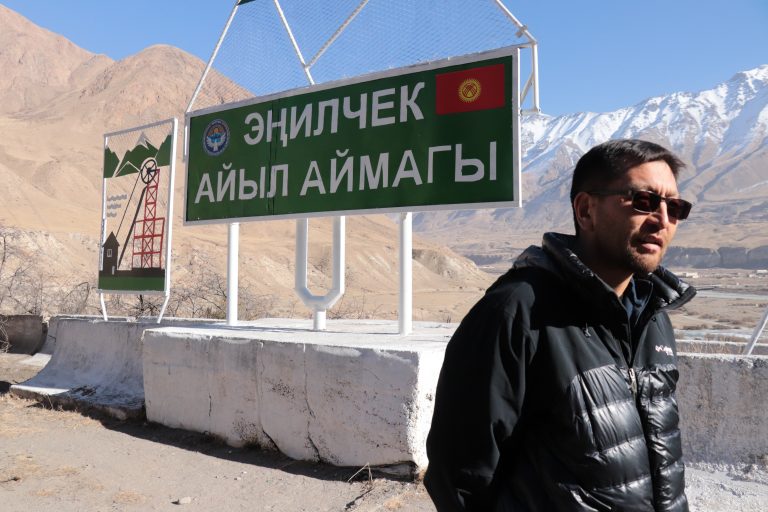
Internet for remote village of Enilchek? – Check

The 2021 was a challenging year, especially for communities with no access to the Internet. When schools went to online mode due to the pandemic, teachers and youth in many rural communities were left without access education due to lack of internet. At the Kyrgyz Internet Society we set a challenge to ourselves to bring internet to unconnected communities in these extreme locations. One of such areas is the village of Enilchek.

Enilchek Village is located in the east of Kyrgyzstan, in the Issyk-Kul oblast, close to the border with China and Kazakhstan. A former booming mining village, is now experiencing a decline. The living conditions in the village are very harsh. It has limited communications, which poses challenges for local residents and tourists, for instance in times of natural disasters.

Yet, it is a potentially popular tourist destination due to proximity to Khan Tengri Peak (7010m), Jenish Peak (7439m), and Merzbacher Lake. It is also important environmental location due to its glaciers, natural resources, and snow leopard habitat. Furthermore it is an interesting historical place. In the 14th century, the great conqueror Temir passed with his armies through these areas.

If we could bring internet to Enilchek, it would improve the quality of the life of the residents of the village. It would give access to educational resources, open economic opportunities, and make it possible to receive e-gov, health and social services.

Kyrgyz Internet Society 2021 – building globally-connected, secure, and trustworthy Internet for everyone

The 2021 was a challenging year, especially for communities with no access to the Internet. We at the Kyrgyz Internet Society tried to help by building globally-connected, secure, and trustworthy Internet. Some of our work includes the following:
  1. IlimBox Digital Library. When the schools went to online mode of education due to the pandemic, teachers and youth in many rural schools were left without access education due to lack of internet. Our team rushed to help to these most remote areas and delivered the IlimBoxes, the digital libraries which work offline and contain educational materials such as e-books, video classes, Wikipedia and Khan Academy in Kyrgyz language. The Ilimbox project was listed among seven worldwide digital education initiatives by Thomson Reuters Foundation.
  2. Community Networks. We did not stop with just the ilimBoxes and set to ourselves a challenge to bring real internet to unconnected communities in extreme locations. We started with Suusamyr, continued in Zardaly, and planning to connect Kyzyl-Oi, Ak-Shyirak, and Enilcheck villages by building Community Internet Networks.
  3. Internet for Schools. In the effort to provide internet for everyone we teamed up with the GIGA Global Initiative of connecting all schools to the Internet by producing a guidebook and sharing our experience.
  4. EduTech Platform IlimBox.kg. Based on the success of the IlimBox, we continued into the next level and created the online school IlimBox.kg, where teachers and students can access all the school courses online with videolessons, tests, textbooks and other interactive materials.
  5. Online Science Experiments. Furthermore, recognizing that schools in rural communities often lack resources for scientific experiments, we are publishing on our Youtube-channel thousands of online physics and chemistry experiments in Kyrgyz language.
  6. Digital Skills. In addition to providing connectivity and developing educational content, we are also helping strengthen digital skills of people in rural areas. Our team travelled to different parts of the country to deliver digital skills trainings for thousands of teachers and students.
  7. IXP. We are building an Fergana Valley Internet Exchange Point in the ancient city of Osh with the aim of lowering internet prices, while improving the speed and quality, for residents of the Kyrgyzstan, Tajikistan, and Uzbekistan.
  8. Digital Kalkan. As we help more and more new users join the Internet, we need to protect them from online risks. Therefore we launched cybersecurity and personal data protection initiative Digital Kalkan (Shield) to protect civil society organizations and SMEs from cyber threats.

We would like to thank our friends and partners across the globe and giving our digital Alkysh (Gratitude)! Without your help none of these initiative would have been possible. Kyrgyz Internet Society wishes everyone a Happy 2022 Year!

Research on Personal Data in the Commercial Sector of the Kyrgyz Republic

Researchers: Nurbek Arzymbaev, Talant Sultanov, Aiperi Bozoeva, Zhazgul Zuridinova

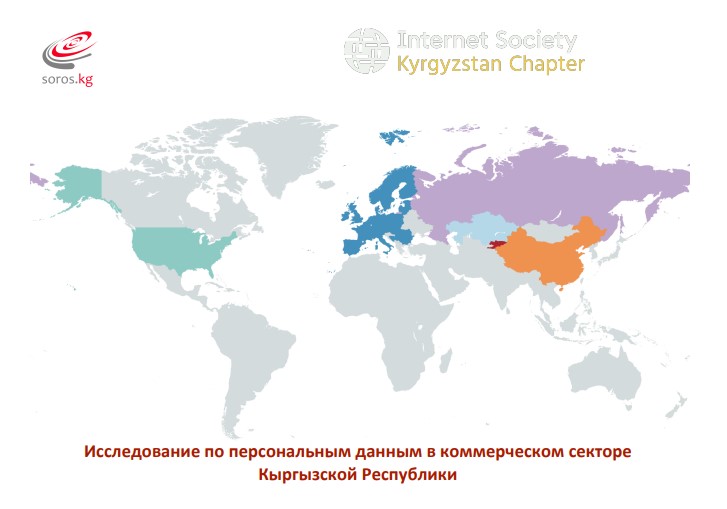
The main objective of the study was to find out how the “market”, the commercial[1] sector in the Kyrgyz Republic enforces the legislation in the collection and processing of personal data directly provided by the users[2], in the absence of an enforcement authority.

According to the results of our research, we can state that the vast majority of companies we studied collect personal data illegitimately, do not inform users about the list of collected personal data, the purposes of their collection and processing, their rights, storage periods and their protection.

Of the more than 500 company websites we reviewed, about 180 directly collect personal data (hereinafter referred to as PD) from users. The vast majority collect users’ contact details to provide feedback and send information about company promotions and products.

 Out of 180 companies collecting personal data, only 44 companies obtain consent. However, according to our research, the absolute majority of online consent forms for personal data processing do not comply with the personal data legislation of the Kyrgyz Republic. According to the current legislation, there are no norms for giving electronic consent to the collection and processing of personal data, except for the use of electronic signature. Despite the fact that the law has a more simplified form – “simple electronic signature”, of the number of web resources reviewed, only a few web resources use it to obtain consent to the collection and processing of personal data.

Of the 180 websites that requested a PD, over 40% of the websites were located outside the country. However, only six companies displayed cross-border data transfer clauses in the consent form.

Of the 519 websites, only 17 (or 3%) had published a Personal Data Processing Policy on their websites[3]. Accordingly, they do not familiarise users with the purposes of collecting PD, conditions of processing, storage, destruction, rights and other important aspects related to PD. It should also be noted that only one company out of 519 has developed and published its Data Processing Policy in Kyrgyz.

It is rather difficult to make unambiguous conclusions about the volume and excessiveness of collected data due to the lack of collection purposes published by the companies. However, we have recorded cases of collecting special categories of personal data[4] and collection of personal data that do not correspond to the text of the consents obtained.

In general, we can draw a portrait of companies in the commercial sector – the company collects personal data directly from users only for marketing mailings, feedback or discounts; does not obtain legitimate consent from users for the collection and processing of personal data; does not notify users about the measures taken to protect personal data, about the rights of users.

According to the results of the study, it can be concluded that the absence of an authorised body negatively affects the relationship of the subject of PD with the private sector. PD subjects cannot realise their legal rights, the commercial sector does not actually comply with the legislation and other acts on personal data protection in the country. Also during the research, having studied the legislation of the country, having checked the enforcement of the rights of the PD subjects, having analysed the leakage of PD, we believe that there are significant gaps in the legislation of the country. For example, the main ones include the following: the rights to revoke consent are not clearly defined, there are difficulties in giving electronic consent (only electronic signature), there are no norms on notification of leakage, the possibility of unsubscribing from marketing mailings and protection of children’s personal data, etc. [1]The issue of data collection and processing is a matter of data collection and processing. 

[1]The issue of data collection and processing by the public sector requires a separate study.

[2]It should be noted that in the study we separate the concepts of “directly provided personal data” and “indirectly provided personal data”. The study was conducted only on the study of directly provided personal data. In subsequent studies, we will examine indirectly provided personal data and users’ attitudes towards it.

[3]A document, often also referred to as a privacy policy, defines the policy of the holder/processor regarding the processing of personal data (hereafter referred to as the Policy).

[4]In the Personal Information Act, special categories are defined as racial or ethnic origin, nationality, political opinions, religious or philosophical beliefs, as well as data concerning health conditions and sexual inclinations.

Source: Survey on personal data in the commercial sector of the Kyrgyz Republic

https://youtu.be/VXApI-IY45c?feature=shared

Donations for Zardaly village

Residents of the village of Zardaly have been living without electricity for several decades. While for the whole of Kyrgyzstan electricity has become a part of everyday life, Zardaly residents need to charge homemade batteries using solar panels so that there is at least some kind of lighting in the house at night.

Battery from a truck in one of the houses in Zardaly

But there is good news!

This spring, the ISOC team will install the Internet in the village of Zardaly!

Since the village has never had either electricity or a mobile network, or the Internet, local residents do not use smartphones or laptops. For this reason, we collect used technologies as donations:
– smartphones (note: the screen must be unbroken and the device’s wi-fi technology must be working);
– tablets (with wi-fi technology);
– routers for the Internet;
– laptops (preferably with a working battery);
– printer (b&w).

For our part, our team guarantees full reporting: photos, videos, acceptance certificates, that is, whatever you deem necessary!

On our last trip, Merim Koichueva donated a smartphone to the residents of the village of Zardaly. When our team visited the school, we decided that the only girl in the elementary school – eight-year-old Ryana – should receive it. She was very happy and grateful for this gift!

If you decide to donate equipment to the village of Zardaly, please fill out the form

For more details, write or call the number: +996 755 330 335, we will be happy to answer all your questions!


The ISOC team would like to thank New-Tek LLC, a domestic solar panel manufacturer, for providing a discount on solar panels!
The project is being applied with collaboration to Taza Koom — Center for Strategic Initiatives.

“Internet and Digital Skills for Remote Community of Zardaly” was provided in part by the USG Alumni Small Grants Program, which is funded by the U.S. Embassy Bishkek, Kyrgyz Republic and administered by American Councils for International Education Kyrgyzstan. The opinions expressed herein are the author’s own and do not necessarily express the views of either U.S. Embassy in the Kyrgyz Republic or the American Councils for International Education.

ISOC team recruits volunteer trainers to travel to Zardaly village

How did it all start?

The ISOC team visited the most remote villages of our country. Every time we came to another special and insanely beautiful village, we tried to learn as much as possible about the inhabitants: about their living conditions, way of life, views, interests, and stories.
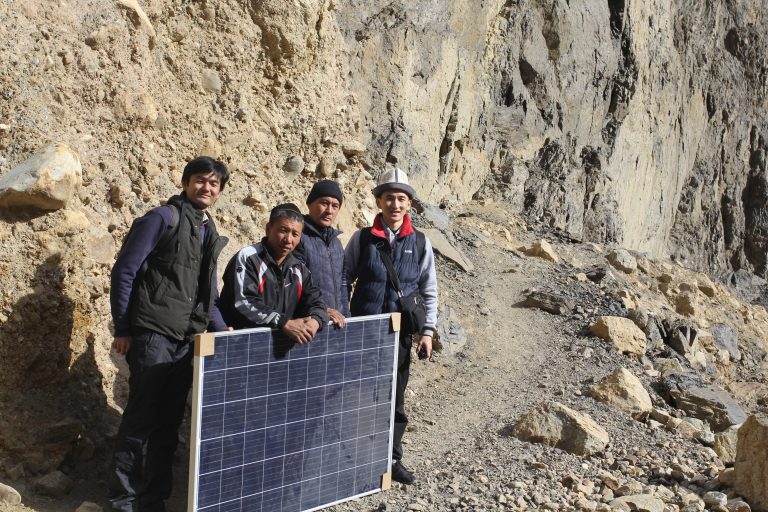

Photo: Children at school in Batken region

We met the residents of the villages of Ortok and Zhaz-Kechuu, who live in walnut forests and protect them from poachers, care for and plant new seedlings of future forests every year. And residents of villages in the Batken region who live on the border with Uzbekistan and Tajikistan, despite the well-known border problems. They repeatedly face conflicts, go through shootings, but every day they try to look for ways of peaceful coexistence with their neighbors. We also visited the villages of Issyk-Kul, Talas, and Naryn regions. We faced the problems of lack of motivation for children to get an education because the only visible path for them is to work in another country.


Photo: villagers in Jalal-Abad oblast

What do we want?

Therefore, it became our dream to return one day with the Internet to these villages and teach young people to use modern technologies for their own benefit. For example, making money through the Internet, self-study, Internet marketing, tourism and everything else that will help them find alternatives to build a better future.

Finally, this year we are starting to make this dream come true! The first village we plan to return to is Zardaly, the most remote village in our country, without electricity.


Photo: Schoolchildren in a village in Talas region

What is required for this?

Now we are recruiting volunteer trainers for further training.

For several weeks we will discuss the training plan, prepare, learn how to correctly present information in Kyrgyz, and collect the necessary attributes for the training. After that, we plan to leave together and stay in this village Zardaly for 5 days, teaching the villagers all useful and necessary skills applicable via the Internet.

How to join?

The exact departure dates will be announced in the second half of March. If you want to become a part of our movement – fill out the form

We will process all applications and contact you for an invitation to the event!


The project is being applied with collaboration to Taza Koom — Center for Strategic Initiatives.

“Internet and Digital Skills for Remote Community of Zardaly” was provided in part by the USG Alumni Small Grants Program, which is funded by the U.S. Embassy Bishkek, Kyrgyz Republic and administered by American Councils for International Education Kyrgyzstan. The opinions expressed herein are the author’s own and do not necessarily express the views of either U.S. Embassy in the Kyrgyz Republic or the American Councils for International Education.

We started our work to bring internet to Zardaly village

Good news!

Our team has started work on bringing the Internet to Zardaly village!

Now the first stage of our project has begun. Our engineer Erzhigit Imamov left for a detailed study of the area, after which the equipment will be ordered.

The second stage will be the installation of a metal frame and radio retranslators, which will be installed in the vicinity of Zardala, and through them, the Internet will be carried out to the village.

solar panels for powering Internet radio repeaters

The third stage: Accommodation in the village of Zardaly for 5 days, to teach local residents digital skills, ways to make money through the Internet, various ways of learning, and much more!


The ISOC team would like to thank New-Tek LLC, a domestic solar panel manufacturer, for providing a discount on solar panels!
The project is being applied with collaboration to Taza Koom — Center for Strategic Initiatives.

“Internet and Digital Skills for Remote Community of Zardaly” was provided in part by the USG Alumni Small Grants Program, which is funded by the U.S. Embassy Bishkek, Kyrgyz Republic and administered by American Councils for International Education Kyrgyzstan. The opinions expressed herein are the author’s own and do not necessarily express the views of either U.S. Embassy in the Kyrgyz Republic or the American Councils for International Education.