In the remote settlement of Kyrchyn in the Naryn region, wired internet has become available

As part of the global Internet Society initiative to promote community internet networks, we are pleased to announce that wired internet has become available in the remote mountainous settlement of Kyrchyn in the Naryn region. All the necessary technical work for laying optical fiber networks to the settlement has been completed. 

Kyrchyn is a settlement consisting of 18 houses located in the Jumgal district, with approximately 100 residents. Today, high-speed internet has been introduced in every household in Kyrchyn, allowing residents to fully access internet services, and children to engage in remote learning when needed.

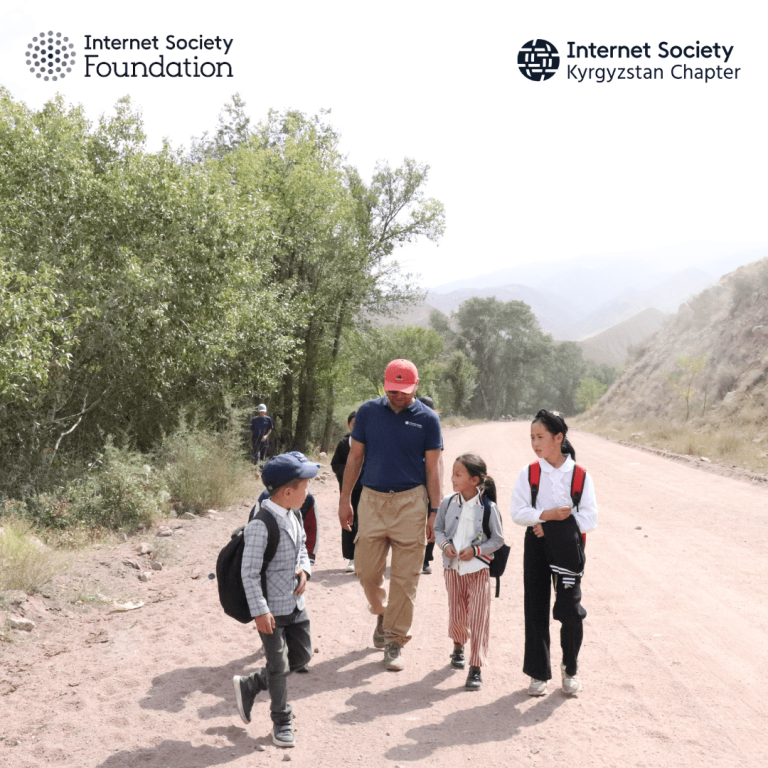
For 22 schoolchildren in Kyrchyn, who walk 3 km to school in neighbouring Aral, the arrival of the Internet was a great joy. While spring and autumn go to school without obstacles, winter conditions are severely frosty. The road to school follows a winding and uninhabited route, where wolves and wild animals have been observed. During the pandemic, everyone climbed the nearest mountain to catch the signal and download the necessary materials.

“Since the Internet became available, it has become much easier to learn. Because of the lack of books, we had to go to each other’s houses to do our homework. Nowadays, we can simply take a photo and send it through WhatsApp. My mom works and lives in Bishkek, and we missed her, but we couldn’t talk to her. Now we talk to her every day. And it has become easier for my brother, who has been working in Moscow for 5 years. Now we can talk to him at any time, and he can send money through the internet faster.”- said fifteen-year-old resident of the village of Kyrchyn Tahmina.

We visited the school in the village of Aral, where the children from Kyrchyn attend. As part of the “IlmBox” project, 100 books on ecology, IT, geography, inspirational literature, and books on improving mobile literacy using the GSMA Foundation Mobile Internet Skills Training Toolkit methodology were donated to the local library. This initiative aims to ensure that students and residents can derive maximum benefit and advantages from internet access.

The mission of the Internet Society Kyrgyzstan Chapter is to promote a healthy internet for all. ISOC Kyrgyz Chapter actively establishes and showcases sustainable models of community internet connections in Kyrgyzstan.  We have already installed internet for communities in the Suusamyr Valley, where winter temperatures can drop to -50 degrees, and in Zardaly, a village in the Batken region, where people have to travel by foot and on donkeys for 5-8 hours, and where there is no electricity as well.

The project is funded by the Internet Society Foundation.

Mobile Internet Skills Training Toolkit released in Kyrgyz and Russian languages

The Sanarip Insan project aimed to address the critical issue of low digital literacy rates, particularly among rural youth and women in the Kyrgyz Republic. Despite the high mobile phone penetration rate in the country, many individuals lacked the skills to effectively use mobile devices beyond basic communication. Recognizing the significance of a mobile-first approach, Sanarip Insan partnered with international platforms to adapt their expertise to local needs and realities.
To promote digital inclusion and economic development in the region, the project successfully localized the GSMA Foundation’s Mobile Internet Skills Toolkit (MIST) into Kyrgyz and Russian languages. Training sessions based on the MISST Framework were conducted in all regions of the country. This approach proved instrumental in advancing mobile literacy skills among rural populations with limited access to fixed broadband infrastructure and desktop computers.

As of the beginning of 2023, the total population of Kyrgyzstan was 7.37 million, with 62.3 percent residing in rural areas. Given the high mobile phone penetration rates and the increasing usage of mobile internet in the country, it is crucial for development organizations to adopt a mobile-first approach in their interventions.

In its efforts to promote digital literacy skills among rural youth and women, Sanarip Insan organized offline training sessions for over 250 participants. These training served as valuable opportunities to test the mobile literacy toolkit in real-world settings. Through these sessions, participants were able to enhance their digital literacy skills, gain a better understanding of mobile platforms and applications, and acquire hands-on experience in using mobile devices.

In addition to the training, Sanarip Insan collaborated with the Presidential Administration and the Ministry of Youth, Culture, and Information to broadcast bite-sized videos about digital platforms and basic digital literacy skills on national and regional TV channels. These videos were produced in both Kyrgyz and Russian languages to maximize their reach. Through this partnership, Sanarip Insan successfully reached 4 million people, accounting for 55% of the country’s total population, particularly those residing in rural areas.

By combining offline training and national TV channels, Sanarip Insan made a significant impact on improving digital literacy skills among rural populations in the Kyrgyz Republic. This approach not only promoted digital inclusion but also empowered individuals to participate in the global digital economy. Through these efforts, Sanarip Insan demonstrated how targeted interventions, developed in collaboration with international partners and adapted to local contexts, can effectively promote sustainable development and contribute to the achievement of the Sustainable Development Goals.

Bringing digital education to remote village schools with Ilimbox

Ilimbox-digital source of knowledge-a product implemented on the basis of Orange Pi in order to provide access to students and teachers of remote secondary schools of the Kyrgyz Republic to textbooks in digital format, Wikipedia and resources of Khan Academy in offline mode.

The Ilimbox project is funded by the Beyond The Net program created by the Internet Society Foundation and AIEF2018. The project is implemented by the Kyrgyz Chapter of the Internet Society ISOC.

About ilimBox and other projects ISOC.KG, you can follow the links:

https://isoc.kg/ilimbox/

https://www.facebook.com/isockg/

Kyrgyzstan has developed a useful alternative to the Internet for schoolchildren

In recent years, the Internet has become increasingly accessible to Kyrgyz people. If about 5 years ago only residents of the capital could afford access to the world wide web, now it is quite a familiar thing for residents of the regions.
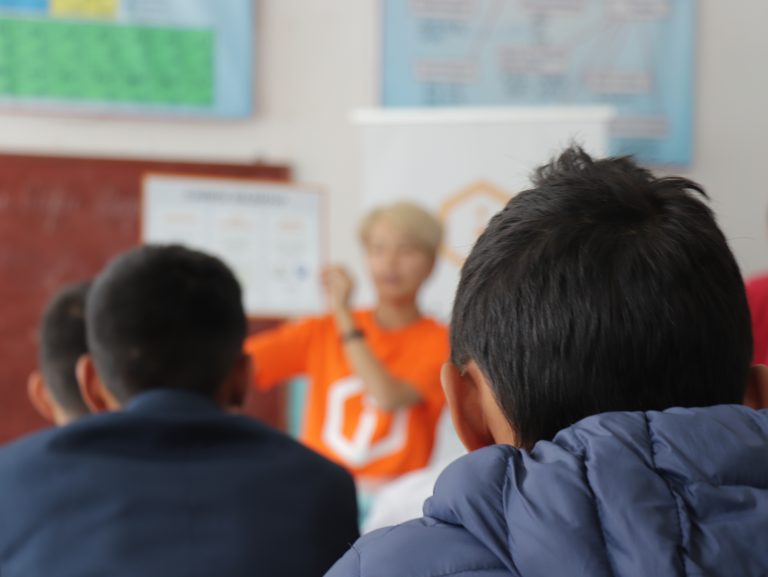
The Internet plays an important role in modern education. Problems such as the shortage of school textbooks could be addressed through quality Internet access. Given this fact, the Ministry of education of Kyrgyzstan has carried out a lot of work in this direction and for 2 years connected almost 2 thousand state and municipal schools to the Internet, which is almost 90% of all schools in the country. However, the analysis showed that schoolchildren still do not have access to the world wide web. Fearing that students will be distracted from lessons and use the Internet for other purposes, school authorities do not provide students with access.

Innovative solutions to two pressing problems such as the lack of books and the lack of Internet can be seen in the project digital library for schools and public libraries “Ilim Box”, which contains Wikipedia in Kyrgyz, Russian and English, Khan Academy in English, thousands of video lessons, audio and e-books. All these digital learning materials are available offline, in other words does not need Internet access. Access to Digital libraries will be carried out through smartphones, tablets, computers and any other personal devices with Wi-Fi technology.

“As you know, the Internet has a huge number of educational resources that would help our children to access the most advanced knowledge online. Unfortunately, now a lot of students can not watch educational videos, read online books and use all educational resources. In order to solve this problem, we launched a project Ilimbox”, – said the representative of the Internet community in Kyrgyzstan (ISOC) Talant Sultanov.
The device allows you to access all educational resources without an Internet connection, in other words offline.
“The content that is online, we downloaded to the hard drive, attached a small computer that also acts as a Wi-Fi router. Any user will be able to download the necessary information to your computer or smartphone. What is most important-the user gets access only to educational resources, he will not have access to social networks and other entertainment content”, – explained Talant Sultanov.
It is worth noting that all data is stored in the device itself, and only the power supply and the box itself are needed for connection. The uniqueness of the innovative project is that students can access educational resources at school without an Internet connection.
“This is a very useful device, because on the one hand it provides access to an extensive database of educational materials, and on the other – it does not have entertainment content that would interfere with students during lessons. We are very happy that we had the opportunity to IlimBox and use it for educational purposes”, – shared his impressions the Director of one of schools of Karakol Gulzat Soukouna.

It should be noted that the IlimBox device was installed in 66 schools of Issyk-Kul, Talas and Chui regions. In these schools was held a presentation of the project “Ilim box” then testing the device with students and teachers and handing the device. During the conversation, the importance of education and self-education were touched upon. The choice of schools was due to several factors: no access to the Internet for students, lack of books, as well as the number of students exceeded the permissible maximum, thereby increasing the likelihood of poor performance in schools without a network connection, as well as the choice of educational institutions influenced the list of proposed schools by the Ministry of education and science of the Kyrgyz REPUBLIC.
The project is planned to cover all regions of Kyrgyzstan and install IlimBox in a total of 100 devices in schools experiencing problems with Internet access. Every educational institution reggenie gets IlimBox free.

The project is funded by Alumni Engagement Innovation Fund 2018 (AEIF) as part of innovative solutions to global challenges and the Beyond the Net ISOC program.

A video about the project can be found here:

Russian language

Kyrgyz language

School of D. Turabekova (Boz-Bulun v., Issyk-Kul region)

The final trip was school  of D. Turabekova (Boz-Bulun v.). There are 214 students enrolled.

In this school the device “Ilim Box” was earlier established, however, it was the outdated version which as it became clear, unfortunately, wasn’t used on purpose, and gathered dust in one of offices as the head teacher lost the password from the old device.
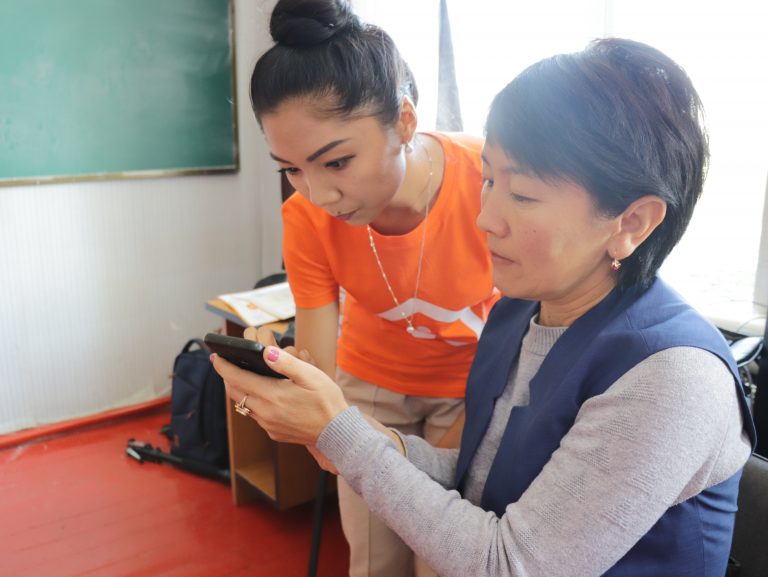
The updated version without a password system pleased the school administration.

During the presentation, we showed the improved nuances of the device and instructed on the use of high school children.


School of Eshimbekova (Tegizchil v., Issyk-Kul region)

The penultimate visit was to the school Esimbekova (Tegizchil v.).

It is a compact school with 238 children.  It is located on the outskirts of the village Tegizchil, however, despite this, at school we met a volunteer from the United States who came on a Peace Corps knowledge-sharing project.
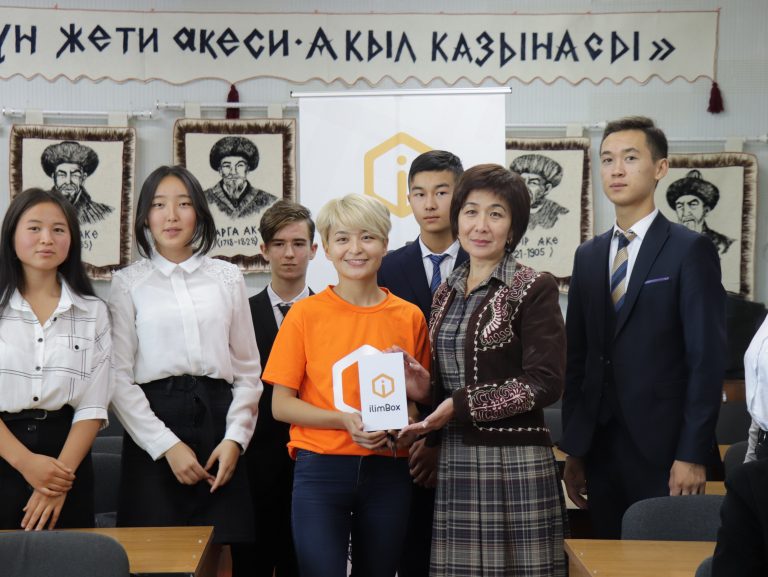
He teaches children English for the second academic year and speaks Kyrgyz perfectly.

Teachers and children admitted, in school except an office of administration there is no Internet access anywhere.

Of course such a gift to the school was very useful and also solved the problem of acute shortage of books.

The guys offered to install the device in the office of the school government, as it is usually open around the clock.

School gymnasium №11 (Karakol, Issyk-Kul region)

In Karakol we visited the gymnasium school №11.

This is one of the largest educational institutions of Issyk-Kul region, in which we have established ilimBox, it has 2600 students, children study in double shifts school.
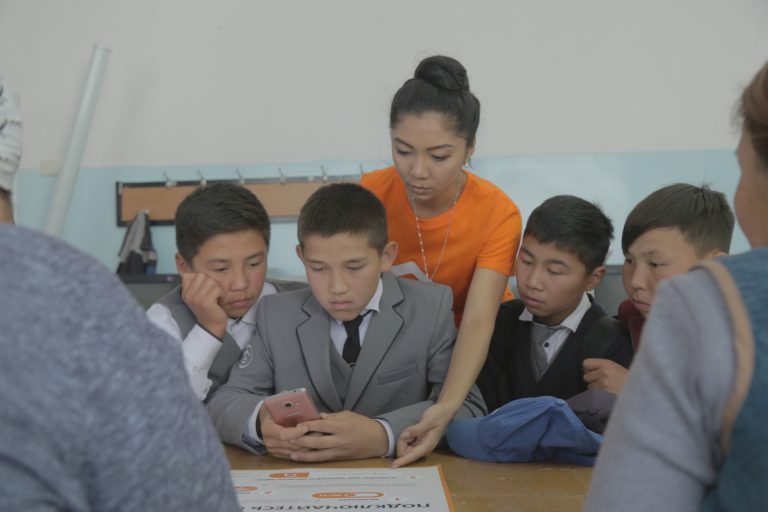
Despite the fact that the school is a gymnasium and is located in Karakol, it still has difficulties accessing the global network.

As high school students admitted, they liked the project with free access to educational information and the opportunity to learn English through the educational resource “Khan Academy”.

The device was installed in the office of computer science and attached instructions for use in Russian.

School of Ekinbaeva (Bar-Bulak v., Issyk-Kul region)

In the fifth school it was possible to meet not only teachers, but also pupils whom in school will count 268.
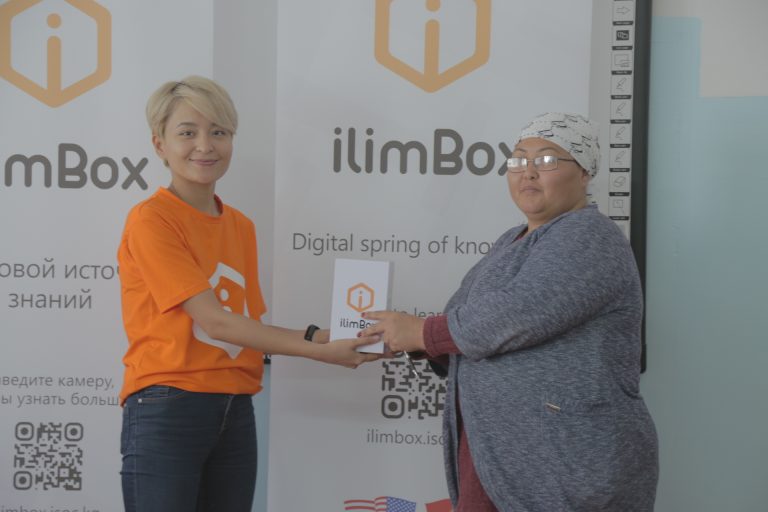
The presentation ilimBox called about ten active high school students and several teachers.

In this school, we noticed posters prohibiting the use of a mobile device at school, as in the classroom, children often use it for entertainment purposes.

We, in turn, have shown that with the advent of “IlimBox” smartphone can be used exclusively for educational purposes, and all this can be fun through video lessons.

School of R. Jangazieva (Kara-Koo, Issyk-Kul region)

The fourth school in line was school of R. Jangaziev (Kara-Koo v., Issyk-Kul region).

There are 776 students enrolled, however, we found only teachers, but it should be noted their interest in the project was genuine.

After the presentation, everyone was happy to test the connection to the network via the phone.

During the conversation with the teachers-identified the need to download online tests for ORT in basic and additional subjects.