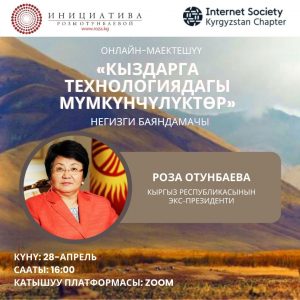
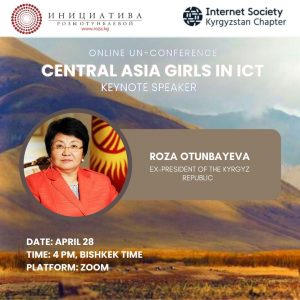
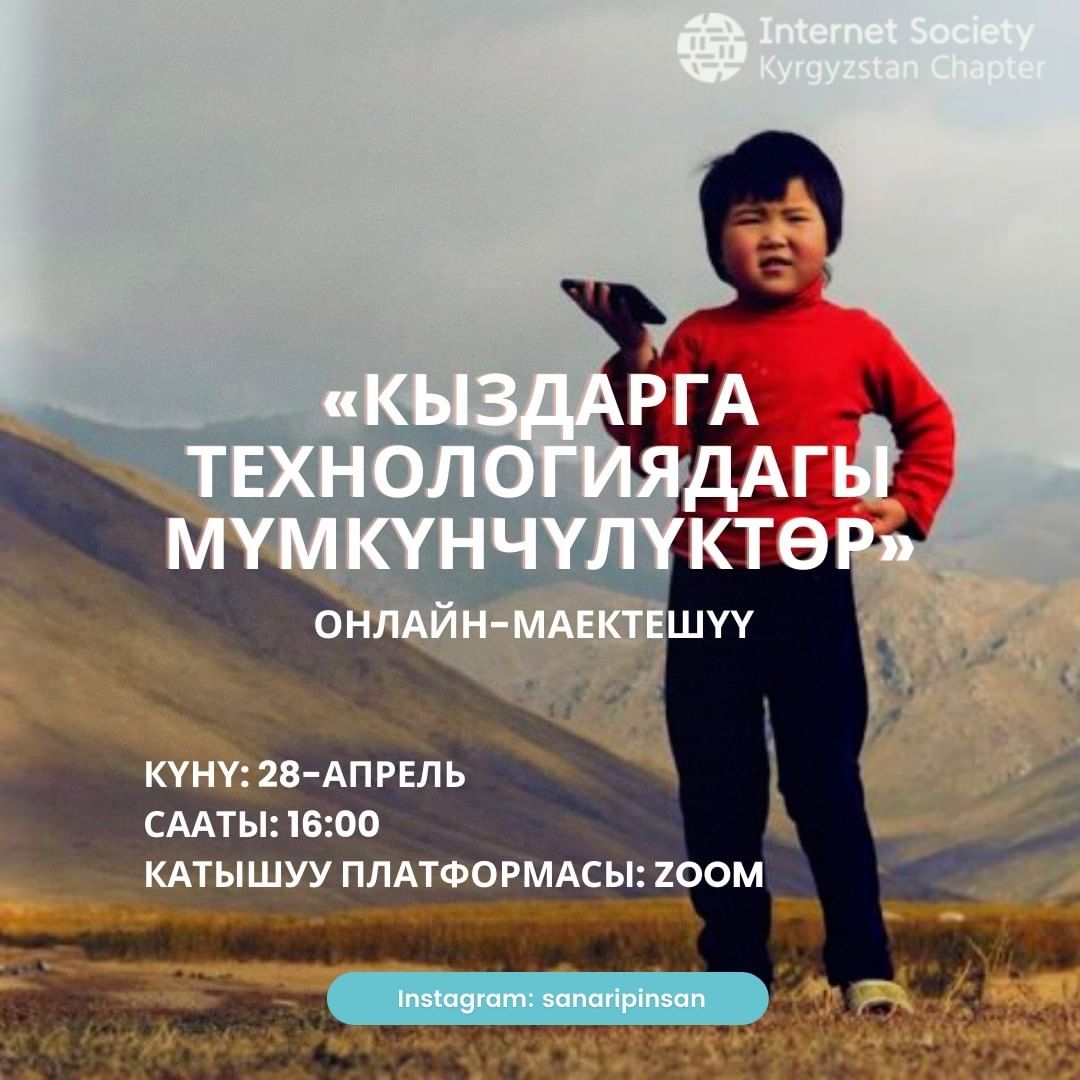
Un-Conference Central Asia Girls in ICT


Opportunities for girls in ICT education and careers in Central Asia: informal online discussion in honor of International Girls in ICT Day

April 28, 2022, 16.00 Bishkek, 10.00 UTC

https://us06web.zoom.us/j/88516164405?pwd=anBlZFNwWm5zNGhLM29QQjhyamxLZz09

Facebook Live Stream: https://fb.watch/cG2PkgRuU8/ 

YouTube Live Stream: https://youtu.be/Xvt7Gd-SnBg

The Central Asian Girls in ICT event aims to inspire and empower girls and girls, especially in rural areas, to pursue education and careers in the ICT sector and STEAM in general. International and local experts and leaders will share their stories and talk about opportunities for girls in Central Asia. The online event will be held in an informal environment without protocol, so that the participants and participants can freely communicate with each other and with prominent ICT experts and leaders.

Program
Organizers: International Organization “Women in Digital Transformation”, Kyrgyz Internet Society and International Public Foundation “Initiatives of Roza Otunbayeva”
Hosts: Ekaterina Gromova, Talant Sultanov

16.00 Greetings

  • Roza Otunbayeva, founder of the International Public Foundation “Initiatives of Roza Otunbayeva”, ex-president
  • Almazbek Beishenaliev, Minister of Education of the Kyrgyz Republic
  • Elvira Surabaldieva, Deputy of the Jogorku Kenesh of the Kyrgyz Republic
  • Nuria Kutnaeva, Director of the State Agency for the Protection of Personal Data under the Cabinet of Ministers of the Kyrgyz Republic

16.30 Teleconference Tashkent-Bishkek “Girls in ICT in the CIS Region”

  • Natalia Mochu, ITU Regional Director for the CIS Region
  • Ekaterina Gromova, Co-Founder, Women in Digital Transformation

16.45 Presentations “Opportunities in ICT for girls and girls in Central Asia”

  • Shayna Cram, Head of Public Affairs, US Embassy
  • Shirin Aitmatova, Vice-President of the International Aitmatov Foundation, Former Deputy of the Jogorku
  • Kenesh of the Kyrgyz Republic
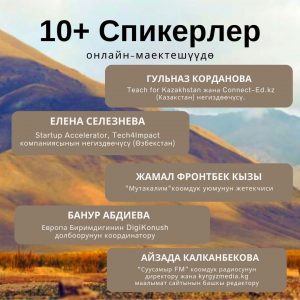
  • Gulnaz Kordanova, Co-Founder, Teach for Kazakhstan and Connect-Ed.kz (Kazakhstan)
  • Elena Selezneva, Director, Startup Accelerator, Co-Founder of Tech4Impact (Uzbekistan)
  • Jamal Frontbek kyzy, Head of the public organization “Mutakalim”
  • Banur Abdiyeva, Founder of the Center for Civic Initiatives “Leader” (Karakol), European Union Project “DigiKonush”
  • Aizada Kalkanbekova, Director of the community radio “Suusamyr FM” and editor-in-chief of the news site kyrgyzmedia.kg
  • Aidana Omurbayeva, DevOps Engineer at Relativity LLC, IT Influencer
  • Aiperi Nogoibaeva, Deputy Director KARPOU (Kyrgyz Association of Software Developers and Services)
  • Aiperi Bozoeva, Digital Hygiene Project “Sanarip Tazalyk”
  • Sapargul Abdinabiyeva, European Union Project “Sanarip Insan”
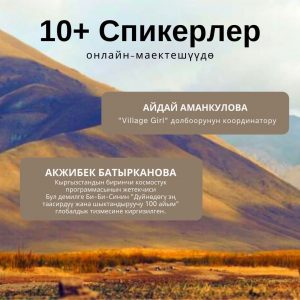
  • Aidai Amankulova, Village Girl Project
  • Kyzzhibek Batyrkanova, Head of the first space program in Kyrgyzstan, an initiative included in the BBC Global List of “100 Most Influential and Inspiring Women in the World”

Questions and answers. Competition with prizes

Roundtable on ‘Improving the Employment Potential of Rural Youth, Women and Migrants through Digital Skills Development’. Launch of the Sanarip Insan project

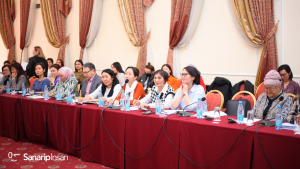
On 31 March 2022, a forum on “Promoting Equal Economic Opportunities and Resilience of Youth” was held at the Park Hotel Conference Hall, where the Sanarip Insan Project was launched. The round table was held in a hybrid format, with more than 80 guests from the public and private sectors attending offline and international partners and viewers from remote regions of the Kyrgyz Republic attending online.  

The Sanarip Insan project aims to build digital skills capacity among young people, migrants and women, from basic digital literacy to more in-demand digital skills such as information search, use of digital platforms, use of social media functionality, financial operations, online commerce and advanced entrepreneurial skills using information technology. The project plans to reach 100,000 people. 

The Sanarip Insan project is implemented by the European Neighbourhood Council together with the Kyrgyz Internet Society with the financial support of the European Union.

Video report           Photo          Presentations

Post-release           Agenda        Press-release

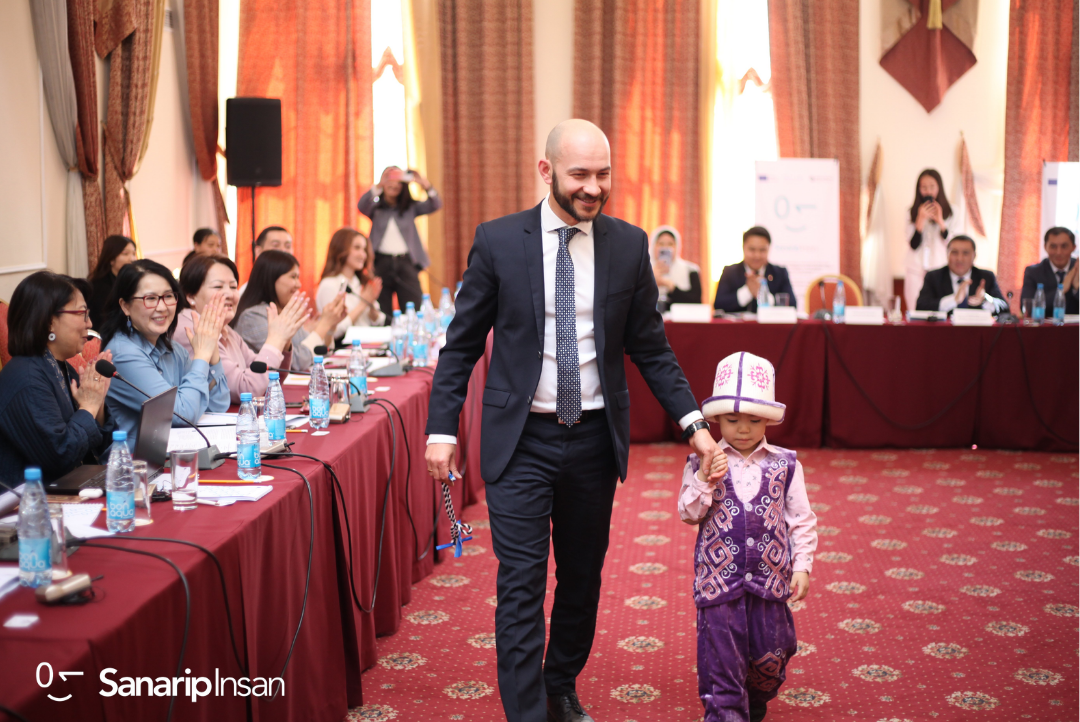
The round table combined a business conference with the national traditions of the Kyrgyz people. At the beginning of the forum, the six-year-old Manaschi performed several Manas commandments. Then, during the forum, Raimonds Wingris, Chargé d’Affaires ad interim of the EU Delegation to the Kyrgyz Republic, gave a “Tushoo kesүү” to the child to mark the opening of the project. 

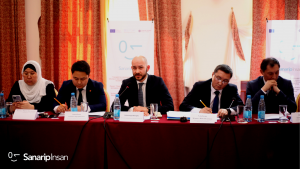
Raimonds Vingris, Chargé d’affaires a.i. of the EU Delegation to the Kyrgyz Republic, spoke about increasing knowledge in digital skills among the population to ensure rapid employment: “Even in EU countries, there is a digital divide. Adult citizens with low levels of digital skills are more likely to have problems finding jobs, and even when they are employed, they get less than adults with higher levels of digital skills,” he said.

Soyuzbek Nadyrbekov, Deputy Minister of Culture, Information, Sports and Youth Policy of the Kyrgyz Republic, was introduced to all aspects of the project and expressed his great desire to cooperate to jointly improve knowledge in digital literacy among citizens of the Kyrgyz Republic. 

Nurdölöt Bazarbaev, Deputy Minister of Labour, Social Security and Migration of the Kyrgyz Republic, shared that the digital literacy of the population, in the future, will enable the citizens of the Kyrgyz Republic to import digital services to international companies while staying in their home country. 

Ulanbek Mambetakunov, Deputy Minister of Education and Science of the Kyrgyz Republic, shared a great desire to cooperate and improve the digital knowledge and skills of the population to achieve sustainable development goals: “We should pay attention to poverty eradication, to quality education, and necessarily consider digital skills to achieve sustainable development goals. The Ministry of Education and other ministries and agencies are making great efforts to develop digital skills, information literacy and as far as you know, a draft of the state educational standard for primary general education is currently being prepared, where one of the objectives is to develop digital literacy plus increase students’ knowledge on the green economy”. 

Internet creator and Google VP – Vinton Cerf also spoke at the forum, where he shared the importance of teaching digital skills to vulnerable groups in order to increase the capacity of the population.

Maria Bevza, Project Coordinator at the European Neighbourhood Council (ENC) spoke about the implementation of the Sanarip Insan project and the targets to be achieved over the next 2 years. 

Leaders of youth and women’s organisations such as SheStarts, Mutakalim, Otkrytaya Liniya, shared their views on the need to promote equal economic opportunities and sustainability for youth and women in the Kyrgyz Republic.

The forum was the opening event of the Sanarip Insan project where partners, state authorities, media and beneficiaries came to an agreement on cooperation to maximise the promotion of the population of the Kyrgyz Republic through enhanced digital skills. 

We take this opportunity to express our gratitude for your presence at the event and your interest in cooperation to achieve common goals. Thank you for your contributions of time, resources and attention!
We will be glad to receive your feedback on social pages.

World Email In Fb Ig Yt Whatsapp Telegram

Additional information about the project can be obtained by phone:
+996 755 330 335 and e-mail: [email protected]

“This <website/page> has been produced with the financial support of the European Union. The content of this publication is the responsibility of the European Neighborhood Council (ENC) / Public Association “Kyrgyz Internet Society” and does not reflect the views of the European Union.

Launch of the Sanarip Insan project. Forum “Improving the Employment Potential of Rural Youth, Women and Migrants through Improving Digital Skills”.

Date: 31.03.2022
Time: 2pm – 5pm
Location: “Park Hotel Bishkek”, Bishkek, The Kyrgyz Republic

Millions of people face the challenge of finding themselves in the labour market and being in professional demand without fear of losing their job. However, the labour market situation in the Kyrgyz Republic is ambiguous. Traditional jobs are not sufficient for the working-age
population, resulting in high unemployment rates. Increasing digital skills of the population contributes to augmenting the number of jobs and the level of wages. These skills help to equalise living standards in both urban and rural areas. For a smooth transition to a digital economy, Kyrgyzstan needs to transform its training system. This will allow for the rapid and high-quality training of specialists with the competencies most in demand in the labour market.

Due to recent events in the world, migrants have to leave their jobs and return home. It isimpossible to predict what percentage of returnees will be able to find work in their home countries. However, given the experience of the pandemic in 2020, it is safe to say that unemployment in the country will increase. The growth of unemployment, a significant reduction of financial opportunities for the population will aggravate the economic situation in Kyrgyzstan and will affect the standard of living of the majority of the country’s population. In these circumstances, it is necessary to provide opportunities to obtain new in-demand professions for vulnerable groups of the population.

In this regard, one of the priorities of the European Neighbourhood Council together with the Public Association “Kyrgyz Internet Society” (ISOC) is the implementation of the project “Promoting Equal Economic Opportunities and Sustainability for Youth” in the Kyrgyz
Republic “Sanarip Insan” (“Digital Citizen”) with the financial support of the European Union. It envisages new opportunities for developing the digital literacy of the population, providing knowledge of the digital and green economy to young people and women living in rural areas
of the republic, and training a professional digital workforce.

The project aims to increase the digital skills capacity of young migrants, including women, from basic digital literacy to more in-demand digital skills such as information search, use of digital platforms, use of social media functionality, financial transactions, online commerce
and advanced entrepreneurial skills using information technology.

The roundtable “Enhancing the Employment Potential of Rural Youth, Women and Migrants through Digital Skills” aims to present and discuss an ecosystem of human resources and education projects. During the forum, heads of expert areas and project implementers
represented by representatives of the government, development institutions, business and educational structures will summarize the results, discuss the tangible effects of digitalization of education for the population, challenges, and opportunities for including all stakeholders in the implementation of projects.

Also, new challenges for young labour migrants from Kyrgyzstan caused by changes in regional labour markets, information exchange between the participants on the use of best practices and the issue of developing recommendations to support and promote vulnerable groups of young migrants will be discussed. A special focus of the round table will be on the presentation of the Sanarip Insan Project, enhancing the role of Kyrgyz regions in project implementation, sharing best practices and discussing approaches to achieving its indicators. The final outcome of the project activities is the improvement of youth protection indicators on the Sustainable Development and Human Rights Goals. The task to promote and ensure the right to leadership and women’s meaningful
participation in decision-making processes is a key one, acting as both a goal and a means to achieve the SDGs.

‘This webpage was created and maintained with the financial support of the European Union. Its contents are the sole responsibility of the European Neighbourhood Council (ENC) / Public Association “Internet Society Kyrgyzstan Chapter” and do not necessarily reflect the views of the European Union’.


The problem of digital inequality during a pandemic

Chairman of the Kyrgyz Internet Society (ISOC) Talant Sultanov told how the pandemic affected digitalization in Kyrgyzstan during the round table: “The pandemic of digitalization. How the coronavirus has affected business”

The pandemic tested the EAEU countries in difficult conditions to what extent they were ready to respond to challenges, including digital ones. Kyrgyzstan, it seemed to me, was better prepared than it could have been expected. This happened because the digital agenda has been a priority for the country for several years.

The topic itself began to develop in 2017-2018 with the program “Taza koom” (clean society) and transformed into the program “Digital Kyrgyzstan”. The negative effects of the pandemic were felt by both states and businesses. However, the activation of digital technologies in parallel has opened up three possibilities for reducing digital inequality: the possibility of access, use, and maintenance. How were they used in the Kyrgyz Republic?

The first initial one is the possibility of access. Although many people had to go into quarantine, not all remote work was set up, access to the network was configured. Even if there was an Internet connection, there was no way to access devices – computers, smartphones.

Moreover, civil servants who went to remote work could not fully function, and therefore they still came to their workplaces to put signatures on paper. There are few positive effects here.

The second possibility is the possibility of convenient use. Even if users have the Internet, there is a device at home through which they can access the Internet, then how convenient were the services and applications that were developed during the pandemic? An interesting aspect is how usability has allowed the government to become closer to citizens. We now have senior officials conducting surveys via social networks about what policies to pursue or not to pursue. This is an indicator of how flat the government is becoming, the hierarchy is disappearing.

The third possibility is the possibility of maintaining and continuing all these initiatives. When the pandemic began, many online services were launched. However, if we try to check their relevance today, many sites have simply stopped functioning. All these three possibilities so far only show how digital inequality is becoming even wider and deeper. And in order to reduce this digital gap, it is necessary to take urgent measures. Here, the private sector and business in general in the country play an important role. But business stops where there is no profitability, profit. Then the state picks up, but the state also has a certain budget, beyond which it cannot go. At the moment, the government is implementing the Digital Central Asia – South Asia project, which plans to connect every locality in the country to broadband high-speed Internet.

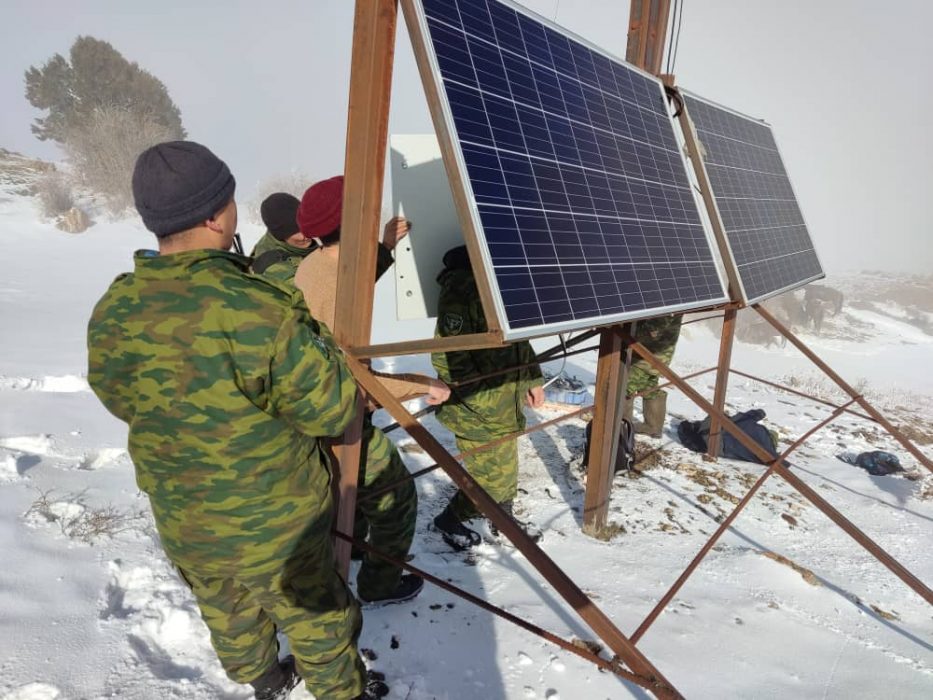
Then the local population, and in particular, the Internet community should pick up the idea. I will focus on the things that our online community does in order to address the designated opportunities. We are currently implementing a project called Ilim Box. Let me remind you that earlier the Ministry of Education of the Kyrgyz Republic took measures to provide all schools of the Republic with network access. The department was able to organize the connection of all schools, except twenty, which are located in the most remote, mountainous areas of the country.

We regard this as a challenge for our community, and before a full-fledged Internet is held, we decided to come to these children with a “box of knowledge”. Such a device allows you to access all educational resources without an Internet connection. Children and schoolchildren will be able to use educational content without going online, because somewhere in the country there are still no funds to access the network.

As for usability, at the second stage of the project, we are already developing Ilim Box 2.0. This is an educational portal where all the necessary data on the field, now relevant in the Kyrgyz Republic, were collected. We did it in a more friendly format than it usually happens with educational platforms, because it is difficult to keep children’s attention when there is competition with YouTube and entertainment portals.

Therefore, educational digital resources should be interactive and accessible to young children. However, digitalization as a whole brings various challenges that we must address both at the country level and at the level of the Eurasian Economic Community. The first challenge associated with digitalization is the protection of personal data. During the first wave of the pandemic, there were several cases when private data of citizens fell into open access.

The second aspect is the legal field. In our country, the implementation of many things could be facilitated if the right laws and regulations were developed. For example, local residents of remote areas can collect resources, money, and specialists can provide people with knowledge. However, they still need to get various licenses, access to radio frequencies, which is almost impossible for a rural resident.

If the government facilitates these conditions, then digitalization in its general sense for residents of the most remote regions will be much faster, easier and cheaper. Another aspect is the sharing of infrastructure. When a new road is being laid, it may be excavated again in a few weeks or months to lay some kind of pipe. In this regard, it would be possible to develop rules for the use of infrastructure. If a road is being built, an Internet cable and other communication should be laid there at the same time – this will facilitate the work, shorten the time.

The third challenge is digital skills. The goal of digitalization is to connect the very last mile, the most final user. In addition to connectivity, it is important to help the residents of the countries get digital skills so that users can work effectively on the network.

The event was held within the framework of the international information and educational project “Eurasian Bridge”.

School Connectivity

This project provides accessible internet for remote schools in Kyrgyzstan. Many students and teachers suffer from insufficient internet in their schools. As a result, they cannot watch educational materials, connect with friends. Furthermore, during the pandemic, these students and teachers could not study and teach. The team of isoc chapter Kyrgyzstan focuses on providing internet for schools and educational institutes in remote areas.

Sanarip Insan – Digital Citizen

“Sanarip Insan” is a project to educate people on digital skills. The main goal of the project is to teach citizens digital literacy skills such as usage of Google platforms, creation of email, or digital security on the internet. The target audience is women and youth. It teaches citizens digital skills, which are now firmly entrenched in daily living. Our potential audiences start basic technological education at first, continually improving learning techniques to support their personal and career growth. “Sanarip Insan” (“Digital Citizen”) is funded by the European Union. 


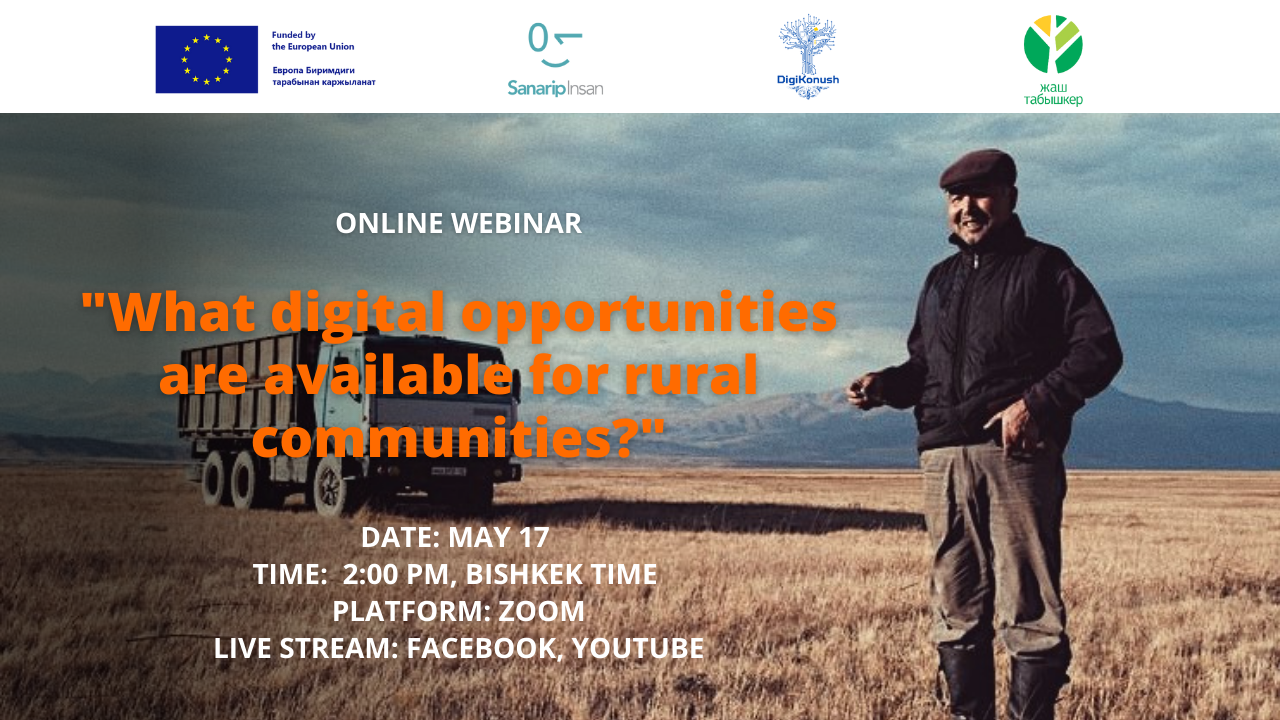
What digital opportunities are available for rural communities?

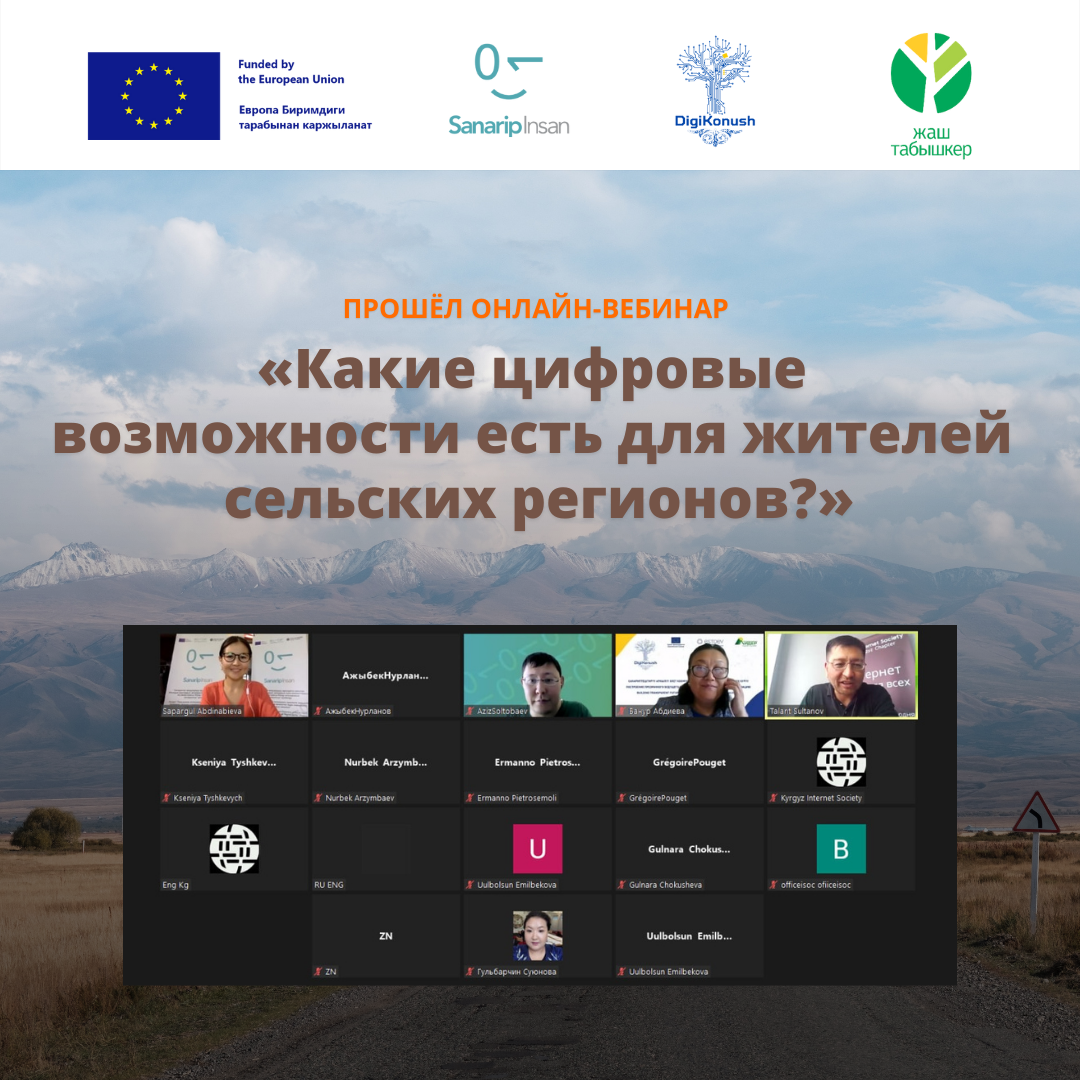
In honor of “Europe Day” on May 9 and “World Telecommunication and Information Society Day” on May 17, the Kyrgyz Internet Society hosted a webinar entitled “What are the digital opportunities for rural residents?” The webinar was attended by leaders of several EU-funded projects in Kyrgyzstan that provided information technology opportunities and grant support to […]


What digital opportunities are available for rural communities?

To celebrate the Europe Day (9 May) and the World Telecommunication and Information Society Day (17 May), the Kyrgyz Internet Society will host a webinar “What digital opportunities are available for rural communities?” The webinar will bring together leaders of several EU-funded and EU-related projects in the Kyrgyz Republic to inform youth, women and migrants […]


Roundtable on ‘Improving the Employment Potential of Rural Youth, Women and Migrants through Digital Skills Development’. Launch of the Sanarip Insan project

On 31 March 2022, a forum on “Promoting Equal Economic Opportunities and Resilience of Youth” was held at the Park Hotel Conference Hall, where the Sanarip Insan Project was launched. The round table was held in a hybrid format, with more than 80 guests from the public and private sectors attending offline and international partners […]