
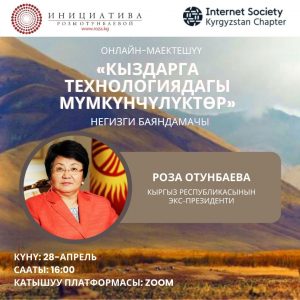
«Кыздарга технологиядагы мүмкүнчүлүктөр» онлайн-маектешүүсү

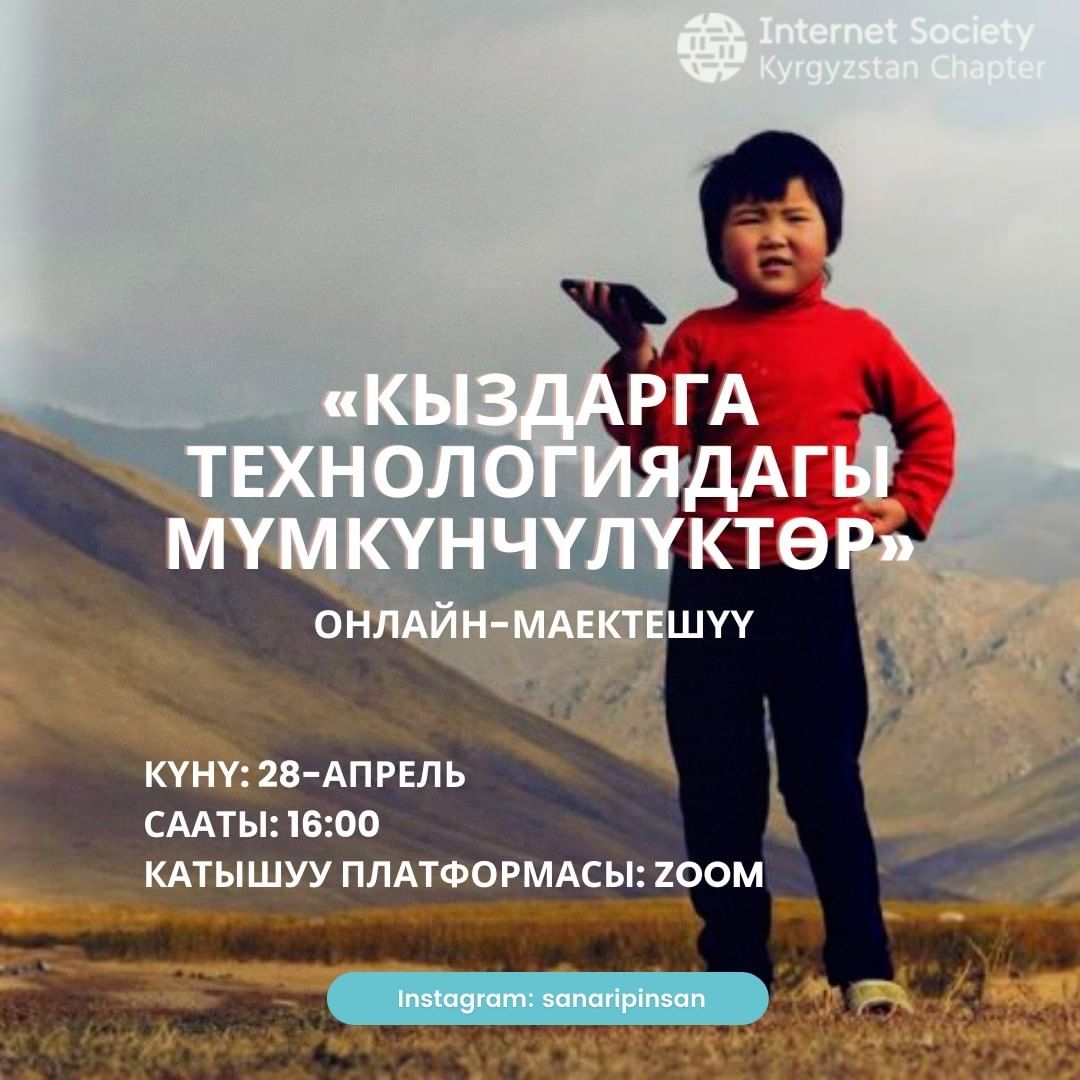
«Кыздарга технологиядагы мүмкүнчүлүктөр» онлайн-маектешүүсү

Күнү: 28-апрель

Сааты: 16:00

Катышуу шилтемеси: https://us06web.zoom.us/j/88516164405pwd=anBlZFNwWm5zNGhLM29QQjhyamxLZz09

Youtube: https://youtu.be/Xvt7Gd-SnBg 
Facebook: https://fb.watch/cG2PkgRuU8/

28-апрель эл аралык “Маалыматтык-байланыш технологиясындагы кыздар” күнүнүн урматына карата Санариптик Трансформациядагы айымдар, Кыргыз Интернет коому жана “Роза Отунбаеванын демилгелери” эл аралык коомдук фонду биргеликте онлайн-маектешүү өткөрөт. «Кыздарга технологиялык мүмкүнчүлүктөр» деген аталыштагы онлайн-маектешүүнүн максаты, кыздарды, өзгөчө алыска айыл-аймактардагы кыз-келиндерди окууга жана технологиялык билим алууга шыктандыруу болуп саналат. Анда эл аралык жана жергиликтүү эксперттер жана ийгиликтүү айымдар өз тажрыйбаларын бөлүшүп, Борбор Азиядагы мүмкүнчүлүктөр тууралуу айтып берет. Онлайн-маек бей-расмий форматта өтөт, ага өлкөнүн бардык булуң-бурчунан кыз-келиндер Zoom  аркылуу катышса болот.

Программасы

  • Уюштуруучулар: Санариптик Трансформациядагы Айымдар эл аралык уюму, Кыргыз Интернет Коому жана “Роза Отунбаеванын демилгелери” эл аралык коомдук фонду
  • Алып баруучу: Екатерина Громова, Талант Султанов
16:00 Ачылышы. Саламдашуу сөз

  • Роза Отунбаева, “Роза Отунбаеванын демилгелери” эл аралык коомдук фондунун негиздөөчүсү, экс-президент
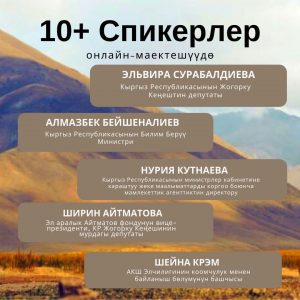
  • Эльвира Сурабалдиева, Кыргыз Республикасынын Жогорку Кеңешинин депутаты
  • Алмазбек Бейшеналиев, Кыргыз Республикасынын билим берүү министри
  • Нурия Кутнаева, Кыргыз Республикасынын Министрлер Кабинетине караштуу Жеке маалыматтарды коргоо боюнча мамлекеттик агенттиктин директору
16:30 Ташкент-Бишкек «КМШ аймагындагы МКТдагы кыздар» телекөпүрөсү

  • Наталья Мочу, КМШ региону боюнча ITU аймактык директору
  • Екатерина Громова, Санариптик Трансформациядагы Айымдар уюмунун негиздөөчүсү

16:45 Баяндамалар “Борбордук Азиядагы айымдар жана кыздар үчүн МКТнын мүмкүнчүлүктөрү”

  • Шайна Крам, АКШ элчилигинин коомчулук менен байланыш бөлүмүнүн башчысы
  • Ширин Айтматова, Эл аралык Айтматов фондунун вице-президенти, КР Жогорку Кеңешинин мурдагы депутаты
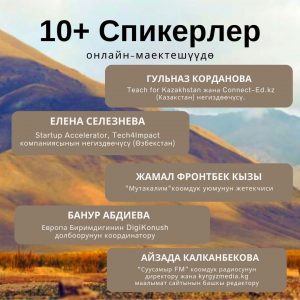
  • Гүлназ Корданова, Teach for Kazakhstan жана Connect-Ed.kz (Казакстан) негиздөөчүсү.
  • Елена Селезнева, Startup Accelerator, Tech4Impact компаниясынын негиздөөчүсү (Өзбекстан)
  • Жамал Фронтбек кызы, “Мутакалим” коомдук уюмунун жетекчиси
  • Банур Абдиева, Европа Биримдигинин DigiKonush долбоорунун координатору
  • Айзада Калканбекова, “Суусамыр FM” коомдук радиосунун директору жана kyrgyzmedia.kg маалымат сайтынын башкы редактору
  • Айдана Омурбаева, Relativity LLC компаниясынын DevOps инженери, IT Инфлюенсер
  • Айпери Ногойбаева, Кыргыз программалык камсыздоону жана кызмат көрсөтүүлөрдү иштеп чыгуучулар ассоциациясынын директорунун орун басары
  • Айпери Бозоева, “Санарип Тазалык” санариптик гигиена долбоорунун эксперти
  • Сапаргүл Абдинабиева, Европа Биримдигинин “Санарип Инсан” долбоорунун медиа эксперти
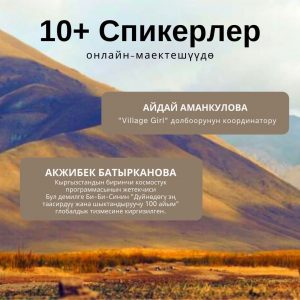
  • Айдай Аманкулова, Village Girl долбоорунун координатору
  • Кызжибек Батырканова, Кыргызстандын биринчи космостук программасынын жетекчиси.         Бул демилге Би-Би-Синин “Дүйнөдөгү эң таасирдүү жана шыктандыруучу 100 айым” глобалдык тизмесине киргизилген.

Талкулоо жана жыйынтыктоо. Конкурс
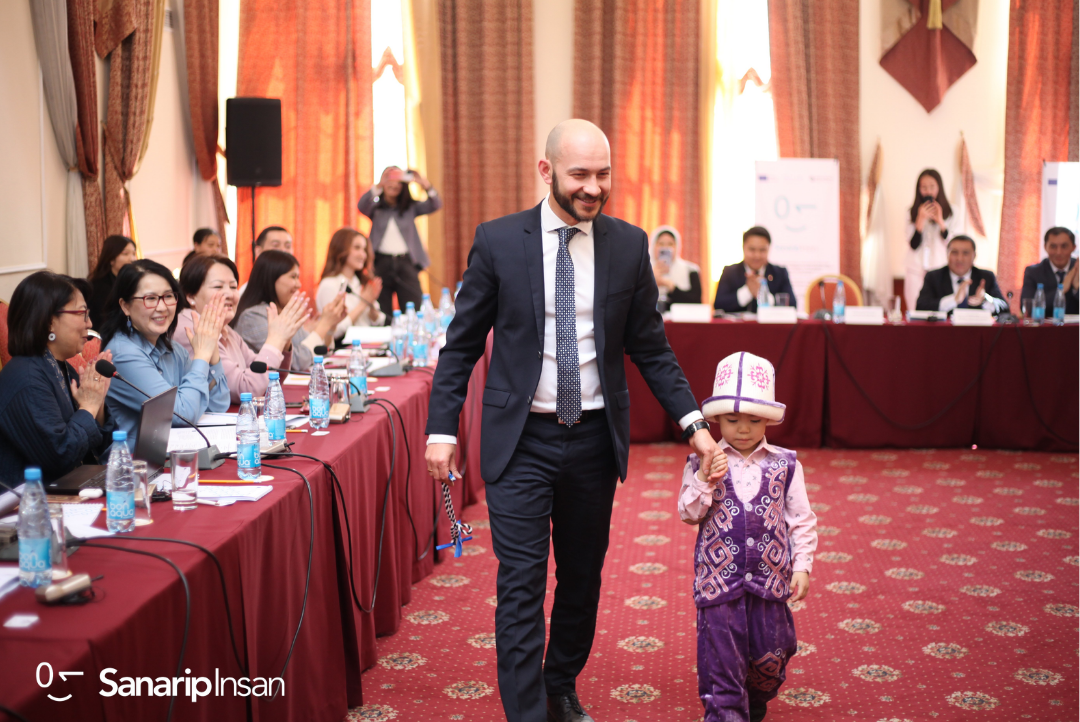
“Санариптик көндүмдөрдү жогорулатуу аркылуу айылдык жаштардын, аялдардын жана мигранттардын иш менен камсыз болуу потенциалын жогорулатуу” тегерек столу. Санарип Инсан долбоорунун бет ачары

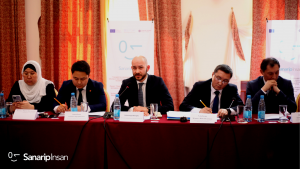
2022-жылдын 31-мартында Бишкек шаарындагы «Парк Отель» мейманканасында «Бирдей экономикалык мүмкүнчүлүктөрдү жана жаштардын туруктуулугун илгерилетүү» форуму менен бирге «Санарип Инсан» долбоорунун ачылыш аземи өттү. Тегерек стол гибриддик форматта өтүп, 80ден ашык мамлекеттик жана жеке сектордун кызматкерлери оффлайн катышса, чет өлкөлүк өнөктөштүрүбүз жана айыл-аймактардагы жарандарыбыз онлайн катышты. 

«Санарип Инсан» долбоору аялдардын, жаштардын, мигранттардын жана коомдун аярлуу катмарынын санариптик сабаттуулугун жогорулатууга, талап кылынган кесиптерге үйрөтүүгө багытталган. Ошондой эле, маалымат кантип издөө, санариптик платформаларды колдоно билүү, социалдык баракчалардагы функцияларды колдонуу, эсептик операцияларды жүргүзүү, онлайн соода кылуу жана ишкердик жасоодо маалыматтык технологияларды колдонууга үйрөтөт. Долбоор 100 000 жаранды камтууну пландап жатат.

«Санарип Инсан» долбоору Европа Коңшулук Кеңеши менен «Кыргыз Интернет Коому» (Айсок) бирикмеси тарабынан ишке ашырылып жатат. Аны Европа Биримдиги каржылоодо.

Видео отчет          Сүрөттөр          Презентациялар

Пост-релиз           Программа             Пресс-релиз

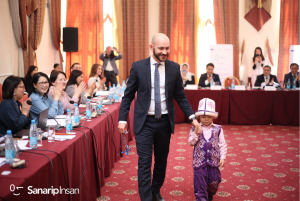
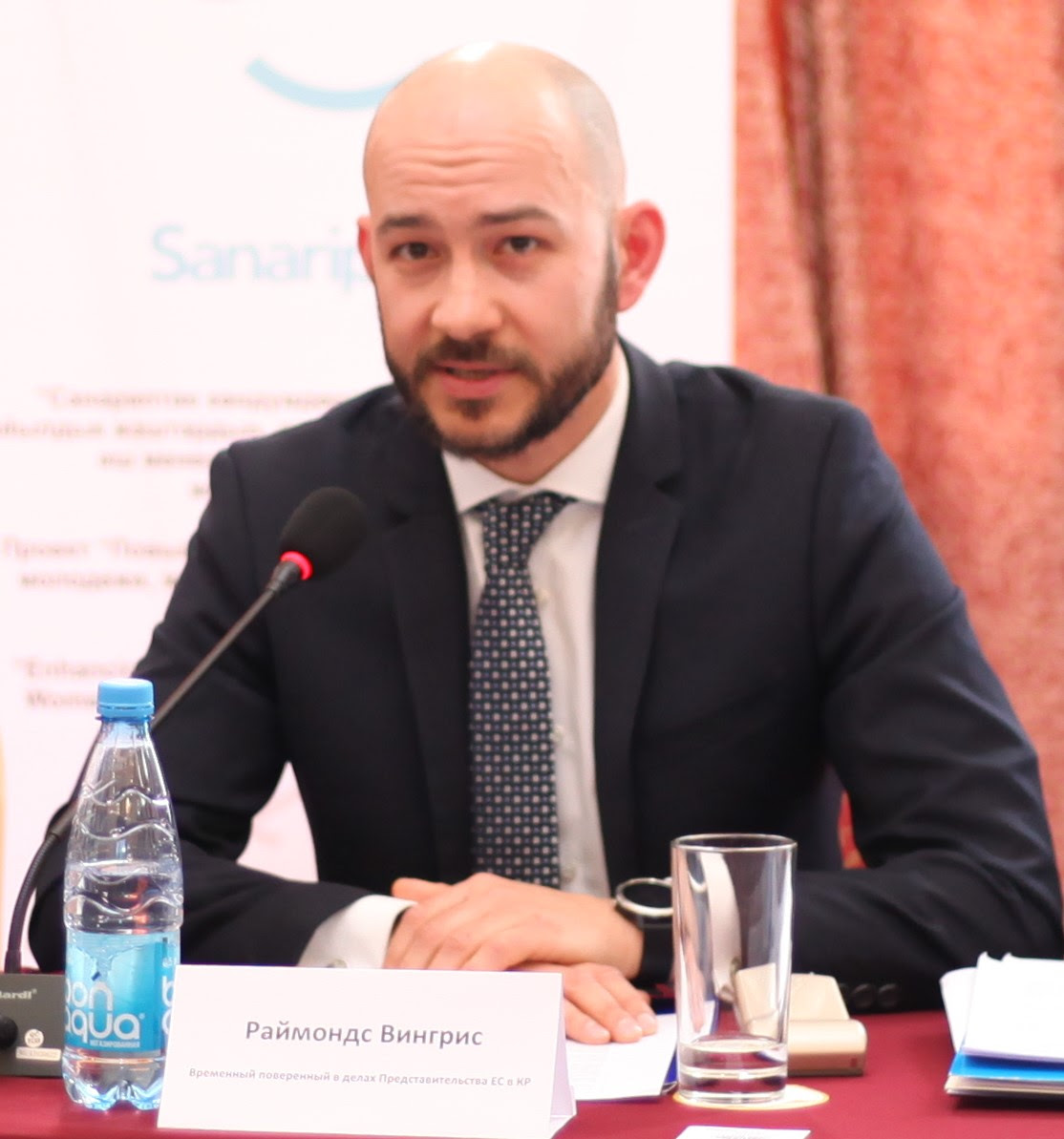
Тегерек стол жумуштук конференция жана кыргыздын улуттук салты менен коштолду. Форумдун башталышында алты жаштагы манасчы «Манастан» бир нече үзүндү айтып берди. Андан соң, Европа Биримдигинин Кыргыз Республикасындагы өкүлчүлүгүнүн убактылуу ишенимдүү өкүлү Раймондс Вингрис кичинекей манасчыны кыргыздын салты боюнча «тушоосун кести.

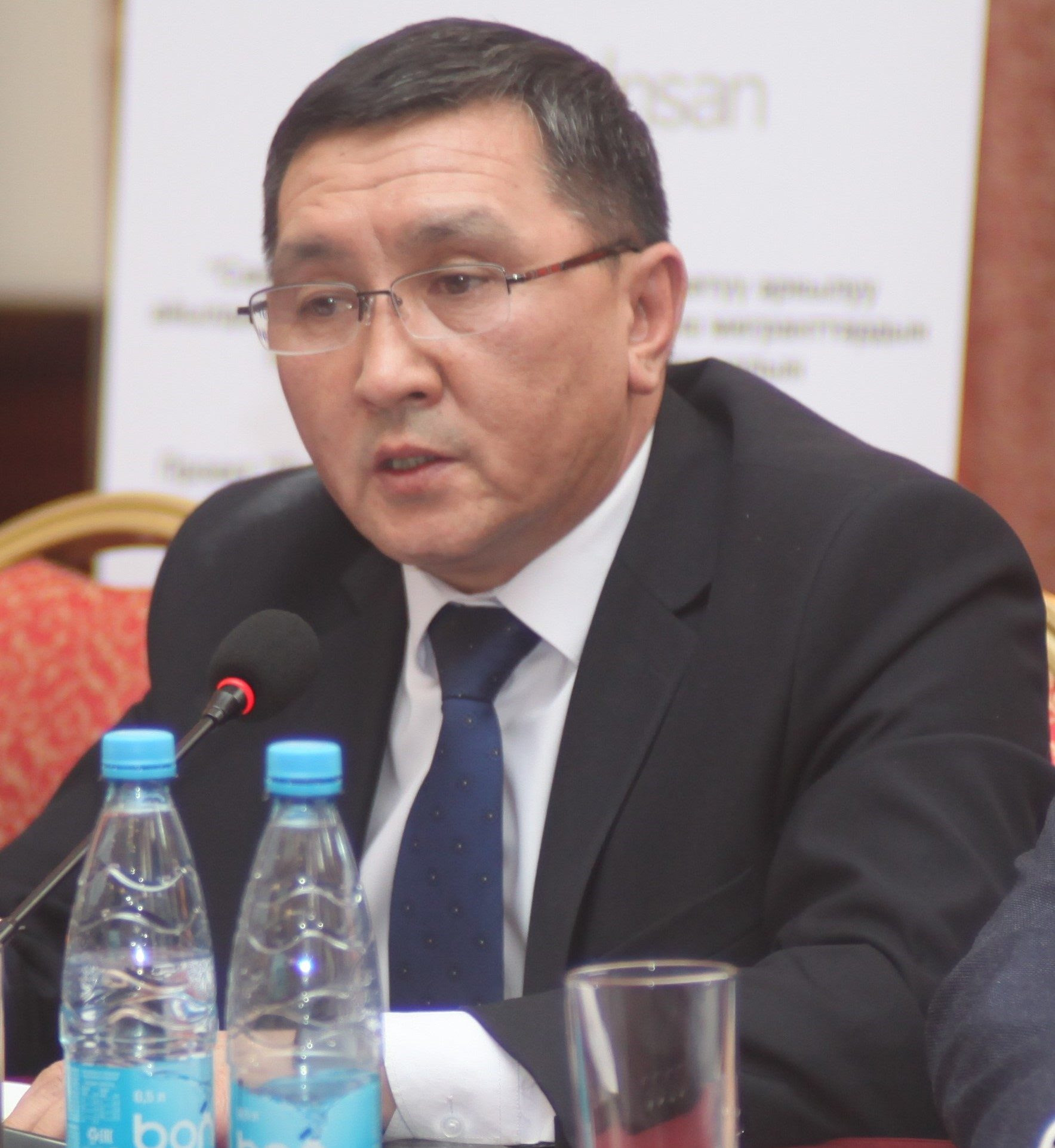
Кыргыз Республикасынын Маданият, маалымат, спорт жана жаштар саясаты министринин орун басары Союзбек Надырбеков «Санарип Инсан» долбоорунун бардык аспектилери менен таанышып чыгып, өлкө калкынын санариптик сабаттуулугун жогорулатуу үчүн кызматашууга абдан кызыкдар экенин билдирди. 

Кыргыз Республикасынын эмгек, социалдык камсыздоо жана миграция министринин орун басары Нурдөөлөт Базарбаев санариптик сабаттуулук келечекте жарандарга өз мекенинде туруп эле чет өлкөлүк компаниялардан санариптик тейлөөлөрдү импорттоого мүмкүнчүлүк берет деди.

Кыргыз Республикасынын билим берүү жана илим министринин орун басары Уланбек Мамбетакунов да «Санарип Инсан» долбоору менен кызматтушууга даяр экенин айтып, калктын санариптик билимин жогорулатып, туруктуу өнүктүрүүгө кызыкдар экенин баса белгиледи. «Биз жакырчылыкты жоюуга, сапаттуу билим берүүгө жана санариптик көндүмдөр аркылуу туруктуу өнүгүүгө маани беришибиз керек. Билим берүү министрлиги менен бирге бир нече министрликтер жарандардын санариптик көндүмдөрүнө, маалыматтык сабаттуулугуна абдан көп күч-аракет жумшап жатат. Баарыңыздарга маалым болгондой, учурда жалпы башталгыч билим берүүгө мамлекеттик билим берүү стандарттарына ылайык долбоор даярдалып жатат. Ал жерде санариптик көндүмдөрдүн калыптануусу жана жашыл экономика тууралуу билим берүү тапшырмасы бар.

Ошондой эле, форумга интернеттин негиздөөчүсү жана Google дун вице-президенти Винтон Серф да каташып, ал потенцияалдуу калкка ээ болуу үчүн коомдун аярлуу катмарын санариптик көндүмдөргө үйрөтүү зарылдыгын айтып өттү.

Долбоордун координатору жана Европалык Коңшулук Кеңешинин (European Neighborhood Councils – ENC) изилдөөчүсү Мария Бевза «Санарип Инсан» долбоорун ишке ашыруу жолдору тууралуу сөз сүйлөп, долбоор белгиленген максатка ылайык 2 жыл аралыгында ишке ашарын кошумчалады.

Раймондс Вингрис

Европа Биримдигинин
Кыргыз Республикасындагы өкүлчүлүгүнүн убактылуу ишенимдүү өкүлү

Нурдоолот Базарбаев

Кыргыз Республикасынын эмгек, социалдык камсыздоо жана миграция министринин орун басары

Уланбек Мамбетакунов

Кыргыз Республикасынын билим берүү жана илим министринин орун басары

Союзбек Надырбеков

Кыргыз Республикасынын Маданият, маалымат, спорт жана жаштар саясаты министринин орун басары

Мария Бевза

Долбоордун координатору жана Европалык Коңшулук Кеңешинин (European Neighborhood Councils – ENC) изилдөөчүсү

Винтон Серф

Интернеттин негиздөөчүлөрүнүн бири жана Google компаниясынын вице-президенти

Жаштардын жана аялдардын коомдук бирикмелернен, атап айтканда SheStarts, Мутакалим, Открытая Линиядан дагы өкүлдөр катышты. Алар өз сөзүндө экономикалык мүмкүнчүлүктөрдүн теңдигин алдыга сүрөө жана аялдардын жана жаштардын туруктуулугун илгерилетүү мүмкүнчүлүктөрү тууралуу ой бөлүштү.

Форум «Санарип Инсан» долбоорунун ачылуу аземи менен коштолуп, мамлекеттик органдардын өкүлдөрү, маалымат каражаттары жана бенефициарлар катышты. Алар Кыргыз Республикасынын калкын максималдуу алдыга жылдырууда алардын санариптик сабаттуулуктарын жогорулатуу багытында иштешүүгө келишти.

<iframe width=”560″ height=”315″ src=”https://www.youtube.com/embed/vWF1Ss7n12Q” title=”YouTube video player” frameborder=”0″ allow=”accelerometer; autoplay; clipboard-write; encrypted-media; gyroscope; picture-in-picture” allowfullscreen></iframe>

Учурдан пайдаланып, иш-чарага катышканыңыз жана жалпы максаттарга жетүү үчүн кызматташууга кызыкканыңыз үчүн ыраазычылык билдиребиз.
Убакыттыңыз, ресурстарга жана көңүл бурганыңыз үчүн рахмат!
Биз сиздин пикириңизди социалдык баракчаларда алууга кубанычта болобуз.
World Email In Fb Ig Yt Whatsapp Telegram


Долбоор боюнча кошумча маалыматты төмөнкү телефон аркылуу алса болот:
+996 755 330 335 жана e-mail:  [email protected]

«Бул <веб сайт/кат> Европа Биримдигинин каржылык колдоосу менен даярдалган. Бул басылманын мазмуну Европалык Коңшулук Кеңешинин (ENC) / “Айсок Кыргызстан Интернет Коому” коомдук бирикмесинин жоопкерчилигинде жана Европа Биримдигинин көз карашын чагылдырбайт.

Launch of the Sanarip Insan project. Forum “Improving the Employment Potential of Rural Youth, Women and Migrants through Improving Digital Skills”.

Date: 31.03.2022
Time: 2pm – 5pm
Location: “Park Hotel Bishkek”, Bishkek, The Kyrgyz Republic

Millions of people face the challenge of finding themselves in the labour market and being in professional demand without fear of losing their job. However, the labour market situation in the Kyrgyz Republic is ambiguous. Traditional jobs are not sufficient for the working-age
population, resulting in high unemployment rates. Increasing digital skills of the population contributes to augmenting the number of jobs and the level of wages. These skills help to equalise living standards in both urban and rural areas. For a smooth transition to a digital economy, Kyrgyzstan needs to transform its training system. This will allow for the rapid and high-quality training of specialists with the competencies most in demand in the labour market.

Due to recent events in the world, migrants have to leave their jobs and return home. It isimpossible to predict what percentage of returnees will be able to find work in their home countries. However, given the experience of the pandemic in 2020, it is safe to say that unemployment in the country will increase. The growth of unemployment, a significant reduction of financial opportunities for the population will aggravate the economic situation in Kyrgyzstan and will affect the standard of living of the majority of the country’s population. In these circumstances, it is necessary to provide opportunities to obtain new in-demand professions for vulnerable groups of the population.

In this regard, one of the priorities of the European Neighbourhood Council together with the Public Association “Kyrgyz Internet Society” (ISOC) is the implementation of the project “Promoting Equal Economic Opportunities and Sustainability for Youth” in the Kyrgyz
Republic “Sanarip Insan” (“Digital Citizen”) with the financial support of the European Union. It envisages new opportunities for developing the digital literacy of the population, providing knowledge of the digital and green economy to young people and women living in rural areas
of the republic, and training a professional digital workforce.

The project aims to increase the digital skills capacity of young migrants, including women, from basic digital literacy to more in-demand digital skills such as information search, use of digital platforms, use of social media functionality, financial transactions, online commerce
and advanced entrepreneurial skills using information technology.

The roundtable “Enhancing the Employment Potential of Rural Youth, Women and Migrants through Digital Skills” aims to present and discuss an ecosystem of human resources and education projects. During the forum, heads of expert areas and project implementers
represented by representatives of the government, development institutions, business and educational structures will summarize the results, discuss the tangible effects of digitalization of education for the population, challenges, and opportunities for including all stakeholders in the implementation of projects.

Also, new challenges for young labour migrants from Kyrgyzstan caused by changes in regional labour markets, information exchange between the participants on the use of best practices and the issue of developing recommendations to support and promote vulnerable groups of young migrants will be discussed. A special focus of the round table will be on the presentation of the Sanarip Insan Project, enhancing the role of Kyrgyz regions in project implementation, sharing best practices and discussing approaches to achieving its indicators. The final outcome of the project activities is the improvement of youth protection indicators on the Sustainable Development and Human Rights Goals. The task to promote and ensure the right to leadership and women’s meaningful
participation in decision-making processes is a key one, acting as both a goal and a means to achieve the SDGs.

‘This webpage was created and maintained with the financial support of the European Union. Its contents are the sole responsibility of the European Neighbourhood Council (ENC) / Public Association “Internet Society Kyrgyzstan Chapter” and do not necessarily reflect the views of the European Union’.


The problem of digital inequality during a pandemic

Chairman of the Kyrgyz Internet Society (ISOC) Talant Sultanov told how the pandemic affected digitalization in Kyrgyzstan during the round table: “The pandemic of digitalization. How the coronavirus has affected business”

The pandemic tested the EAEU countries in difficult conditions to what extent they were ready to respond to challenges, including digital ones. Kyrgyzstan, it seemed to me, was better prepared than it could have been expected. This happened because the digital agenda has been a priority for the country for several years.

The topic itself began to develop in 2017-2018 with the program “Taza koom” (clean society) and transformed into the program “Digital Kyrgyzstan”. The negative effects of the pandemic were felt by both states and businesses. However, the activation of digital technologies in parallel has opened up three possibilities for reducing digital inequality: the possibility of access, use, and maintenance. How were they used in the Kyrgyz Republic?

The first initial one is the possibility of access. Although many people had to go into quarantine, not all remote work was set up, access to the network was configured. Even if there was an Internet connection, there was no way to access devices – computers, smartphones.

Moreover, civil servants who went to remote work could not fully function, and therefore they still came to their workplaces to put signatures on paper. There are few positive effects here.

The second possibility is the possibility of convenient use. Even if users have the Internet, there is a device at home through which they can access the Internet, then how convenient were the services and applications that were developed during the pandemic? An interesting aspect is how usability has allowed the government to become closer to citizens. We now have senior officials conducting surveys via social networks about what policies to pursue or not to pursue. This is an indicator of how flat the government is becoming, the hierarchy is disappearing.

The third possibility is the possibility of maintaining and continuing all these initiatives. When the pandemic began, many online services were launched. However, if we try to check their relevance today, many sites have simply stopped functioning. All these three possibilities so far only show how digital inequality is becoming even wider and deeper. And in order to reduce this digital gap, it is necessary to take urgent measures. Here, the private sector and business in general in the country play an important role. But business stops where there is no profitability, profit. Then the state picks up, but the state also has a certain budget, beyond which it cannot go. At the moment, the government is implementing the Digital Central Asia – South Asia project, which plans to connect every locality in the country to broadband high-speed Internet.

Then the local population, and in particular, the Internet community should pick up the idea. I will focus on the things that our online community does in order to address the designated opportunities. We are currently implementing a project called Ilim Box. Let me remind you that earlier the Ministry of Education of the Kyrgyz Republic took measures to provide all schools of the Republic with network access. The department was able to organize the connection of all schools, except twenty, which are located in the most remote, mountainous areas of the country.

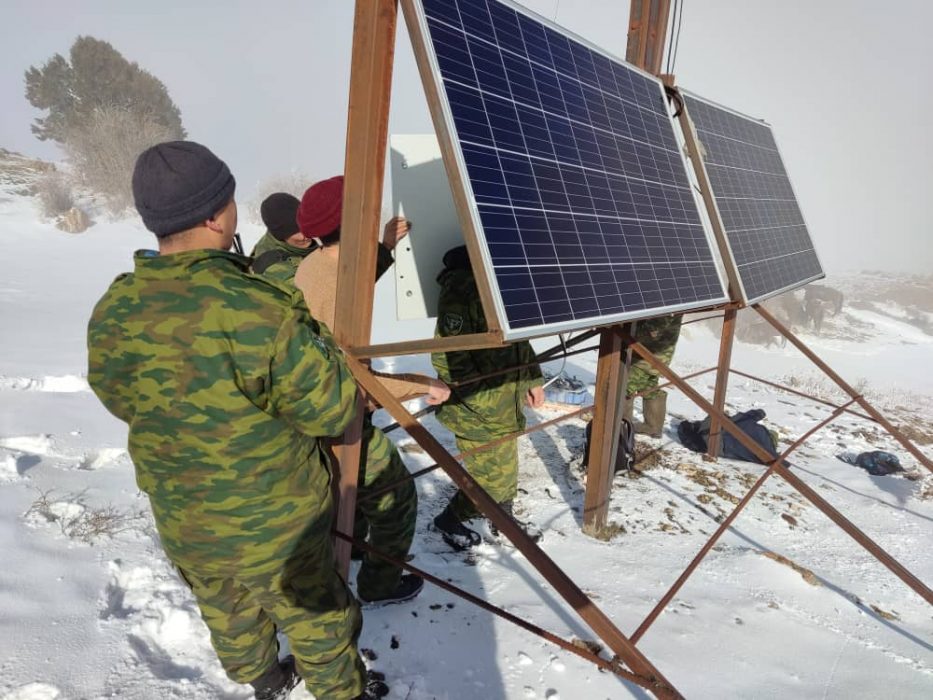
We regard this as a challenge for our community, and before a full-fledged Internet is held, we decided to come to these children with a “box of knowledge”. Such a device allows you to access all educational resources without an Internet connection. Children and schoolchildren will be able to use educational content without going online, because somewhere in the country there are still no funds to access the network.

As for usability, at the second stage of the project, we are already developing Ilim Box 2.0. This is an educational portal where all the necessary data on the field, now relevant in the Kyrgyz Republic, were collected. We did it in a more friendly format than it usually happens with educational platforms, because it is difficult to keep children’s attention when there is competition with YouTube and entertainment portals.

Therefore, educational digital resources should be interactive and accessible to young children. However, digitalization as a whole brings various challenges that we must address both at the country level and at the level of the Eurasian Economic Community. The first challenge associated with digitalization is the protection of personal data. During the first wave of the pandemic, there were several cases when private data of citizens fell into open access.

The second aspect is the legal field. In our country, the implementation of many things could be facilitated if the right laws and regulations were developed. For example, local residents of remote areas can collect resources, money, and specialists can provide people with knowledge. However, they still need to get various licenses, access to radio frequencies, which is almost impossible for a rural resident.

If the government facilitates these conditions, then digitalization in its general sense for residents of the most remote regions will be much faster, easier and cheaper. Another aspect is the sharing of infrastructure. When a new road is being laid, it may be excavated again in a few weeks or months to lay some kind of pipe. In this regard, it would be possible to develop rules for the use of infrastructure. If a road is being built, an Internet cable and other communication should be laid there at the same time – this will facilitate the work, shorten the time.

The third challenge is digital skills. The goal of digitalization is to connect the very last mile, the most final user. In addition to connectivity, it is important to help the residents of the countries get digital skills so that users can work effectively on the network.

The event was held within the framework of the international information and educational project “Eurasian Bridge”.

School Connectivity

This project provides accessible internet for remote schools in Kyrgyzstan. Many students and teachers suffer from insufficient internet in their schools. As a result, they cannot watch educational materials, connect with friends. Furthermore, during the pandemic, these students and teachers could not study and teach. The team of isoc chapter Kyrgyzstan focuses on providing internet for schools and educational institutes in remote areas.

Sanarip Insan – Digital Citizen

“Sanarip Insan” is a project to educate people on digital skills. The main goal of the project is to teach citizens digital literacy skills such as usage of Google platforms, creation of email, or digital security on the internet. The target audience is women and youth. It teaches citizens digital skills, which are now firmly entrenched in daily living. Our potential audiences start basic technological education at first, continually improving learning techniques to support their personal and career growth. “Sanarip Insan” (“Digital Citizen”) is funded by the European Union. 


What digital opportunities are available for rural communities?

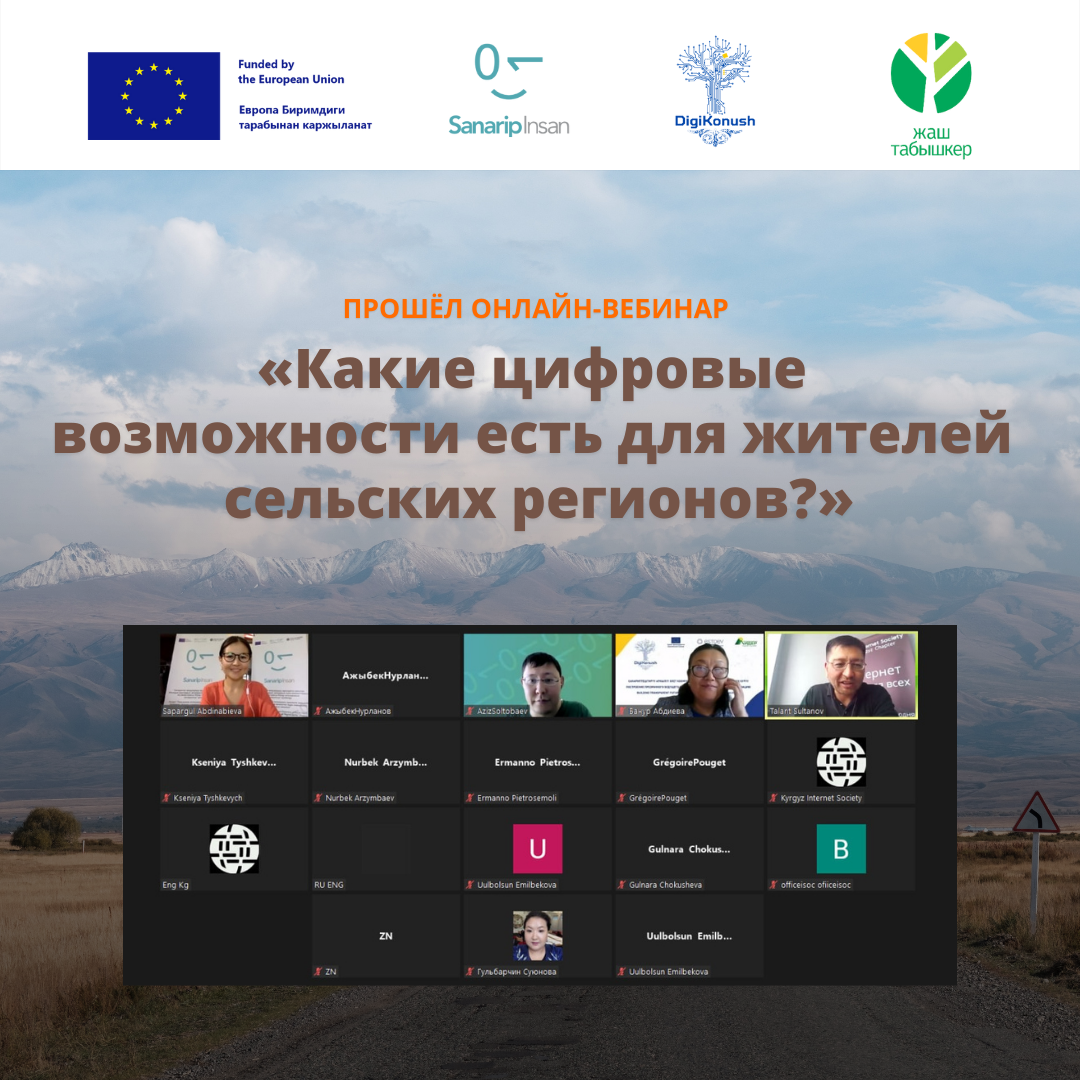
In honor of “Europe Day” on May 9 and “World Telecommunication and Information Society Day” on May 17, the Kyrgyz Internet Society hosted a webinar entitled “What are the digital opportunities for rural residents?” The webinar was attended by leaders of several EU-funded projects in Kyrgyzstan that provided information technology opportunities and grant support to […]


What digital opportunities are available for rural communities?

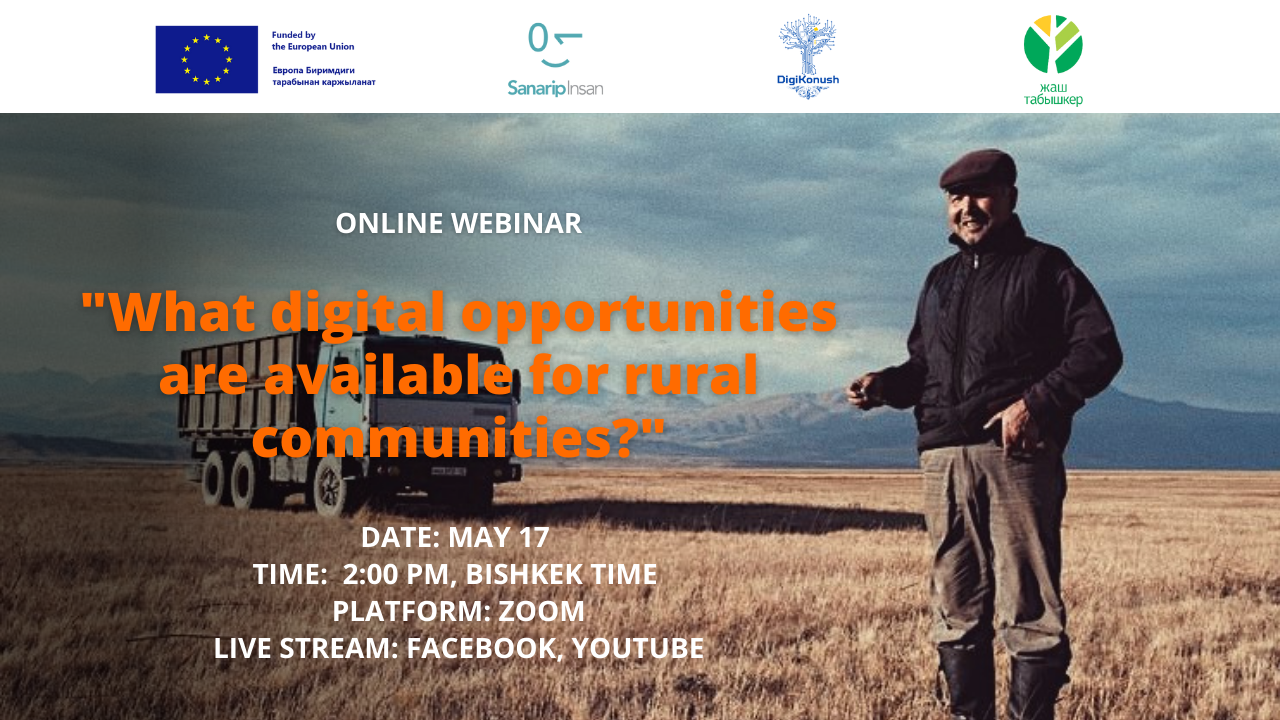
To celebrate the Europe Day (9 May) and the World Telecommunication and Information Society Day (17 May), the Kyrgyz Internet Society will host a webinar “What digital opportunities are available for rural communities?” The webinar will bring together leaders of several EU-funded and EU-related projects in the Kyrgyz Republic to inform youth, women and migrants […]


Roundtable on ‘Improving the Employment Potential of Rural Youth, Women and Migrants through Digital Skills Development’. Launch of the Sanarip Insan project

On 31 March 2022, a forum on “Promoting Equal Economic Opportunities and Resilience of Youth” was held at the Park Hotel Conference Hall, where the Sanarip Insan Project was launched. The round table was held in a hybrid format, with more than 80 guests from the public and private sectors attending offline and international partners […]