«Кыздарга технологиядагы мүмкүнчүлүктөр» онлайн-маектешүүсү

«Кыздарга технологиядагы мүмкүнчүлүктөрү» онлайн-маектешүүсү

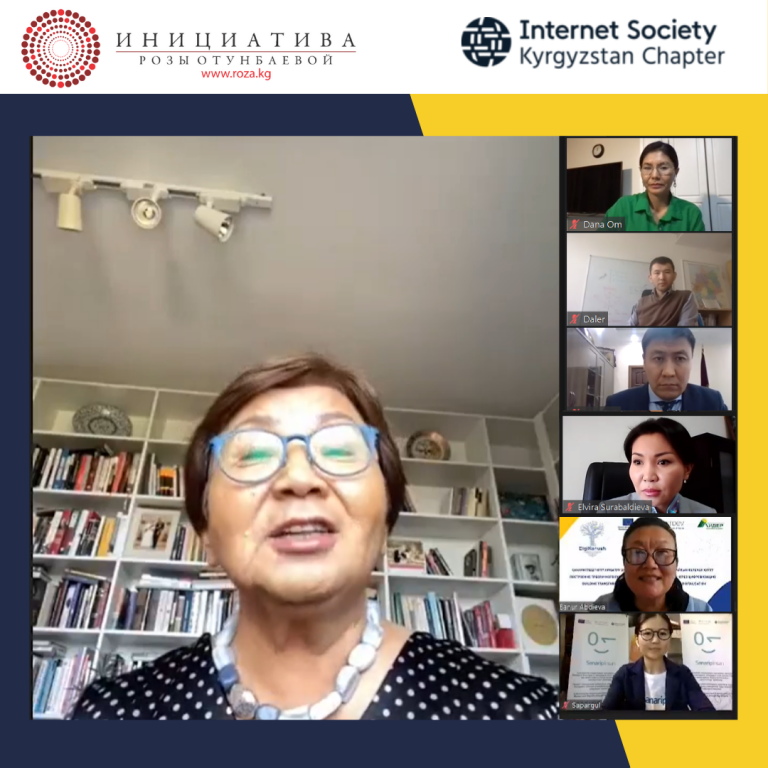
28-апрель эл аралык “Маалыматтык-байланыш технологиясындагы кыздар” күнүнүн урматына карата Санариптик Трансформациядагы айымдар, «Р. Отунбаеванын демилгелери» коомдук эл аралык фонду жана Кыргыз Интернет коому биргеликте онлайн-маектешүү өткөрдү. Анда эл аралык жана жергиликтүү эксперттер жана ийгиликтүү айымдар өз тажрыйбаларын бөлүшүп, кыздар үчүн технологиядагы мүмкүнчүлүктөр тууралуу айтып беришти.

Онлайн-маектешүүнүн негизги баяндамачысы КРнын экс-президенти Роза Исаковна Отунбаева болду. Ал өз сөзүндө кыздардын технологиядагы мүмкүнчүлүктөрү чексиз деп айтты:

«Кыздарга технологиядагы мүмкүнчүлүктөр» деген видео-конференция республикалык деңгээлде биринчи жолу өтүп жатканына кубанычтамын. Биздин фонд 2013-жылдан баштап эле кыздар маалыматтык-технологиялык илим алсын деген демилген менен келе жатабыз. Соңку 2 жылдан бери STEM программабыз жүрүүдө. Анын алкагында Бишкек жана Ош шаарларында 2000ден ашуун окуучу кыздарга 193 адис менторлук кылып, окутуп чыгарды. Ал дагы деле уланып жатат. Бир нече донорлорлук уюмдар, мекемелер бизге жардам берип жатат. «Кыргыз Интернет коомун» дагы Европа Биримдиги колдоп, чогуу иш алып жаратасыздар. Ушундай эле нукта баарыбыз туш-туштан аракет кыла берсек дың жерлерди көтөрүп жаткан болобуз. Анткени технологиялык билимдерсиз биз 21-кылымды багындыра албайбыз»,- деди экс-президент Роза Отунбаева.

Ал эми ЖК депутаты Элвирва Сурабалдиева да сөз сүйлөп, ал кыздардын маалыматтык-технологиялык билим алуусу өтө маанилүү экенин жана кыз-келиндердин таламын парламентте коргоп келе жатканын билдирди. 

Кийинки баяндамачы КРнын Билим берүү жана илим министри А.Бейшеналиев сөз сүйлөп, буларга токтолду:

«Балдардын информациялык-технологиялык билим алуусунун негизги булагы катары биз азыр приоритетти так илимдерден сабак берген мугалимдерге коюп жатабыз. Президентибиздин соңку жарлыгына ылайык, табигый так илимдерден сабак берген мугалимдердин айлык акысы башка мугалимдерге караганда 20% га көтөрүлдү».

Кийинки онлайн талкуунун спикери Кыргыз Республикасынын Министрлер Кабинетине караштуу “Жеке маалыматтарды коргоо боюнча мамлекеттик агенттигинин” директору Нурия Кутнаева болуп, ал өз сөзүндө:

“Биз баарыбыз МКТ идеясын, санариптештирүү жана бул аймактарга кирүүгө жардам берип жайылтышыбыз керек”,- деп белгиледи. Ошондой эле ал бир нече кыздарга санариптик көндүмдөрдү, санариптик коопсуздукту жана МКТ тармагындагы карьералык багытты үйрөткөн насаатчылык программасы менен бөлүштү.

«Кыздарга технологиядагы мүмкүнчүлүктөр» деген аталыштагы онлайн-маектешүүсүнө расмийлерден сырткары бир нече эл аралык жана жергиликтүү эскперттер катышты.

Онлайн-маек учурунда Ташкент-Бишкек «КМШ аймагындагы МКТдагы кыздар» телекөпүрөсү аркылуу КМШ региону боюнча ITU аймактык директору Наталья Мочу жана «Санариптик Трансформациядагы Айымдар уюмунун» негиздөөчүсү Екатерина Громова байланышка чыгып, бул багыттагы эл аралык тажрыйбалар тууралуу кыскача айтып беришти.

Ал эми “Борбордук Азиядагы айымдар жана кыздар үчүн МКТнын мүмкүнчүлүктөрү тууралуу жергиликтүү эскперттер өз тажрыйбалары боюнча айтып беришти. Алар:

Шайна Крам, АКШ элчилигинин коомчулук менен байланыш бөлүмүнүн башчысы; Эл аралык Айтматов фондунун вице-президенти, КР Жогорку Кеңешинин мурдагы депутаты  Ширин Айтматова; Teach for Kazakhstan жана Connect-Ed.kz (Казакстан) негиздөөчүсү Гүлназ Корданова; Startup Accelerator, Tech4Impact компаниясынын негиздөөчүсү (Өзбекстан) Елена Селезнева; “Мутакалим” коомдук уюмунун жетекчиси Жамал Фронтбек кызы; Европа Биримдигинин DigiKonush долбоорунун координатору Банур Абдиева; “Суусамыр FM” коомдук радиосунун директору жана kyrgyzmedia.kg маалымат сайтынын башкы редактору Айзада Калканбекова; Relativity LLC компаниясынын DevOps инженери IT Инфлюенсер Айдана Омурбаева; Кыргыз программалык камсыздоону жана кызмат көрсөтүүлөрдү иштеп чыгуучулар ассоциациясынын директорунун орун басары Айпери Ногойбаева; “Санарип Тазалык” санариптик гигиена долбоорунун эксперти Айпери Бозоева; Европа Биримдигинин “Санарип Инсан” долбоорунун медиа эксперти Сапаргүл Абдинабиева; Village Girl долбоорунун координатору Айдай Аманкулова жана Кыргызстандын биринчи космостук программасынын жетекчиси Кызжибек Батырканова катышышты.

Онлайн-маектешүүнүн аягында «Кыргыз Интернет коомунун» негиздөөчүлөрүнүн бири Азиз Солтобаев жыйынтыктап, өз сөзүндө кийинки белгиледи: “Бүгүн биз биргелешкен күч-аракет менен чоң натыйжаларга жетишип, кыздардын МКТда гана эмес, жалпы эле илимде да жетишкендик көрсөтө аларыбызды түшүндүк”. 

Ошондой эле «Кыргыз Интернет коомунун» төрагасы Талант Султанов бардык катышуучуларга рахмат айтып, көрүп жаткан кыздарды маалыматтык-технологиялык билим алууга үндөдү.

«Кыздарга технологиядагы мүмкүнчүлүктөр» онлайн-маектешүүсүнүн максаты, кыздарды, өзгөчө алыска айыл-аймактардагы кыз-келиндерди окууга жана технологиялык билим алууга шыктандыруу. Баштапкы эфир Zoom платформасы аркылуу өтсө, ал “Кыргыз Интернет коомунун» Ютубдагы жана Фейсбуктагы расмий баракчаларынын түз чагылдырылып турду.  Ага өлкөнүн бардык булуң-бурчунан:

Zoom аркылуу- 100 киши

Фейсбук аркылуу- 162 киши

Ютуб аркылуу- 145 киши түз көрүп отурду.

Кыздардын шыктандырган маектердин артынан чакан онлайн-сынак уюштурулду. Анда маалыматтык-технология багытында суроолор берилип, жеңүүчүлөргө IT курсуна сертификат, IT  тармагында иштеген адистерге бекер консультациялар жана китеп, блокнот сыяктуу кызыктыруучу белектер ыйгарылды.

<iframe width=”560″ height=”315″ src=”https://www.youtube.com/embed/IGrjxWTmx34″ title=”YouTube video player” frameborder=”0″ allow=”accelerometer; autoplay; clipboard-write; encrypted-media; gyroscope; picture-in-picture” allowfullscreen></iframe>

The problem of digital inequality during a pandemic

Chairman of the Kyrgyz Internet Society (ISOC) Talant Sultanov told how the pandemic affected digitalization in Kyrgyzstan during the round table: “The pandemic of digitalization. How the coronavirus has affected business”

The pandemic tested the EAEU countries in difficult conditions to what extent they were ready to respond to challenges, including digital ones. Kyrgyzstan, it seemed to me, was better prepared than it could have been expected. This happened because the digital agenda has been a priority for the country for several years.

The topic itself began to develop in 2017-2018 with the program “Taza koom” (clean society) and transformed into the program “Digital Kyrgyzstan”. The negative effects of the pandemic were felt by both states and businesses. However, the activation of digital technologies in parallel has opened up three possibilities for reducing digital inequality: the possibility of access, use, and maintenance. How were they used in the Kyrgyz Republic?

The first initial one is the possibility of access. Although many people had to go into quarantine, not all remote work was set up, access to the network was configured. Even if there was an Internet connection, there was no way to access devices – computers, smartphones.

Moreover, civil servants who went to remote work could not fully function, and therefore they still came to their workplaces to put signatures on paper. There are few positive effects here.

The second possibility is the possibility of convenient use. Even if users have the Internet, there is a device at home through which they can access the Internet, then how convenient were the services and applications that were developed during the pandemic? An interesting aspect is how usability has allowed the government to become closer to citizens. We now have senior officials conducting surveys via social networks about what policies to pursue or not to pursue. This is an indicator of how flat the government is becoming, the hierarchy is disappearing.

The third possibility is the possibility of maintaining and continuing all these initiatives. When the pandemic began, many online services were launched. However, if we try to check their relevance today, many sites have simply stopped functioning. All these three possibilities so far only show how digital inequality is becoming even wider and deeper. And in order to reduce this digital gap, it is necessary to take urgent measures. Here, the private sector and business in general in the country play an important role. But business stops where there is no profitability, profit. Then the state picks up, but the state also has a certain budget, beyond which it cannot go. At the moment, the government is implementing the Digital Central Asia – South Asia project, which plans to connect every locality in the country to broadband high-speed Internet.

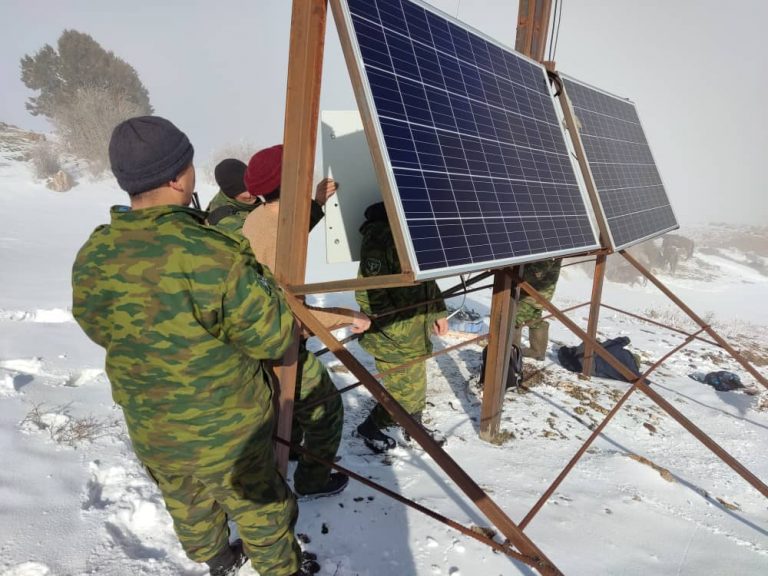
Then the local population, and in particular, the Internet community should pick up the idea. I will focus on the things that our online community does in order to address the designated opportunities. We are currently implementing a project called Ilim Box. Let me remind you that earlier the Ministry of Education of the Kyrgyz Republic took measures to provide all schools of the Republic with network access. The department was able to organize the connection of all schools, except twenty, which are located in the most remote, mountainous areas of the country.

We regard this as a challenge for our community, and before a full-fledged Internet is held, we decided to come to these children with a “box of knowledge”. Such a device allows you to access all educational resources without an Internet connection. Children and schoolchildren will be able to use educational content without going online, because somewhere in the country there are still no funds to access the network.

As for usability, at the second stage of the project, we are already developing Ilim Box 2.0. This is an educational portal where all the necessary data on the field, now relevant in the Kyrgyz Republic, were collected. We did it in a more friendly format than it usually happens with educational platforms, because it is difficult to keep children’s attention when there is competition with YouTube and entertainment portals.

Therefore, educational digital resources should be interactive and accessible to young children. However, digitalization as a whole brings various challenges that we must address both at the country level and at the level of the Eurasian Economic Community. The first challenge associated with digitalization is the protection of personal data. During the first wave of the pandemic, there were several cases when private data of citizens fell into open access.

The second aspect is the legal field. In our country, the implementation of many things could be facilitated if the right laws and regulations were developed. For example, local residents of remote areas can collect resources, money, and specialists can provide people with knowledge. However, they still need to get various licenses, access to radio frequencies, which is almost impossible for a rural resident.

If the government facilitates these conditions, then digitalization in its general sense for residents of the most remote regions will be much faster, easier and cheaper. Another aspect is the sharing of infrastructure. When a new road is being laid, it may be excavated again in a few weeks or months to lay some kind of pipe. In this regard, it would be possible to develop rules for the use of infrastructure. If a road is being built, an Internet cable and other communication should be laid there at the same time – this will facilitate the work, shorten the time.

The third challenge is digital skills. The goal of digitalization is to connect the very last mile, the most final user. In addition to connectivity, it is important to help the residents of the countries get digital skills so that users can work effectively on the network.

The event was held within the framework of the international information and educational project “Eurasian Bridge”.

School Connectivity

This project provides accessible internet for remote schools in Kyrgyzstan. Many students and teachers suffer from insufficient internet in their schools. As a result, they cannot watch educational materials, connect with friends. Furthermore, during the pandemic, these students and teachers could not study and teach. The team of isoc chapter Kyrgyzstan focuses on providing internet for schools and educational institutes in remote areas.

Bringing digital education to remote village schools with Ilimbox

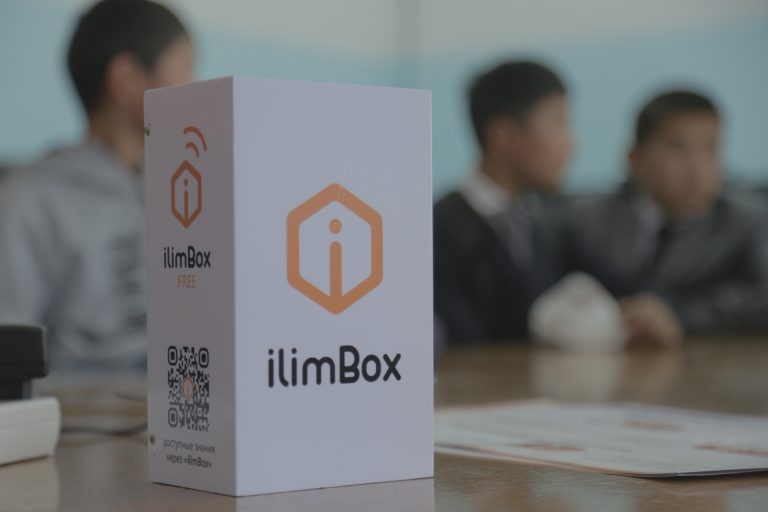
Ilimbox-digital source of knowledge-a product implemented on the basis of Orange Pi in order to provide access to students and teachers of remote secondary schools of the Kyrgyz Republic to textbooks in digital format, Wikipedia and resources of Khan Academy in offline mode.

The Ilimbox project is funded by the Beyond The Net program created by the Internet Society Foundation and AIEF2018. The project is implemented by the Kyrgyz Chapter of the Internet Society ISOC.

About ilimBox and other projects ISOC.KG, you can follow the links:

https://isoc.kg/ilimbox/

https://www.facebook.com/isockg/

Kyrgyzstan has developed a useful alternative to the Internet for schoolchildren

In recent years, the Internet has become increasingly accessible to Kyrgyz people. If about 5 years ago only residents of the capital could afford access to the world wide web, now it is quite a familiar thing for residents of the regions.

The Internet plays an important role in modern education. Problems such as the shortage of school textbooks could be addressed through quality Internet access. Given this fact, the Ministry of education of Kyrgyzstan has carried out a lot of work in this direction and for 2 years connected almost 2 thousand state and municipal schools to the Internet, which is almost 90% of all schools in the country. However, the analysis showed that schoolchildren still do not have access to the world wide web. Fearing that students will be distracted from lessons and use the Internet for other purposes, school authorities do not provide students with access.

Innovative solutions to two pressing problems such as the lack of books and the lack of Internet can be seen in the project digital library for schools and public libraries “Ilim Box”, which contains Wikipedia in Kyrgyz, Russian and English, Khan Academy in English, thousands of video lessons, audio and e-books. All these digital learning materials are available offline, in other words does not need Internet access. Access to Digital libraries will be carried out through smartphones, tablets, computers and any other personal devices with Wi-Fi technology.

“As you know, the Internet has a huge number of educational resources that would help our children to access the most advanced knowledge online. Unfortunately, now a lot of students can not watch educational videos, read online books and use all educational resources. In order to solve this problem, we launched a project Ilimbox”, – said the representative of the Internet community in Kyrgyzstan (ISOC) Talant Sultanov.
The device allows you to access all educational resources without an Internet connection, in other words offline.
“The content that is online, we downloaded to the hard drive, attached a small computer that also acts as a Wi-Fi router. Any user will be able to download the necessary information to your computer or smartphone. What is most important-the user gets access only to educational resources, he will not have access to social networks and other entertainment content”, – explained Talant Sultanov.
It is worth noting that all data is stored in the device itself, and only the power supply and the box itself are needed for connection. The uniqueness of the innovative project is that students can access educational resources at school without an Internet connection.
“This is a very useful device, because on the one hand it provides access to an extensive database of educational materials, and on the other – it does not have entertainment content that would interfere with students during lessons. We are very happy that we had the opportunity to IlimBox and use it for educational purposes”, – shared his impressions the Director of one of schools of Karakol Gulzat Soukouna.

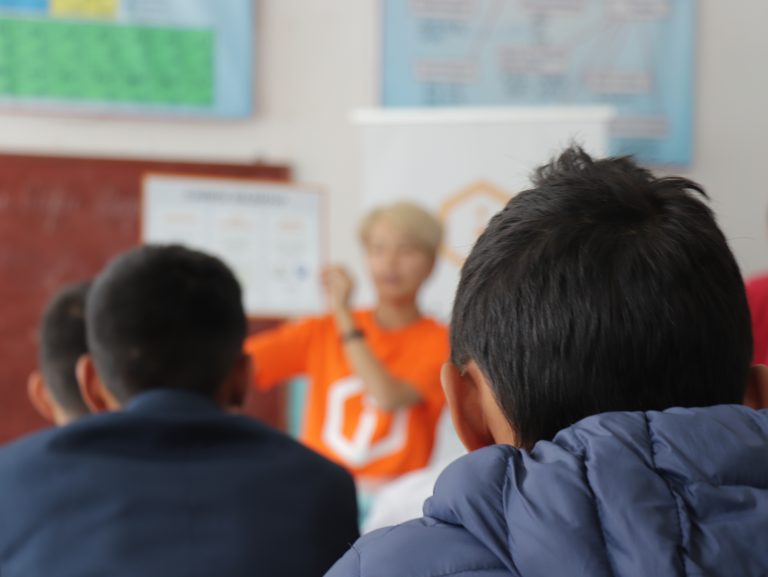
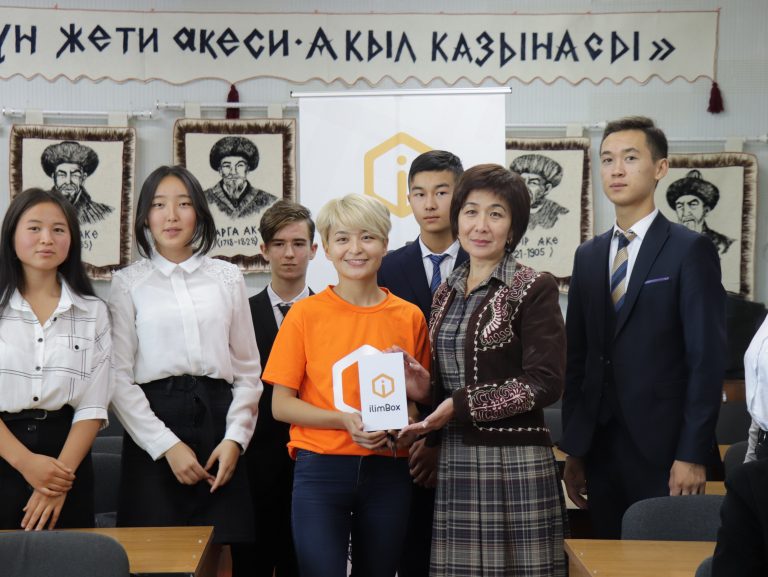
It should be noted that the IlimBox device was installed in 66 schools of Issyk-Kul, Talas and Chui regions. In these schools was held a presentation of the project “Ilim box” then testing the device with students and teachers and handing the device. During the conversation, the importance of education and self-education were touched upon. The choice of schools was due to several factors: no access to the Internet for students, lack of books, as well as the number of students exceeded the permissible maximum, thereby increasing the likelihood of poor performance in schools without a network connection, as well as the choice of educational institutions influenced the list of proposed schools by the Ministry of education and science of the Kyrgyz REPUBLIC.
The project is planned to cover all regions of Kyrgyzstan and install IlimBox in a total of 100 devices in schools experiencing problems with Internet access. Every educational institution reggenie gets IlimBox free.

The project is funded by Alumni Engagement Innovation Fund 2018 (AEIF) as part of innovative solutions to global challenges and the Beyond the Net ISOC program.

A video about the project can be found here:

Russian language

Kyrgyz language

School of D. Turabekova (Boz-Bulun v., Issyk-Kul region)

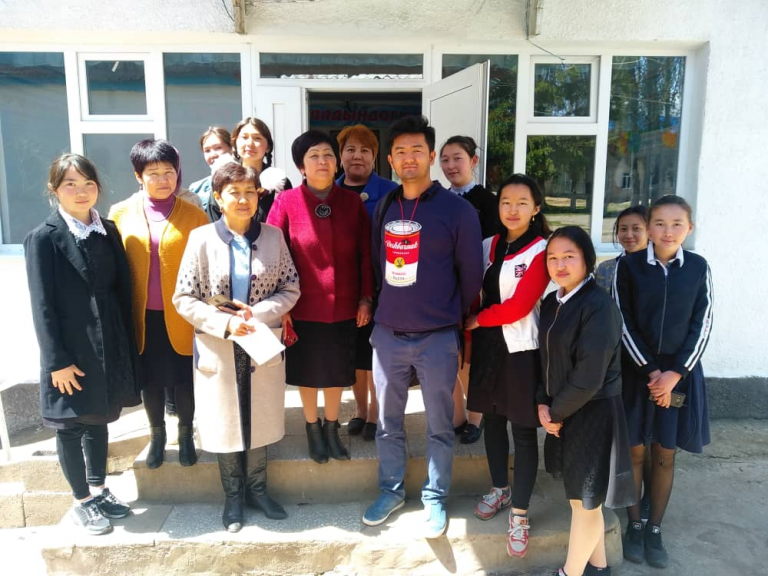
The final trip was school  of D. Turabekova (Boz-Bulun v.). There are 214 students enrolled.

In this school the device “Ilim Box” was earlier established, however, it was the outdated version which as it became clear, unfortunately, wasn’t used on purpose, and gathered dust in one of offices as the head teacher lost the password from the old device.

The updated version without a password system pleased the school administration.

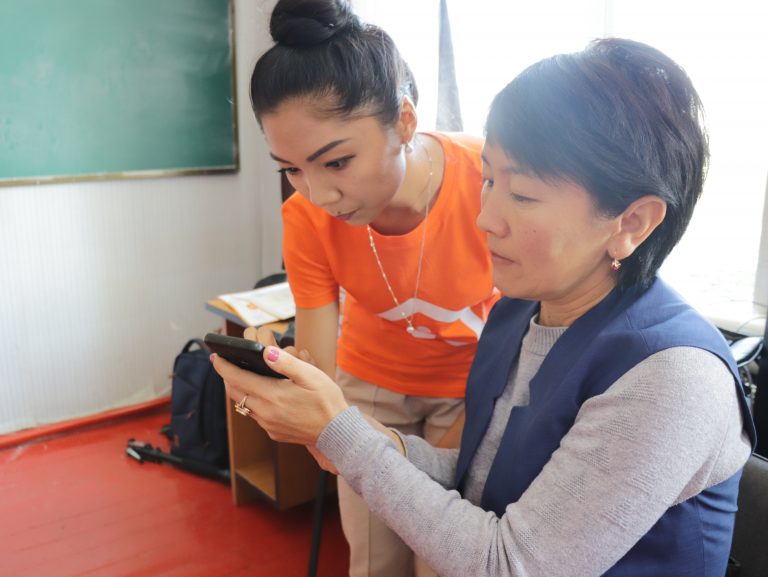
During the presentation, we showed the improved nuances of the device and instructed on the use of high school children.


School of Eshimbekova (Tegizchil v., Issyk-Kul region)

The penultimate visit was to the school Esimbekova (Tegizchil v.).

It is a compact school with 238 children.  It is located on the outskirts of the village Tegizchil, however, despite this, at school we met a volunteer from the United States who came on a Peace Corps knowledge-sharing project.

He teaches children English for the second academic year and speaks Kyrgyz perfectly.

Teachers and children admitted, in school except an office of administration there is no Internet access anywhere.

Of course such a gift to the school was very useful and also solved the problem of acute shortage of books.

The guys offered to install the device in the office of the school government, as it is usually open around the clock.

School gymnasium №11 (Karakol, Issyk-Kul region)

In Karakol we visited the gymnasium school №11.

This is one of the largest educational institutions of Issyk-Kul region, in which we have established ilimBox, it has 2600 students, children study in double shifts school.

Despite the fact that the school is a gymnasium and is located in Karakol, it still has difficulties accessing the global network.

As high school students admitted, they liked the project with free access to educational information and the opportunity to learn English through the educational resource “Khan Academy”.

The device was installed in the office of computer science and attached instructions for use in Russian.

Connecting schools to Ilimbox aka Bilim Bulagy

On April 13, 2019, the ISOC team began installing the Bilim Bulagy electronic library. The device allows you to access all educational resources without an Internet connection, in other words offline. Moreover, it should be noted that all data is stored in the device itself, and only power supply and wireless modem are required for connection. The uniqueness of the innovative project is that students can access educational resources at school without an Internet connection.  

The first schools where the trip was organized were the secondary school O. Isaeva (Kegety) and Chui boarding school (Tokmok) located in the Chui valley. The choice of schools was due to several factors: there is no access to the Internet, the number of students exceeded the allowable maximum, thereby increasing the likelihood of poor performance in schools without a network connection, as well as the choice of the above-described educational institutions was influenced by the interest Of the Association of young entrepreneurs “JIA” and the club of professionals “ProKG”, as they have a project “My school” with supervised schools.

For example, in high school O. Isaeva (Kegety) 511 students study, and the number of computers is equal to thirty-three, there is only one computer connected to the Internet. The second school is Chui boarding school (Tokmok), which has approximately the same performance. In these schools was held a presentation of the project “Internet in a box” then testing the device with students and teachers. During the conversation, the importance of education and self-education were touched upon.  

The third school was in S. Boroldai of Kemin district of Chui region. The plan of the meeting was built in the same way. Since the school is Russian-speaking, the appeal of teachers was aimed at increasing the materials in Russian, which would greatly facilitate the process of knowledge transfer.

There are more than 2,000 schools in Kyrgyzstan, some of which do not have access to the Internet and lack books. Accordingly, it affects the level of quality of education. In 2018, Kyrgyzstan declined to participate in the PISA world school rankings, as it was ranked last 65th in previous competitions.

Innovative solutions to two pressing problems such as the lack of books and the lack of the Internet can be seen in the project “Bilim Bulagy” (Internet in a box) – a digital library for schools and public libraries containing Wikipedia in Kyrgyz, Russian and English languages, Khan Academy, thousands of video lessons, audio and e-books. All these digital learning materials are available offline, in other words does not need Internet access. Access to Digital libraries will be carried out through smartphones, tablets, computers and any other personal devices with Wi-Fi technology.

“Bilim Bulagy will allow Kyrgyzstan to improve the level of education in the regions”, – said the Chairman of ISOC – Talent Sultanov, at the digital forum of Kazakhstan.

Thus, visits to schools helped to identify several important points: it is necessary to develop a manual in the Kyrgyz language for better perception of information, there is a need in the formation of the database of electronic books, materials should be both in Russian and in Kyrgyz, there is a need to create a list of the most necessary books. The goals and objectives of the project “Bilim Bulagy” coincide with the five-year strategy of digital transformation “Digital Kyrgyzstan 2019-2023” and contribute to the achievement of target indicators for the component “development of the digital state” and “development of digital skills”.

The project is funded by Alumni Engagement Innovation Fund 2018 (AEIF) as part of innovative solutions to global challenges.