Баткен областынын Кадамжай шаарындагы мугалимдер үчүн STEAM тренингдери

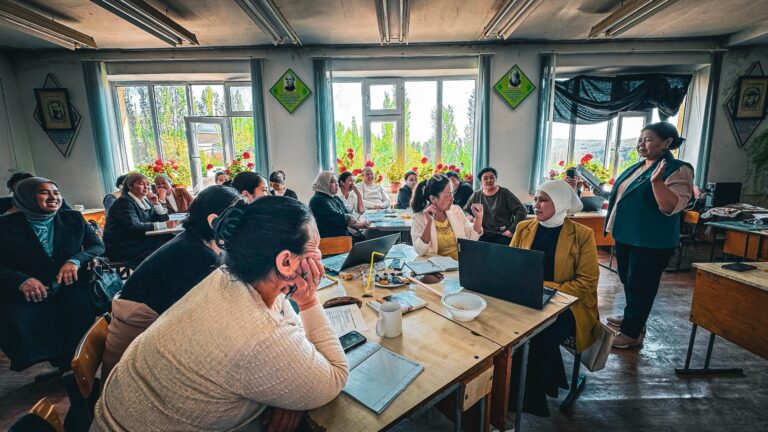
In the bustling educational hub of Kadamzhay, a transformative day unfolded on April 23, 2025, as dedicated educators from three dynamic cities—Kyzyl Kiya, Bujum, and Batken—converged at School #17 named after Masalieva for an intensive STEAM training experience. This gathering represented the second phase of a comprehensive regional initiative that had begun in Osh Oblast the previous day, extending innovative pedagogical approaches across southern Kyrgyzstan’s educational landscape.

The single-day intensive format demanded a focused approach, concentrating the most impactful elements of STEAM methodology into actionable strategies that teachers could immediately implement. Unlike traditional professional development sessions, this training emphasized hands-on experimentation and peer collaboration, recognizing that educators from these three cities bring diverse perspectives shaped by their unique urban and semi-urban contexts.

Master trainer Symbat Satybaldieva, supported by co-trainers Ainaz Ysmailova and Gulmira Isakova, adapted the comprehensive STEAM curriculum to address the specific challenges faced by teachers working in resource-diverse environments. The educators gathered represented a cross-section of subjects and grade levels, united by their commitment to elevating student engagement and learning outcomes through scientific inquiry and integrated approaches.

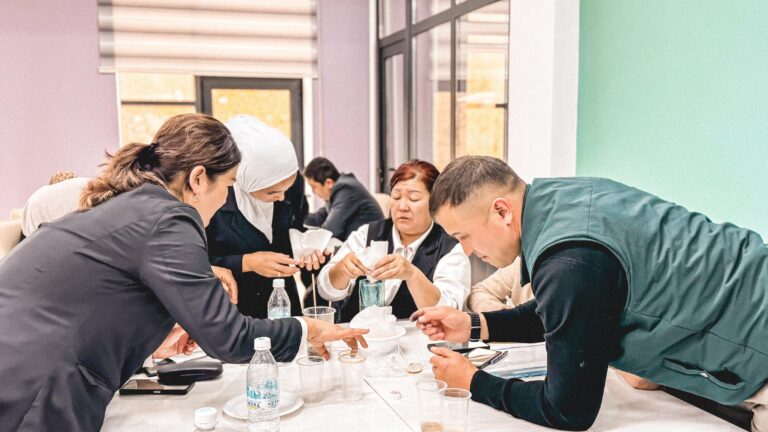
The heart of the Kadamzhay session centered on the practical application of the 5E learning model—Engage, Explore, Explain, Elaborate, and Evaluate. Teachers worked in mixed-city groups, designing mini-lessons that transformed traditional content delivery into dynamic, student-centered experiences. The collaborative nature of these activities created natural opportunities for educators from different cities to share local innovations and adapt successful practices to their own contexts.

One particularly powerful moment emerged when a mathematics teacher from Kyzyl Kiya demonstrated how geometric concepts could be explored through architectural elements found in their city’s Soviet-era buildings, while a colleague from Batken showed how similar principles applied to traditional Kyrgyz construction techniques. This cross-pollination of ideas exemplified the program’s goal of making abstract concepts tangible through local relevance.

The training’s emphasis on Growth Mindset resonated strongly with participants who often face the challenge of motivating students in economically challenging environments. Teachers engaged with research on neuroplasticity, discovering how understanding the brain’s capacity for change could revolutionize their approach to student potential. This scientific foundation provided educators with evidence-based strategies for encouraging persistence and resilience in their classrooms.

PISA-aligned assessment strategies took on particular significance in this setting, as teachers grappled with preparing students for international standards while maintaining connection to local contexts. The session included practical workshops on developing critical thinking tasks that mirror global assessments while incorporating culturally relevant scenarios that students could relate to and engage with meaningfully.

The integration of artificial intelligence tools sparked considerable discussion among participants, many of whom had limited previous exposure to educational technology. Rather than viewing AI as a replacement for traditional teaching methods, educators learned to conceptualize these tools as collaborative partners that could enhance their ability to personalize instruction and provide immediate feedback to students.

Interactive demonstrations brought theoretical concepts to life through engaging activities. The “Marshmallow Challenge” revealed insights about teamwork, iteration, and learning from failure, while “Food Print Puzzles” developed observation and inference skills crucial for scientific thinking. These activities served dual purposes: modeling effective STEAM pedagogies while providing ready-to-use classroom activities.

Teachers from Bujum particularly appreciated the emphasis on resource optimization, learning how everyday materials could be transformed into powerful learning tools. The session included practical demonstrations of creating laboratory equipment from locally available materials, addressing a common challenge in schools where traditional science resources may be limited.

The collaborative atmosphere extended beyond formal sessions, with educators naturally forming professional networks that crossed city boundaries. Teachers exchanged contact information and began planning follow-up collaborations, recognizing that the challenges they face are often similar despite geographical differences.

Feedback from participants highlighted the value of the intensive format, with many noting that the concentrated learning experience created a sense of urgency and focus that enhanced retention and application. One educator commented: “This single day changed how I think about every lesson I teach. The 5E model isn’t just for science—it’s a way of thinking about all learning.”

The training’s success in Kadamzhay demonstrates the scalability of innovative educational approaches across diverse contexts. By bringing together educators from three different cities, the program created opportunities for knowledge sharing that extended far beyond the formal training hours. Teachers returned to their schools not just with new methodologies, but with expanded professional networks and renewed enthusiasm for educational innovation.

This Kadamzhay experience represents a crucial link in the broader regional transformation of education, connecting the pilot innovations tested in Osh Oblast with the rural implementations planned for Leylek district. The urban and semi-urban perspectives contributed by Kyzyl Kiya, Bujum, and Batken educators provide valuable insights for adapting STEAM approaches across the diverse educational landscape of southern Kyrgyzstan.

As these educators return to their classrooms, they carry with them not just new teaching strategies, but a shared vision of educational excellence that transcends city boundaries. The collaborative spirit fostered during this intensive day continues to ripple through professional conversations and classroom innovations, creating a sustainable foundation for long-term educational transformation in the region.

The success of the Kadamzhay training reinforces the importance of bringing high-quality professional development directly to educators in their regional contexts, recognizing that transformative change happens when teachers have immediate opportunities to collaborate, experiment, and implement new approaches within their familiar professional communities.

Ош облусунун мугалимдери үчүн STEM тренингдери

On April 22, 35 dedicated teachers from pilot schools across the Osh oblasty gathered in Osh city for an intensive one day mastercalls that would fundamentally transform how they approach teaching and learning.
The STEAM (Science, Technology, Engineering, Arts, and Mathematics) training program, conducted represents more than just professional development—it’s a cornerstone initiative supporting Kyrgyzstan’s ambitious transition to a 12-year Cambridge secondary education system. As the country on the way to the comprehensive education sector reforms, programs like these are crucial for ensuring that rural schoolchildren receive the same quality of innovative education as their urban counterparts.

These 35 educators from Osh Oblast pilot schools now equipped to lead the integration of modern pedagogical approaches that align with international standards while remaining rooted in local contexts.

Led by master trainer Symbat Satybaldieva alongside co-trainers Ainaz Ysmailova and Gulmira Isakova, the program introduced teachers to cutting-edge methodologies that transform passive learning into active discovery. The training centered on several revolutionary approaches: The 5E Learning Model became the foundation for reimagining lessons. Teachers learned to structure their classes around five key phases: Engage, Explore, Explain, Elaborate, and Evaluate. This model shifts the teacher’s role from information deliverer to learning facilitator, encouraging students to construct their own understanding through guided inquiry. Growth Mindset and Neuroplasticity sessions challenged teachers to reconsider how they view student potential. By understanding that intelligence isn’t fixed but can be developed through effort and strategy, educators gained tools to help every student, regardless of their starting point, achieve academic success. PISA-aligned Tasks brought international assessment standards into local classrooms, ensuring that students develop the critical thinking and problem-solving skills needed to compete globally while addressing local challenges.

The heart of the training lay in its practical application. Teachers didn’t just learn about new methodologies—they experienced them firsthand by designing and delivering their own demo lessons. From “Birds’ Classification” to “Historical Places of Uzgen,” educators crafted innovative lessons that brought abstract concepts to life. One particularly memorable demonstration involved Newton’s third law of action and reaction, taught through a “balloon car” experiment. Students watched in amazement as simple materials transformed into vehicles that perfectly illustrated complex physics principles. This hands-on approach exemplifies how STEAM education makes learning tangible, memorable, and genuinely exciting.

The training emphasized that STEAM education isn’t just about science and mathematics—it’s about developing the critical thinking, collaboration, and problem-solving skills that define 21st-century success. Through activities like the “Marshmallow Challenge” and “Food Print Puzzles,” teachers experienced firsthand how failure becomes a learning opportunity and how teamwork amplifies individual capabilities. The integration of artificial intelligence tools introduced educators to the reality that technology isn’t replacing teachers—it’s empowering them to focus on what they do best: inspiring, guiding, and mentoring young minds.

The impact of the training resonates in teachers’ own words: “After the training, I was encouraged to work more with groups and develop logical thinking, work with real-life examples, and think in a holistic way, not just about one subject in class.” Another educator noted: “5E model, PISA test based exercises, scientific methods. I will use them in laboratory work because I am a biology teacher.” These testimonials reflect a fundamental shift in educational philosophy—from subject-specific teaching to integrated, real-world learning that prepares students for the interconnected challenges they’ll face in their careers and communities.

With an impressive post-training survey result of 8-10, the training received overwhelmingly positive feedback. But perhaps more importantly, it sparked a broader conversation about educational equity and rural development. Teachers identified concrete needs—from laboratory facilities to STEAM camps—that highlight both the challenges and opportunities in rural education.

The program’s success demonstrates that geographic isolation doesn’t have to mean educational isolation. When rural teachers receive world-class training and support, they become catalysts for community transformation, inspiring students who might never have imagined careers in science, technology, or engineering.

Ысык-Көл облусунда тренингдер башталды

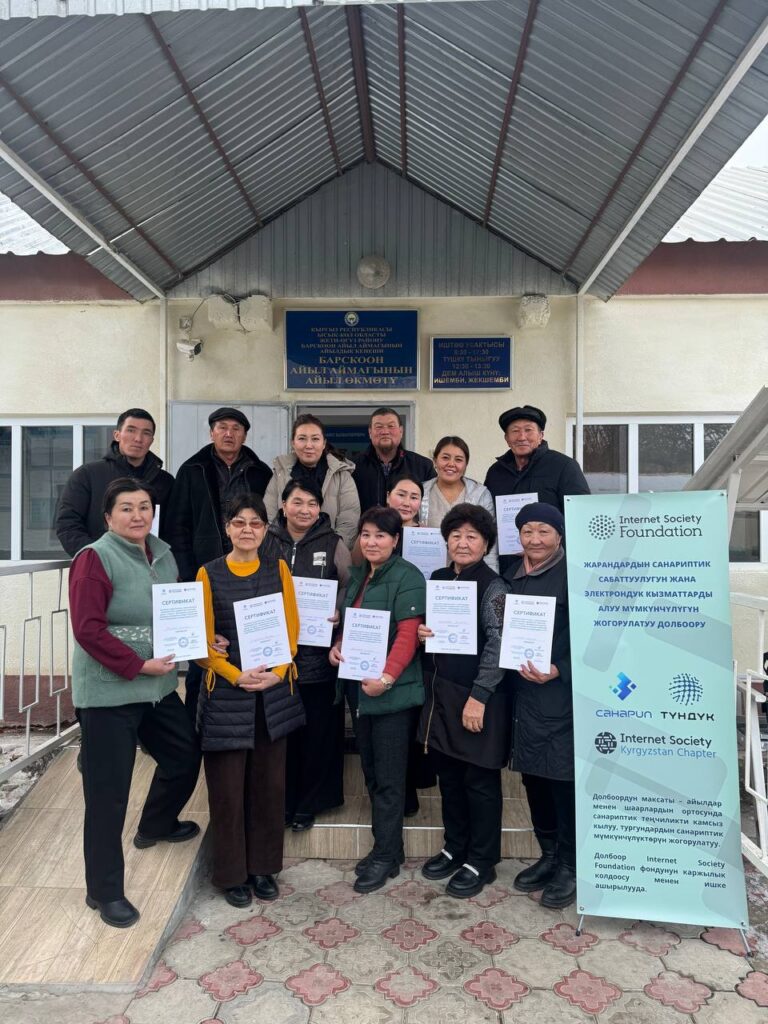
2024-жылдын 18-20-декабрь күндөрү ISOC командасы Ысык-Көлдүн түштүк жээгинде, тактап айтканда, Балыкчы шаарында, Тон, Ак-Суу жана Барскоон айылдарында тренингдерди өткөрдү. Бардык тренингдер райондордун администрацияларынын имараттарында өтүп, долбоордун тарыхында эң көп катышуучуларды тартты. Тренингдерге Өзгөчө кырдаалдар министрлигинин, райондордун администрацияларынын кызматкерлерин жана санариптештирүү бөлүмдөрүнүн башчылары катышты.
Катышуучулар тренингдерге топтолуучу суроолор менен келишип, өздөрүнүн иш тажрыйбалары менен бөлүшүүгө даяр болушту, айрыкча эл менен иштөө жаатында. ISOC тренерлери бардык катышуучуларга Google Документтерин кандайча колдонуу керектигин көрсөтүп, түшүндүрүштү. Бул технологияда бир нече колдонуучу бир эле документти бир учурда түзөтүп, өзгөртүүлөрдү киргизип, суроолорду бере алышат, бул болсо бюрократияны азайтып, процессти натыйжалуу кылат. Бул маалымат катышуучулар үчүн өтө пайдалуу жана актуалдуу болду.

Бардык тренингдерге катышуучулар үчүн WhatsApp топтору ачылып, келечекте байланышта болуу жана алардын санариптештирүү боюнча мамлекеттик органдарга суроолорун жеткирүү үчүн шарт түзүлдү.


Жобонун алдын ала жыйынтыктары боюнча түз эфир өттү

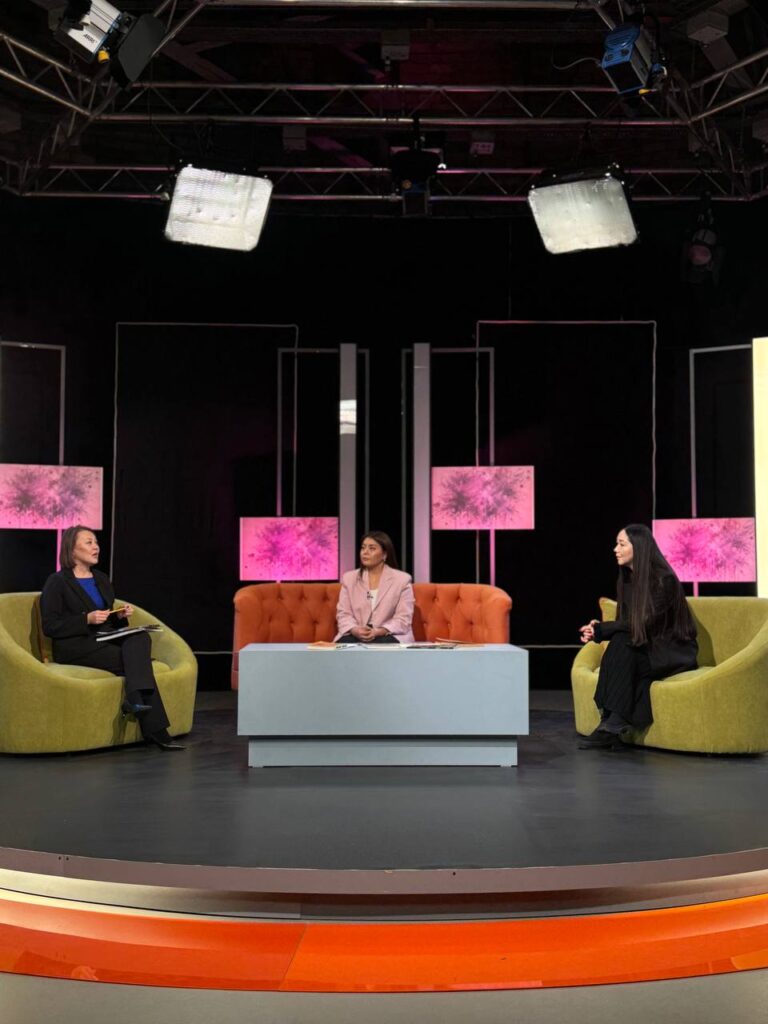
2024-жылдын 11-декабрында МанасТВ мамлекеттик телеканалында ISOC тренери Айпери Бозоева жана Кыргыз Республикасынын Цифрдык өнүктүрүү министрлигинин Цифрдык чечимдер башкармалыгынын башкы адиси Айчурок Бексултанованын катышуусунда түз эфир өттү.


Түз эфирдин жалпы узактыгы 40 мүнөт болду. Айпери жана Айчурок долбоорду ишке ашыруудагы жетишкендиктер жана кыйынчылыктар тууралуу айтып беришти. Бул долбоор Общественный фонд «Интернет Общество» тарабынан каржылык колдоо менен ишке ашырылууда. Айпери ошондой эле Интернет коомдуулугу деген эмне жана ал эмне менен алектенет, Кыргызстандын Интернет коомдуулугу кандай долбоорлорду ишке ашырды, тренингдердин жүрүшү тууралуу маалымат берди.

Айчурок министрлик жарандардын кайрылууларын кантип карап чыгары жана онлайн кызматтарга өтүү процессин, айрыкча өлкөнүн алыстаган аймактарында, кандайча жайылтып жатканы жөнүндө айтып берди. Ал акыркы бир жылда мамлекеттик кызматтарга болгон ишенимдин кыйла өскөнүн белгиледи. Мындан тышкары, жарандардын жеке маалыматтарынын коопсуздугуна болгон күмөн саноолорун да айтып өттү. Ошондуктан өлкөдө, айрыкча аймактарда көп түшүндүрүү иштерин жүргүзүү зарыл.

Телеканал өкүлдөрү Айпери жана Айчурокко абдан пайдалуу жана мазмундуу түз эфир үчүн ыраазычылык билдиришти.

Training for trainers on digital government services was held

27 сентября 2024 года заместитель директора ГП Тундук Рахат Жусумамбетова провела онлайн тренинг для тренеров (ТоТ) в городе Бишкек. Общее количество участников составило 16 человек.
На данном тренинге г-жа Жусумамбетова поделилась своей обширной экспертизой, дала представление об IT-архитектуре приложения «Тундук», рассказала о нюансах и различиях мобильного приложения и государственного портала. Так, тогда как приложение предоставляет в районе 60 гос.услуг, портал может предложить 160 гос.услуг. В данное время все государственные органы страны находятся на разных этапах оцифровки своих данных. Профиль Тундук «Цифровые документы» пользуется колоссальной популярностью среди населения благодаря своему удобству, тому, что документы всегда под рукой и избавляет от необходимости постоянно носить их с собой.

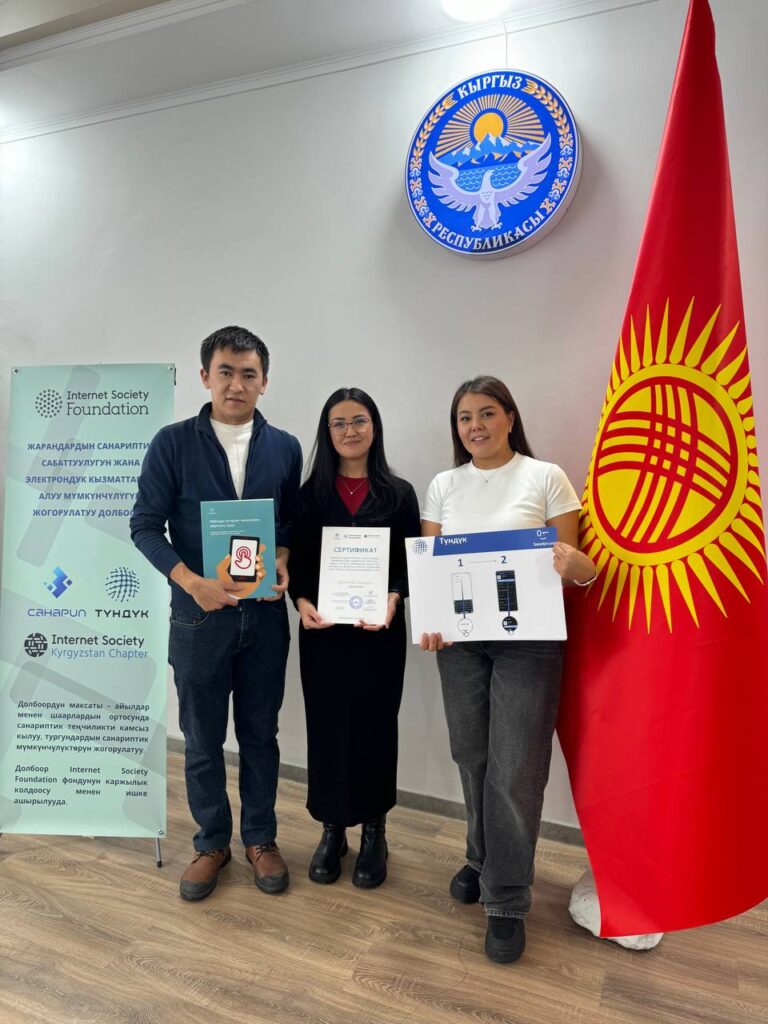
Тренеры задали в конце тренинга свои наиболее волнующие вопросы и получили исчерпывающие ответы от непосредственного эксперта. По итогам тренинга тренерам были выданы именные сертификаты за подписью заместителя директора Рахат Жусумамбетовой.

“Tunduk” chapter added to the educational manual

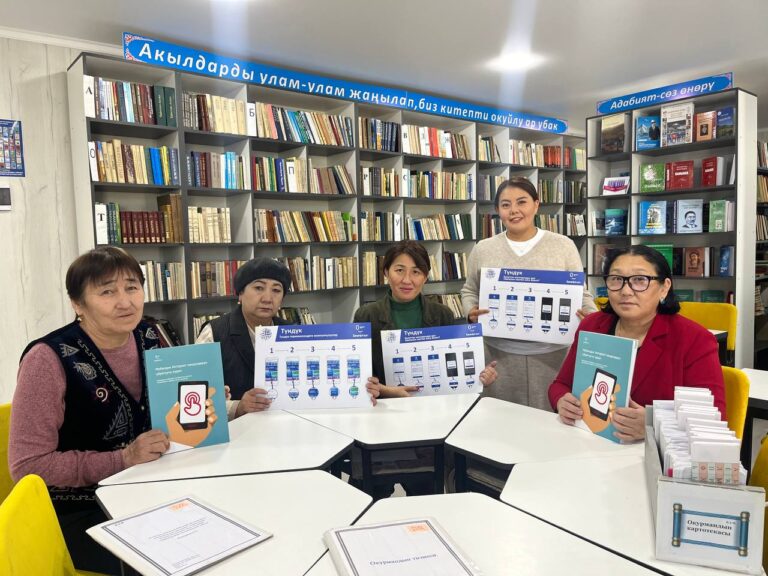
Кыргызстан Интернет коомчулугунун бөлүмү жана ОсОО «МедиаКыздар» «Интернет коомчулугу» коомдук фондунун каржылык колдоосу менен санариптик сабаттуулук боюнча 10 видеороликти иштеп чыгып, чыгарды. Видеороликтердин негизинде окуу постерлери даярдалып, «Түндүк» темасы боюнча окуу китебинин бөлүмү жаңыртылды, ал МИССТ тиркемесине киргизилет. Бардык материалдар кыргыз тилинде чыгарылганын белгилөө маанилүү. Учурда мамлекеттик тилде сапаттуу билимдердин жетишсиздиги байкалууда.
Видеороликтердин темалары ГП Түндүк жетекчилигинин сунуштары жана талаптарына ылайык тандалды. Бул максатта ISOC кызматкерлери жана МедиаКыздар өкүлдөрү жетекчилик менен жолугушуулар өткөрүп, жарандардан келген актуалдуу суроолорду кеңири талкуулашты. Бардык видеороликтерди аялдарнын үнү менен үн бөлүштүрүү кылынды, бул Кыргызстандагы гендердик теңдикти илгерилетүүгө да салым кошот, анткени аялдын үнү «технологиялык» деп кабыл алынат.

Аталган видеороликтер isoc.kg жана tunduk.gov.kg социалдык тармактарында биргелешип жарыяланды жана жалпы 15000ден ашык карап чыгуу топтоду. Мындан тышкары, ISOC МСУ Союзу менен директор Бектурган Исмаиловдун катышуусунда жолугушуу өткөрдү. МСУ Союзу бул видеороликтерди өз ишине кабыл алып, өзүнүн WhatsApp чаттарында таратып, ошону менен 5000ден ашуун адамга жеткиришти.

“Интернет Коомунун Кыргыз Бөлүмү” туризмди өнүктүрүү үчүн 500 айымды санариптик көндүмдөрдү үйрөтөт

Арсланбап 2
Арсланбап 1
Арстанбап 10
Арстанбап 9
Арстанбап 8
Арстанбап 7
Арстанбап 6
Арстанбап 5
Арстанбап 4
Арстанбап 3

Previous
Next

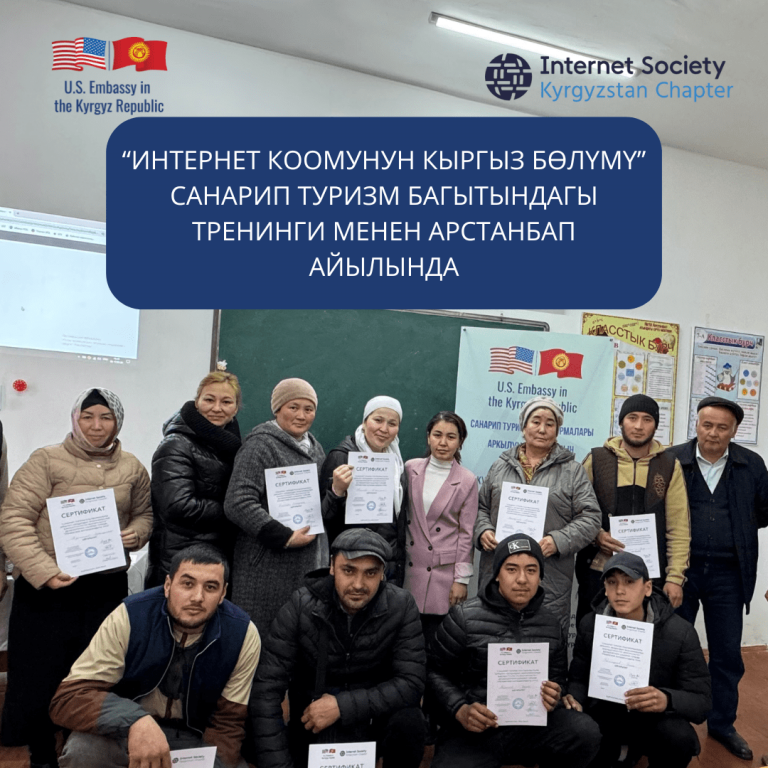
“Internet Society Kyrgyzstan Chapter”, with financial support from the U.S. Embassy in the Kyrgyz Republic, has begun training women in remote mountainous areas of the country in digital tourism to increase their digital literacy and promote their pursuit of economic prosperity.
The peculiarity of these trainings is the presence of trainers from different regions. In November 2023, trainers from 10 densely populated regions of our country were selected and had the opportunity to be trained by professional, experienced trainers in an offline format in Bishkek.

Offline trainings started on 10 March 2024 in the village of Arstanbap, Jalal-Abad region, with the participation of 20 local residents and guest house hosts who had the opportunity to improve their digital knowledge in tourism.

On the basis of the training, participants learnt the following skills: according to MISTT (Mobile Internet Skills Training Toolkit), the Mobile Internet Skills Training Toolkit, use social networks such as Instagram, Tik-Tok, Facebook, Google My Business, messengers WhatsApp, Telegram, Google Maps  navigator in business, as well as register their guesthouses on travel platforms such as Booking. com, AirBnB, TripAdvisor, use automation systems for guesthouse management such as Shelter, PMS, edelweis, Fidelio. com, AirBnB, TripAdvisor, use guesthouse management automation systems such as Shelter, PMS, Edelweis, Fidelio.

The project aims to increase digital education of 500 women in remote mountainous areas of Kyrgyzstan over a period of 6 months.

The end result of the training is for women, youth, migrants and guesthouse owners in the regions to strive for an economically independent and prosperous life by learning and practising the correct use of digital platforms and skills in business.

“Санарип Инсан” эки жылдык долбоордун жыйынтыгын чыгарды

The project “Sanarip Insan,” implemented with the financial support of the European Union, the European Neighborhood Council, and the Internet Society Kyrgyz Chapter (ISOC), is paving the way for inclusive growth and innovation in Central Asia. The main goal of the project is to promote equal economic opportunities and the resilience of youth and women in rural regions of Kyrgyzstan to improve economic prosperity through digital platform training and increased digital literacy. The project’s activities have resulted in improved indicators of youth security regarding Sustainable Development Goals and human rights protection.

Focusing on three key areas—e-commerce, digital tourism, and digital agriculture—the “Sanarip Insan” has helped residents of the region’s villagers themselves with digital knowledge, which has increased their economic well-being and contributed to sustainable development.

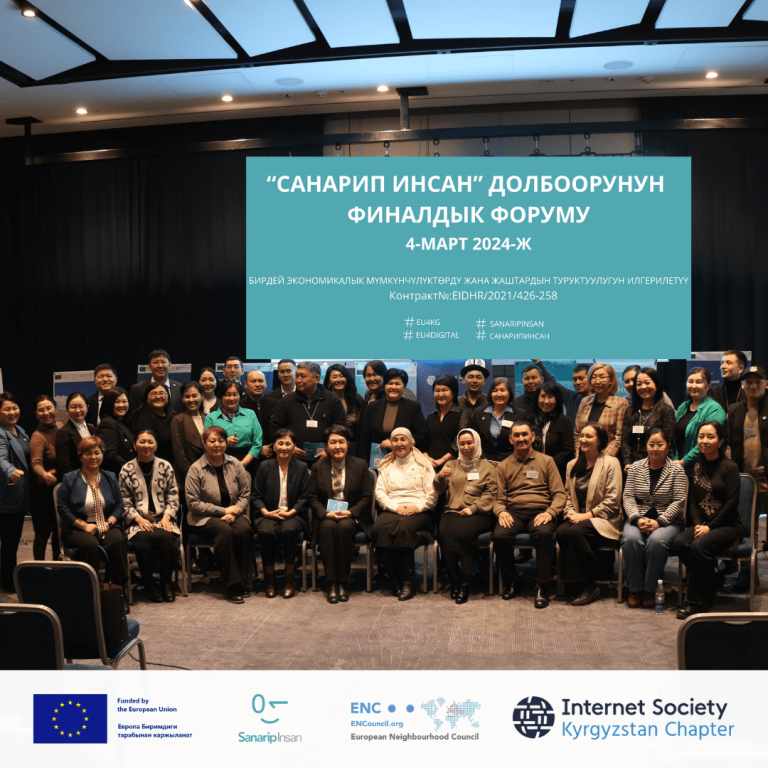
On March 4th, the final forum of the “Sanarip Insan” project took place.

“The project’s main focus is on the regions, and it seems to us that there are very few opportunities for digital skills in the regions, and even fewer opportunities are available for women and youth. We believe that by expanding their economic and digital opportunities, the regions will develop rapidly,” emphasized Talant Sultanov, director and co-founder of ISOC Kyrgyzstan.

In line with the priorities of the Kyrgyz government for digitalization, the project is being implemented in close coordination with various ministries and agencies. Joint efforts with the Ministry of Education have led to the development of digital educational materials, and partnerships with the Ministry of Digital Development and the Ministry of Culture, Information, Sports and Youth Policy ensure a comprehensive approach to expanding digital opportunities.

“The ‘Sanarip Insan’ project is being implemented for two years. Today, here, we have such a rich exhibition of products that have been implemented thanks to this project. Digital skills have been improved, business skills have been enhanced, and the qualifications of employees of various projects have been raised. All this is thanks to this project, so we are very pleased that projects like ‘Sanarip Insan’ exist,” emphasized Nuriya Kutnaeva, Minister of Digital Development.

To enhance computer literacy, one of the frameworks for digital competencies, Microsoft Digital Literacy, has been fully adapted and voiced in the Kyrgyz language. Around 100 video materials and an equal number of presentation materials for teachers are available in the Kyrgyz language.

“Sanarip Insan” has taken the first step in making programming languages accessible in the Kyrgyz language by translating the Python programming language, which is now available to every Kyrgyzstani.

“The Python programming language has been translated into the Kyrgyz language. 76 video lessons have been created, which we have distributed to 2,300 schools across the country. Now students in the regions interested in IT technologies can learn independently. Our goal for this year is to provide graduates with a certificate in digital knowledge,” said Supanalyev Bekzhan, Deputy Minister of Education and Science of the Kyrgyz Republic, at the forum’s opening.

One of the main achievements of the project was a startup competition for youth with a total prize fund of 2.7 million soms (27,500 euros). Thus, support was provided to 10 digital startups from all regions of the country. 255 jobs were created as a result of startup acceleration and financing.

Digital tourism and e-commerce were important components of the project. Within this framework, two-day courses were held in all seven regions of Kyrgyzstan, training 500 people who were able to create 356 jobs, 11 times more than planned. To improve digital literacy among the population, the project, in partnership with the GSMA Foundation, translated the Mobile Internet Skills Training Toolkit (MISTT) into Russian and Kyrgyz. Videos on the benefits of using digital platforms were shown on national and regional television channels—KTRK, ElTR—reaching an audience of 2.5 million people, with over 6 million video views and 6 million podcast listens throughout the project implementation period.

The project has helped thousands of citizens improve their digital skills, thereby enhancing their economic well-being, which will bring inclusive economic growth to the villages of Kyrgyzstan, ultimately affecting the country’s digital economy.


Outcomes by March 2024

  1. 500 women and youth from rural regions have been trained in digital tourism, e-commerce, and the use of new digital skills to open and run businesses with minimal capital. As a result of the training, 201 new jobs have been created
  2. The Microsoft Digital Literacy framework for digital competencies was translated and voiced into Kyrgyz, comprising 100 video materials and 100 presentation materials for teachers. 25 out of 50 universities have incorporated these materials into their curricula, benefiting 150,000 students who are enhancing their intermediate digital competencies
  3. In partnership with the GSMA Foundation, the MISTT mobile literacy training was translated into Russian and Kyrgyz, localized, printed into physical textbooks, made available electronically, and distributed via TV and radio. The total audience reached 2.5 million viewers
  4. The Python programming language was translated into Kyrgyz, and 74 videos providing practical guidance were created. These resources are available online on four digital platforms and have been installed on 2000 educational laptops distributed by the Center for Civic Education throughout the country. The course has reached an audience of 150,000 students and 10,000 teachers
  5. The distribution of materials was disseminated among 84 local governments, including two cities of republican significance, 12 cities of regional significance, 17 cities of district significance, and 453 aiyl aimaks
  6. The project supported a youth startup competition, with 160 applications submitted. Twenty-two of these passed through an acceleration program, and finally, 10 projects received financial support totaling 2.7 million soms. As a result, 255 new jobs were created
  7. In support of the SDG concept, the project developed a course on innovative green economy for universities. 30 teachers and 394 students were trained in this course, which has been integrated as a modular course
  8. The cumulative audience for 2 years: videos on digital platforms – 2,552,507 viewers; podcasts on national and regional – 6,584,000; regional TV – 78,152 viewers, national TV – 6,106,740; online media – 6,492,716; social media – 4,723,163.