ISOC Kyrgyz Chapter demonstrates the benefits of lorawan for climate change monitoring

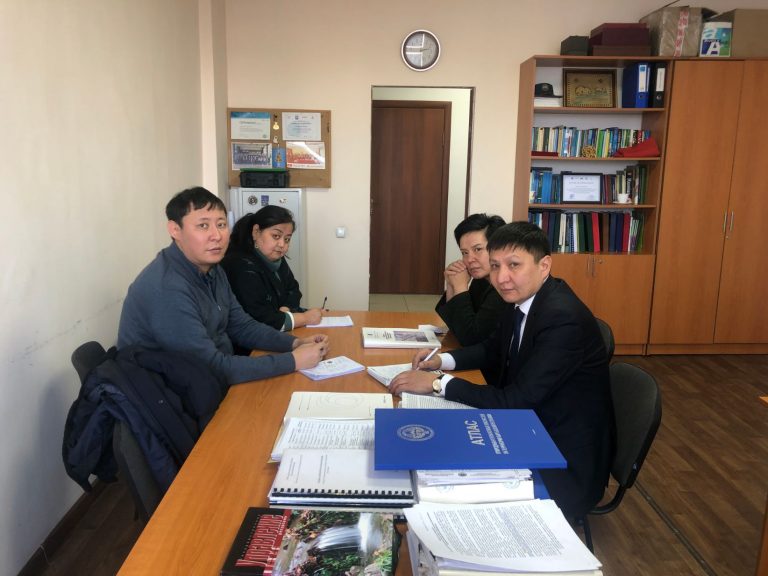
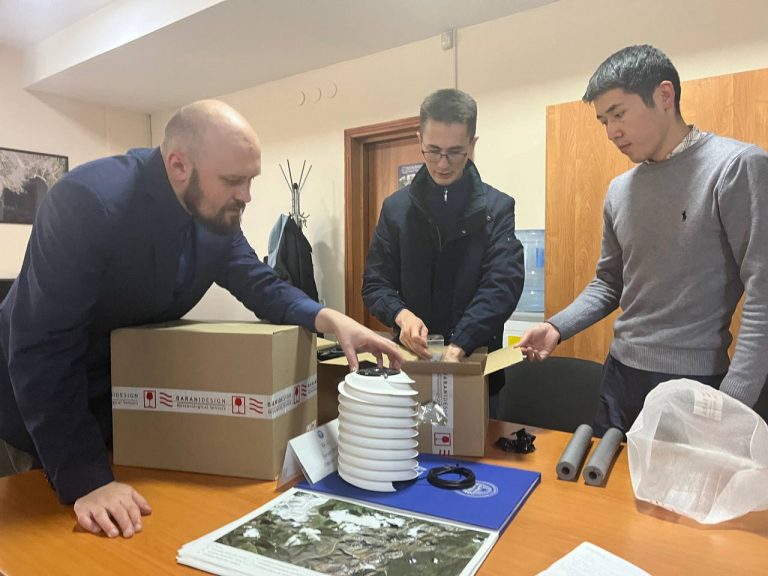
On April 6-10, 2023, the research team of the Kyrgyz branch of the Internet Society conducted a demonstration of automatic weather stations and other lorawan-enabled sensors for key project partners. The team visited various partners where they carefully unpacked all the sensors and discussed in detail the specifications and suitability of the sensors for pilot locations.

To provide partners with a comprehensive understanding of the sensors and their potential benefits, the team distributed demo products for in-house testing. This allowed partners to gain first-hand experience with the sensors and understand how they work, as well as understand their potential benefits in achieving project goals and future applications.

An important aspect of the research project is the installation of these sensors in pilot sites by the joint efforts of the Kyrgyz branch of ISOC and the team of the Abdus Salam International Center for Theoretical Physics (Italy). By collecting data from these sensors, the project aims to demonstrate the significant value of lorawan technology to key stakeholders.

LoRaWAN (Long Range Wide Area Network) is a wireless communication protocol specifically designed for Internet of Things (IoT) applications. It provides long-range, low-power communications between IoT devices and gateways, making it ideal for connecting sensors and other devices in a variety of settings including smart cities, agriculture, logistics, and environmental monitoring.

One of the main advantages of LoRaWAN technology is its range. It can provide communication for tens of kilometers even in areas with limited technical infrastructure. This makes it suitable for deploying IoT devices in remote locations or areas inaccessible to traditional mobile networks.

Another key benefit of LoRaWAN is its low power consumption. IoT devices using this technology can operate on battery power for long periods of time, sometimes up to ten years. The energy-saving nature of LoRaWAN allows IoT devices to be deployed in remote or inaccessible areas where power supplies are limited or difficult to maintain.

In addition, LoRaWAN supports secure and reliable communications. It includes end-to-end encryption and authentication mechanisms to ensure the confidentiality and integrity of data transmitted between devices and gateways. This makes it suitable for applications that use sensitive or sensitive data such as environmental monitoring systems or industrial IoT deployments.

Thus, lorawan technology offers long distance connectivity, low power consumption, economy and reliable security features. Its ability to connect IoT devices over long distances, combined with its energy efficiency, makes it an ideal choice for projects such as the one being implemented by the Kyrgyz Branch of the Internet Society. Taking advantage of lorawan technology, the project aims to collect valuable sensor data, demonstrate its value to stakeholders, and promote the development of IoT-based solutions in various fields.

For demonstration purposes, the research team uses the ISM bands. ISM stands for industrial, scientific and medical ranges. These bands enable industries to use wireless technologies without the need for individual licenses, facilitating innovation and the development of diverse applications.

Meeting with the Department of Monitoring and Prognosis under MES

In the realm of natural hazards monitoring and climate change response, the adoption of innovative information and communication technologies is increasingly seen as an important advancement. It is in this context that a follow-up meeting between the Research Team from the Internet Society Kyrgyz Chapter and the Department of Monitoring and Prognosis under the Ministry of Emergency Situations of the Kyrgyz Republic took place on December 27, 2022. This meeting served as an extension of a project launch forum, aiming to chart a path for future collaboration among key stakeholders, and underlining the paramount importance of bringing advanced digital solutions into disaster risk management efforts.
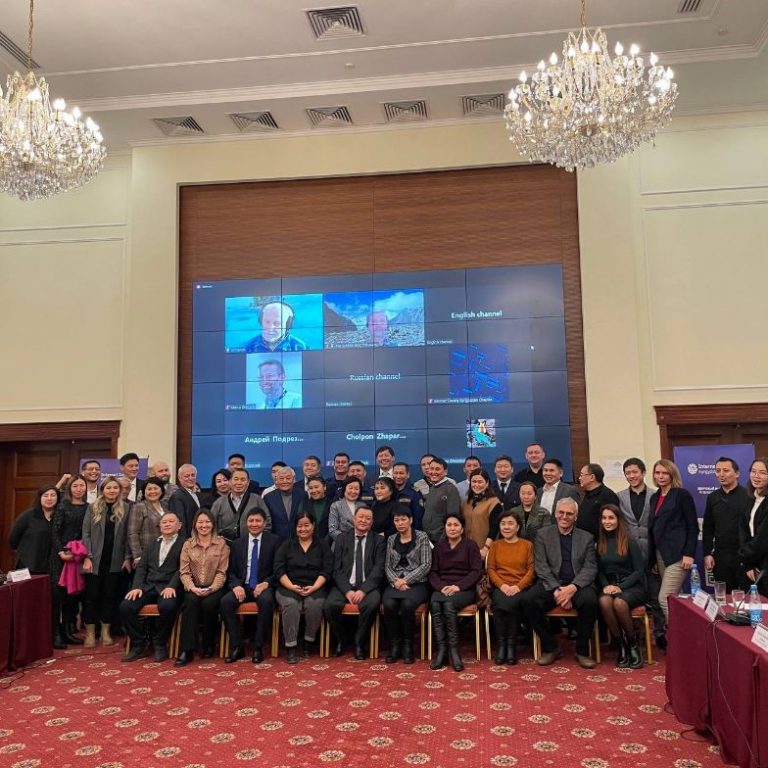
Aziz Soltobaev, Project Manager, provided detailed insights into the research goals, partners involved, project implementation phases, and the expected outcomes. One crucial aspect he highlighted was the potential of the Internet of Things (IoT) in monitoring natural hazards in the Kyrgyz Republic. The use of IoT technology, particularly through the application of LoRaWAN (Long Range Wide Area Network), holds significant promise in providing real-time, high-quality data that is pivotal in making informed decisions to mitigate and adapt to the impacts of natural hazards.

The Ministry’s interest in the project was explicitly expressed by Mr. Daurbek Djoomartovich Sakyev, the Head of the Department of Monitoring and Prognosis. He conveyed their eagerness to contribute towards the achievement of the research goals, particularly those that can translate into practical benefits for local communities. In his presentation, Mr. Sakyev outlined the Department’s current activities, role, and goals planned for 2023, reinforcing the Ministry’s commitment to harnessing technology for enhancing the resilience of the Kyrgyz Republic to natural hazards.

Meeting ends with agreement to look for possible locations for testing use of LoRaWAN technology and IoT. It is agreed that Ministry can help with this. This important development come as response to directive from Cabinet of Ministers to install ways to monitor natural disasters in Boom Gorge. This critical area often at risk from such natural hazards as rainfall, mudflows. Boom Gorge connects three regions and as a result of climate change is subject to regular mudflows, which were blocking or limiting transport communications from several hours to several days. In 2021, mudflows swept away railroad infrastructure which led to meaningful economic losses.

This good cooperation paves way for wider use of technology in managing hazards, making big step towards creating strong, digitally enabled resilience framework for climate in Kyrgyz Republic.

A Digital Leap: LoRaWAN and Climate Change Mitigation in Kyrgyzstan

Imagine you’re an apple farmer like Askar living in the picturesque landscapes of Kyrgyzstan. Every year, you wait in anticipation for the right climatic conditions to harvest your crops. But in recent years, the unpredictable weather patterns and natural disasters triggered by climate change have left you helpless and anxious. This is where the miraculous technology of LoRaWAN steps in.
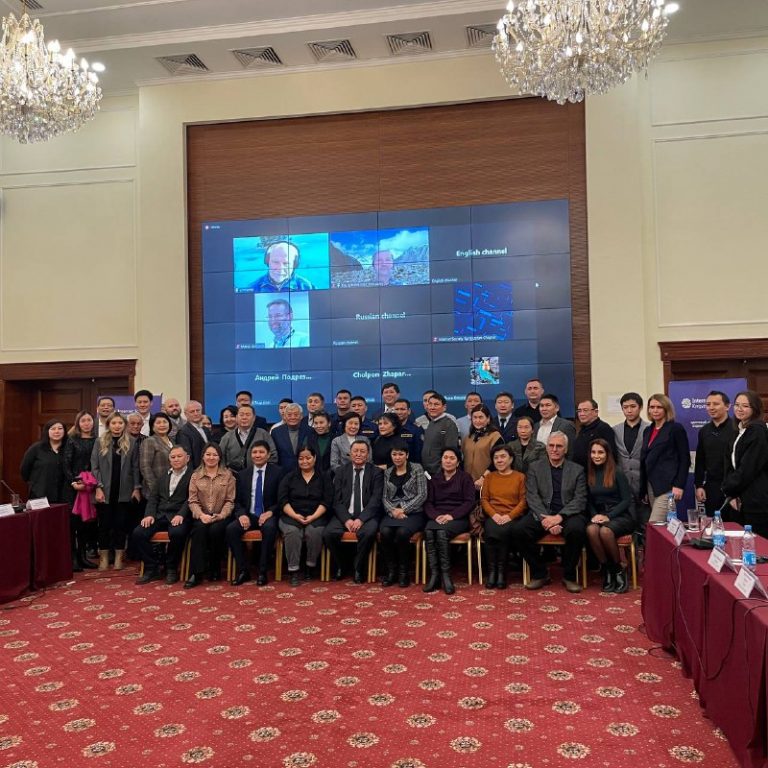
In a landmark forum on the “Application of Innovative Technologies in Monitoring and Forecasting of Climate Change and Natural Disasters,” organized by the Internet Society Kyrgyz Chapter in collaboration with the Central Asian Institute for Applied Geosciences (CAIAG), experts from across the globe met to discuss how to combat climate change using technology. The event saw participation from key stakeholders in climate change monitoring and was moderated by chairs of the partnering organizations, Dr. Moldobekov Bolot Duishenalievich and Mr. Talant Isakovich Sultanov.

LoRaWAN stands for Long Range Wide Area Network, a digital technology that has been making strides in the Internet of Things (IoT) landscape. The technology operates on “smart” sensors that monitor indicators online, analyze them, and transmit data to a server. This is similar to how your smartphone receives updates on weather conditions. But the beauty of LoRaWAN is that it can operate in areas with limited cellular communication, making it ideal for remote regions of Kyrgyzstan.

Picture this: Suppose Askar had a LoRaWAN-enabled sensor in his apple orchard. This sensor could monitor factors like temperature, humidity, and precipitation, essential to the growth of his apple trees. When there’s an impending frost or a storm, the sensor could alert Askar through an app, giving him enough time to take preventive measures, safeguarding his livelihood.

But it’s not just Askar who stands to benefit. Consider Ainura, a mother of three living in a small Uzgen village prone to landslides. An early warning system powered by LoRaWAN technology could alert her and her neighbors of an impending disaster, giving them precious time to evacuate and reach safety.

The forum highlighted the crucial role of such innovative technologies in monitoring and forecasting climate change and natural disasters. It illuminated the potential of technologies like LoRaWAN in not only enhancing our understanding of climate dynamics but also equipping us with actionable data to make informed decisions.

The promise of IoT and LoRaWAN isn’t confined to a few individuals. It extends to scientists, policymakers, farmers, and ordinary citizens alike. In the face of climate change, such technological advancements provide a beacon of hope. The fusion of cutting-edge technology and traditional practices could be our key to mitigating the adverse impacts of climate change and ensuring a sustainable future for Kyrgyzstan.

This Project is funded by the Internet Society Foundation Research Grants Programme.

Media coverage of the forum

Forum Explores Innovative Technologies for Climate Change Monitoring and Disaster Prevention

Forum Explores Innovative Technologies for Climate Change Monitoring and Disaster consequences Mitigation

Bishkek, December 12, 2022 – Addressing the critical need to safeguard lives and property from climate-related disasters, a high-profile forum titled “Application of Innovative Technologies in Monitoring and Forecasting of Climate Change and Natural Disasters” was successfully held in Bishkek city. The event brought together about 100 local and international experts, government representatives, policymakers,  and stakeholders to discuss groundbreaking information and communication technologies for sustainable development in the face of alarming climate change predictions.
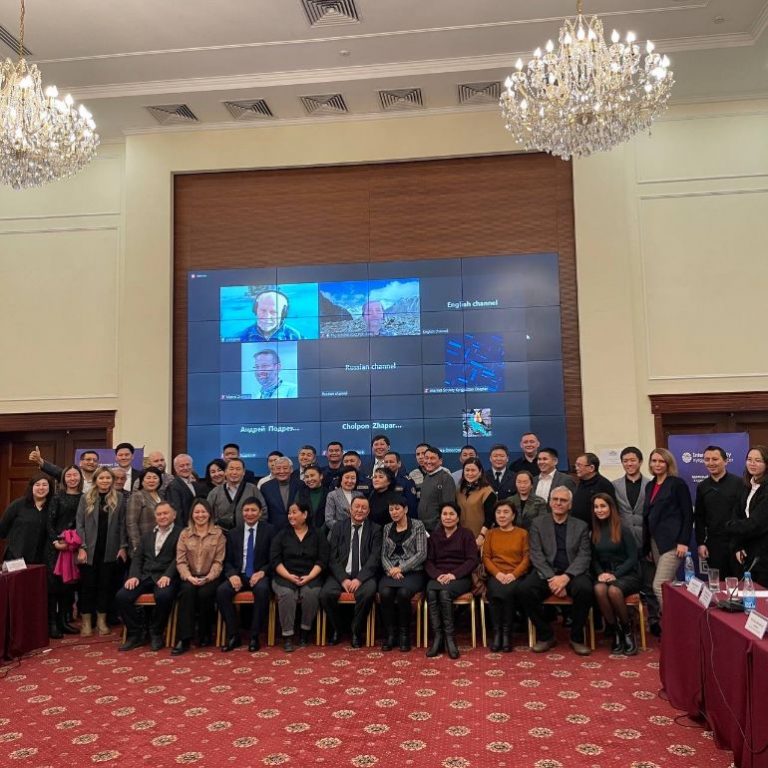
Mr. Shaazadan Tyumonbaev, Deputy Head of the Monitoring and Analysis Department of the Presidential Administration of the Kyrgyz Republic, commenced forum with thought-provoking introduction highlighting the urgent task of mitigating climate change and its impact on sustainable development of the Kyrgyz Republic.In response, experts, scientists and policymakers emphasized the importance of embracing affordable technologies for climate change mitigation.

Mr. Bolot Moldobekov, co-director of the Central Asian Institute of Applied Geosciences, made presentation titled “Hazardous natural processes and monitoring systems” that highlighted the efforts and initiatives taken by the country to mitigate the impacts of natural disasters. Kyrgyzstan, a geographically vulnerable region, faces numerous hazards such as earthquakes, landslides, floods, mudflows and avalanches. The presentation discusses the existing monitoring infrastructure, observed geographic areas, specific sensors installed in locations and insights from data observations.

Talant Sultanov, chair and co-founder of the Internet Society Kyrgyz Chapter, in his presentation “ICT for disaster resilience” marked how bottom-up initiatives in the example of ISOC Kyrgyz Chapter helped to prevail internet connectivity challenges for landlocked or sanctions-locked countries such as Kyrgyzstan.

The event emphasized the role of observation, research, and forecasting in disaster prevention, underscoring the significance of data gathered from various monitoring stations. Among the array of innovative technologies discussed, one particular standout was LoRaWAN (Long Range Wide Area Network) data transfer technology for the Internet of Things (IoT). This technology enables “smart” sensors to monitor indicators in real-time, analyze the data, and transmit it to servers for further processing.

An impressive feature of LoRaWAN technology is its ability to operate wirelessly and autonomously for up to 10 years without a power supply, making it an ideal solution for climate monitoring stations in remote or challenging terrains. The absence of wiring simplifies the implementation process, while remaining cost-effective for widespread adoption. Ermanno Pietrocemolli,  expert from the Abdus Salam International Center of Theoretical Physics made thorough presentation about Lorawan technology for various purposes. Marco Zennaro on behalf of ICTP demonstrated past installs of lorawan sensors and how ICTP team transmitted data using traditional unlicensed spectrum for up to 400km.

Distinguished speakers from governmental departments, research institutions, and industry shared valuable insights during the forum. Presentations covered a wide range of topics, including climate change monitoring, the CAIAG (Central Asian Institute for Applied Geosciences) monitoring system, and the creation of a secure IoT infrastructure using LoRaWAN technology for emergency prevention in mountainous areas of Kyrgyzstan.

Participants had the opportunity to engage in lively discussions and pose questions to the experts during dedicated Q&A sessions. Topics such as wireless technologies for IoT and the pros and cons of LoRaWAN technology were thoroughly explored, shedding light on the immense potential and practical considerations of these emerging solutions.

The forum concluded with a comprehensive summary and concluding remarks, emphasizing the crucial role of innovative technologies in monitoring and preventing natural disasters. Participants left with a renewed commitment to harness the power of technology for sustainable development and climate resilience. By the request of the Ministry of Emergency Situations, two locations in Boom gorge had been added to the list of pilot locations where automatic meteo stations and sensors should be installed.

The “Application of Innovative Technologies in Monitoring and Forecasting of Climate Change and Natural Disasters” forum served as a catalyst for knowledge exchange, collaboration, and the advancement of effective strategies to combat climate change and protect lives and property. By embracing cutting-edge technologies like LoRaWAN, the global community can forge a path towards a safer, more sustainable future.

For more information about the forum and its outcomes, please visit https://isoc.kg or contact Aziz Soltobaev, Projects Coordinator, [email protected]

Press Contact: Talant Sultanov, Chair of the Internet Society Kyrgyz Chapter, [email protected]

Post release of the Forum “Application of innovative technologies in monitoring and forecasting climate change and natural disasters”

Forum Explores Innovative Technologies for Climate Change Monitoring and Disaster Mitigation

Bishkek, December 12, 2022 – Due to the urgent need to protect life and property from climate disasters, the forum “Application of innovative technologies in monitoring and forecasting climate change and natural disasters” was successfully held in Bishkek. The event brought together some 100 local and international experts, government representatives, policy makers and stakeholders to discuss innovative information and communication technologies for sustainable development in the face of alarming climate change forecasts.
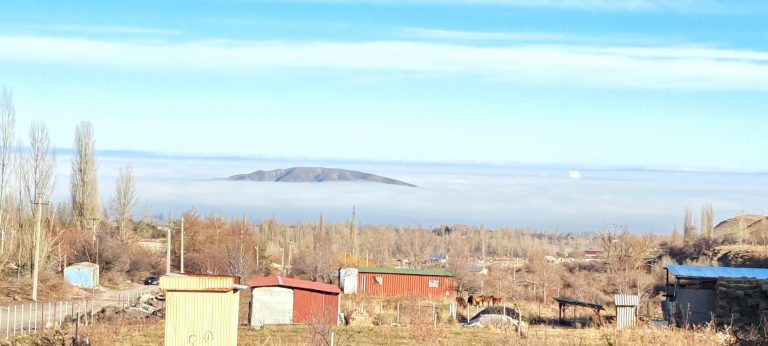
Mr. Shaazdan Tyumonbaev, Deputy Head of the Monitoring and Analysis Department of the Administration of the President of the Kyrgyz Republic, began the forum with a thought-provoking introduction, highlighting the urgent task of climate change mitigation and its impact on the sustainable development of the Kyrgyz Republic. In response, experts, scientists and politicians have stressed the importance of using available technologies to mitigate climate change.

Mr. Bolot Moldobekov, Co-Director of the Central Asian Institute of Applied Geosciences, made a presentation on “Natural Hazardous Processes and Monitoring Systems”, in which he spoke about the efforts and initiatives taken by the country to mitigate the consequences of natural disasters. Kyrgyzstan, a geographically vulnerable region, faces numerous hazards such as earthquakes, landslides, floods, mudflows and avalanches. The presentation discusses the existing monitoring infrastructure, the geographical areas monitored, the special sensors installed in the field, and the implications of the data observations.

Talant Sultanov, Chairman and Co-Founder of the Kyrgyz chapter of the Internet Society (ISOK), in his presentation “ICT for Disaster Resilience” noted how “bottom-up” initiatives, using the example of the Kyrgyz chapter of ISOC, helped solve problems with Internet connectivity for countries without landlocked or unaffected by sanctions, on the example of Kyrgyzstan.

The event emphasized the role of observations, research and forecasting in the prevention of natural disasters, and emphasized the importance of data collected from various monitoring stations. Among the many innovative technologies discussed, LoRaWAN (Long Range Wide Area Network) data transmission technology for the Internet of Things (IoT) stands out. This technology allows “smart” sensors to track performance in real time, analyze data and transfer it to servers for further processing.

An impressive feature of LoRaWAN technology is its ability to operate autonomously and wirelessly for up to 10 years without a power source, making it an ideal solution for climate monitoring stations in remote or difficult areas. The lack of wiring simplifies the implementation process while remaining cost effective for widespread adoption. Ermanno Pietrocemolli, expert at the International Center for Theoretical Physics. Abdus Salam, spoke in detail about Lorawan technology for various purposes. Marco Zennaro, on behalf of ICTP, demonstrated past lorawan sensor installations and how the ICTP team transmitted data using traditional unlicensed spectrum up to 400 km.

Distinguished speakers from government departments, research institutes and industry shared valuable insights during the forum. The reports covered a wide range of topics, including climate change monitoring, the CAIAG (Central Asian Institute of Applied Geosciences) monitoring system, the creation of a secure IoT infrastructure using LoRaWAN technology to prevent emergencies in the mountainous regions of Kyrgyzstan.

Participants had the opportunity to engage in lively discussions and ask questions of the experts during special Q&A sessions. Topics such as wireless technologies for the Internet of Things, the pros and cons of LoRaWAN technology were carefully studied, which shed light on the huge potential and practical considerations of these new solutions.

The forum concluded with a comprehensive debriefing and concluding remarks highlighting the critical role of innovative technologies in disaster monitoring and prevention. Participants left with a renewed commitment to harness the power of technology for sustainable development and climate resilience. At the request of the Ministry of Emergency Situations, two points in the Boom Gorge were added to the list of pilot areas where automatic weather stations and sensors should be installed.

The forum “Application of innovative technologies in monitoring and forecasting climate change and natural disasters” served as a catalyst for knowledge sharing, cooperation and promotion of effective strategies to combat climate change and protect life and property. By leveraging cutting-edge technologies such as LoRaWAN, the global community can pave the way for a more secure and sustainable future.

For more information about the forum and its results, please visit https://isoc.kg or contact project coordinator Aziz Soltobaev, [email protected]

Press contact: Talant Sultanov, Chairman of the Kyrgyz branch of the Internet Society, [email protected]

IoT LoRaWan in monitoring natural disasters Forum Announcement

ISOC Kyrgyz Chapter is organizing forum "Application of innovative technologies in monitoring and forecasting of climate change and natural disasters" in Bishkek

Protecting people’s lives and property from disasters related to weather, climate and water has been and remains the most important task for ensuring global sustainable development.

Most of the results presented recently by climate scientists are alarming. The mass of greenhouse gases in the atmosphere is increasing faster than originally predicted. Scientists, economists and policy makers are calling for a reduction in emissions benchmarks. A number of positive steps have been taken to prevent the most adverse scenarios of climate change. Affordable new technologies that contribute to mitigation have become available, such as the use of solar and wind energy, electric vehicles and vehicles.  Thirty-two countries have successfully reduced their emissions in the last 15 years, and their economies continue to grow.

In the prevention of natural disasters, multiple methods have been developed: observation, research, forecasting, taking into account the receipt of data from various stations. The combination of devices and services that collect, transmit and display data and information electronically leads to easier work in forecasting. This includes personal computers (PCs) and their peripherals, broadband networks and telecommunication devices, as well as data processing centers.

One of such technologies is LoRaWAN data transfer technology for the Internet of Things IoT. The principle of operation is that smart sensors monitor indicators online, analyze them and transmit data to the server. Through the application, sensor data is displayed on the monitor. In general, the system is able to independently evaluate hundreds of indicators, which allows, for example, to unload responsible employees. Unskilled routine operations can now be safely entrusted to the machine, leaving employees more time for intellectual work.

All sensors work autonomously without power supply for up to 10 years without wires. This is especially true for stations that transmit data using electricity or panels.  The absence of wires also makes the process of implementing the technology as simple and convenient as possible. At the same time, the cost remains affordable for mass use.

Internet Society Kyrgyz Chapter in partnership with Central Asian Institute for Applied Geosciences is planning to conduct presentation forum “Application of innovative technologies in monitoring and forecasting of climate change and natural disasters” with key stakeholders on use of LoRaWAN technology and internet of things to monitor and predict natural disasters in the Kyrgyz Republic. The forum will be held on December 7, 2022 in Park Hotel, Bishkek.

Agenda

Presentation Forum

“Application of innovative technologies in monitoring and forecasting of climate change and natural disasters”
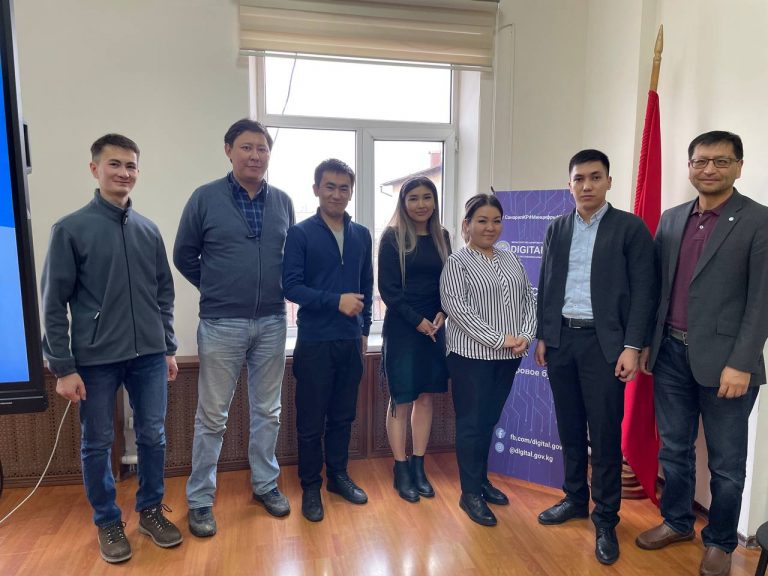
Moderator: Moldobekov Bolot Duishenalievich / Talant Isakovich Sultanov

13.30-14.00

Registration of participants /coffee break

14.00-14.30

Welcome words:

Mr. Shaazadan Akylbekovich Tyumonbaev – Deputy Head of the Monitoring and Analysis Department of the Administration of the President of the Kyrgyz Republic

Mr. Mazaripov A.A. – Deputy Minister of Emergency Situations of the Kyrgyz Republic

Mr. Beksultan Melisovich Ibraimov-Ministry of Natural Resources, Ecology and Technical Supervision of the Kyrgyz Republic

Mr. Bolot Duishenalievich Moldobekov – Co-Director of CAIAG

Mr. Talant Isakovich Sultanov – Chairman and Co-Founder of the Kyrgyz Internet Society ISOC

14.30-14. 50

“Monitoring and forecasting of climate change and natural disasters”

Mr. Bolot Duishenalievich Moldobekov – Co-Director of CAIAG

14.50-15.00

Q&A – Aziz Soltobaev

15.00 -15.15

” Environmental monitoring system “

Mr. Alexander Vladimirovich Zubovich – Head of Department No. 3, CAIAG

15.15 -15.25

Q&A – Aziz Soltobaev

15.25 – 16.00

Coffee break

16.00-16.30

“Creating an open and secure infrastructure of the Internet of Things using LoRaWAN technology for monitoring and preventing emergencies in the mountainous areas of Kyrgyzstan”

Mr. Talant Isakovich Sultanov – Chairman and Co-Founder of the Internet Society Kyrgyz Chapter

16.30 -16.40

Q&A – Aziz Soltobaev

16.40-17.15

“Wireless Technologies for IoT”, “Pros and Cons of Lorawan Technology”

Mr. Ermanno Pietrosemoli – Scientist at the Abdus Salam International Center for Theoretical Physics

17.15-17.25

Q&A – Aziz Soltobaev

17.25-18.00

Summing up /Concluding words

Discussing LoRaWAN spectrum with regulatory authority

On November 22, 2022 the ISOC Kyrgyz Chapter Research Team had visited office of the State Telecommunications Regulatory Body and met representatives of the Spectrum allocation Monitoring Department.
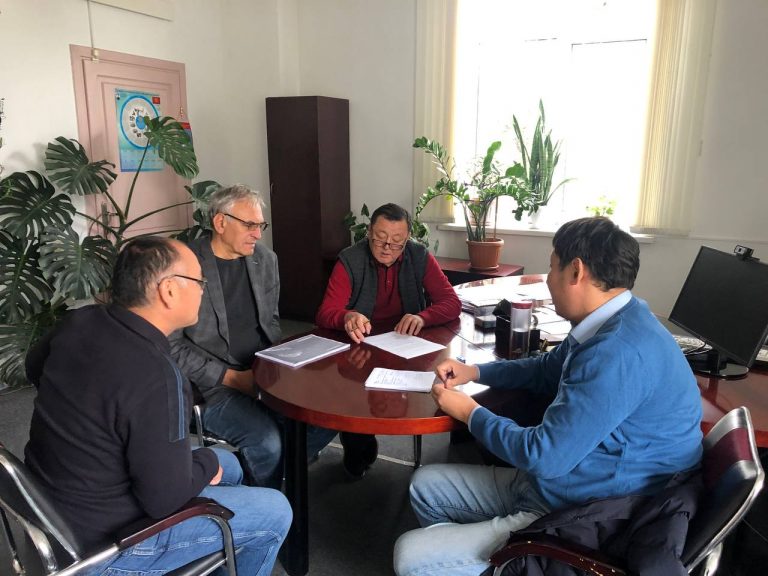
ISOC team conducted introductory presentation about all activities of the chapter, its achievements and defined areas for cooperation with regulator to reach common goals in improving connectivity in the Kyrgyz Republic.

In particular, the research team made presentation about the project of using of the lorawan spectrum to monitor and predict natural disasters in country.

Kyrgyz Republic had reached good mobile connectivity in populated areas of the country. In some destinations there’s good connectivity in near populated areas that present such georisks as landslides, avalanches, mudflows.

Presently, in many of areas of potential natural disasters, authorities use geostationary satellite connectivity, gsm communication as well as old-fashioned manual observation tools. LoRaWAN had not yet been used for the given purposes so far.

The team explained the technology, learned about the regulatory environment and invited authority representatives to participate in upcoming forum to be held on December 7, 2022

Research team selected pilot locations

Research team held meeting to discuss potential locations for deployment of internet of things and lorawan technology to monitor and forecast natural disasters.

As a result of discussions, research team had selected Tatyr landslide, Baytik meteostation and Adygene lake. The pilot locations are based near Bishkek and easy to access and check the deployment and functionality of the internet of things and data transmission via LoRaWan technology.

Tatyr landslide is locatd in 30-40 km south of Bishkek The landslide formed on the slope of the northern exposure, which is 1510 meters long, 250 to 300 meters wide and 10-15 meters thick. The main factors of formation are the fallout of anomalous atmospheric precipitation in combination with the impact of groundwater wedging out in the form of springs, as well as a close predisposition to a tectonic fault. The last activation was in 2004. 

Adygene glacial lake located at an altitude of 3583 meters above sea level, on the northern slope of the Kyrgyz ridge, in the Adygen gorge, 43 kilometers south-west of the city of Bishkek in the Alamudun district of the Chui region.
The moraine lake is located 260 meters north of the Adygene glacier. The length of the lake from south-west to north-east is 371 meters, the greatest width in the central part of the lake is 170 meters. The perimeter of the lake is 1090 meters, the area is 34101 square meters.
The lake is located on the sea of the glacier. There are three more lakes in the south and southeast. The most southeastern lake, located at an altitude of 3640 meters above sea level, was formed along the northern edge of the glacier and its southern coast is the coast of the glacier.
The length of this lake is 188 meters, the maximum width is 70 meters. The perimeter of the lake is 550 meters, the area is 17142 square meters. A stream flows out of the northeastern side of Lake Adygene, which after 330 meters flows into a small moraine lake. In the southern part of the lake there are 10 more small moraine lakes.
In the southeastern side of the lake there is a hut for hydrologists and glaciologists. The lake poses an increased danger to the city of Bishkek, as it is prone to destruction of the banks and river bed and the formation of mudflows.

Baitik station (HM01) is located in Kyrgyzstan south of Bishkek on the river Ala-Archa. It’s good location to test equipment for water and snow measurements.

After initial pilot stage, team is intended to relocate communication equipment and sensors to Jalal-Abad and Naryn oblasty locations, where the most of natural disasters happen.