Мектептин интернет байланышын көзөмөлдөө куралдары

Understanding the real quality of internet connectivity in educational institutions has become a critical challenge for policymakers and administrators across the globe. The Internet Society Kyrgyz Chapter recently recognized this urgent need and commissioned the development of specialized monitoring software to assess internet quality in pilot secondary schools throughout Kyrgyzstan. This initiative represents a significant step toward evidence-based decision-making in educational technology infrastructure, particularly in addressing longstanding concerns about service delivery quality.

The context surrounding this project reveals a troubling disconnect between contractual obligations and actual service delivery. Since 2021, Kyrgyztelecom has held an exclusive contract as the sole internet service provider for secondary schools across Kyrgyzstan, with agreements specifying 100 Mbps internet connectivity for educational institutions. However, the reality on the ground tells a different story. Schools consistently reported significant performance issues, slow speeds, and unreliable connections that made it virtually impossible to conduct modern digital education effectively.

The situation became so problematic that teachers began using their personal mobile data allowances, creating Wi-Fi hotspots from their smartphones to ensure their students could access online learning platforms and digital educational resources. This grassroots solution highlighted the severity of the connectivity crisis while simultaneously demonstrating the dedication of educators to providing quality instruction despite infrastructure challenges. The irony was stark – the Kyrgyz Government was paying for internet services that were essentially unusable, while teachers were subsidizing the education system with their personal resources.

This widespread practice of teachers sharing mobile data revealed the fundamental problem with existing service arrangements. Without objective measurement tools, schools had no concrete evidence to support their complaints about poor connectivity. Service provider claims about delivered bandwidth had no independent verification, creating an accountability gap that disadvantaged both educators and students. The lack of empirical data made it difficult for education officials to address the problem through formal channels or to justify contract modifications or provider changes.

The technical approach for addressing this challenge crystallized during project coordinator Aziz Soltobaev’s participation in the RIPE NCC conference, where he joined the Internet of Things working group. The discussions and insights gained from this engagement with the European network coordination community provided the inspiration for utilizing OpenWrt as the foundation for the monitoring solution. This connection to the broader internet infrastructure community proved instrumental in shaping the project’s technical direction and ensuring alignment with established best practices in network measurement and monitoring.

The project centers around creating a comprehensive measurement platform built on the OpenWrt framework, an open-source operating system designed primarily for embedded devices and network routers. This choice of foundation proves particularly strategic for educational environments, as OpenWrt provides a stable, customizable, and cost-effective solution that can be deployed across diverse hardware configurations commonly found in schools. The system transforms abstract complaints about internet quality into concrete, measurable data that can drive meaningful policy changes.

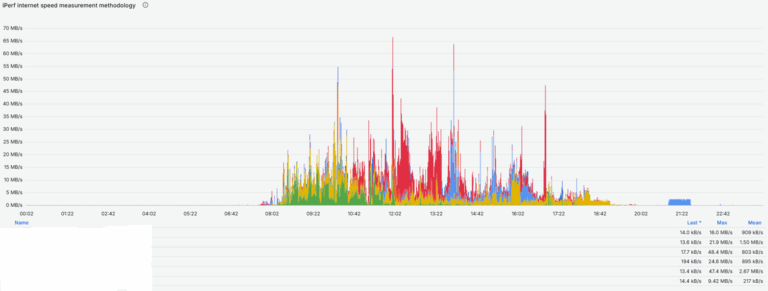
The monitoring system incorporates multiple measurement methodologies to provide a comprehensive view of internet performance. The implementation includes NDT7 (Network Diagnostic Tool version 7), which offers standardized speed testing capabilities developed by Measurement Lab. This protocol provides reliable throughput measurements that can be compared across different locations and time periods. Additionally, the system utilizes iPerf, a widely-recognized network testing tool that measures maximum achievable bandwidth on IP networks, supporting both TCP and UDP protocols for comprehensive performance analysis.

Beyond these core measurement tools, the platform integrates additional diagnostic capabilities including latency measurements, packet loss detection, and jitter analysis. These metrics collectively paint a detailed picture of network performance that goes far beyond simple download and upload speeds. The system continuously monitors these parameters throughout the school day, capturing variations in performance that correspond to different usage patterns and peak demand periods.

The data visualization capabilities of the system prove particularly valuable for decision-makers dealing with service provider accountability. Real-time dashboards display current network status while historical reporting functions reveal trends and patterns over extended periods. The screenshots demonstrate how the system presents upload and download performance data in clear, accessible formats that allow administrators to quickly identify periods when promised service levels are not being delivered. This creates an evidence base that can support formal complaints, contract renegotiations, or provider performance reviews.

One notable aspect of the implementation is its consideration of the unique challenges faced by educational institutions in service provider relationships. Schools typically experience highly variable internet usage patterns, with significant spikes during class transitions, lunch periods, and specific lesson times when multiple classrooms simultaneously access online resources. The monitoring system accounts for these patterns by providing detailed temporal analysis that helps administrators understand when and why network performance fails to meet educational needs, particularly in comparison to contracted service levels.

The open-source nature of the solution offers several advantages for government agencies and educational institutions operating under budget constraints while dealing with underperforming commercial relationships. Unlike proprietary monitoring solutions that often require expensive licensing fees and vendor-specific hardware, this OpenWrt-based approach can be deployed on commodity hardware or integrated into existing network infrastructure. This accessibility makes it particularly suitable for developing regions where cost-effectiveness remains a primary consideration in technology adoption decisions, especially when existing service contracts are not delivering promised value.

For the Ministry of Education and Sciences, this monitoring capability provides unprecedented visibility into the actual internet experience of students and teachers, contrasting sharply with the theoretical service levels outlined in government contracts with Kyrgyztelecom. Rather than relying on service provider assertions or anecdotal reports from schools, education officials can now access concrete performance data that reflects real-world conditions. This information proves invaluable when making decisions about service provider accountability, contract enforcement, or alternative arrangements that could better serve educational needs.

The Ministry of Digital Development benefits from having standardized measurement data across multiple educational institutions that can objectively assess whether government investments in educational connectivity are delivering promised results. This consistency enables meaningful evaluation of service provider performance across different regions and school types. Such comparative analysis can inform policy decisions about contract modifications, penalty enforcement, or the potential benefits of introducing competition in educational internet services.

For telecommunications regulatory bodies, the system provides an independent source of performance data that complements traditional regulatory monitoring efforts while offering insight into how monopolistic service arrangements perform in practice. The continuous measurement approach offers a more comprehensive view of service quality than periodic testing, potentially revealing systematic service degradation or improvement trends that might otherwise go unnoticed. This capability enhances regulatory oversight while providing objective data for discussions with service providers about network performance standards and contract compliance.

The practical implementation of the system reveals concerning patterns in educational internet delivery that validate teacher complaints about service quality. The monitoring data shows significant discrepancies between promised and delivered bandwidth, particularly during peak educational hours when reliable connectivity is most crucial. Understanding these patterns helps administrators document service failures while providing valuable evidence for accountability discussions with Kyrgyztelecom and government oversight agencies.

The bandwidth utilization analysis component of the system offers insights into how contracted internet resources are actually delivered versus consumed within educational environments. This information helps school administrators understand whether current service arrangements meet educational needs while providing data-driven justification for contract enforcement actions or alternative service arrangements when necessary. The system can identify specific periods when service falls below contractual obligations, enabling more informed decisions about remedial actions or penalty applications.

The project’s emphasis on open-source development ensures long-term sustainability and adaptability while reducing dependence on commercial monitoring solutions that might be influenced by service provider relationships. Educational institutions and government agencies can modify the software to meet specific local requirements without depending on commercial vendors for customization or potentially compromised monitoring tools. This independence proves particularly important in situations where service provider accountability is a primary concern.

The classification of this monitoring toolkit as a digital public good adds significant value to its development and deployment. Digital public goods are defined as “open-source software, open data, open artificial intelligence models, open standards and open content” that are intended to contribute to sustainable development. This classification promotes “open-source solutions for a more equitable world” and is “key to achieving the Sustainable Development Goals”. By developing this internet monitoring solution as a digital public good, the Internet Society Kyrgyz Chapter ensures that the benefits extend far beyond the immediate pilot implementation.

The digital public goods framework means that other countries facing similar challenges with educational internet service delivery can adapt and deploy this monitoring solution without licensing restrictions or vendor dependencies. Digital public goods “offer the opportunity to counteract” digital divides “through their open access to information and technologies” while limiting “economic monopolies over digital solutions and knowledge”. This is particularly relevant for developing nations where telecommunications monopolies may underdeliver on government contracts while lacking independent oversight mechanisms.

The toolkit’s status as a digital public good also facilitates international cooperation and knowledge sharing about internet quality monitoring in educational settings. Educational authorities in other countries can learn from Kyrgyzstan’s implementation experience while contributing their own innovations and adaptations back to the global community. This collaborative approach accelerates the development of effective solutions while reducing the individual costs and risks associated with developing monitoring capabilities from scratch.

Looking toward broader implications, this monitoring initiative represents a model that directly addresses accountability gaps in government service procurement while providing concrete tools for advocacy on behalf of educators and students. The combination of standardized measurement protocols, open-source implementation, and focus on decision-maker needs creates a framework that transcends specific national or regional contexts. The detailed performance data generated by such systems can inform evidence-based policy making at multiple levels of government and educational administration, particularly in situations where service providers may not be meeting contractual obligations.

The success of this pilot implementation in Kyrgyzstan’s secondary schools demonstrates the value of systematic internet quality monitoring in addressing service delivery problems that affect educational outcomes. By providing reliable, continuous measurement data through accessible open-source tools, the project enables informed decision-making about service provider accountability, contract enforcement, and alternative arrangements that could better serve educational needs. This approach transforms teachers’ personal sacrifices and student learning disruptions into concrete evidence that can drive systemic improvements in educational technology infrastructure.

The toolkit serves as a powerful advocacy tool that gives voice to educators and students who have been struggling with inadequate internet connectivity despite government investments in educational technology. Rather than continuing the cycle of paying for services that don’t meet educational needs while teachers subsidize the system with personal mobile data, this monitoring solution provides the evidence base necessary to demand accountability and drive meaningful improvements in educational internet service delivery.

The web platform is accessible to decision makers via link: https://mektepinternet.isoc.kg 

The Github repository of code located here: https://github.com/ISOCKG/internetqualitymonitoring 

#DigitalPublicGoods #OpenSource #InternetForEducation #DigitalEquity #OpenWRT #NetworkMonitoring #EducationTechnology #DigitalDivide #InternetRights #TechForGood #SDGs #DigitalInclusion #OpenData #CommunityTech #EducationAccess #NetworkTransparency #DigitalGovernance #TechPolicy #ConnectivityMatters 

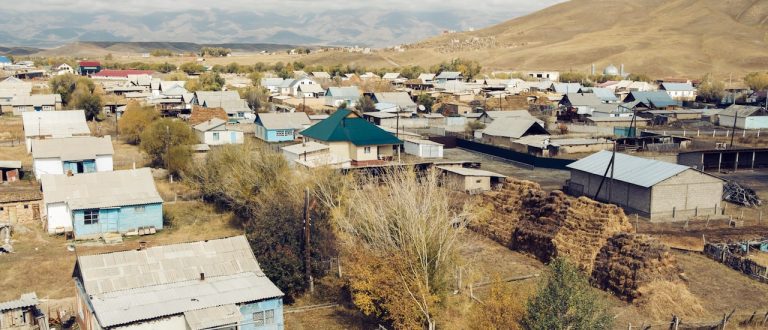
School of D. Turabekova (Boz-Bulun v., Issyk-Kul region)

The final trip was school  of D. Turabekova (Boz-Bulun v.). There are 214 students enrolled.

In this school the device “Ilim Box” was earlier established, however, it was the outdated version which as it became clear, unfortunately, wasn’t used on purpose, and gathered dust in one of offices as the head teacher lost the password from the old device.
The updated version without a password system pleased the school administration.

During the presentation, we showed the improved nuances of the device and instructed on the use of high school children.


Learning by Doing: Have You Heard of the Suusamyr Community Network in Kyrgyzstan?

Last week, the Internet Society together with our Kyrgyz chapter and the wider local community held discussions about Internet connectivity in remote areas in Bishkek, Kyrgyzstan. Approximately 35% of the Kyrgyz population use the Internet (ITU data, 2017) and most users are located in cities and urban areas.
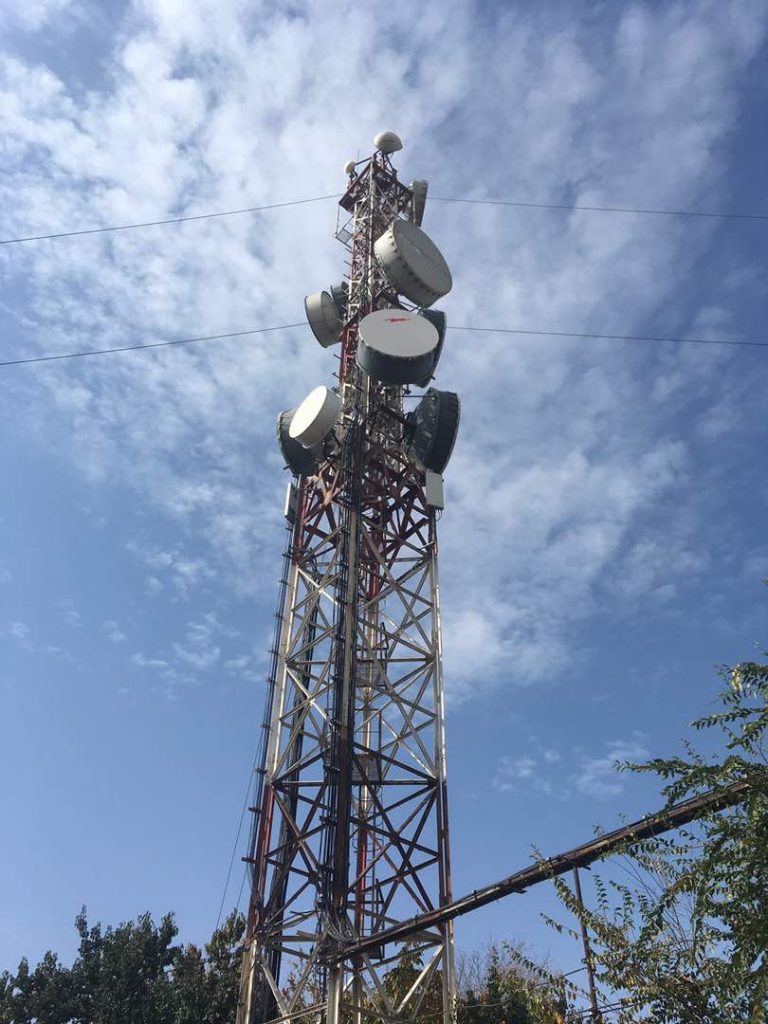
In cooperation with its Kyrgyz chapter, the Internet Society is piloting the community networks approach in the village of Suusamyr, located some 150 kilometers south of the capital city Bishkek. We had an opportunity to visit this village of about 4000 people, tucked away in a wide valley surrounded by high mountains. The economic activity revolves around farming, horse and cattle keeping, and tourism.

While the final phase of the Suusamyr community network is still under implementation, we can already draw some lessons learnt from the preparatory and testing phases.

Partnerships

As a starting point, the Internet Society Kyrgyz chapter consolidated a partnership with the government, Internet Service Providers (ISP), and the local community in Suusamyr. The Kyrgyz government saw the opportunity for local economic development. Two ISPs agreed to lease their existing backbone infrastructure to connect the last mile. And most importantly, the local community embraced this initiative with a hope that it will provide new opportunities for the people in the community. It is important to have the backing of the key stakeholders.

Licensing and permissions

As in most countries, building Internet infrastructure requires licenses and permissions. While it was relatively simple to get the network operator license, the rules for spectrum licenses in Kyrgyzstan involve costs and time-consuming application processes. Our project team partnered with a regional ISP to share their existing spectrum license. Permissions for land use and power supply for masts can also be complicated. Following discussions with landowners and the national electricity company, the permissions for the Suusamyr project were agreed on by a case-by-case basis. An enabling policy framework is necessary to make progress with connectivity in remote areas.

Demand generation

During our visit to Suusamyr, it was clear that there was enthusiasm and demand for the Internet within the local community. The largest school in Suusamyr had a computer lab, but no Internet connection. The municipality headquarters, the local hospital and small businesses would surely benefit, too. However, the municipality does not yet have concrete plans on how to use the Internet to boost local economic development. There is a need for a local “action group,” which could raise awareness and provide skills training amongst the village population.

The President of the Kyrgyz Republic has named 2018 a year of rural development. This ambition is perfectly aligned with the Internet Society’s goal to connect everyone to the Internet, with a focus on the communities in the hardest to reach places. We aim to have a fully operational community network in Suusamyr in a few months’ time.

By Maarit Palovirta

Senior Manager, Regional Affairs Europe

Ferghana Valley IXP

ISOC Kyrgyz Chapter is implementing one of its first major projects thanks to Beyond the Net grant from ISOC. Ferghana Valley Internet Exchange Point (FVIXP) Project will install an IXP in Osh city in the south of Kyrgyzstan, which will result in a much cheaper internet for all the residents of Ferghana Valley.

Ferghana Valley located on crossroads of three countries is the most populated area in Central Asia, the source of regional inter-ethnic tensions due to water and land irrigation disputes, poverty and lack of access to communication services. Internet Exchange Point Project with location in Osh city (Kyrgyzstan) is aimed to increase regional cross-border collaboration between stakeholders and communication of people through increase of Internet affordability by lowering internet tariff plans up to 3 times, multiply growth of Internet traffic exchange in region, increase Internet penetration rate due to price reduction, and improve latency for international and regional content sources.

Ferghana Valley located at the crossroads of three countries of Central Asia: Kyrgyzstan, Uzbekistan, and Tajikistan are in top 10 regions with highest population density in the world. Over 14 million people (2014) reside in 22,000 square kilometers (approximately 636 persons per square km). The region is known for land and water disputes, inter-ethnic conflicts. There is a huge income disparity between administrative capitals of the Stans and regional dwelling communities in Ferghana Valley.

Central Asia has one of the lowest internet penetration rates per capita in Europe and Central Asian region, according to ITU 2014. One of the key regions that illustrate state of the regional digital divide is Ferghana Valley. In regional perspective Internet prices for Ferghana valley dwellers are higher than for residents of other administrative districts. For example, Internet tariff plans in southern cities are 5 times higher (13USD) for the same traffic bandwidth than that in Bishkek located in the North of Kyrgyzstan. Tajikistan, which primarily depends on Internet transit of Russian content from Kyrgyzstan, has an even more severe situation. National ISP Tojnet provides 1Mb unlimited tariff for as low as 45USD. The situation in Uzbekistan is even worse. Uzbekistan ISP monopoly company provides Internet in cities located in Ferghana valley for the price of 59USD for 10GB of the daily Internet and unlimited night traffic.

Considering above mentioned situation we believe establishing Internet Exchange Point in the valley will alleviate the digital divide between the north and south of Kyrgyzstan as well as between the bordering countries by removing barriers for connectivity and stimulating better access.

Internet Exchange Point is a physical location where different stakeholders who have ASN meet to exchange local traffic via a switch. Kyrgyzstan is one of the countries where Ferghana Valley is spread. There are several closed IXPs based in Bishkek (ISP, banks). Unlike present IXPs that could not be neutral and open for new members by Charter, Ferghana Valley IXP (FVIXP) will follow principles of openness and neutrality by providing equal access to infrastructure to all stakeholders, including Government agencies, educational and healthcare institutions as well as commercial banks. IXP will help local small and medium ISP to minimize traffic costs, spend more on infrastructure rather than on internet traffic purchase.

Establishing IXP would greatly enhance the utility and value of the regional Internet and promote the growth of the digital economy. According to Terabit Consulting, “Improvement in ICT infrastructure yields: Increased demand for the output of other industries (demand multiplier), New opportunities for production in other industries (supply multiplier), new goods and services for consumers (final demand). It also increases firms’ innovation capabilities and increases the probability of new products, innovations, and organizations.”