Айылдык мектептердин интернетке туташуу мониторингинин жыйынтыктары (апрель 2025)

After the completion of software and conducting some advocacy campaigns with the stakeholders, we have travelled to pilot schools, tested existing quality of internet speed before and after upgrade with the new hardware.

The measurements were conducted in 10 pilot schools. The team used such measurement tools as fast.com, nPerf. The results demonstrated the average and peak speed and bandwidth capacity (download, upload, latency). In addition to this tests, the team had remotely installed GIGA Meters for constant monitoring of the interent quality. All installations had been made in accordance with the guidance of the GIGA Project.

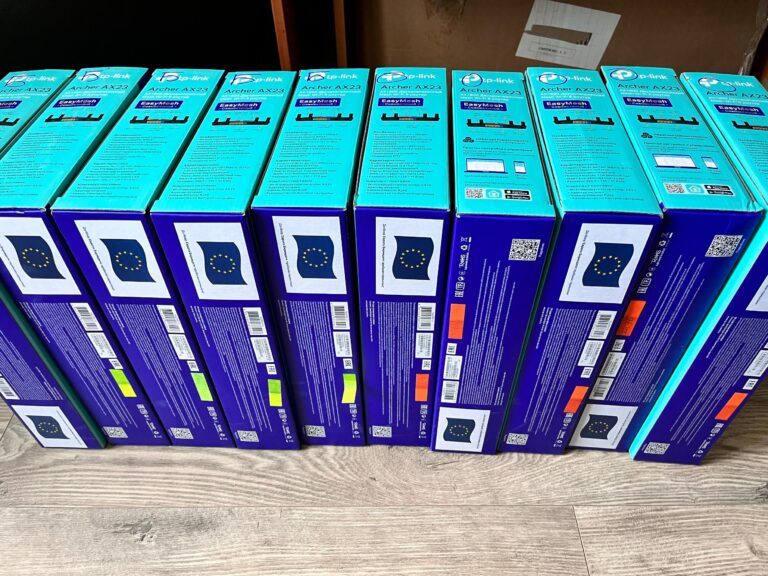
Apparently, all pilot schools had fiber optics cables up to schools that potentially could allow speed up to 1Gbps. The fiber optics were laid by the Kyrgyztelecom ISP with the financial support of the Digital CASA Project, project funded by the World Bank and implemented by the Project Implementation Unit under the Ministry of the Digital Development. However, the media converters and routers were outdated creating hardware constrains to benefiting from high speed Internet. The upgrade of routers to Wi-fi 6 standard ones allowed to increase connectivity speeds up to 30% in connection points. The upgrade of wifi hotspots allowed to have more simultaneous connections at the same time with no setback on quality of services.

The technical audit of the school network infrastructure revealed that there was no much progress from the authorities and school administrations over the last six months. However, some schools had installed videosurveillance system with the support of high quality video streaming and possibility to transmit data to the administraiton of the Ministry of Education and Sciences. Nevertheless, the outbound bandwidth capacity remained low. 
We also conducted measurements of the LAN infrastructure: existing topology, the needs and challenges of school principals, teachers and schoolchildren. As an outcome we have made preliminary assessment of required maintenance works to connect all STEM classes to the LAN Internet.
 
Why LAN not WiFi? Some schools had thick brick or sand block walls that effectively block wifi signals from routers installed in corridors or other rooms. In this context, the LAN infrastructure was the only possible option.

Learning by Doing: Have You Heard of the Suusamyr Community Network in Kyrgyzstan?

Last week, the Internet Society together with our Kyrgyz chapter and the wider local community held discussions about Internet connectivity in remote areas in Bishkek, Kyrgyzstan. Approximately 35% of the Kyrgyz population use the Internet (ITU data, 2017) and most users are located in cities and urban areas.

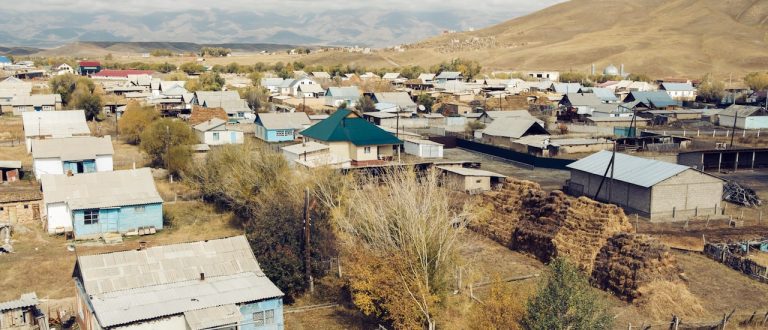
In cooperation with its Kyrgyz chapter, the Internet Society is piloting the community networks approach in the village of Suusamyr, located some 150 kilometers south of the capital city Bishkek. We had an opportunity to visit this village of about 4000 people, tucked away in a wide valley surrounded by high mountains. The economic activity revolves around farming, horse and cattle keeping, and tourism.

While the final phase of the Suusamyr community network is still under implementation, we can already draw some lessons learnt from the preparatory and testing phases.

Partnerships

As a starting point, the Internet Society Kyrgyz chapter consolidated a partnership with the government, Internet Service Providers (ISP), and the local community in Suusamyr. The Kyrgyz government saw the opportunity for local economic development. Two ISPs agreed to lease their existing backbone infrastructure to connect the last mile. And most importantly, the local community embraced this initiative with a hope that it will provide new opportunities for the people in the community. It is important to have the backing of the key stakeholders.

Licensing and permissions

As in most countries, building Internet infrastructure requires licenses and permissions. While it was relatively simple to get the network operator license, the rules for spectrum licenses in Kyrgyzstan involve costs and time-consuming application processes. Our project team partnered with a regional ISP to share their existing spectrum license. Permissions for land use and power supply for masts can also be complicated. Following discussions with landowners and the national electricity company, the permissions for the Suusamyr project were agreed on by a case-by-case basis. An enabling policy framework is necessary to make progress with connectivity in remote areas.

Demand generation

During our visit to Suusamyr, it was clear that there was enthusiasm and demand for the Internet within the local community. The largest school in Suusamyr had a computer lab, but no Internet connection. The municipality headquarters, the local hospital and small businesses would surely benefit, too. However, the municipality does not yet have concrete plans on how to use the Internet to boost local economic development. There is a need for a local “action group,” which could raise awareness and provide skills training amongst the village population.

The President of the Kyrgyz Republic has named 2018 a year of rural development. This ambition is perfectly aligned with the Internet Society’s goal to connect everyone to the Internet, with a focus on the communities in the hardest to reach places. We aim to have a fully operational community network in Suusamyr in a few months’ time.

By Maarit Palovirta

Senior Manager, Regional Affairs Europe