Кыргызстандын пилоттук мектептеринде GIGA Meter сыноо

The Internet Society Kyrgyzstan Chapter, working with the Ministry of Education and Sciences and the GIGA Global Team, has completed connectivity assessments at ten pilot schools in southern Kyrgyzstan using the GIGA Meter tool.

GIGA is a global initiative by UNICEF and ITU launched in 2019 to connect every school to the Internet by 2030. The program has mapped over 2.1 million schools across 140 countries and aims to connect 6 million offline schools globally. Since 2021, the GIGA Global has partnered with teh ISOC Kyrgyz Chapter  on research of state of school connectivity, developing sustainable connectivity in Central Asian region.

The GIGA Meter is a desktop application that allows school administrators to monitor their institution’s connectivity. The tool measures upload and download speeds, latency, packet loss, and accessibility to educational platforms, providing comprehensive data beyond basic speed tests.

In Central Asia, Kyrgyzstan faces particular challenges due to its mountainous terrain and dispersed rural communities. GIGA is developing connectivity solutions and business models specifically for remote mountainous regions, with the Internet Society Kyrgyzstan Chapter serving as a key implementation partner.

The assessment covered schools in six districts: Aravan, Batken, Kadamzhay, Kara-Suu, Leylek, and Suluktu. The GIGA Meter was installed remotely at ten schools, with six installations remaining active during the monitoring period.

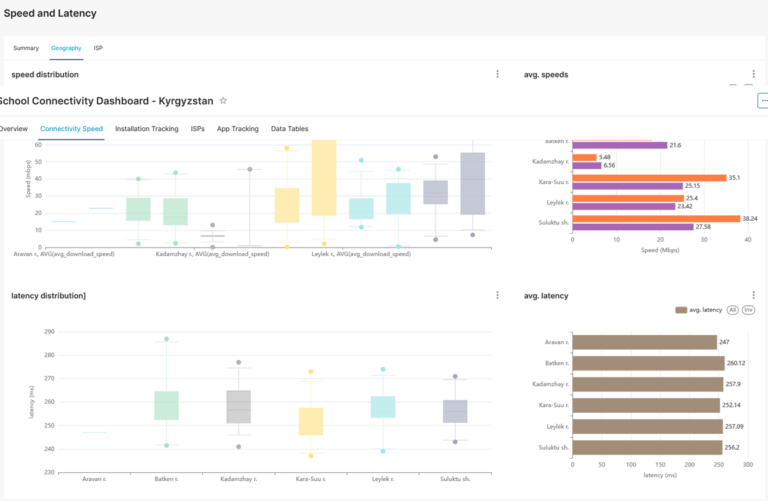
Giga Meter school connectivity dashboard summary kyrgyzstan
Giga Meter school connectivity dashboard summary Kyrgyzstan

Key Connectivity Metrics

Based on 201 measurements collected over several weeks, the pilot revealed:

  • Average download speed: 19.63 Mbps
  • Average upload speed: 22.44 Mbps
  • Average latency: 251 ms

Regional Performance Variations

The data shows significant differences between regions:

Download speeds ranged from 21.6 Mbps in Batken to 35.1 Mbps in Kara-Suu, with most regions performing between 23-27 Mbps.

Latency was relatively consistent across regions, ranging from 247 ms in Aravan to 260 ms in Batken, indicating stable but elevated response times due to the remote fiberoptical location of measurement servers (Mumbai, India).

Connectivity Patterns

Time-series data from May through June shows notable variations in performance:

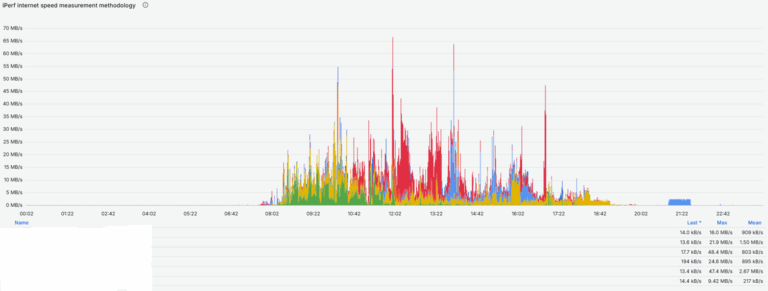
  • Daily speed fluctuations ranged from near zero to peaks of 50+ Mbps
  • Upload speeds demonstrated more stability than download speeds
  • Latency remained consistent around 250-270 ms throughout the monitoring period

Of Kyrgyzstan’s 2,080 schools mapped on GIGA’s platform, 1,220 are classified as connected while 851 have unknown connectivity status. However, the Ministry of Education and Sciences as well as the Ministry of Digital Development reported repeatedly that over 90% of schools connected to the Internet. This pilot provides detailed performance data for a representative sample of connected schools in the southern regions.

Implications

The results confirm earlier assessments of Kyrgyzstan’s school connectivity landscape, showing adequate speeds for basic educational applications but with significant variability that could impact consistent access to digital learning resources.

This pilot establishes a additional measurement toolkit for ongoing monitoring and provides evidence for targeted improvements in school connectivity across the country’s rural regions.

Өзгөн районундагы Кара-Дыйкана айылындагы орто мектепке инновациялык күл чогултуучу орнотулду.

In secondary school No. 7 named after Tagay Tashmamatov, located in the village of Kara-dyikan, Uzgen district, Osh region, an innovative industrial ash filter for a coal furnace was installed, which retains up to 98% of harmful substances and carbon dioxide. Thanks to the introduction of these green technologies, schoolchildren, teachers and residents of nearby houses can be protected from the negative health consequences of emissions of harmful substances from coal furnaces during winter heating seasons.
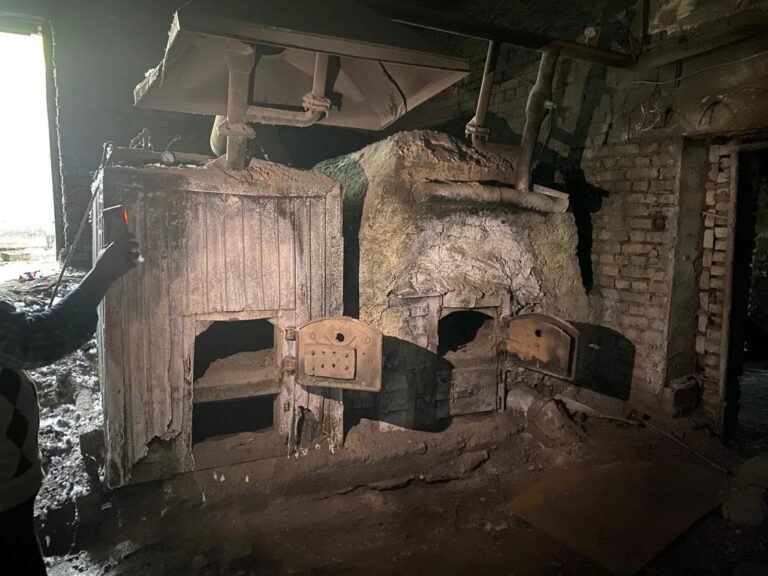
In the process of monitoring the quality of the network Internet infrastructure, the project team paid attention to the heating systems in pilot schools. Almost all schools in rural areas are heated by coal furnaces installed 50-60 years ago, which are significantly inferior in energy efficiency and safety to modern coal furnaces and alternative heating methods. Particular attention was drawn to the coal furnace of the secondary school in the village of Kara-dyikan, Uzgen district, Osh region. This coal furnace was located in the basement under the floors where students study during the day. Even in the spring, it was difficult to enter and stay in this room due to the high content of harmful substances and the smell of coal ash. The team found it difficult to imagine how it works in the winter and how children study while smelling the ash that penetrated the classrooms through the floor and windows.

The school administration repeatedly contacted local government bodies and the leadership of the Ministry of Education of the Kyrgyz Republic. However, these issues remained open and were not a priority. About 1,500 students study at this school, and the total number of residents in the village of Kara-Dyikan, according to the census, was 7,700 people. During the same period in Kyrgyzstan, engineer Amantur Salymbaev invented an innovative filter for coal furnaces, which cyclone and electromagnetic filters trap 90% of harmful particles and do not allow 50% of carbon dioxide. The filter does not need electricity or water to operate. According to the Ministry of Natural Resources, its efficiency in air purification reaches 98%. At the time of the appeal, Salymbaev had a patent for a technical invention and began to offer implementation. The filter is designed for a service life of 5-6 years and does not require maintenance. This makes the device a sustainable and cost-effective solution. In this regard, this project financed the installation of this filter at the school. The initiative to install an innovative filter received support from the school administration and local government. The industrial filter was developed within a few days, and the installation took two days. We hope that this measure will contribute to the health of the residents of this village, students and teachers of the school, and also become an exemplary model for other schools in the Kyrgyz Republic.

You could learn more about innovative solution following the link: https://www.instagram.com/reel/DI3oZeNMBVY/ 

Айылдык мектептердин интернетке туташуу мониторингинин жыйынтыктары (апрель 2025)

After the completion of software and conducting some advocacy campaigns with the stakeholders, we have travelled to pilot schools, tested existing quality of internet speed before and after upgrade with the new hardware.

The measurements were conducted in 10 pilot schools. The team used such measurement tools as fast.com, nPerf. The results demonstrated the average and peak speed and bandwidth capacity (download, upload, latency). In addition to this tests, the team had remotely installed GIGA Meters for constant monitoring of the interent quality. All installations had been made in accordance with the guidance of the GIGA Project.

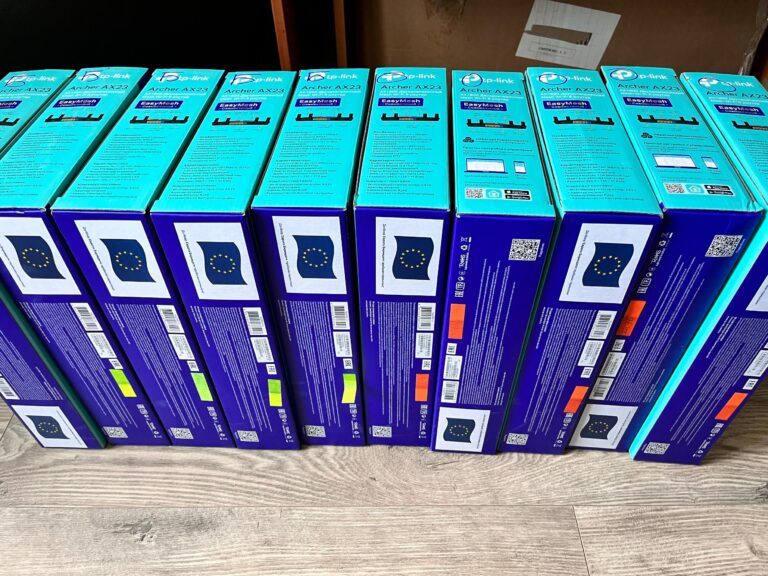
Apparently, all pilot schools had fiber optics cables up to schools that potentially could allow speed up to 1Gbps. The fiber optics were laid by the Kyrgyztelecom ISP with the financial support of the Digital CASA Project, project funded by the World Bank and implemented by the Project Implementation Unit under the Ministry of the Digital Development. However, the media converters and routers were outdated creating hardware constrains to benefiting from high speed Internet. The upgrade of routers to Wi-fi 6 standard ones allowed to increase connectivity speeds up to 30% in connection points. The upgrade of wifi hotspots allowed to have more simultaneous connections at the same time with no setback on quality of services.

The technical audit of the school network infrastructure revealed that there was no much progress from the authorities and school administrations over the last six months. However, some schools had installed videosurveillance system with the support of high quality video streaming and possibility to transmit data to the administraiton of the Ministry of Education and Sciences. Nevertheless, the outbound bandwidth capacity remained low. 
We also conducted measurements of the LAN infrastructure: existing topology, the needs and challenges of school principals, teachers and schoolchildren. As an outcome we have made preliminary assessment of required maintenance works to connect all STEM classes to the LAN Internet.
 
Why LAN not WiFi? Some schools had thick brick or sand block walls that effectively block wifi signals from routers installed in corridors or other rooms. In this context, the LAN infrastructure was the only possible option.

Баткен облусунун Лейлек районунун мугалимдери үчүн STEM тренингдери

High in the mountainous terrain of Leylek district, the village of Chimgen became an unlikely epicenter of educational innovation on April 24, 2025. At the School named after Japarov, rural educators from across one of Batken Oblast’s most remote districts gathered for the culminating session of a three-day regional STEAM training initiative that had already energized teachers in Osh Oblast and the urban centers of Kadamzhay.
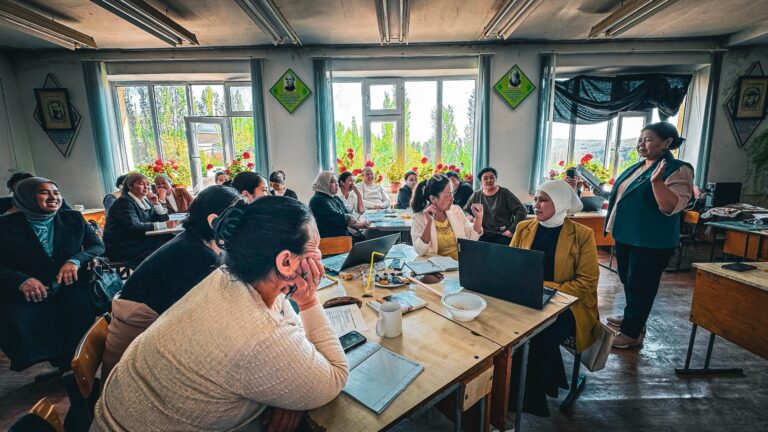
This final training session carried special significance, representing the program’s commitment to ensuring that geographical isolation never translates to educational isolation. The teachers who made the journey to Chimgen village embody the dedication that characterizes rural education—professionals who often serve as the sole representatives of their subjects in small schools, wearing multiple hats and serving entire communities as educational leaders.

The rural context demanded a uniquely adapted approach to STEAM methodology. While their urban colleagues in Kyzyl Kiya and Batken had access to varied resources and specialist teachers, Leylek district educators often work in schools where a single teacher might cover multiple grade levels or subjects. This reality shaped the training’s focus toward versatile, adaptable strategies that could function effectively in resource-constrained environments.

Master trainer Symbat Satybaldieva, completing her three-day journey across the region alongside co-trainers Ainaz Ysmailova and Gulmira Isakova, brought to Chimgen a refined understanding of how STEAM principles could be tailored to rural realities. The cumulative experience from Osh and Kadamzhay sessions informed adaptations that made the methodology even more accessible and practical for remote schools.

The 5E learning model took on particular relevance in this setting, where teachers recognized its potential to transform limited resources into rich learning experiences. A biology teacher shared how the “Engage” phase could begin with students’ direct observations of their mountain environment, while the “Explore” phase might involve investigating local ecosystems that urban students could only read about in textbooks.

Rural educators brought unique perspectives to Growth Mindset discussions, sharing stories of students who had overcome significant challenges to pursue education despite economic and geographical barriers. These real-world examples of resilience and determination provided powerful illustrations of neuroplasticity principles, demonstrating how belief in student potential can literally reshape neural pathways and academic outcomes.

The session’s emphasis on locally-sourced materials resonated deeply with participants who have long practiced the art of educational innovation born from necessity. Teachers shared creative solutions they had developed—using mountain stones for mathematics manipulatives, incorporating traditional crafts into engineering challenges, and utilizing agricultural cycles to teach scientific method. The training validated these approaches while providing theoretical frameworks that elevated intuitive practices to evidence-based methodologies.

PISA-aligned assessment strategies sparked particularly engaging discussions as teachers grappled with preparing students for global standards while honoring local knowledge systems. The session explored how traditional Kyrgyz problem-solving approaches could be integrated with international assessment frameworks, creating learning experiences that were both culturally grounded and globally relevant.

Artificial intelligence tools presented both opportunities and challenges in this rural context. While internet connectivity and technology access remain variable in remote areas, teachers learned to view AI as a planning and preparation tool that could enhance their instructional design even when classroom implementation might rely on more traditional methods.

The “Marshmallow Challenge” took on special meaning in Chimgen, where teachers recognized parallels to community problem-solving traditions. The activity’s emphasis on iteration, collaboration, and learning from failure mirrored approaches that rural communities have long used to address resource limitations and environmental challenges.

One of the day’s most powerful moments came during the “Food Print Puzzles” activity, when teachers connected observation and inference skills to traditional ecological knowledge that their students possess. A geography teacher noted: “My students can predict weather patterns by reading cloud formations and animal behaviors—this is scientific observation at its most sophisticated. Now I understand how to build on this foundation.”

The collaborative atmosphere was enhanced by the intimate setting, where teachers from scattered mountain schools had rare opportunities to connect with colleagues facing similar challenges. Professional isolation, a common experience in rural education, gave way to animated discussions about shared solutions and mutual support strategies.

Demo lesson presentations showcased remarkable creativity in adapting content to local contexts. A history teacher demonstrated how the 5E model could transform lessons about ancient Silk Road trade routes by having students physically map pathways through their own mountain passes, while a mathematics teacher showed how geometric principles could be explored through traditional yurt construction techniques.

The training’s rural focus highlighted the critical role that individual teachers play in their communities. Unlike urban settings where educational responsibilities are distributed among many professionals, rural teachers often serve as their schools’ primary innovators, technology coordinators, and community liaisons. The STEAM methodologies provided frameworks for managing these multiple roles more effectively.

Feedback from participants emphasized the training’s relevance to their daily realities. One teacher reflected: “Living in the mountains teaches you to be resourceful, but this training showed me how to be resourceful with purpose. Every stone, every plant, every traditional practice can become a pathway to scientific understanding.”

The Chimgen session completed a comprehensive regional initiative that demonstrated how innovative educational approaches can be successfully adapted across diverse contexts—from urban pilot schools in Osh Oblast to the busy cities of Kadamzhay region to the remote villages of Leylek district. Each setting contributed unique insights that enriched the overall understanding of STEAM implementation in Central Asian contexts.

As the three-day program concluded, the mountain setting provided a fitting metaphor for the journey these educators have undertaken. Like climbers who support each other in reaching new heights, these teachers have formed professional networks that transcend geographical boundaries, united by shared commitment to educational excellence regardless of their schools’ remote locations.

The success in Chimgen proves that transformative education is not dependent on urban resources or technological abundance, but on the creativity, dedication, and professional growth of educators who refuse to let geographical challenges limit their students’ potential. These rural teachers return to their mountain schools equipped not just with new methodologies, but with renewed confidence that they can provide world-class educational experiences in any setting.

The ripple effects of this rural training will extend far beyond individual classrooms, as these teachers serve as educational leaders in communities where their influence shapes not just student learning, but community attitudes toward education, innovation, and possibility.

Баткен областынын Кадамжай шаарындагы мугалимдер үчүн STEAM тренингдери

In the bustling educational hub of Kadamzhay, a transformative day unfolded on April 23, 2025, as dedicated educators from three dynamic cities—Kyzyl Kiya, Bujum, and Batken—converged at School #17 named after Masalieva for an intensive STEAM training experience. This gathering represented the second phase of a comprehensive regional initiative that had begun in Osh Oblast the previous day, extending innovative pedagogical approaches across southern Kyrgyzstan’s educational landscape.

The single-day intensive format demanded a focused approach, concentrating the most impactful elements of STEAM methodology into actionable strategies that teachers could immediately implement. Unlike traditional professional development sessions, this training emphasized hands-on experimentation and peer collaboration, recognizing that educators from these three cities bring diverse perspectives shaped by their unique urban and semi-urban contexts.

Master trainer Symbat Satybaldieva, supported by co-trainers Ainaz Ysmailova and Gulmira Isakova, adapted the comprehensive STEAM curriculum to address the specific challenges faced by teachers working in resource-diverse environments. The educators gathered represented a cross-section of subjects and grade levels, united by their commitment to elevating student engagement and learning outcomes through scientific inquiry and integrated approaches.

The heart of the Kadamzhay session centered on the practical application of the 5E learning model—Engage, Explore, Explain, Elaborate, and Evaluate. Teachers worked in mixed-city groups, designing mini-lessons that transformed traditional content delivery into dynamic, student-centered experiences. The collaborative nature of these activities created natural opportunities for educators from different cities to share local innovations and adapt successful practices to their own contexts.

One particularly powerful moment emerged when a mathematics teacher from Kyzyl Kiya demonstrated how geometric concepts could be explored through architectural elements found in their city’s Soviet-era buildings, while a colleague from Batken showed how similar principles applied to traditional Kyrgyz construction techniques. This cross-pollination of ideas exemplified the program’s goal of making abstract concepts tangible through local relevance.

The training’s emphasis on Growth Mindset resonated strongly with participants who often face the challenge of motivating students in economically challenging environments. Teachers engaged with research on neuroplasticity, discovering how understanding the brain’s capacity for change could revolutionize their approach to student potential. This scientific foundation provided educators with evidence-based strategies for encouraging persistence and resilience in their classrooms.

PISA-aligned assessment strategies took on particular significance in this setting, as teachers grappled with preparing students for international standards while maintaining connection to local contexts. The session included practical workshops on developing critical thinking tasks that mirror global assessments while incorporating culturally relevant scenarios that students could relate to and engage with meaningfully.

The integration of artificial intelligence tools sparked considerable discussion among participants, many of whom had limited previous exposure to educational technology. Rather than viewing AI as a replacement for traditional teaching methods, educators learned to conceptualize these tools as collaborative partners that could enhance their ability to personalize instruction and provide immediate feedback to students.

Interactive demonstrations brought theoretical concepts to life through engaging activities. The “Marshmallow Challenge” revealed insights about teamwork, iteration, and learning from failure, while “Food Print Puzzles” developed observation and inference skills crucial for scientific thinking. These activities served dual purposes: modeling effective STEAM pedagogies while providing ready-to-use classroom activities.

Teachers from Bujum particularly appreciated the emphasis on resource optimization, learning how everyday materials could be transformed into powerful learning tools. The session included practical demonstrations of creating laboratory equipment from locally available materials, addressing a common challenge in schools where traditional science resources may be limited.

The collaborative atmosphere extended beyond formal sessions, with educators naturally forming professional networks that crossed city boundaries. Teachers exchanged contact information and began planning follow-up collaborations, recognizing that the challenges they face are often similar despite geographical differences.

Feedback from participants highlighted the value of the intensive format, with many noting that the concentrated learning experience created a sense of urgency and focus that enhanced retention and application. One educator commented: “This single day changed how I think about every lesson I teach. The 5E model isn’t just for science—it’s a way of thinking about all learning.”

The training’s success in Kadamzhay demonstrates the scalability of innovative educational approaches across diverse contexts. By bringing together educators from three different cities, the program created opportunities for knowledge sharing that extended far beyond the formal training hours. Teachers returned to their schools not just with new methodologies, but with expanded professional networks and renewed enthusiasm for educational innovation.

This Kadamzhay experience represents a crucial link in the broader regional transformation of education, connecting the pilot innovations tested in Osh Oblast with the rural implementations planned for Leylek district. The urban and semi-urban perspectives contributed by Kyzyl Kiya, Bujum, and Batken educators provide valuable insights for adapting STEAM approaches across the diverse educational landscape of southern Kyrgyzstan.

As these educators return to their classrooms, they carry with them not just new teaching strategies, but a shared vision of educational excellence that transcends city boundaries. The collaborative spirit fostered during this intensive day continues to ripple through professional conversations and classroom innovations, creating a sustainable foundation for long-term educational transformation in the region.

The success of the Kadamzhay training reinforces the importance of bringing high-quality professional development directly to educators in their regional contexts, recognizing that transformative change happens when teachers have immediate opportunities to collaborate, experiment, and implement new approaches within their familiar professional communities.

Ош облусунун мугалимдери үчүн STEM тренингдери

On April 22, 35 dedicated teachers from pilot schools across the Osh oblasty gathered in Osh city for an intensive one day mastercalls that would fundamentally transform how they approach teaching and learning.
The STEAM (Science, Technology, Engineering, Arts, and Mathematics) training program, conducted represents more than just professional development—it’s a cornerstone initiative supporting Kyrgyzstan’s ambitious transition to a 12-year Cambridge secondary education system. As the country on the way to the comprehensive education sector reforms, programs like these are crucial for ensuring that rural schoolchildren receive the same quality of innovative education as their urban counterparts.

These 35 educators from Osh Oblast pilot schools now equipped to lead the integration of modern pedagogical approaches that align with international standards while remaining rooted in local contexts.

Led by master trainer Symbat Satybaldieva alongside co-trainers Ainaz Ysmailova and Gulmira Isakova, the program introduced teachers to cutting-edge methodologies that transform passive learning into active discovery. The training centered on several revolutionary approaches: The 5E Learning Model became the foundation for reimagining lessons. Teachers learned to structure their classes around five key phases: Engage, Explore, Explain, Elaborate, and Evaluate. This model shifts the teacher’s role from information deliverer to learning facilitator, encouraging students to construct their own understanding through guided inquiry. Growth Mindset and Neuroplasticity sessions challenged teachers to reconsider how they view student potential. By understanding that intelligence isn’t fixed but can be developed through effort and strategy, educators gained tools to help every student, regardless of their starting point, achieve academic success. PISA-aligned Tasks brought international assessment standards into local classrooms, ensuring that students develop the critical thinking and problem-solving skills needed to compete globally while addressing local challenges.

The heart of the training lay in its practical application. Teachers didn’t just learn about new methodologies—they experienced them firsthand by designing and delivering their own demo lessons. From “Birds’ Classification” to “Historical Places of Uzgen,” educators crafted innovative lessons that brought abstract concepts to life. One particularly memorable demonstration involved Newton’s third law of action and reaction, taught through a “balloon car” experiment. Students watched in amazement as simple materials transformed into vehicles that perfectly illustrated complex physics principles. This hands-on approach exemplifies how STEAM education makes learning tangible, memorable, and genuinely exciting.

The training emphasized that STEAM education isn’t just about science and mathematics—it’s about developing the critical thinking, collaboration, and problem-solving skills that define 21st-century success. Through activities like the “Marshmallow Challenge” and “Food Print Puzzles,” teachers experienced firsthand how failure becomes a learning opportunity and how teamwork amplifies individual capabilities. The integration of artificial intelligence tools introduced educators to the reality that technology isn’t replacing teachers—it’s empowering them to focus on what they do best: inspiring, guiding, and mentoring young minds.

The impact of the training resonates in teachers’ own words: “After the training, I was encouraged to work more with groups and develop logical thinking, work with real-life examples, and think in a holistic way, not just about one subject in class.” Another educator noted: “5E model, PISA test based exercises, scientific methods. I will use them in laboratory work because I am a biology teacher.” These testimonials reflect a fundamental shift in educational philosophy—from subject-specific teaching to integrated, real-world learning that prepares students for the interconnected challenges they’ll face in their careers and communities.

With an impressive post-training survey result of 8-10, the training received overwhelmingly positive feedback. But perhaps more importantly, it sparked a broader conversation about educational equity and rural development. Teachers identified concrete needs—from laboratory facilities to STEAM camps—that highlight both the challenges and opportunities in rural education.

The program’s success demonstrates that geographic isolation doesn’t have to mean educational isolation. When rural teachers receive world-class training and support, they become catalysts for community transformation, inspiring students who might never have imagined careers in science, technology, or engineering.

Мектептин интернет байланышын көзөмөлдөө куралдары

Understanding the real quality of internet connectivity in educational institutions has become a critical challenge for policymakers and administrators across the globe. The Internet Society Kyrgyz Chapter recently recognized this urgent need and commissioned the development of specialized monitoring software to assess internet quality in pilot secondary schools throughout Kyrgyzstan. This initiative represents a significant step toward evidence-based decision-making in educational technology infrastructure, particularly in addressing longstanding concerns about service delivery quality.
The context surrounding this project reveals a troubling disconnect between contractual obligations and actual service delivery. Since 2021, Kyrgyztelecom has held an exclusive contract as the sole internet service provider for secondary schools across Kyrgyzstan, with agreements specifying 100 Mbps internet connectivity for educational institutions. However, the reality on the ground tells a different story. Schools consistently reported significant performance issues, slow speeds, and unreliable connections that made it virtually impossible to conduct modern digital education effectively.

The situation became so problematic that teachers began using their personal mobile data allowances, creating Wi-Fi hotspots from their smartphones to ensure their students could access online learning platforms and digital educational resources. This grassroots solution highlighted the severity of the connectivity crisis while simultaneously demonstrating the dedication of educators to providing quality instruction despite infrastructure challenges. The irony was stark – the Kyrgyz Government was paying for internet services that were essentially unusable, while teachers were subsidizing the education system with their personal resources.

This widespread practice of teachers sharing mobile data revealed the fundamental problem with existing service arrangements. Without objective measurement tools, schools had no concrete evidence to support their complaints about poor connectivity. Service provider claims about delivered bandwidth had no independent verification, creating an accountability gap that disadvantaged both educators and students. The lack of empirical data made it difficult for education officials to address the problem through formal channels or to justify contract modifications or provider changes.

The technical approach for addressing this challenge crystallized during project coordinator Aziz Soltobaev’s participation in the RIPE NCC conference, where he joined the Internet of Things working group. The discussions and insights gained from this engagement with the European network coordination community provided the inspiration for utilizing OpenWrt as the foundation for the monitoring solution. This connection to the broader internet infrastructure community proved instrumental in shaping the project’s technical direction and ensuring alignment with established best practices in network measurement and monitoring.

The project centers around creating a comprehensive measurement platform built on the OpenWrt framework, an open-source operating system designed primarily for embedded devices and network routers. This choice of foundation proves particularly strategic for educational environments, as OpenWrt provides a stable, customizable, and cost-effective solution that can be deployed across diverse hardware configurations commonly found in schools. The system transforms abstract complaints about internet quality into concrete, measurable data that can drive meaningful policy changes.

The monitoring system incorporates multiple measurement methodologies to provide a comprehensive view of internet performance. The implementation includes NDT7 (Network Diagnostic Tool version 7), which offers standardized speed testing capabilities developed by Measurement Lab. This protocol provides reliable throughput measurements that can be compared across different locations and time periods. Additionally, the system utilizes iPerf, a widely-recognized network testing tool that measures maximum achievable bandwidth on IP networks, supporting both TCP and UDP protocols for comprehensive performance analysis.

Beyond these core measurement tools, the platform integrates additional diagnostic capabilities including latency measurements, packet loss detection, and jitter analysis. These metrics collectively paint a detailed picture of network performance that goes far beyond simple download and upload speeds. The system continuously monitors these parameters throughout the school day, capturing variations in performance that correspond to different usage patterns and peak demand periods.

The data visualization capabilities of the system prove particularly valuable for decision-makers dealing with service provider accountability. Real-time dashboards display current network status while historical reporting functions reveal trends and patterns over extended periods. The screenshots demonstrate how the system presents upload and download performance data in clear, accessible formats that allow administrators to quickly identify periods when promised service levels are not being delivered. This creates an evidence base that can support formal complaints, contract renegotiations, or provider performance reviews.

One notable aspect of the implementation is its consideration of the unique challenges faced by educational institutions in service provider relationships. Schools typically experience highly variable internet usage patterns, with significant spikes during class transitions, lunch periods, and specific lesson times when multiple classrooms simultaneously access online resources. The monitoring system accounts for these patterns by providing detailed temporal analysis that helps administrators understand when and why network performance fails to meet educational needs, particularly in comparison to contracted service levels.

The open-source nature of the solution offers several advantages for government agencies and educational institutions operating under budget constraints while dealing with underperforming commercial relationships. Unlike proprietary monitoring solutions that often require expensive licensing fees and vendor-specific hardware, this OpenWrt-based approach can be deployed on commodity hardware or integrated into existing network infrastructure. This accessibility makes it particularly suitable for developing regions where cost-effectiveness remains a primary consideration in technology adoption decisions, especially when existing service contracts are not delivering promised value.

For the Ministry of Education and Sciences, this monitoring capability provides unprecedented visibility into the actual internet experience of students and teachers, contrasting sharply with the theoretical service levels outlined in government contracts with Kyrgyztelecom. Rather than relying on service provider assertions or anecdotal reports from schools, education officials can now access concrete performance data that reflects real-world conditions. This information proves invaluable when making decisions about service provider accountability, contract enforcement, or alternative arrangements that could better serve educational needs.

The Ministry of Digital Development benefits from having standardized measurement data across multiple educational institutions that can objectively assess whether government investments in educational connectivity are delivering promised results. This consistency enables meaningful evaluation of service provider performance across different regions and school types. Such comparative analysis can inform policy decisions about contract modifications, penalty enforcement, or the potential benefits of introducing competition in educational internet services.

For telecommunications regulatory bodies, the system provides an independent source of performance data that complements traditional regulatory monitoring efforts while offering insight into how monopolistic service arrangements perform in practice. The continuous measurement approach offers a more comprehensive view of service quality than periodic testing, potentially revealing systematic service degradation or improvement trends that might otherwise go unnoticed. This capability enhances regulatory oversight while providing objective data for discussions with service providers about network performance standards and contract compliance.

The practical implementation of the system reveals concerning patterns in educational internet delivery that validate teacher complaints about service quality. The monitoring data shows significant discrepancies between promised and delivered bandwidth, particularly during peak educational hours when reliable connectivity is most crucial. Understanding these patterns helps administrators document service failures while providing valuable evidence for accountability discussions with Kyrgyztelecom and government oversight agencies.

The bandwidth utilization analysis component of the system offers insights into how contracted internet resources are actually delivered versus consumed within educational environments. This information helps school administrators understand whether current service arrangements meet educational needs while providing data-driven justification for contract enforcement actions or alternative service arrangements when necessary. The system can identify specific periods when service falls below contractual obligations, enabling more informed decisions about remedial actions or penalty applications.

The project’s emphasis on open-source development ensures long-term sustainability and adaptability while reducing dependence on commercial monitoring solutions that might be influenced by service provider relationships. Educational institutions and government agencies can modify the software to meet specific local requirements without depending on commercial vendors for customization or potentially compromised monitoring tools. This independence proves particularly important in situations where service provider accountability is a primary concern.

The classification of this monitoring toolkit as a digital public good adds significant value to its development and deployment. Digital public goods are defined as “open-source software, open data, open artificial intelligence models, open standards and open content” that are intended to contribute to sustainable development. This classification promotes “open-source solutions for a more equitable world” and is “key to achieving the Sustainable Development Goals”. By developing this internet monitoring solution as a digital public good, the Internet Society Kyrgyz Chapter ensures that the benefits extend far beyond the immediate pilot implementation.

The digital public goods framework means that other countries facing similar challenges with educational internet service delivery can adapt and deploy this monitoring solution without licensing restrictions or vendor dependencies. Digital public goods “offer the opportunity to counteract” digital divides “through their open access to information and technologies” while limiting “economic monopolies over digital solutions and knowledge”. This is particularly relevant for developing nations where telecommunications monopolies may underdeliver on government contracts while lacking independent oversight mechanisms.

The toolkit’s status as a digital public good also facilitates international cooperation and knowledge sharing about internet quality monitoring in educational settings. Educational authorities in other countries can learn from Kyrgyzstan’s implementation experience while contributing their own innovations and adaptations back to the global community. This collaborative approach accelerates the development of effective solutions while reducing the individual costs and risks associated with developing monitoring capabilities from scratch.

Looking toward broader implications, this monitoring initiative represents a model that directly addresses accountability gaps in government service procurement while providing concrete tools for advocacy on behalf of educators and students. The combination of standardized measurement protocols, open-source implementation, and focus on decision-maker needs creates a framework that transcends specific national or regional contexts. The detailed performance data generated by such systems can inform evidence-based policy making at multiple levels of government and educational administration, particularly in situations where service providers may not be meeting contractual obligations.

The success of this pilot implementation in Kyrgyzstan’s secondary schools demonstrates the value of systematic internet quality monitoring in addressing service delivery problems that affect educational outcomes. By providing reliable, continuous measurement data through accessible open-source tools, the project enables informed decision-making about service provider accountability, contract enforcement, and alternative arrangements that could better serve educational needs. This approach transforms teachers’ personal sacrifices and student learning disruptions into concrete evidence that can drive systemic improvements in educational technology infrastructure.

The toolkit serves as a powerful advocacy tool that gives voice to educators and students who have been struggling with inadequate internet connectivity despite government investments in educational technology. Rather than continuing the cycle of paying for services that don’t meet educational needs while teachers subsidize the system with personal mobile data, this monitoring solution provides the evidence base necessary to demand accountability and drive meaningful improvements in educational internet service delivery.

The web platform is accessible to decision makers via link: https://mektepinternet.isoc.kg 

The Github repository of code located here: https://github.com/ISOCKG/internetqualitymonitoring 

#DigitalPublicGoods #OpenSource #InternetForEducation #DigitalEquity #OpenWRT #NetworkMonitoring #EducationTechnology #DigitalDivide #InternetRights #TechForGood #SDGs #DigitalInclusion #OpenData #CommunityTech #EducationAccess #NetworkTransparency #DigitalGovernance #TechPolicy #ConnectivityMatters 

Айылдык мектептердин интернетке туташуу мониторингинин алгачкы жыйынтыктары

The initial monitoring of the school connectivity demonstrated lack of the promised speed by Internet Service Provider. The internal wired and wireless infrastructure were the other issue of low connectivity leaving teachers and schools an opportunity to benefit from Internet provided by authorities.

Methodology

To assess the technical condition of the Internet infrastructure of 10 pilot schools in the Osh and Batken regions of the Kyrgyz Republic, the following activities were carried out:

  • Video interviews with school principals and IT teachers were conducted in Kyrgyz to identify current challenges and needs of educational institutions.
  • Remote diagnostics of the condition of equipment, communication lines and current Internet connection speed.
  • Analysis of building plans to study the location of classes, network nod locations and used network equipment.
  • Collection of data on internet service providers and tariff plans, as well as technical network parameters.

Based on our previous research we learned that all networking and information technology issues delegated as additional responsibility to teachers of the informatics, computer science classes. Therefore, the teachers were important source of information providing preliminary insights about the state of connectivity.

The remote diagnostics had been conducting using video call and overview of the cabling to the schools, media converters, routers and switches as well as end devices such as computers, laptops, etc.

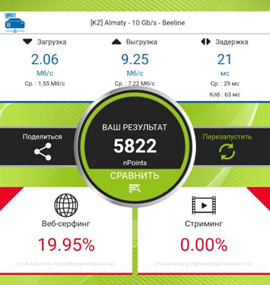
We have used different testing platforms to monitor school connectivity including such parameters as speed diagnostics, browsing, Quality of Service, latency rate to key data centers and internet exchange points, as well as compliance of existing infra to LAN cabling engineering standards. Some parameters were tested using such diagnostics services as Ookla Speedtest, fast.com focused on quality of streaming services, and nPerf that rely upon the mLab measurement protocol (NDT7). Note that the GIGA Daily Check Up App was not available to Kyrgyzstan therefore ignored in testing stage.

The buliding information modeling helped us to understand the quality of wireless signal, possibility of wireless mesh network across the school, existing capacity, needs and challenges for schools to be fully connected and enjoy the seamless digital education experience.

Findings

  • All of the secondary schools had low-bandwidth capacity routers from two vendors with a maximum speed of up to 300 Mbps, limited processor performance and memory capacity suitable for home or small office usage only. The routers haven’t been able to cope with all connections.
  • Pilot schools were utilizing combined internal connectivity infrastructure – LAN cable connecting computer classrooms and wifi connection for teachers. The actual internet speed ranged between 340Kbps to 16Mbps.
  • Based on the Cabinet of Ministry’s decision KyrgyzTelecom Joint Stock Company had been selected as the single supplier of the internet services for all 2200 secondary schools of Kyrgyzstan. The terms of the agreement were classified and not available publicly. According to the interview, the Ministry of Education paid roughly 2500 Kyrgyz soms monthly fee per school in duration from September to June, while summertime were unpaid.

Photo gallery of school connectivity monitoring results