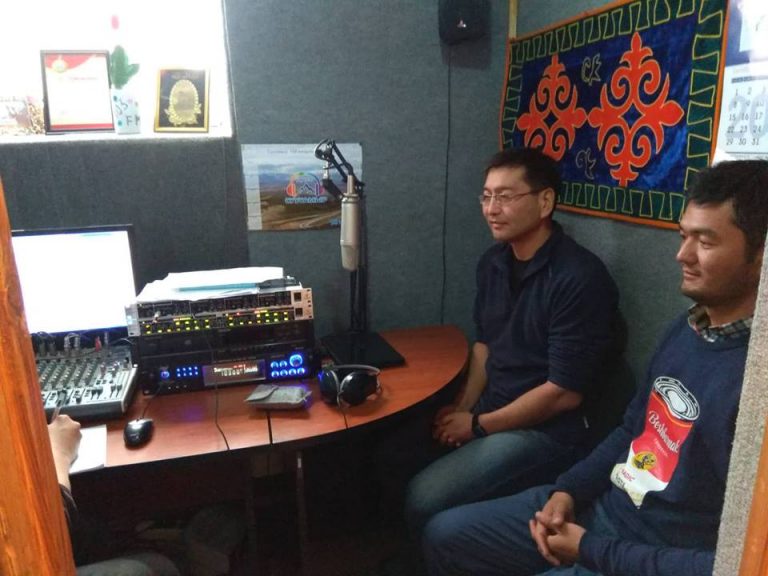
Interview about community network on “Suusamyr FM”

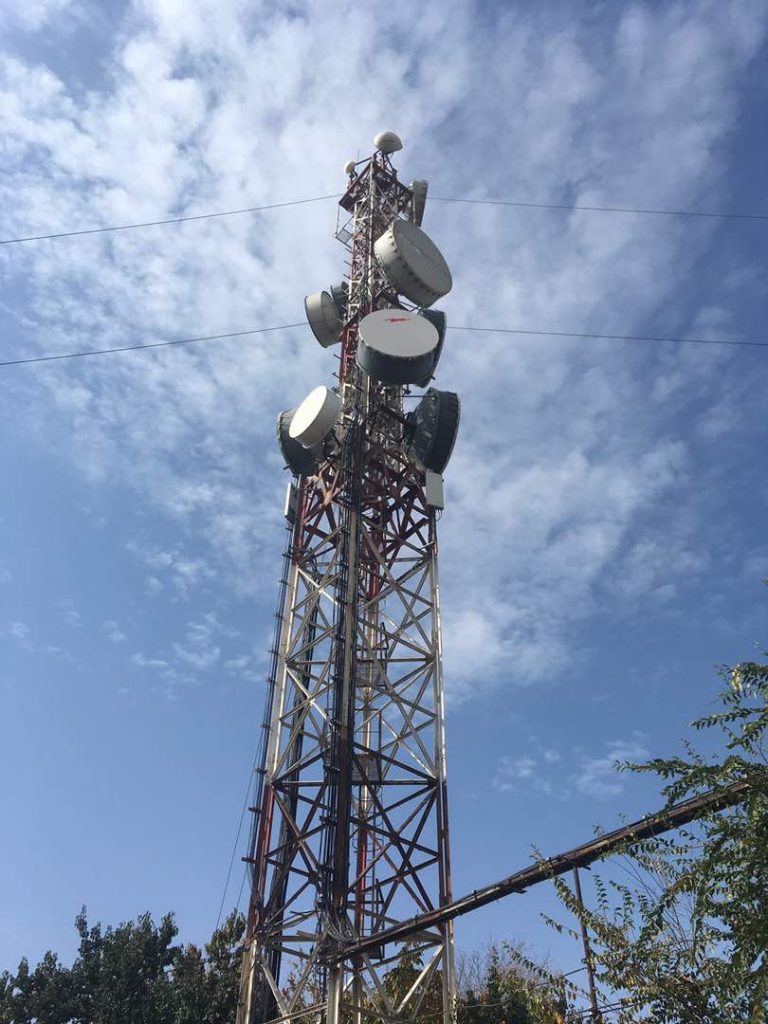
November 23, 2018 after the launch of the project “Suusamyr net” and the start of connecting subscribers, a meeting with local residents was organized. During the conversation, they talked about the project, the advantages and importance of high-speed Internet. The audience needed to provide ip TV, as there were no entertainment and sports channels, and they received many proposals to improve the Internet environment. There were no more than twenty people, in order to reach more people community Radio “Suusamyr FM” invited representatives of our company – Talent Sultanov – Chairman of ISOC and Erzhigit Imamov – technical Manager of the project on the air. During the broadcast Talant and Erzhigit shared with the audience the immediate plans of this initiative. The broadcast was exciting and productive and solved the issue of audience coverage of Suusamyr.



Ferghana Valley IXP

ISOC Kyrgyz Chapter is implementing one of its first major projects thanks to Beyond the Net grant from ISOC. Ferghana Valley Internet Exchange Point (FVIXP) Project will install an IXP in Osh city in the south of Kyrgyzstan, which will result in a much cheaper internet for all the residents of Ferghana Valley.
Ferghana Valley located on crossroads of three countries is the most populated area in Central Asia, the source of regional inter-ethnic tensions due to water and land irrigation disputes, poverty and lack of access to communication services. Internet Exchange Point Project with location in Osh city (Kyrgyzstan) is aimed to increase regional cross-border collaboration between stakeholders and communication of people through increase of Internet affordability by lowering internet tariff plans up to 3 times, multiply growth of Internet traffic exchange in region, increase Internet penetration rate due to price reduction, and improve latency for international and regional content sources.

Ferghana Valley located at the crossroads of three countries of Central Asia: Kyrgyzstan, Uzbekistan, and Tajikistan are in top 10 regions with highest population density in the world. Over 14 million people (2014) reside in 22,000 square kilometers (approximately 636 persons per square km). The region is known for land and water disputes, inter-ethnic conflicts. There is a huge income disparity between administrative capitals of the Stans and regional dwelling communities in Ferghana Valley.

Central Asia has one of the lowest internet penetration rates per capita in Europe and Central Asian region, according to ITU 2014. One of the key regions that illustrate state of the regional digital divide is Ferghana Valley. In regional perspective Internet prices for Ferghana valley dwellers are higher than for residents of other administrative districts. For example, Internet tariff plans in southern cities are 5 times higher (13USD) for the same traffic bandwidth than that in Bishkek located in the North of Kyrgyzstan. Tajikistan, which primarily depends on Internet transit of Russian content from Kyrgyzstan, has an even more severe situation. National ISP Tojnet provides 1Mb unlimited tariff for as low as 45USD. The situation in Uzbekistan is even worse. Uzbekistan ISP monopoly company provides Internet in cities located in Ferghana valley for the price of 59USD for 10GB of the daily Internet and unlimited night traffic.

Considering above mentioned situation we believe establishing Internet Exchange Point in the valley will alleviate the digital divide between the north and south of Kyrgyzstan as well as between the bordering countries by removing barriers for connectivity and stimulating better access.

Internet Exchange Point is a physical location where different stakeholders who have ASN meet to exchange local traffic via a switch. Kyrgyzstan is one of the countries where Ferghana Valley is spread. There are several closed IXPs based in Bishkek (ISP, banks). Unlike present IXPs that could not be neutral and open for new members by Charter, Ferghana Valley IXP (FVIXP) will follow principles of openness and neutrality by providing equal access to infrastructure to all stakeholders, including Government agencies, educational and healthcare institutions as well as commercial banks. IXP will help local small and medium ISP to minimize traffic costs, spend more on infrastructure rather than on internet traffic purchase.

Establishing IXP would greatly enhance the utility and value of the regional Internet and promote the growth of the digital economy. According to Terabit Consulting, “Improvement in ICT infrastructure yields: Increased demand for the output of other industries (demand multiplier), New opportunities for production in other industries (supply multiplier), new goods and services for consumers (final demand). It also increases firms’ innovation capabilities and increases the probability of new products, innovations, and organizations.”


Partnering with Kyrgyz Republic Stakeholders to Develop Regional Internet Infrastructure

Central Asia, comprising Kazakhstan, Kyrgyzstan, Tajikistan, Turkmenistan and Uzbekistan, serves as a strategic link between Asia and Europe for terrestrial Internet connectivity. Many international and regional organizations are recognizing the potential positive economic and social impact of a regional connectivity infrastructure.

The Internet Society was excited to announce recently that it is collaborating with several high-level stakeholders in the Kyrgyz Republic to develop Internet infrastructure in the region. Collaborating with the Internet Society European Regional Bureau are the National Institute for Strategic Studies of Kyrgyzstan (NISS), the Central Asian Research and Education Network (CAREN) and the National Information Technology Center of the Kyrgyz Republic. The Kyrgyz Republic goal is to become a high-tech hub for online communication and the virtual movement of services.

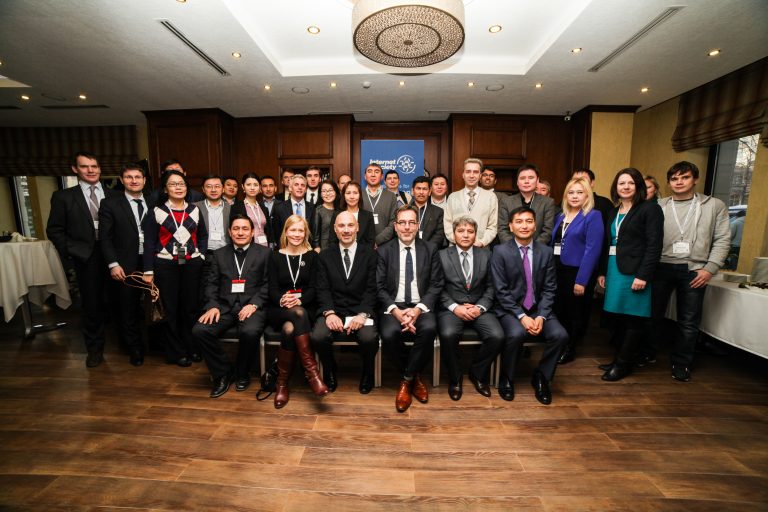
As an initial step in sharing ideas with the local stakeholders, the Internet Society European Regional Bureau hosted its first Central Asian Symposium on 10 December in Bishkek, Kyrgyzstan. The program addressed topics on the Internet as a platform for economic growth, creating an enabling environment for local Internet development, and building sustainable Internet infrastructure.

REFLECTING BACK ON THE SYMPOSIUM, THERE ARE A FEW POINTS I WOULD LIKE TO HIGHLIGHT:

First, the build-up towards the Symposium was from the very beginning a bottom-up process in the true sprit of the Internet. The initial dialogue, started by the Kyrgyz technical community stakeholders, quickly turned into a multistakeholder effort with the support of the government and the business community. In the end the Symposium brought together a knowledgeable and enthusiastic group of both local and international Internet stakeholders, who are now better placed to work together on the next steps of Internet development in the Kyrgyz Republic and the wider region.

Second, the strategic importance of improving regional connectivity of Central Asia became abundantly clear during the Symposium.

See opening video message from Vint Cerf, Chief Internet Evangelist for Google and co-founder of the Internet Society.

For many centuries the Silk Road was the main route for trade and communication across Central Asia linking Asia and Europe. Today the Internet provides the only real alternative for the Central Asian Republics to integrate into the world economy. The geographic position of Central Asia and the lack of direct access to submarine cables have played their part in slowing down the Internet development in the region. Ermek Niazov, Vice-President at Kyrgyz Telekom, called for a mindset shift “from land-locked to land-linked” and a number of speakers highlighted potential solutions and scenarios for improving international connectivity of the Kyrgyz Republic.

Finally, both Deputy Prime Minister Elvira Sarieva and Deputy Minister of Transport and Telecommunications Ernis Mamyrkanov acknowledged the crucial role of the Internet for boosting the Kyrgyz economy and stated the government’s intention to revise the country’s ICT strategy. The Internet provides countries with a platform for economic and societal development, and both aspects were addressed at the Symposium. Siddhartha Raja from the World Bank alongside local business community speakers emphasized the importance of the Internet for jobs, trade, services, innovation and entrepreneurship. A lively debate followed on how best to educate and equip the Kyrgyz decision-makers, technical community and citizens with the right skills and qualifications to fully embrace the Internet opportunity.

The Internet Society European Regional Bureau looks forward to working together with the NISS and other partners on Internet infrastructure development and deployment in the Kyrgyz Republic.  Through knowledge sharing in the technological, capacity building, and policy areas, we hope to contribute not only to Internet development in the Kyrgyz Republic, but also to share these experiences to encourage Internet expansion across the region.

“Internet Development Perspectives in Kyrgyz Republic” Central Asian symposium

On December 10, 2014, the national Institute for strategic studies of the Kyrgyz Republic (NISI KR) and the Internet Society (ISOC), together with the National center for information technology and the Central Asian research and education network CAREN, held the Central Asian Internet Symposium “Prospects for the development of the Internet in the Kyrgyz Republic”.

Such a conference was held in Central Asia for the first time. The Symposium was attended by recognized professionals in the field of modern information technology from Europe and Kyrgyzstan. There was a video message from Vint CERF, one of the” fathers of the Internet ” (co-inventor of the Internet Protocol (IP)) and co-founder of ISOC. As well as speeches by the Deputy Prime Minister of the Kyrgyz Republic, heads of ISOC, the world Bank, Google employee, who is a native of Kyrgyzstan, representatives of government agencies and public organizations of the Kyrgyz Republic.

In addition, the event was held live online and the performances of the participants could be followed from around the world. This is a great opportunity to follow the work of the Symposium in real time. To do this, you had to go to the next link for the live stream http://new.livestream.com/internetsociety/Bishkek2014

It should be noted that ISOC has declared its readiness to cooperate with Kyrgyzstan in order to stimulate the development of the Internet here.  According to ISOC Regional Director Frederic Donk: “ISOC looks forward to working with NISI and other local stakeholders to further develop the Internet in the Kyrgyz Republic and wishes to share best practices across the region.”

In turn, the Director of NISI Talant Sultanov noted: “the Kyrgyz Republic has all the prerequisites for the development of the knowledge economy: an educated population, a free political regime and a favorable economic climate. Our goal is to become a high-tech hub for online communication and virtual service movement. We look forward to working with ISOC on projects that will support this goal and bring great benefits to the citizens of the Kyrgyz Republic.”

The Symposium program was aimed at creating a platform for economic growth, creating an enabling environment for local development, and building a sustainable Internet infrastructure. More information is available here: http://www.internetsociety.org/events/central-asian-internet-symposium-bishkek-2014