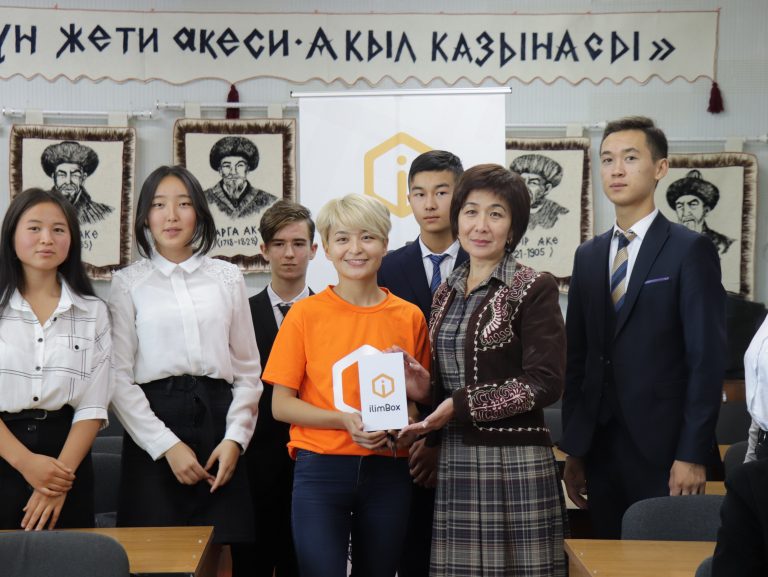
School gymnasium №11 (Karakol, Issyk-Kul region)

In Karakol we visited the gymnasium school №11.

This is one of the largest educational institutions of Issyk-Kul region, in which we have established ilimBox, it has 2600 students, children study in double shifts school.

Despite the fact that the school is a gymnasium and is located in Karakol, it still has difficulties accessing the global network.

As high school students admitted, they liked the project with free access to educational information and the opportunity to learn English through the educational resource “Khan Academy”.

The device was installed in the office of computer science and attached instructions for use in Russian.

ISOC in partnership with KG Labs is to prepare ICT development roadmap for Osh oblast

Kyrgyz Chapter of Internet Society in partnership with KG Labs Public Foundation will prepare roadmap for ICT development for Osh oblast and city in upcoming months.  ISOC signed agreement with GIZ programme “Promotion of Sustainable Economic Development” (NaWi) to help the most populous regions of Kyrgyz Republic to secure sustainable development with enabling technology adoption and digital skills. Aziz Soltobaev will lead team of experts to prepare guidance and roadmap.
Programme Background

In 2017, the Government of the Kyrgyz Republic adopted the concept of regional development “Cities – points of growth”. This concept envisaged the development of strategic development programs for 20 cities of Kyrgyzstan using the basics of business planning. The implementation of the concept was divided into several stages, where the first stage incorporates development programs for 5 pilot cities, including Osh, Jalal-Abad, Kara-Balta, Karakol and Naryn.

In 2018, the GIZ programme on “Promoting Sustainable Economic Development” provided technical support to the Osh city development program. The project for the creation and development of ICT is one of the business plans included in the strategic program for the development of the city.

In 2018 the programme supported Osh City Hall to improve knowledge and skills on attracting and promoting investments, including FDI. ICT was chosen as a pilot sector for attracting investments.

During the period between July-November 2018 an international expert conducted weekly online webinars/conferences during which a quick initial analysis on the status of ICT in the region was carried out. The expert also provided advice on strategic ICT business planning.

The Agency for External Relations and Development of the Business Environment and private ICT entrepreneurs have jointly developed the concept of creating an ICT Technopark based primarily on the inputs of the international expert.

Further development of the project involves the transition from the stage of theory to practical implementation. To carry out such a transition a comprehensive consultation is needed particularly in view of scenario planning to cross check the theoretical concept of the Technopark with the current economic development of Osh and Osh oblast, it’s legal framework and the market conditions.

Aziz Soltobaev and his team will carry out an in-depth analysis of current level of ICT development in coherence with the potential opportunities with the objective to develop an ICT development roadmap. The roadmap should clearly outline a set of actions with stipulated timelines enabling the responsible partner structure to fully utilise local /regional resources with the knowledge and the experience in ICT and develop strategies and potential partnerships.

Osh City Hall: represented by the Agency for External Relations and Development of the Business Environment under the Osh City Hall, the Office of the Plenipotentiary Representative of the Government of the Kyrgyz Republic in Osh oblast and the Agency for the Promotion and Protection of Investments.

The purpose of this assignment is to provide strategic guidance to the NGO “ICT Technopark” (established on the initiative of a private entrepreneur and the Osh city hall) in their objective of developing a comprehensive roadmap towards creation and development of ICT technology park in Osh.

Learning by Doing: Have You Heard of the Suusamyr Community Network in Kyrgyzstan?

Last week, the Internet Society together with our Kyrgyz chapter and the wider local community held discussions about Internet connectivity in remote areas in Bishkek, Kyrgyzstan. Approximately 35% of the Kyrgyz population use the Internet (ITU data, 2017) and most users are located in cities and urban areas.
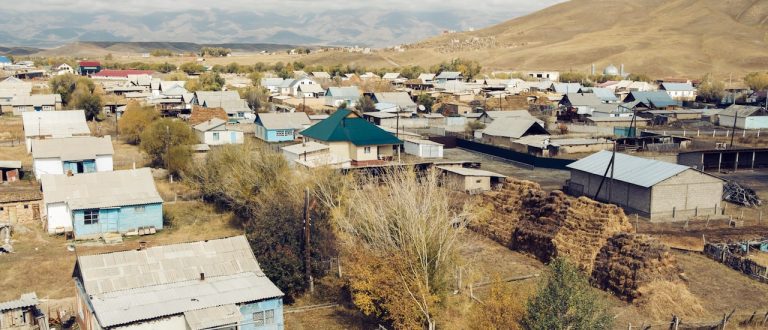
In cooperation with its Kyrgyz chapter, the Internet Society is piloting the community networks approach in the village of Suusamyr, located some 150 kilometers south of the capital city Bishkek. We had an opportunity to visit this village of about 4000 people, tucked away in a wide valley surrounded by high mountains. The economic activity revolves around farming, horse and cattle keeping, and tourism.

While the final phase of the Suusamyr community network is still under implementation, we can already draw some lessons learnt from the preparatory and testing phases.

Partnerships

As a starting point, the Internet Society Kyrgyz chapter consolidated a partnership with the government, Internet Service Providers (ISP), and the local community in Suusamyr. The Kyrgyz government saw the opportunity for local economic development. Two ISPs agreed to lease their existing backbone infrastructure to connect the last mile. And most importantly, the local community embraced this initiative with a hope that it will provide new opportunities for the people in the community. It is important to have the backing of the key stakeholders.

Licensing and permissions

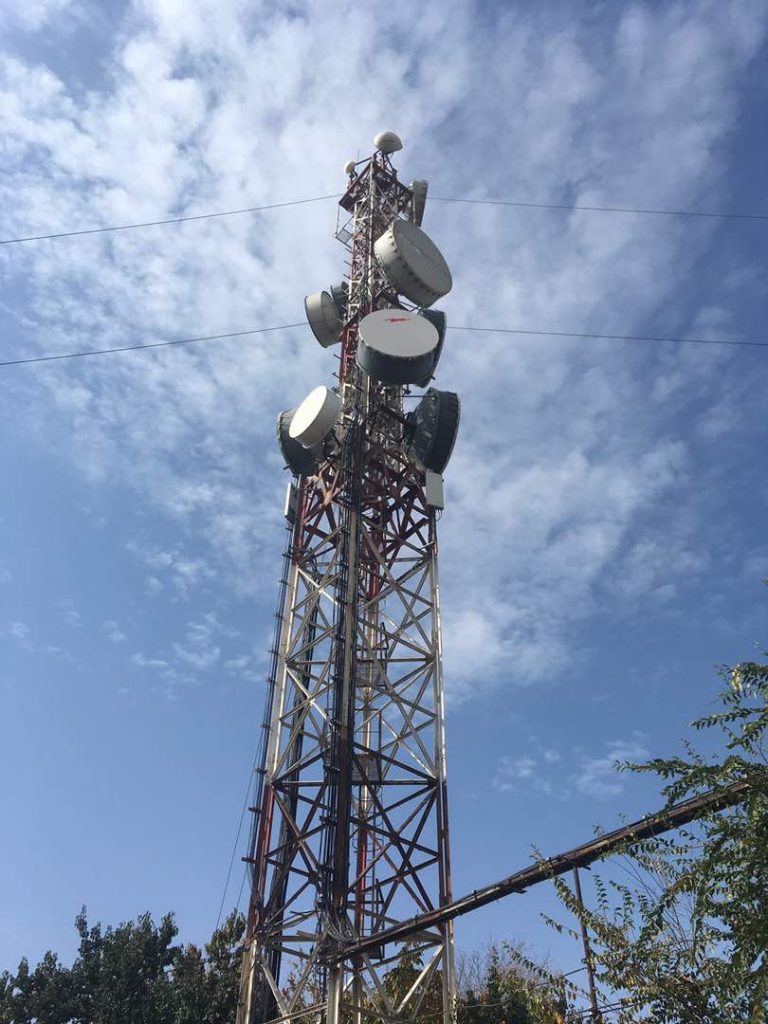
As in most countries, building Internet infrastructure requires licenses and permissions. While it was relatively simple to get the network operator license, the rules for spectrum licenses in Kyrgyzstan involve costs and time-consuming application processes. Our project team partnered with a regional ISP to share their existing spectrum license. Permissions for land use and power supply for masts can also be complicated. Following discussions with landowners and the national electricity company, the permissions for the Suusamyr project were agreed on by a case-by-case basis. An enabling policy framework is necessary to make progress with connectivity in remote areas.

Demand generation

During our visit to Suusamyr, it was clear that there was enthusiasm and demand for the Internet within the local community. The largest school in Suusamyr had a computer lab, but no Internet connection. The municipality headquarters, the local hospital and small businesses would surely benefit, too. However, the municipality does not yet have concrete plans on how to use the Internet to boost local economic development. There is a need for a local “action group,” which could raise awareness and provide skills training amongst the village population.

The President of the Kyrgyz Republic has named 2018 a year of rural development. This ambition is perfectly aligned with the Internet Society’s goal to connect everyone to the Internet, with a focus on the communities in the hardest to reach places. We aim to have a fully operational community network in Suusamyr in a few months’ time.

By Maarit Palovirta

Senior Manager, Regional Affairs Europe

Ferghana Valley IXP

ISOC Kyrgyz Chapter is implementing one of its first major projects thanks to Beyond the Net grant from ISOC. Ferghana Valley Internet Exchange Point (FVIXP) Project will install an IXP in Osh city in the south of Kyrgyzstan, which will result in a much cheaper internet for all the residents of Ferghana Valley.

Ferghana Valley located on crossroads of three countries is the most populated area in Central Asia, the source of regional inter-ethnic tensions due to water and land irrigation disputes, poverty and lack of access to communication services. Internet Exchange Point Project with location in Osh city (Kyrgyzstan) is aimed to increase regional cross-border collaboration between stakeholders and communication of people through increase of Internet affordability by lowering internet tariff plans up to 3 times, multiply growth of Internet traffic exchange in region, increase Internet penetration rate due to price reduction, and improve latency for international and regional content sources.

Ferghana Valley located at the crossroads of three countries of Central Asia: Kyrgyzstan, Uzbekistan, and Tajikistan are in top 10 regions with highest population density in the world. Over 14 million people (2014) reside in 22,000 square kilometers (approximately 636 persons per square km). The region is known for land and water disputes, inter-ethnic conflicts. There is a huge income disparity between administrative capitals of the Stans and regional dwelling communities in Ferghana Valley.

Central Asia has one of the lowest internet penetration rates per capita in Europe and Central Asian region, according to ITU 2014. One of the key regions that illustrate state of the regional digital divide is Ferghana Valley. In regional perspective Internet prices for Ferghana valley dwellers are higher than for residents of other administrative districts. For example, Internet tariff plans in southern cities are 5 times higher (13USD) for the same traffic bandwidth than that in Bishkek located in the North of Kyrgyzstan. Tajikistan, which primarily depends on Internet transit of Russian content from Kyrgyzstan, has an even more severe situation. National ISP Tojnet provides 1Mb unlimited tariff for as low as 45USD. The situation in Uzbekistan is even worse. Uzbekistan ISP monopoly company provides Internet in cities located in Ferghana valley for the price of 59USD for 10GB of the daily Internet and unlimited night traffic.

Considering above mentioned situation we believe establishing Internet Exchange Point in the valley will alleviate the digital divide between the north and south of Kyrgyzstan as well as between the bordering countries by removing barriers for connectivity and stimulating better access.

Internet Exchange Point is a physical location where different stakeholders who have ASN meet to exchange local traffic via a switch. Kyrgyzstan is one of the countries where Ferghana Valley is spread. There are several closed IXPs based in Bishkek (ISP, banks). Unlike present IXPs that could not be neutral and open for new members by Charter, Ferghana Valley IXP (FVIXP) will follow principles of openness and neutrality by providing equal access to infrastructure to all stakeholders, including Government agencies, educational and healthcare institutions as well as commercial banks. IXP will help local small and medium ISP to minimize traffic costs, spend more on infrastructure rather than on internet traffic purchase.

Establishing IXP would greatly enhance the utility and value of the regional Internet and promote the growth of the digital economy. According to Terabit Consulting, “Improvement in ICT infrastructure yields: Increased demand for the output of other industries (demand multiplier), New opportunities for production in other industries (supply multiplier), new goods and services for consumers (final demand). It also increases firms’ innovation capabilities and increases the probability of new products, innovations, and organizations.”