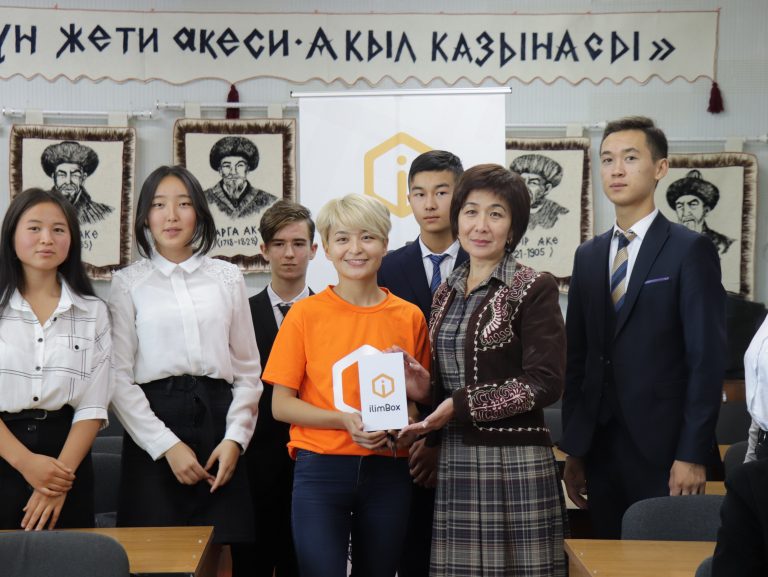
“Central Asia girls in ICT” online un-conference

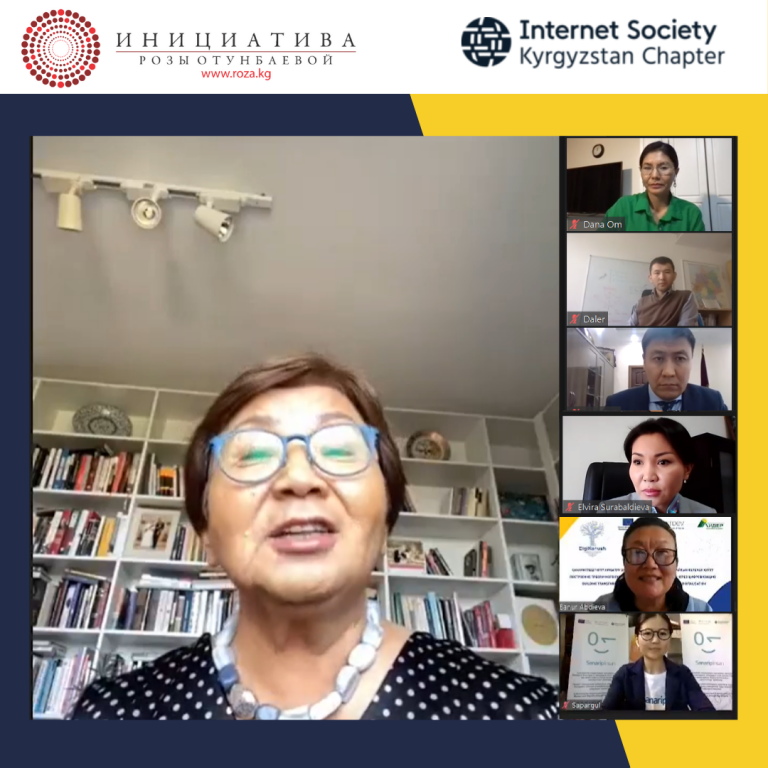
On April 28, in honor of the International Day of “Girls in Information and Communication Technologies”, the organization “Women in Digital Transformation”, “Initiatives of R. Otunbayeva” and the Kyrgyz Internet Society held an online discussion on the topic “Girls in ICT”. International and local experts, as well as successful women, shared their experience and opportunities in technology for girls. The main speaker of the online discussion was the ex-President of the Kyrgyz Republic Roza Isakovna Otunbayeva. In her speech, she shared that the potential of girls in technology is limitless:

“I am delighted that for the first time at the national level, an online session is being held in honor of Girls in ICT Day. Our foundation has been promoting the initiative to involve girls in digital technologies since 2013. As part of our STEAM training project, we have educated 193 specialists and trained more than 2,000 schoolgirls in Bishkek and Osh. We are supported by several donor organizations and institutions. Our goal, like yours, is to expand opportunities for girls in technology. Let’s work together to achieve common goals, because without technological knowledge we will not be able to conquer the 21st century,” shared the ex-president, Roza Otunbayeva.

MP Elvira Surabaldiyeva also noted that teaching girls about information technology is very important because it represents the interests of women in parliament. The next speaker was the Minister of Education and Science of the Kyrgyz Republic A. Beishenaliev. “As the primary source of information and technology education for children, we are now prioritizing science (STEM) teachers. According to a recent presidential decree, the salary of science teachers has been increased by 20% compared to other teachers.”

The next speaker of the online discussion was the Director of the State Agency for the Protection of Personal Data under the Cabinet of Ministers of the Kyrgyz Republic – Nuria Kutnaeva. In her speech, she noted that we should all promote the idea of ​​IT, digitalization and help develop in this direction. Also, Nuria Kutnaeva shared a mentoring program where girls were trained in the necessary digital skills, digital security and IT career guidance. In addition to officials, the online discussion titled “Technological Opportunities for Girls” brought together several international and local experts.

During the online discussion, Natalia Mochu, ITU Regional Director for the CIS region, and Ekaterina Gromova, founder of the Women’s Digital Transformation Organization, spoke about international experience in the framework of ICT “Tashkent-Bishkek Girls” in the CIS.

Local Experts: Shaina Cram, Public Affairs Officer, US Embassy; Shirin Aitmatova, Vice-President of the International Aitmatov Foundation and ex-deputy of the Jogorku Kenesh of the Kyrgyz Republic; Gulnaz Kordanova, founder of Teach for Kazakhstan and Connect-Ed.kz (Kazakhstan); Elena Selezneva, Startup Accelerator, founder of Tech4Impact (Uzbekistan); Jamal Frontbek kyzy, head of the public organization “Mutakalim”; Banur Abdiyeva, DigiKonush project coordinator; Aizada Kalkanbekova, director of the Public Radio “Suusamyr FM”, editor-in-chief of kyrgyzmedia.kg; Aidana Omurbayeva, IT Influencer and DevOps Engineer, Relativity LLC; Aiperi Nogoibaeva, Deputy Director of the Kyrgyz Association of Software and Services Developers; Aiperi Bozoeva, expert of the Digital Hygiene project; Sapargul Abdinabiyeva, media expert of the Sanarip Insan project, as well as the coordinator of the Village Girl project – Aidai Amankulova, the head of the first space program of Kyrgyzstan Kyzzhibek Batyrkanova, shared their experience on the opportunities of ICT for women and girls in Central Asia.


At the end of the event, the co-founder of the Kyrgyz Internet Society, Aziz Soltobaev, concluded: “Today we realized that together we can achieve great results and demonstrate the power of girls not only in ICT, but in science in general.”

Chairman of the Kyrgyz Internet Society, Talant Sultanov thanked all the participants and encouraged the girls to receive information technology education. The purpose of the online discussion “Central Asian Girls in ICT” was to inspire girls from remote rural areas to study and receive technological education.

The initial broadcast took place on the Zoom platform, and was also broadcast live on the official social pages on YouTube and Facebook. From all over the country connected: via Zoom – 100 people; 162 people watched the live broadcast via Facebook; through YouTube – 145 people. After inspiring discussions, a small online competition was organized for the girls. The participants were asked questions in the field of information technology, the winners were awarded certificates for IT courses, free consultations from IT professionals and gifts such as books and notebooks.

School gymnasium №11 (Karakol, Issyk-Kul region)

In Karakol we visited the gymnasium school №11.

This is one of the largest educational institutions of Issyk-Kul region, in which we have established ilimBox, it has 2600 students, children study in double shifts school.
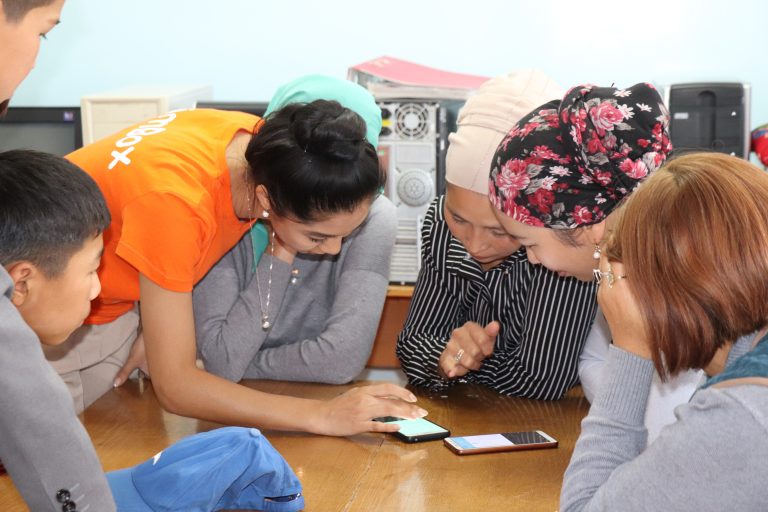
Despite the fact that the school is a gymnasium and is located in Karakol, it still has difficulties accessing the global network.

As high school students admitted, they liked the project with free access to educational information and the opportunity to learn English through the educational resource “Khan Academy”.

The device was installed in the office of computer science and attached instructions for use in Russian.

School of B.Alakov (Kara-Taala)

In the third school of SS.B. Alakov (S. Kara-Taala) voiced the same problem – the lack of Internet access for students. In this school 514 pupils, more than 100 children of final classes study. Graduates admitted that they are experiencing difficulties in preparing for the national testing, as the library does not have sufficient material resources.
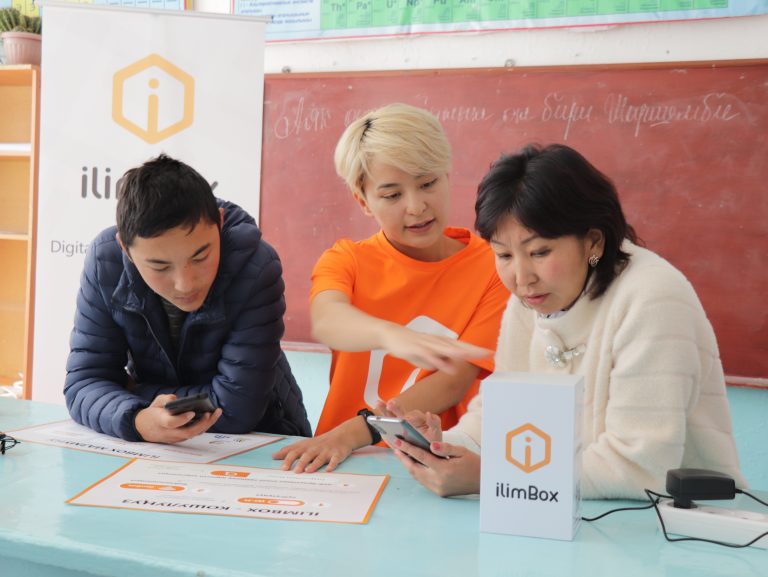
It should be noted that the use of the phone on school grounds is prohibited. Despite this, the director of school – S. S. Cookeev permission to students to use phones in the office computer where it was installed ilimBox with appropriate instruction in Kyrgyz and Russian languages.

Young teachers of the school attended the presentation with great interest connected the phones to the device IlimBox.

The high school students and teachers noted that they were pleasantly surprised by the innovation of the project, and were pleased to join the list of participants, with whom we undertake to periodically contact for information about the operation of the device and feedback on improving the content.


Young teachers of the school attended the presentation of ilimBox

Presentation of IlimBox
Eletronic data of knowledge – ilimBox

School №7 (Balykchy)

The Second school №7 (Balykchy) was near the first twenty minutes. This school was not included in the list to install ilimBox, however, the Director of school №10 Manasa asked to go to the school next door, as they had similar problems with Internet access for students. It has 518 children. It should also be noted that it is located on the outskirts of the village, and therefore has problems with telephone communication.
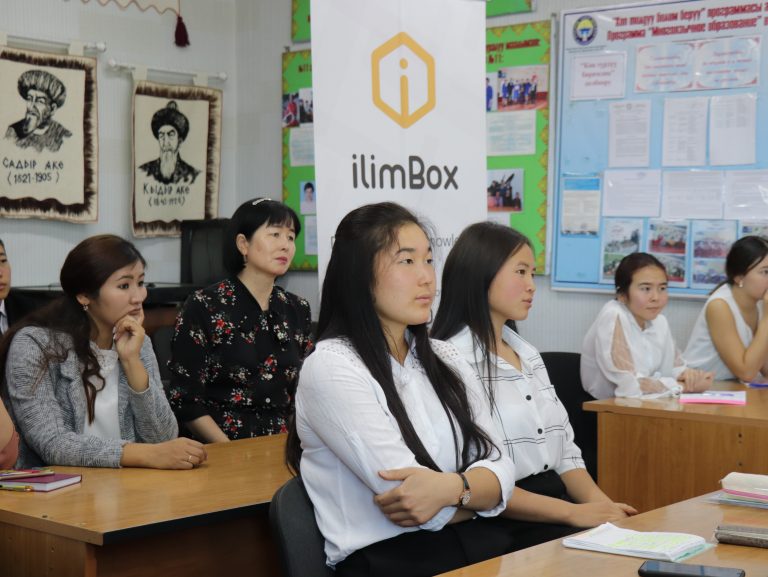
The Director was very pleased with our visit and the presentation of the device that helps to access educational resources without an Internet connection, as it turned out that the school has access to the Internet only through a 3G modem in the office of the Director.

As the guys noticed, they now do not need to spend money in computer clubs to prepare an essay, report, etc.Since the language of instruction is Kyrgyz, the teachers liked the base of the electronic library in two languages.

For public access during school hours, IlimBox with visual instruction was established in the school’s library.

It looks like the Wikiquote in ilimBox
high school teachers joined the presentation of ilimBox
We explained the contents of the ilimBox
Here is the home page of ilimBox


The first school №10 Manas (Balykchy)

The First school we visited was school №10. Manas (Balykchy) in which 895 children are trained. The school is connected to the Internet, however, it is only the Director’s office, in connection with which this educational institution was included into the list of schools to install electronic library ilimBox.
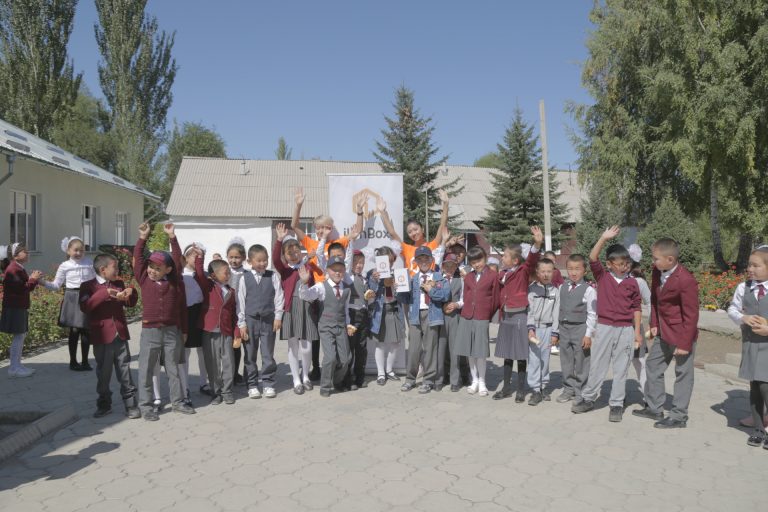
The Administration warmly welcomed our team and gathered all the high school students in the auditorium. The number of children numbered more than 120 people.

During the presentation it became obvious that it becomes difficult to keep the attention of children of grades 5-6, in connection with which  we decided to leave active children and show them the principle of operation of the device in order for them to share their knowledge with their peers,” – said the representative of the ISOC team Begaim bekbolotova.

Re-presentation of the project was done in another room for high school students interested in teaching their peers. They actively asked questions and practiced through their smartphones.

The Director of the school – Venera Jusuenvasad: “This project will help our school to solve the issue with the textbooks”. Interest to our project was shown not only by teachers and students, but also by parents who came for children of younger classes, who with great curiosity asked about the possibility of purchasing a device home.

Schoolgirl of senior classes is trying to open electronic library of ilimBox
Presentation of device ilimBox
In the presentation of ilimBox assembled senior schoolchildren

Video report of installation ilimBox in Issyk-Kul region (Russian version)

On September 10-11, the ISOC team visited schools of Issyk-Kul region for the presentation and mounting of devices IlimBox.
https://youtu.be/QHTuUHVCYqM
On September 10-11, the ISOC team visited schools of Issyk-Kul region for the presentation and mounting of devices IlimBox.
The traffic exchange point in the Ferghana valley (FVIXP) – successfully implemented

The traffic exchange point in the Ferghana valley (FVIXP) is successfully implemented by our team project. The Fergana valley, located at the crossroads of three countries, is the most populated area in Central Asia, the center of regional inter-ethnic tensions related to water and land.
FVIXP is the installation of an Internet traffic exchange point (IXP) in southern Kyrgyzstan, in Osh, which significantly reduced the cost and accelerated the Internet for all residents of the Fergana valley. FVIXP opens up opportunities to build a digital silk road. Connection to the Internet traffic exchange point allows to establish peer-to-peer interaction between participants with lower costs and greater efficiency regarding the organization of pairwise physical joints. IXP efficiency increases with the number of connected participants. With the junction with China, new junctions with Tajikistan and Uzbekistan, Osh is becoming a key city in the development of digital infrastructure. The project is aimed at expanding regional cross-border cooperation, as well as increasing the availability of the Internet by reducing tariff plans up to 3 times, multiplying the growth of Internet traffic exchange in the region, increasing the level of Internet penetration.

The goals and objectives of the project coincide with the five-year digital transformation strategy “Digital Kyrgyzstan 2019-2023” and contribute to the achievement of target indicators for the component “development of the digital state” and “development of digital skills”.

Beyond the Net Grants

Connecting schools to Ilimbox aka Bilim Bulagy

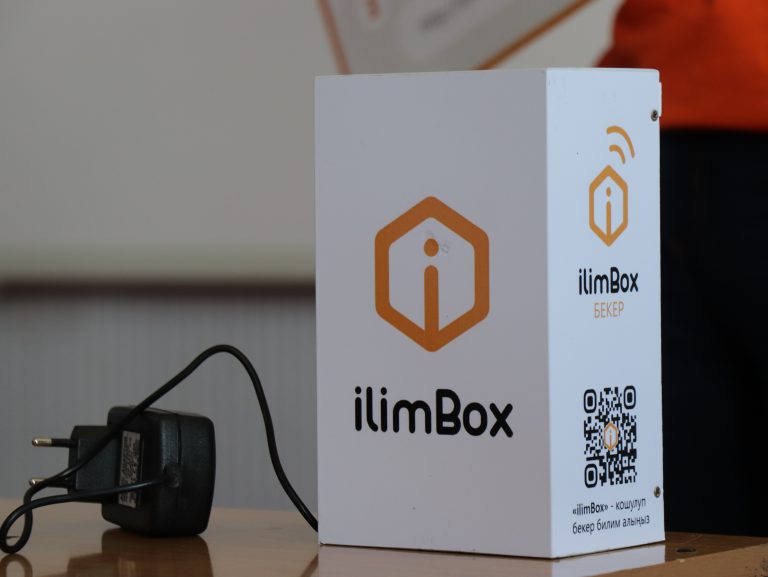
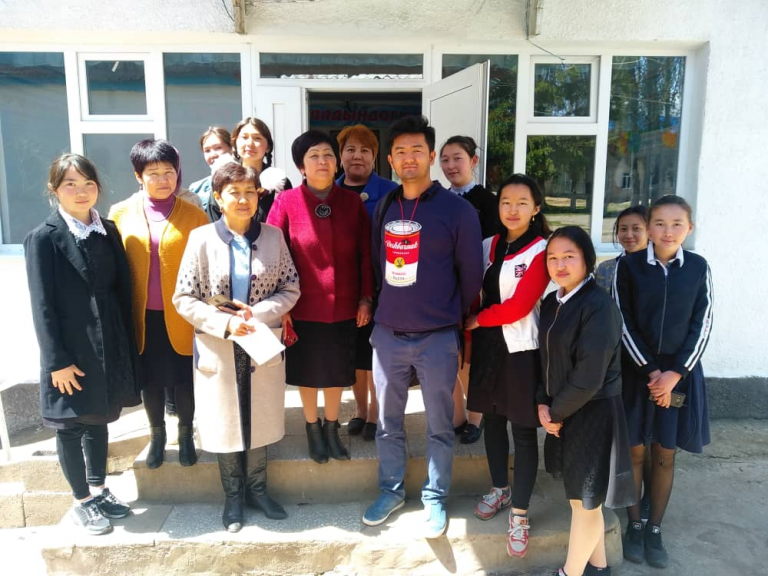
On April 13, 2019, the ISOC team began installing the Bilim Bulagy electronic library. The device allows you to access all educational resources without an Internet connection, in other words offline. Moreover, it should be noted that all data is stored in the device itself, and only power supply and wireless modem are required for connection. The uniqueness of the innovative project is that students can access educational resources at school without an Internet connection.  

The first schools where the trip was organized were the secondary school O. Isaeva (Kegety) and Chui boarding school (Tokmok) located in the Chui valley. The choice of schools was due to several factors: there is no access to the Internet, the number of students exceeded the allowable maximum, thereby increasing the likelihood of poor performance in schools without a network connection, as well as the choice of the above-described educational institutions was influenced by the interest Of the Association of young entrepreneurs “JIA” and the club of professionals “ProKG”, as they have a project “My school” with supervised schools.

For example, in high school O. Isaeva (Kegety) 511 students study, and the number of computers is equal to thirty-three, there is only one computer connected to the Internet. The second school is Chui boarding school (Tokmok), which has approximately the same performance. In these schools was held a presentation of the project “Internet in a box” then testing the device with students and teachers. During the conversation, the importance of education and self-education were touched upon.  

The third school was in S. Boroldai of Kemin district of Chui region. The plan of the meeting was built in the same way. Since the school is Russian-speaking, the appeal of teachers was aimed at increasing the materials in Russian, which would greatly facilitate the process of knowledge transfer.

There are more than 2,000 schools in Kyrgyzstan, some of which do not have access to the Internet and lack books. Accordingly, it affects the level of quality of education. In 2018, Kyrgyzstan declined to participate in the PISA world school rankings, as it was ranked last 65th in previous competitions.

Innovative solutions to two pressing problems such as the lack of books and the lack of the Internet can be seen in the project “Bilim Bulagy” (Internet in a box) – a digital library for schools and public libraries containing Wikipedia in Kyrgyz, Russian and English languages, Khan Academy, thousands of video lessons, audio and e-books. All these digital learning materials are available offline, in other words does not need Internet access. Access to Digital libraries will be carried out through smartphones, tablets, computers and any other personal devices with Wi-Fi technology.

“Bilim Bulagy will allow Kyrgyzstan to improve the level of education in the regions”, – said the Chairman of ISOC – Talent Sultanov, at the digital forum of Kazakhstan.

Thus, visits to schools helped to identify several important points: it is necessary to develop a manual in the Kyrgyz language for better perception of information, there is a need in the formation of the database of electronic books, materials should be both in Russian and in Kyrgyz, there is a need to create a list of the most necessary books. The goals and objectives of the project “Bilim Bulagy” coincide with the five-year strategy of digital transformation “Digital Kyrgyzstan 2019-2023” and contribute to the achievement of target indicators for the component “development of the digital state” and “development of digital skills”.

The project is funded by Alumni Engagement Innovation Fund 2018 (AEIF) as part of innovative solutions to global challenges.