Новости

Установка Lorawan метеостанций и сенсоров мониторинга природных явлений в Боомском ущелье

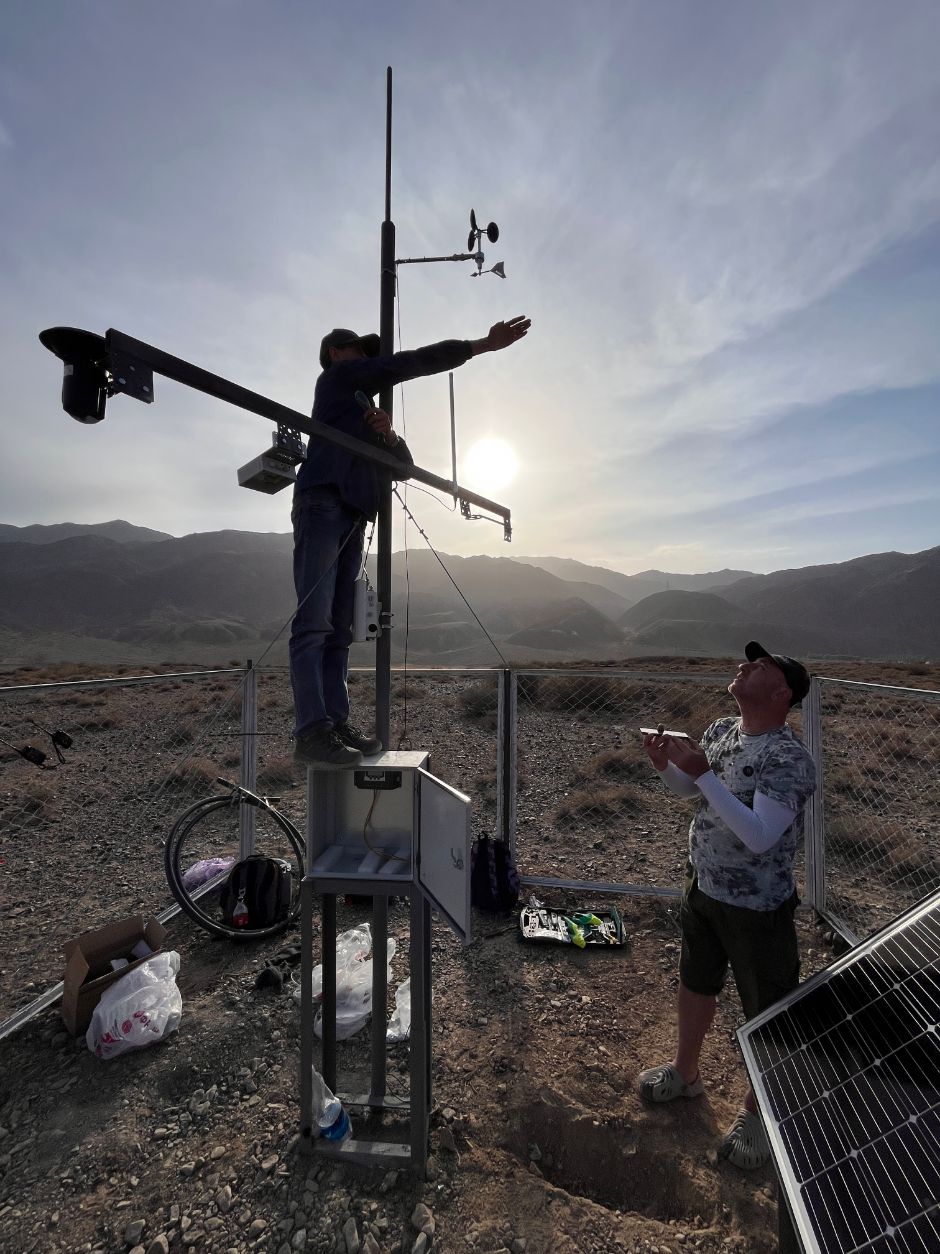
The ISOC Kyrgyz Chapter team, in response to a request from the Ministry of Emergency Situations, has made a crucial advancement in natural disaster mitigation and management. From May 7 to May 17, 2023, the team installed two Lorawan-enabled meteostations and additional sensors in the Boom Gorge of the Kyrgyz Republic. This vital initiative aims to enhance the understanding and monitoring of the region’s distinct microclimate, providing key data to inform preemptive action and disaster management.

The Boom Gorge, marked by unique orographic features and a complex geological structure, has historically grappled with the impacts of heavy rainfalls. These intense precipitations often trigger powerful mudflows, draining from side valleys onto railroads and roads, causing significant infrastructural damage and posing public safety risks. Given the challenges posed by climate change, obtaining accurate and reliable local environmental and meteorological data in this region is becoming increasingly crucial.

In a pioneering research project, the Internet Society Kyrgyzstan Chapter, in collaboration with the Abdus Salam International Centre for Theoretical Physics and the Ministry of Emergency Situations, has been exploring the utility of data transmission using the LoRaWAN protocol in areas susceptible to hazardous natural processes and with limited cellular communications. As part of this research project, two automatic weather stations have been installed in the Boom Gorge, along with additional sensors at key locations: Kyz-Kuye and Kok-Moinok. These locations mark the entry and exit points of the gorge, respectively.

The primary aim of this project at these pilot sites is to monitor and evaluate key meteorological parameters, including precipitation, temperature, moisture, and soil temperature. By doing so, the researchers aim to deepen their understanding of these parameters’ influence on the formation of mudflows in the Boom Gorge.

This installation of automatic weather stations and additional sensors is expected to considerably enhance the accuracy and systematic assessment of meteorological parameters. The use of the LoRaWAN data protocol technology enables continuous monitoring, providing more accurate and up-to-date data while reducing connection operating costs. This invaluable data will underpin informed decisions about mudflow risks and mitigation strategies.

Moreover, the placement of these local weather stations and sensors will facilitate comprehensive studies on the influence of meteorological parameters on mudflow formation processes. In the future, the data collected will enable the Department for Monitoring and Forecasting Natural Disasters of the Ministry of Emergency Situations to determine the threshold values needed to build a high-quality temporal forecast of mudflow events in the Boom Gorge.

Through this blend of technology and scientific research, we aim to deepen our understanding of mudflow dynamics and develop effective measures to mitigate their adverse impacts on infrastructure and people’s lives. The ISOC Kyrgyz Chapter and the Department of Monitoring and Disaster Forecasting are proud to contribute to this vital research project, fostering a safer and more sustainable future for the region.

The Internet Society Foundation’s research grant program funds this pioneering project, with the implementation by the Internet Society Kyrgyz Chapter Public Association and the Abdus Salam International Centre for Theoretical Physics.
Датчики и Lorawan технологии для мониторинга оползня Татыр

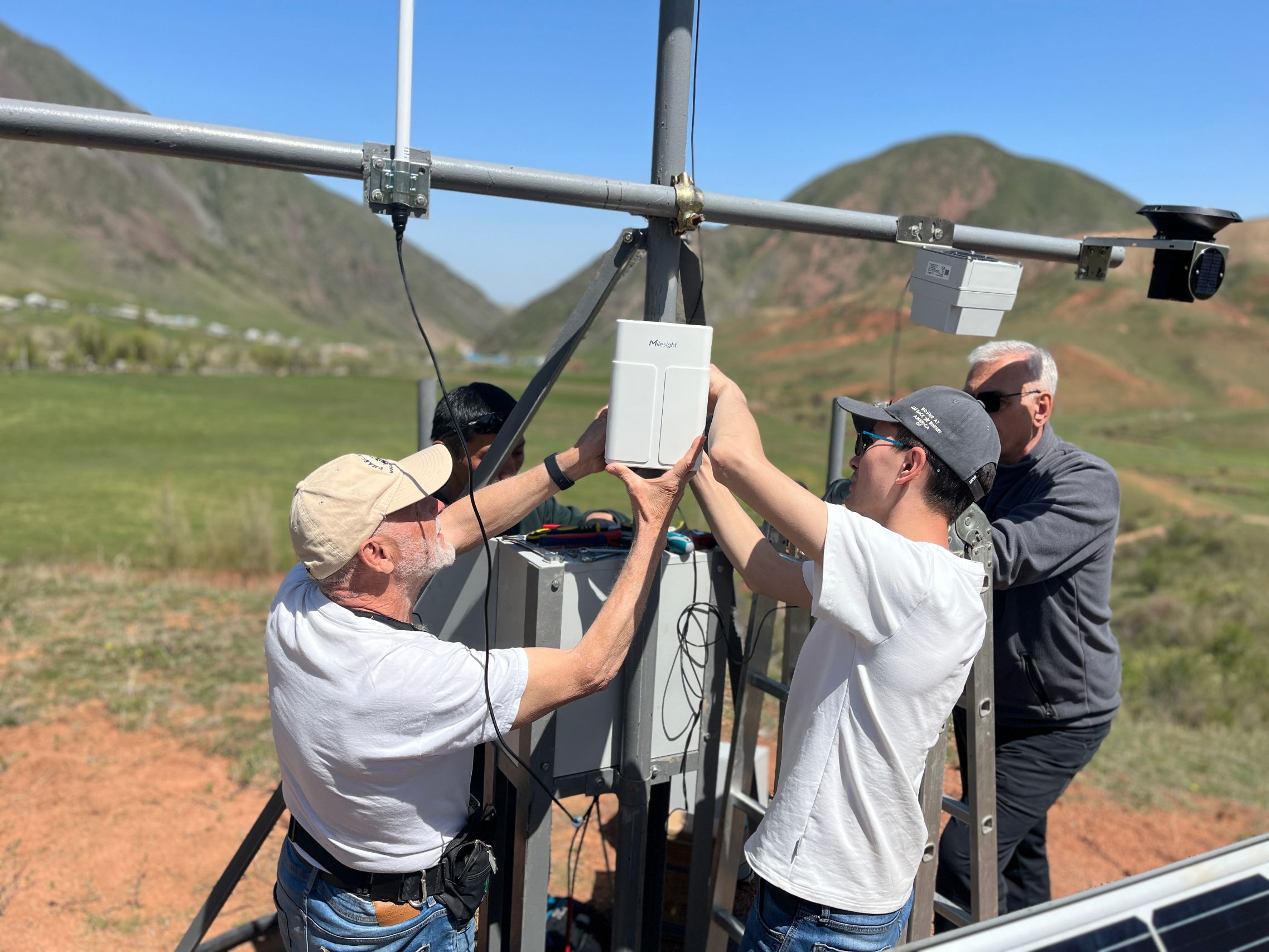
On April 27, 2023, a team comprising representatives from the ISOC Kyrgyz Chapter, ICTP, and CAIAG successfully installed and launched Lorawan-enabled sensors on the Tatyr landslide.

The Tatyr landslide is geographically situated 30-40 km south of Bishkek. Administratively, the area is part of the Arashan aiyl district within the Alamedin district. Formed on a north-facing slope, the landslide extends for 1510 meters, with a width varying between 250 to 300 meters, and a thickness ranging from 10 to 15 meters. The landslide involves loamy soils, encompassing the underlying Paleogene-Neogene age rocks. Its formation is primarily attributed to anomalous atmospheric precipitation, coupled with the impact of groundwater emerging as springs and a proximate tectonic fault. The last significant activity was recorded in 2004 when the landslide moved 70 meters following a year of intense rainfalls. The landslide lies along the route to popular skiing locations and tourist destinations. Previously, monitoring was performed manually through periodic on-site visits. The site’s proximity to Bishkek city made it an ideal pilot location for this research project, allowing for swift sensor calibrations and validation of research goals.

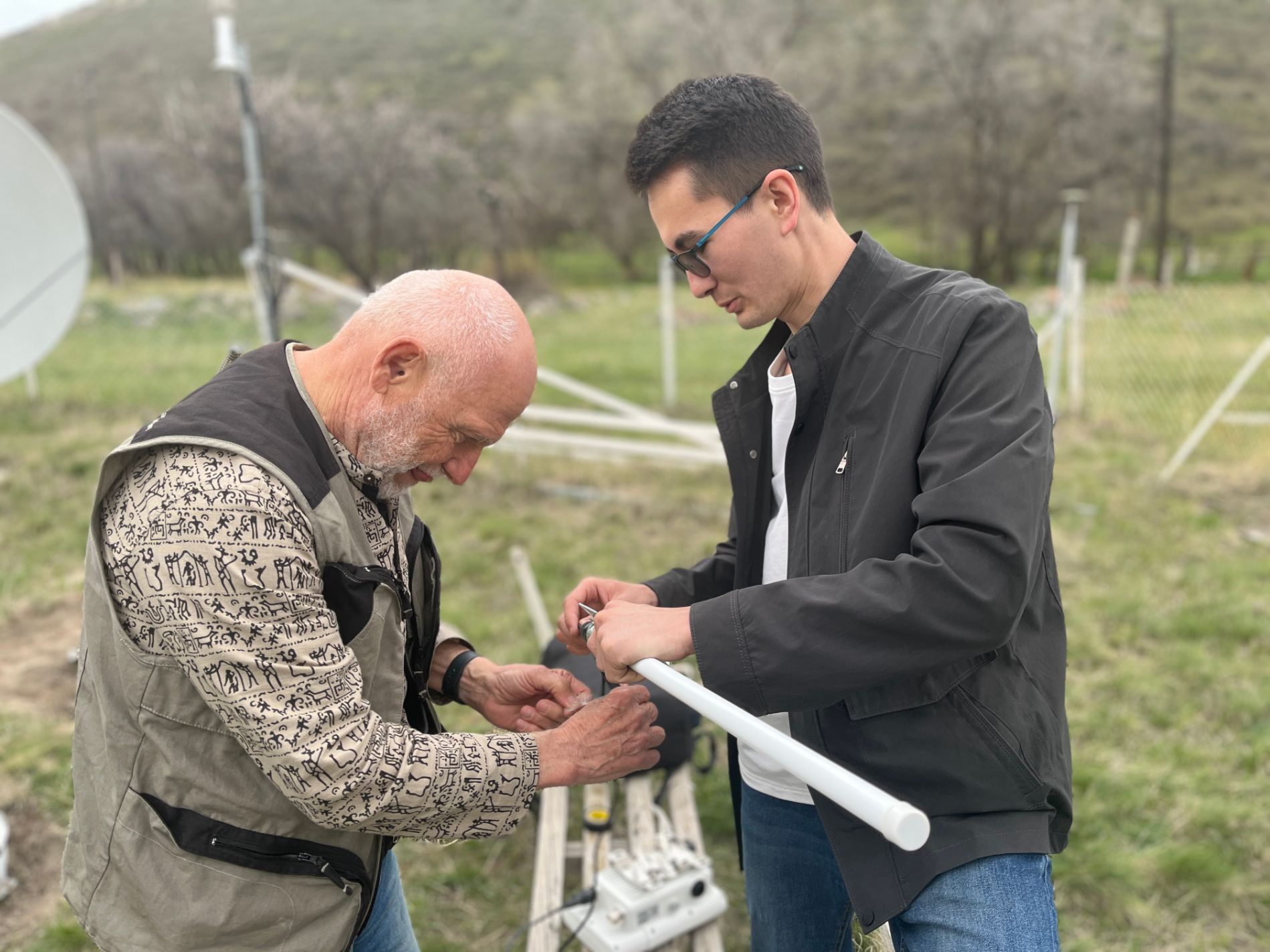
Bolot Moldobekov from CAIAG provided an overview of the landslide, discussing its features, historical background, and offering practical guidance on sensor installation for accurate data collection. Ermanno Pietrosemoli from the ICTP trained the team on the installation of Lorawan gateways, antennas, signal calibration, firmware upgrading, and sensor connection via Lorawan frequencies. Marco Zennaro assisted with the installation of monitoring software, providing a practical demonstration of how MQTT works and ensuring the secure transmission of data to servers through VPN channels. All team members participated in the installation of masts, equipment, sensors, and the establishment of a protective perimeter around the site.

The sensor installation aims to practically test and validate Lorawan technology, sensors, and the power of open-source solutions. It is anticipated that the equipment will generate automatic data via Lorawan and transmit it to the servers, benefitting key stakeholders and local communities. Furthermore, the data will be visualized in a user-friendly format, enabling interested parties to understand and assess the current situation efficiently.

Additional information on the Tatyr landslide: The active 70-meter slope movement recorded in May 2004 came just a year after 2002’s high precipitation year, which triggered widespread slumping of the foothill and some mountain slopes. This suggests that the landslide’s base is permeated with groundwater from deep fractured zones, requiring substantial time to circulate. Moreover, the Tatyr landslide belongs to deep-seated landslides, encompassing significant depth of slope deposits in its movement. Landslides of this nature are known for their long periods (30-50 years) of stability.

Форум по IoT для изменения климата и управления стихийными бедствиями

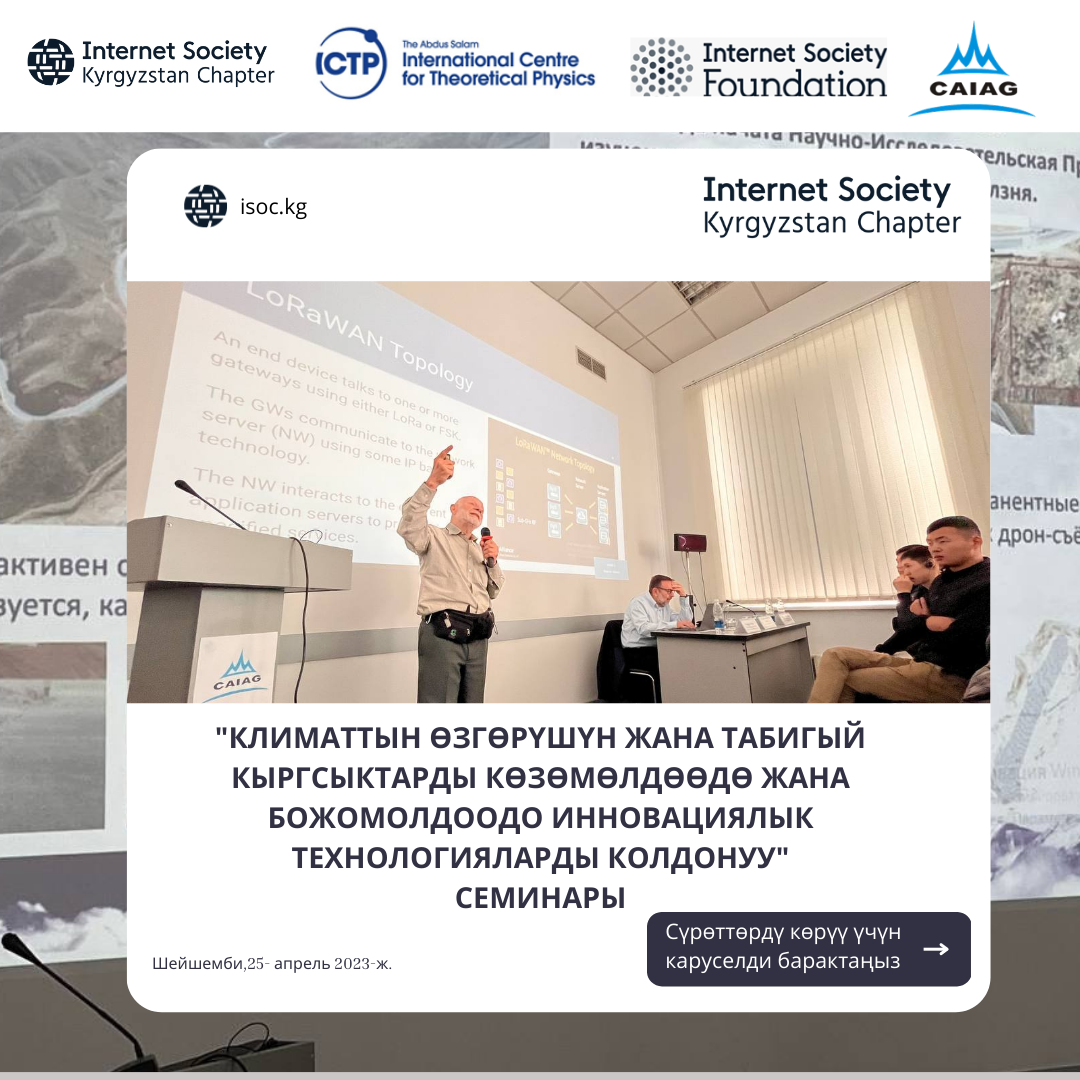
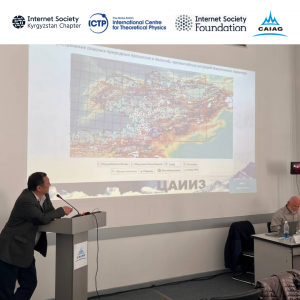
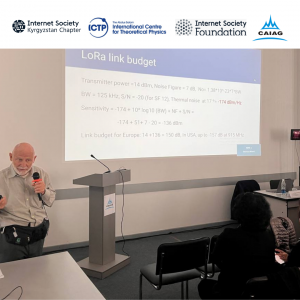
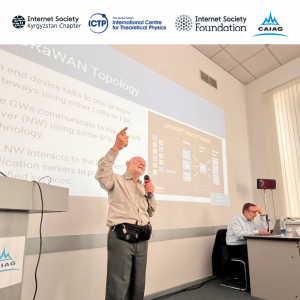
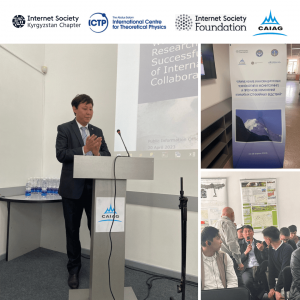
On April 25, 2023, the Internet Society Kyrgyz Chapter successfully hosted forum titled «Application of Innovative Technologies in Monitoring and Forecasting Climate Change and Natural Disasters» at the Central-Asian Institute for Applied Geoscience (CAIAG). Organized thanks to a research grant from the ISOC Foundation, the forum drew an impressive crowd of 70 participants, including representatives from esteemed institutions such as the Kyrgyz State Technical University, Manas University, and the Academy of Sciences.

This forum addressed the vital role of technology, especially the Internet of Things (IoT), in mitigating climate change and managing disasters in landlocked, mountainous countries, with a particular focus on the case of Kyrgyzstan. The event served as a platform for sharing valuable insights and knowledge, reinforcing the importance of advanced technologies in climate change monitoring and disaster management.

Renowned expert Marco Zennaro initiated the substantive sessions, illuminating the various opportunities available at the International Centre for Theoretical Physics (ICTP). Subsequently, his presentation «Introduction to the Internet of Things» shed light on how IoT can dramatically enhance our capabilities to monitor and predict climatic changes and environmental disasters, especially in challenging geographies like Kyrgyzstan.

The dialogue around an open and secure IoT infrastructure was deepened by Ermanno Pietrosemoli’s session on «Introduction to LoRaWAN.» This discourse showcased the potential of LoRaWAN as a long-range, low-power wireless platform for establishing an effective IoT network in regions characterized by difficult terrains and connectivity challenges.

B. Moldobekov’s presentation on «Monitoring and Forecasting of Climate Change and Natural Disasters» deepened the understanding of the role that innovative technologies play in tackling climate change and managing natural disasters. A. Zubovich further highlighted this with his presentation on how innovative technologies can be applied in real-world scenarios to monitor and forecast climate change and natural disasters.

Participants were also engaged in presentations and discussions around the practical implementation of IoT technologies, facilitated by Marco Zennaro’s hands-on lab session on the «Use of MQTT for IoT» and the insightful session on the «Use of TinyML in Disaster Monitoring». Both sessions highlighted the transformative role of these technologies in enhancing disaster monitoring and response systems.

The forum, organized by the Internet Society Kyrgyz Chapter and supported by the ISOC Foundation, is a testament to the growing significance of IoT and other innovative technologies in climate change mitigation and disaster management. By focusing on landlocked mountainous countries like Kyrgyzstan, the event underscored the unique challenges and opportunities in these regions. The insights and experiences shared during this forum will undoubtedly shape further advancements in the field and pave the way for innovative, resilient, and sustainable solutions to our global climate crisis.

установка метеостанций с поддержкой Lorawan на гидропостах Байтик и Ала-Арча

A significant stride has been made in the realm of disaster response and climate research in Kyrgyzstan, spearheaded by the ISOC Kyrgyz Chapter, the Abdus Salam International Centre for Theoretical Physics (ICTP), and the Central-Asian Institute for Applied Geosciences (CAIAG). In a bid to demonstrate the capabilities of Lorawan technology and to validate its consistency with existing meteorological systems, Lorawan-enabled meteo stations and additional sensors have been installed at the Baytik Meteorological Center and the Ala Archa Hydropost on April 24, 2023.

The selection of these sites was strategic, not only due to their locations but also due to the unique opportunities they present for comparing data with existing meteo stations operating under different systems. By analyzing and comparing the data gathered from these stations, the team aims to validate the consistency, accuracy, and relevancy of the data generated by the Lorawan-enabled technology.

Barani Design meteo stations have been chosen for this project due to their reputation for providing reliable, accurate, and high-quality data. These stations measure several key parameters, including temperature, humidity, atmospheric pressure, wind speed and direction, solar radiation, and rainfall. The wide array of indicators provided by Barani Design meteo stations offers a comprehensive picture of local climatic conditions, essential for informing climate research and disaster response strategies. in addition, several other sensors from different vendors had been selected to measure height of the river and speed of waterflow on Kashka Suu river.

Each partner organization played a critical role in this installation. CAIAG, known for their extensive work in applied geosciences, provided the locations, conducted preliminary construction works (such as the installation of masts, fences, and photovoltaics), and offered expert guidance to ensure that the installations were conducted in accordance with global standards. ISOC Kyrgyz Chapter and ICTP provided the necessary expertise and knowledge in Lorawan technology, ensuring seamless integration of these sensors into the broader network.

The Baytik Meteorological Center, located in a significant climatic area, offers critical insights into local and regional weather patterns. Meanwhile, the Ala Archa Hydropost plays a crucial role in monitoring water levels, enabling early detection and warnings of potential floods. The installation of Lorawan-enabled sensors at these locations will greatly enhance the accuracy and timeliness of data collected, further aiding in the decision-making process for disaster management.

Through this partnership, ISOC Kyrgyz Chapter, ICTP, and CAIAG demonstrate a steadfast commitment to enhancing climate research and disaster response capabilities in Kyrgyzstan. By leveraging advanced technology like Lorawan, these organizations are working towards a future where data-driven decisions can significantly mitigate the impact of natural disasters, safeguarding communities and infrastructure.

“Возможности в технологии для девушек Центральной Азии” II Международный форум

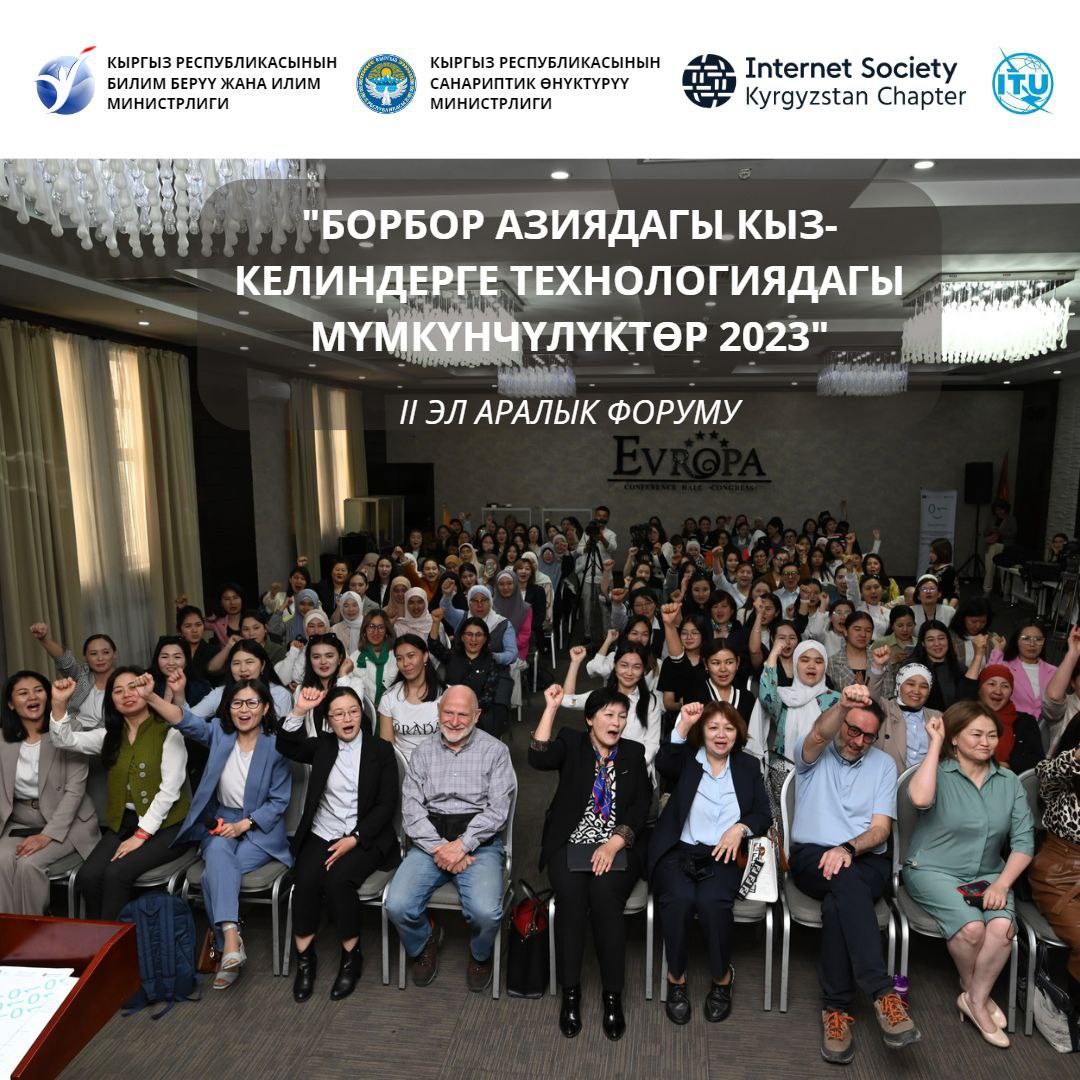
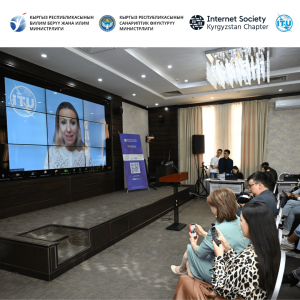
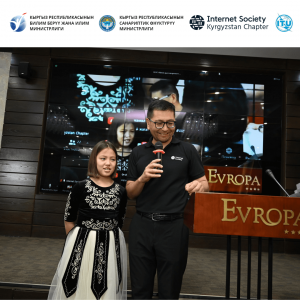
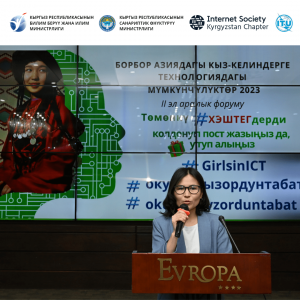
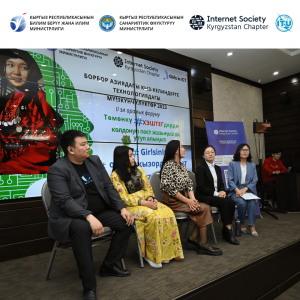
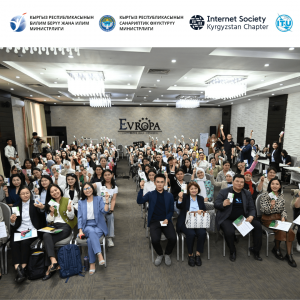
27-апрелде Бишкекте “Борбор Азиядагы кыз-келиндерге маалыматтык-технологиядагы мүмкүнчүлүктөр” аталышындагы экинчи эл аралык форум өттү. Форумда жергиликтүү жана  эл аралык эксперттер жана маалыматтаык-технология тармагындагы ийгиликтүү айымдар өз тажрыйбаларын бөлүшүп, космоско кантип спутник учурса болот, жасалма интеллектти кантип багынта алабыз, дүйнө талап кылган кесиптер жана алардын келечеги кандай, социалдык тармактарды кандайча пайдага колдоно алабыз, интернетте өзүн коргоо эмнеге керек, заманбап жашоодо финансылык сабаттуулук эмне үчүн маанилүү деген сыяктуу бир нече актуалдуу темалардын айланасында маалымат бөлүшүштү.

Бул иш-чара дүйнөнүн 195 өлкөсүндө белгиленип келе жаткан “Маалыматтык-байланыш технологиясындагы кыздар” күнүнүн урматына карата уюштурулду.

Форумда КРнын Санариптик өнүктүрүү министринин орун басары Индира Шаршенова сөз сүйлөп, маалыматтык-технология багытында кыз-келиндердин потенциалы чексиз экенин айтып берди:

“Биздин өлкөдө ITге байланыштуу мамлекеттик кызматтардын 15% айымдар башкарат. Андан сырткары, 5% код жазган айымдар бар. Бул да болсо жакшы көрсөткүч. Айымдар баштаган иш-чаралар, демилгелер ийгиликке жетип, жакшы көрсөткүч көрсөтүп келет. Бирок, өнүккөн технология алыскы региондогу кыз-келиндерге да мүмкүнчүлүк бериши керек. Мисалы, алар кол өнрчүлүк, сүт продукцияларын чыгарып же ж.б. өздөрүнүн продукцияларын электрондук коммерция аркылуу сата алышат. Демек, биз өлкөнүн бардык аймактарында маалыматтык-технологиялык көндүмдөрдү өздөштүргөндү үйрөтүшүбүз керек”.

Ал эми “Эл аралык электр байланыш союзунун” КМШ өлкөлөрү боюнча регионалдык жетекчиси Наталья Мочу:

“Аялдарда жана кыздарда эч кандай чек жок жана алардын таланттары бар экенин билип, керектүү билимге ээ болууга умтулуп, бүгүнкү санариптик дүйнөгө катышууга толук укуктуу”,- деп баса белгиледи.

“Интернет Коомунун кыргыз бөлүмүнүн” төрагасы Талант Султанов, кыз-келиндерди колдоо багытындагы иш-аракеттери менен ой бөлүштү:

“Интернет коомунун кыргыз бөлүмүнүн принциптери тууралуу айткым келип турат. Биринчи, бул алгач кыздар үчүн деген принцип. Иш-чараларды уюштурууда алгач кыздарга кызыктуу, пайдалуубу деген ой суроо менен баштайбыз. Экинчи, региондор үчүн биринчи деген принцип. Биз өткөргөн иш-чаралардын 1% гана бүгүнкүдөй шаарда өтөт, калган 99% региондордо уюштурабыз. Эмки жылкы форумду балким биз Ошто өткөрөбүз. Кийинки принцип,  бул биринчи кыргыз тилинде болсун дейбиз. Анткени, санариптешүү тармагында кыргызча маалыматтар абдан аз”, — деди Т. Султанов. 

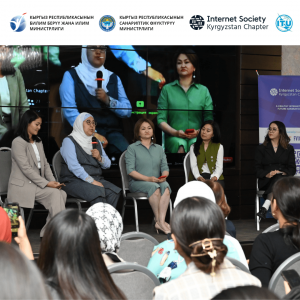
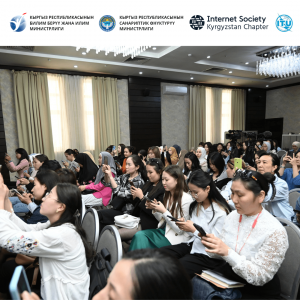
 Форум гибриддик форматта өттү. Ага дүйнөнүн жана Кыргызстандын бардык булуң-бурчунан 200дөн ашык жаран катышты. Алардын  арасында студенттер, тигүүчүлөр, мигранттар, окуучулар, мугалимдер, тарбиячылар жана үй кожейкелери болду. 

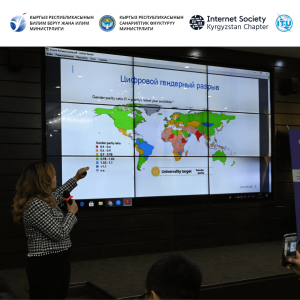
«Борбор Азиядагы кыз-келиндерге маалыматтык-технологиядагы мүмкүнчүлүктөр” форумунун максаты, жаштарды, кыздарды, өзгөчө алыскы айыл-аймактардагы кыз-келиндерди окууга жана технологиялык билим алууга шыктандыруу, инклюзивдүү жана гендердик санариптик ажырымды түшүнүүгө көмөктөшүү, STEM билимин жана санариптик көндүмдөрдү окутууну жактоо, ошондой эле кыздарды жана жаш аялдарды МКТ тармагында карьера жасоого үндөө болуп саналат. Бул көндүмдөргө таянып, кыз-келиндердин социалдык-экономикалык мүмкүнчүлүктөрүн жогорулатуу аркылуу туруктуу өнүгүүгө жол ачуу узак мөөнөттүү максаттарыбыздын бири.

Форум КРнын Билим берүү жана илим министрлиги, КРнын Санариптик өнүктүрүү министрлиги, “Эл аралык электр байланыш союзу” (ITU) жана “Интернет коомунун кыргыз бөлүмүнүн”(ISOC)  кызматташуусу менен уюштурулду.

Дүйнөдө “Маалыматтык-байланыш технологиясындагы кыздар” күнү 2011-жылдан бери белгиленип келет. Соңку маалыматка ылайык, бул 12 жыл аралыгында 195 өлкөдө белгиленип, ага жалпысынан  600 000ден ашык кыз-келиндер катыша алышты. 

Форумдун толук онлайн версиясын биздин социалдык тармактар же төмөнкү шилтеме аркылуу көрө аласыздар: https://www.youtube.com/watch?v=oZZb1y7sOq8

«Применение инновационных технологий в мониторинге и прогнозировании изменения климата и стихийных бедствий»

A seminar on «Application of innovative technologies in monitoring and forecasting of climate change and natural disasters» was held in Bishkek on April 25.

This event is organized by the «Internet Society Kyrgyz Chapter» together with the «International Center for Theoretical Physics» (ICTP), the «Internet Society Foundation» and the «Central Asian Institute for Applied Earth Research» (CAIAG).

The speakers of the seminar were:

President of the Latin American Network Association Escuela Latinoamerica de Redes Ermanno Pietrosemoli and

Coordinator, researcher at the International Center for Theoretical Physics Marco Zennaro.

The seminar was attended by more than 80 teachers, students of the Kyrgyz-Turkish Manas University and the Kyrgyz State Polytechnic University, as well as representatives of the National Academy of Sciences.

ICTP исследует технологию Lorawan для мониторинга изменения климата в презентации

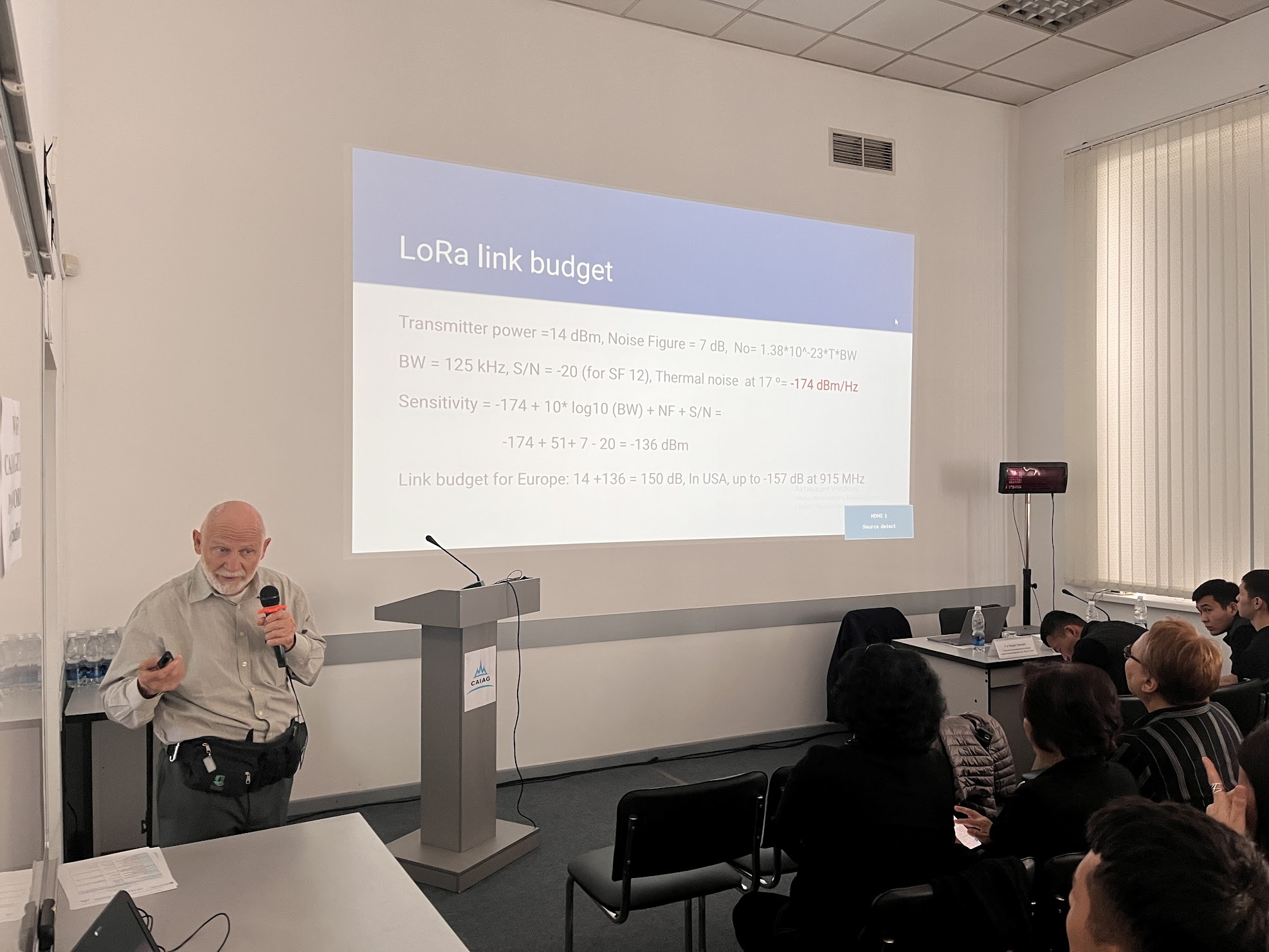
On April 24, 2023, a seminal roundtable discussion was hosted at the premises of the Central-Asian Institute for Applied Geosciences (CAIAG), an internationally recognized center for geoscience research. The roundtable was led by the Abdus Salam International Centre for Theoretical Physics (ICTP) team, who presented on the potential of Lorawan technology, its relevant communication protocols, and the historical footprint of ICTP’s activities in this domain.

The discussion was attended by a variety of key stakeholders involved in climate change monitoring, including members from pertinent ministries, state agencies, and academicians. This roundtable discussion is part of a broader research grants project funded by the Internet Society (ISOC) Foundation and led by the Internet Society Kyrgyz Chapter, aimed at enhancing the understanding and utilization of ICT solutions for monitoring environmental changes.

Lorawan technology, a suite of long-range, low-power communication protocols, was the central focus of the presentation. The ICTP team delved into the operational intricacies of the technology, emphasizing its significance in data collection, remote environmental monitoring, and real-time analysis.

The presentation was spearheaded by Ermanno Pietrosemoli and Marco Zennaro, two prominent members of ICTP.

Ermanno Pietrosemoli is a renowned pioneer in the field of wireless networking technology, best known for his significant contributions to bridging digital divides, particularly in Latin America. With his groundbreaking work, he has been instrumental in ensuring digital inclusivity, a commitment which led to his induction into the Internet Hall of Fame in 2017. Originally from Italy, Pietrosemoli moved to Venezuela, where he co-founded the Escuela Latinoamericana de Redes (EsLaRed), an organization devoted to ICT training throughout Latin America and the Caribbean. Through his commitment to EsLaRed, Pietrosemoli has facilitated knowledge sharing and technical expertise across the region, supporting local experts and researchers. Pietrosemoli has also been acclaimed for his pioneering work in long-distance Wi-Fi links. In 2007, he and his team set a world record for the longest Wi-Fi link, at a staggering distance of 382 kilometers. This achievement showcased the potential of low-cost wireless technology to bring internet connectivity to remote and rural areas.

Marco Zennaro, an ICTP research scientist, brought his extensive background in Information and Communication Technologies (ICTs) for sustainable development to the discussion. He has an extensive portfolio of publications, having written over 40 articles in peer-reviewed journals and books, all while maintaining his active involvement in scientific conferences and workshops worldwide. Some of his notable works include ‘Science Dissemination using Open Access,’ a pioneering book that explores the use of
open-access methodologies in sharing scientific research, and ‘Wireless Networking in the Developing World,’ a practical guide to using inexpensive wireless networking technology in developing areas.

The Abdus Salam International Centre for Theoretical Physics, named in honor of its founder, the Nobel Laureate Abdus Salam, is renowned for fostering scientific research in the developing world. With a legacy extending over 50 years, ICTP continues to promote scientific capacity and knowledge, underscoring the role of technology in addressing challenges like climate change.

This roundtable served as an opportunity for ICTP to demonstrate the role of innovative technologies like Lorawan in climate change monitoring. By facilitating real-time, precise data acquisition, these tools empower stakeholders to make informed decisions, thereby enhancing climate change mitigation and adaptation strategies. The roundtable underscored the continuous commitment of Pietrosemoli, Zennaro, and ICTP towards leveraging technology for sustainable development and climate action.

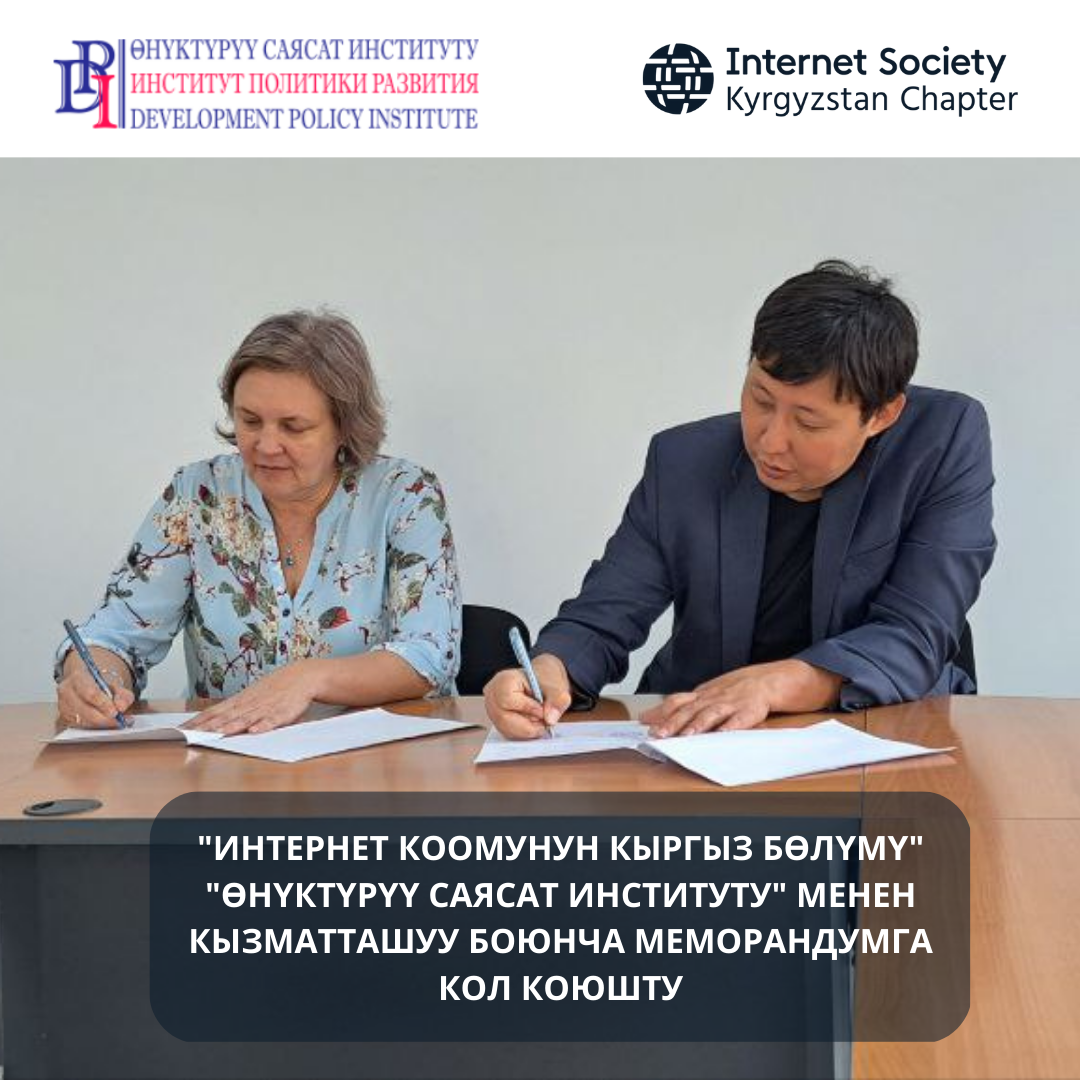
«Кыргызское Отделение Интернет Общества» и «Институт Развития Политики» подписали меморандум о сотрудничестве по повышению цифровой грамотности граждан в сельской местности

Internet Society Kyrgyz Chapter has signed a memorandum of cooperation with the Development Policy Institute to improve the digital literacy of women and youth in the region.

Based on this memorandum, both sides translate international educational materials on improving digital literacy into Kyrgyz and Russian, supplement the materials of local development partners, including the Development Policy Institute on financial literacy for adaptation and inclusion in the general training module, train young people, especially in remote areas without access to in the regions.

Digital tourism;

Digital Marketing;

E-commerce skills are taught on the basis of the Sanarip Insan project.

Also specialists of the “Tech4society” project of Internet Society Kyrgyz Chapter will conduct courses on “cybersecurity”.

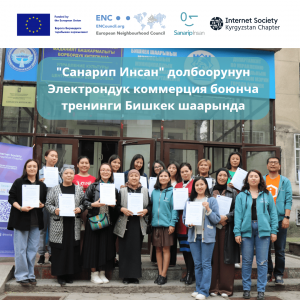
Тренинг по Электронной коммерции проекта «Санарип Инсан» в городе Бишкек

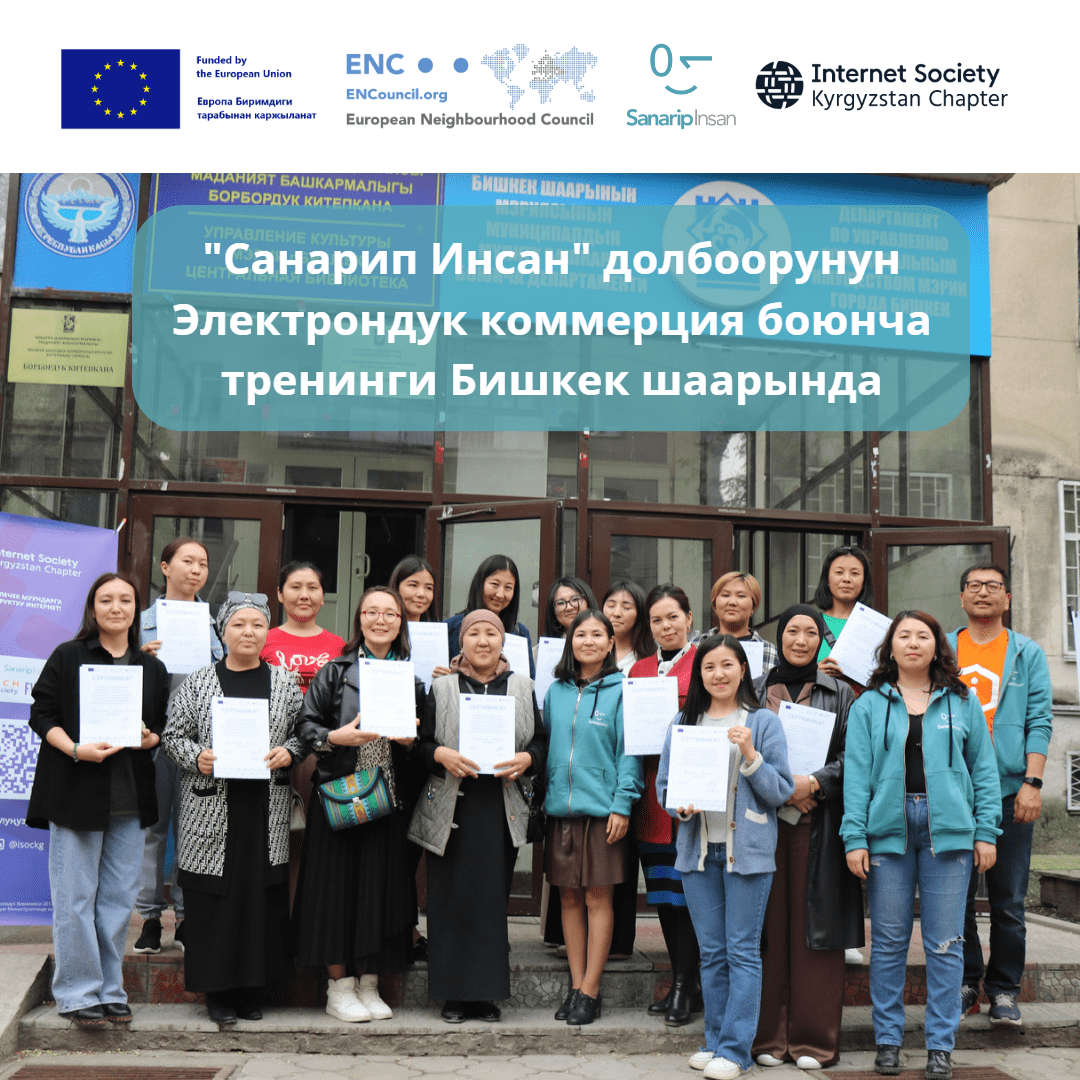
The second round of regional training of the project «Sanarip Insan» continued in Bishkek on April 14.

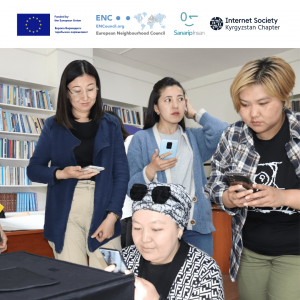
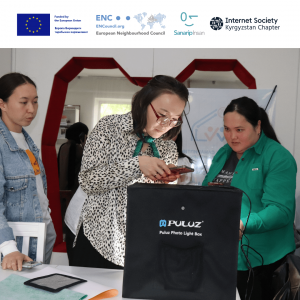
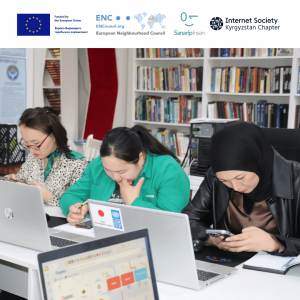
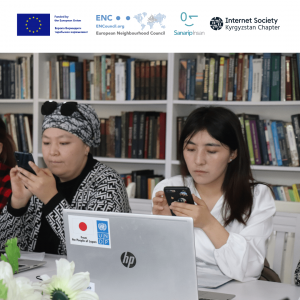
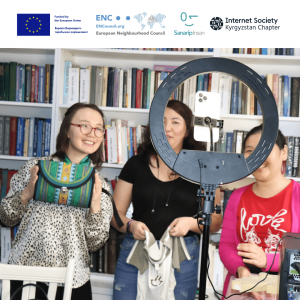
Training to improve digital skills of the population in rural areas, this time is held on the theme of «E-commerce». Each participant of this training event learns how to take photos and videos (mobileography) of their products or services, edit them, create a text description (copywriting) and place them on different electronic platforms.

In total, more than 20 girls and young people took part in the training. During the training, students were able to create photo/video content for their products and post them on their social media pages.

At the end of the training, all participants were given certificates that they had been trained in «E-Commerce».

The project «Sanarip Insan» is implemented by the «European Neighborhood and Association Council», «Internet Society Kyrgyz Chapter», with the financial support of the European Union.