Наш проект выиграл Moundatin Future Award 2025

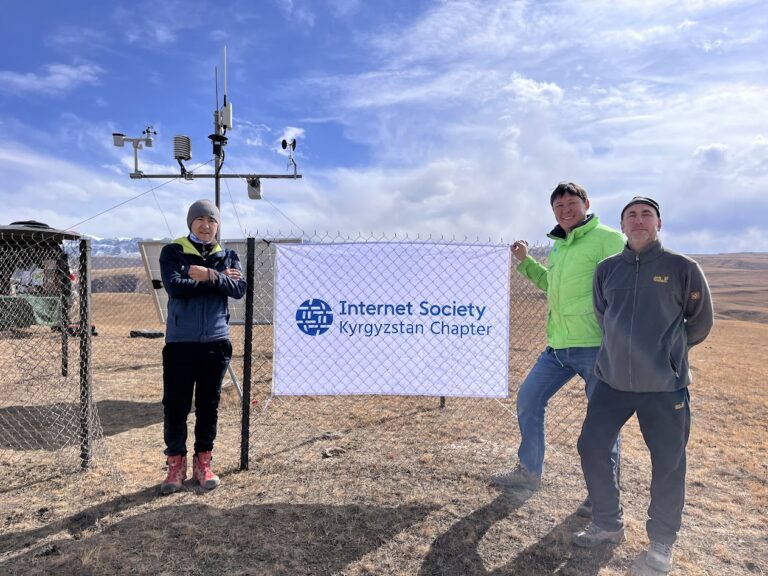
I am pleased to announce that on International Mountain Day, December 11, 2025, we received the award for the most innovative project related to

climate change and glacier conservation. The award ceremony took place at the Mountain Partnership of the United Nations headquarters at the Food and Agriculture Organization of the United Nations (FAO) in Rome.

As the project coordinator, I would like to highlight this achievement as a tribute to our outstanding Kyrgyz team: Azhybek Nurlanov, Murat Kaipov, Maksat, Emil, Alexander, and Gulbara Omorova. We are deeply grateful to the Abdus Salam International Centre for Theoretical Physics team — Ermanno Pietrosemoli Marco Rainone Marco Zennaro and Rytis Paskauskas for their technical expertise and constant support in navigating frontier technologies. And profound appreciation to our essential partners who made deployment possible: the Ministry of Emergency Situations of the Kyrgyz Republic, the administration of the Sary-Chelek Nature Reserve and the Karatal-Zhapyryk State Nature Reserve, and scientific institutions across the Central Asian region. We are thankful to the Internet Society Foundation for financial support of our project.

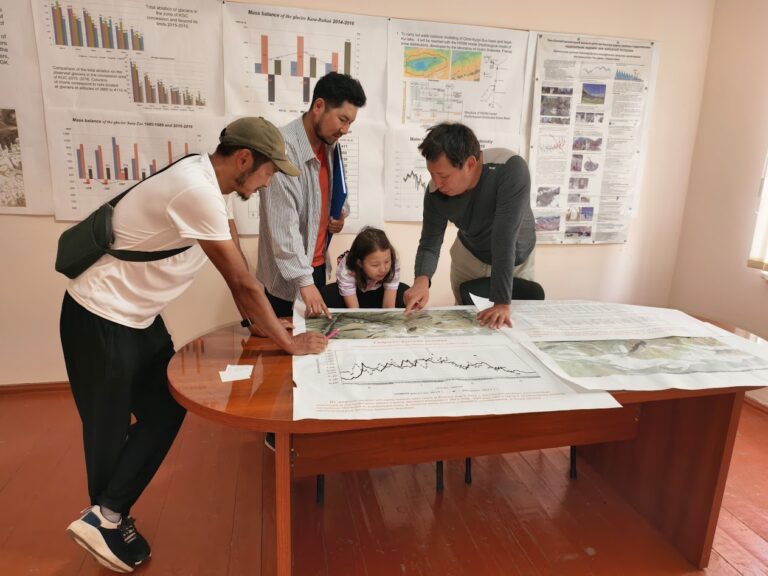
The Internet Society Kyrgyz Chapter’s victory in the Mountain Future Award in the Innovation category validates our work in addressing a critical monitoring gap: in the Pan-Third Pole region, only 10% of weather stations operate above 2,000 meters, and less than 5% above 3,000 meters, despite the fact that these high-altitude zones contain glaciers and permafrost that are most vulnerable to climate change. Kyrgyzstan’s data from only two weather stations located above 2,000 meters was available to the international scientific community. We demonstrate that affordable, advanced meteorological telemetry sensors and technologies like LoRaWAN, Wifi HaLow and EdgeAI can scale monitoring at extreme altitudes, where data is critically needed.

At the end of my speech, I called on countries to recognize climate data as a digital public good to build resilient and sustainable mountain communities. In other words, make such data accessible and free. It still shocks me that in order to write research paper based on the official historical climate data on the cryosphere in Kyrgyzstan, a researcher should spend roughly $3,000-$5,000 for purchasing data from Kyrgyzhydromet, which is already a major barrier to new research. If you would need to know the mean temperature which was this day ten years ago, you need to pay 50 Kyrgyz Soms (57 US cents) for one figure only, while research requires extensive amount of data. Therefore I call all nations to make such data open, free of charge, machine friendly, the digital public good asset.

More information about the event can be found at: https://www.fao.org/webcast/detail/international-mountain-day-2025-high-level-event/en (the Mountain Future Award 2025 ceremony begins at the 57th minute).

#MountainsMatter #InternationalMountainDay #GlacierPreservation

Проснувшись однажды утром после беспокойного сна, Грегор Замза обнаружил, что он у себя в постели превратился в страшное насекомое.

Полевые заметки о вызовах при установке шлюзов в горных районах

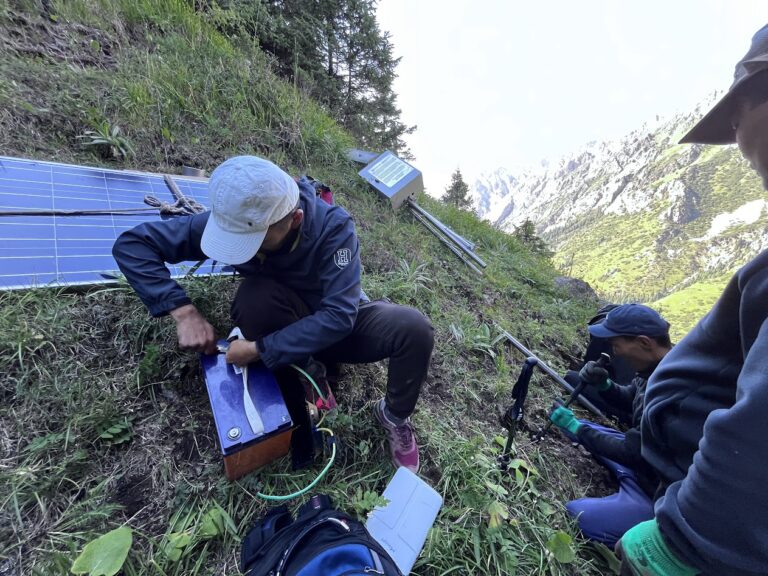
Climbing 700 meters with a 55° slope with solar panels, heavy batteries, and an IoT communication gateway strapped to our backs is not the usual picture of innovation and one wouldn’t think of AI in such context. However, this was exactly what it took to bring climate monitoring communication network to one of the most remote and high altitude places on Earth.
Recently, our team completed the installation of an IoT communication gateway near the Kara-Batkak (3360-4800 altitude) and Aylama glaciers in the Terskey-Alatoo mountain range. This system will connect affordable climate-related sensors at high altitudes — places where critical data is still missing not only in Kyrgyzstan or Third Pole, but globally.

Most foundational climate AI models today rely on assumptions to fill in gaps (cdf-mapping, bias-correction, etc), because the ground data from mountainous regions simply doesn’t exist. The cryosphere — glaciers, snow, and permafrost — remains under-observed, under-researched particularly in the world’s high mountain ranges. The Third Pole Regional Climate Center reported that in the entire Pan-Third Pole region, only 28 monitoring stations sat above 3000 meters out of nearly 700. These are exactly the altitudes where some of the most dramatic changes are taking place.

And the stakes are high. According to ICIMOD even in a world that warms by just 1.5 to 2°C, glaciers in the Third Pole could lose 30 to 50 percent of their volume by the end of this century. Without precise, high-resolution data, real-time data, AI models risk underestimating the hazards we face, from permafrost instability and glacier detachments to glacial lake outburst floods and snow droughts.

That is why Precision matters! Even down to the third-fourth decimal place, every data point helps improve forecasts, anticipate risks, and strengthen climate models that inform policy and adaptation strategies.

The summertime is high season for field works and installations far from the digital sphere in unconnected areas trying to connect the last-mile and secure supply of high precision data for scientists and local communities. For me, the climb was exhausting, but also deeply meaningful. Just like other teammates, I’ve suffered from pain, exhaustion, walking/falling through slippery meadows… Right there in altitude of 3000, looking into the downstream rivers, with spectacular views around, it was a reminder to me that innovation doesn’t only happen in labs, conference rooms, or algorithms. Sometimes it begins with sweat, altitude, and determination — carrying heavy equipment up a mountain so that the world can better understand what is at stake. And it was the second from 15 installations planned under the research project funded by the Internet Society Foundation and implemented by the Internet Society Kyrgyz Chapter along with partners.

Проснувшись однажды утром после беспокойного сна, Грегор Замза обнаружил, что он у себя в постели превратился в страшное насекомое.

Полевые заметки о наблюдениях за природными явлениями в высокогорных районах Третьего полюса

We are now entering the next stage of our climate project focused on monitoring natural phenomena in the high-mountain regions of the Pan-Third Pole. This phase is about scaling—reaching more remote areas, collecting more reliable data, and doing so with tools that are both affordable and practical in extreme conditions.
It’s remarkable that at a time when everyday life is supported by advanced technologies—robotic vacuums, smart thermostats, and self-driving cars—the monitoring of critical natural hazards like glacial lake outbursts, glacier melt, and landslides in some of the world’s most fragile regions still relies heavily on manual or semi-automated methods. Meanwhile, the number of trained climatologists remains extremely limited, and this field continues to receive only a fraction of the funding it needs.

To help close this gap, we, the Internet Society Kyrgyz Chapter and Abdus Salam International Centre for Theoretical Physics (ICTP), are preparing to test new telecommunication solutions that drastically cut the cost of data transmission—by up to a hundredfold when measured across the full system lifecycle. This makes it possible to connect more locations without the usual financial and logistical barriers. We’re also working with specially adapted meteorological and environmental sensors that are significantly more affordable than traditional models, yet still meet the accuracy requirements for climatological research. These sensors are designed to withstand harsh alpine environments where many commercial solutions fall short. In addition, we are exploring the use of simple and accessible AI tools to help process and interpret the growing volume of data in ways that support faster, more informed decision-making.

This project is not only about technology—it’s about the landscapes and communities of high-mountain regions like Kyrgyzstan, Tajikistan, Nepal. It offers a chance to work closely with local people, experience the beauty of these remote environments, and contribute meaningfully to global efforts in disaster monitoring and climate resilience.

This project is funded by the Internet Society Foundation Research Grants Programme


As cofounder and programs manager Aziz leads projects related to frontier communication technologies, digital innovations, climate change and artificial intelligence. He regularly posts updates from the field trips on his Linkedin profile.

Тестирование GIGA Meter в пилотных школах Кыргызстана

The Internet Society Kyrgyzstan Chapter, working with the Ministry of Education and Sciences and the GIGA Global Team, has completed connectivity assessments at ten pilot schools in southern Kyrgyzstan using the GIGA Meter tool.
GIGA is a global initiative by UNICEF and ITU launched in 2019 to connect every school to the Internet by 2030. The program has mapped over 2.1 million schools across 140 countries and aims to connect 6 million offline schools globally. Since 2021, the GIGA Global has partnered with teh ISOC Kyrgyz Chapter  on research of state of school connectivity, developing sustainable connectivity in Central Asian region.

The GIGA Meter is a desktop application that allows school administrators to monitor their institution’s connectivity. The tool measures upload and download speeds, latency, packet loss, and accessibility to educational platforms, providing comprehensive data beyond basic speed tests.

In Central Asia, Kyrgyzstan faces particular challenges due to its mountainous terrain and dispersed rural communities. GIGA is developing connectivity solutions and business models specifically for remote mountainous regions, with the Internet Society Kyrgyzstan Chapter serving as a key implementation partner.

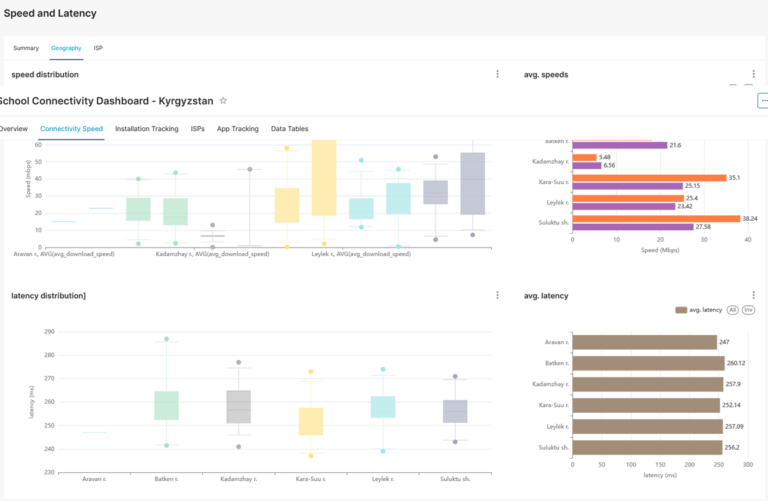
The assessment covered schools in six districts: Aravan, Batken, Kadamzhay, Kara-Suu, Leylek, and Suluktu. The GIGA Meter was installed remotely at ten schools, with six installations remaining active during the monitoring period.

Giga Meter school connectivity dashboard summary kyrgyzstan
Giga Meter school connectivity dashboard summary Kyrgyzstan

Key Connectivity Metrics

Based on 201 measurements collected over several weeks, the pilot revealed:

  • Average download speed: 19.63 Mbps
  • Average upload speed: 22.44 Mbps
  • Average latency: 251 ms

Regional Performance Variations

The data shows significant differences between regions:

Download speeds ranged from 21.6 Mbps in Batken to 35.1 Mbps in Kara-Suu, with most regions performing between 23-27 Mbps.

Latency was relatively consistent across regions, ranging from 247 ms in Aravan to 260 ms in Batken, indicating stable but elevated response times due to the remote fiberoptical location of measurement servers (Mumbai, India).

Connectivity Patterns

Time-series data from May through June shows notable variations in performance:

  • Daily speed fluctuations ranged from near zero to peaks of 50+ Mbps
  • Upload speeds demonstrated more stability than download speeds
  • Latency remained consistent around 250-270 ms throughout the monitoring period

Of Kyrgyzstan’s 2,080 schools mapped on GIGA’s platform, 1,220 are classified as connected while 851 have unknown connectivity status. However, the Ministry of Education and Sciences as well as the Ministry of Digital Development reported repeatedly that over 90% of schools connected to the Internet. This pilot provides detailed performance data for a representative sample of connected schools in the southern regions.

Implications

The results confirm earlier assessments of Kyrgyzstan’s school connectivity landscape, showing adequate speeds for basic educational applications but with significant variability that could impact consistent access to digital learning resources.

This pilot establishes a additional measurement toolkit for ongoing monitoring and provides evidence for targeted improvements in school connectivity across the country’s rural regions.

В средней школе села Кара-Дыйкана Узгенского района установлен инновационный золоуловитель

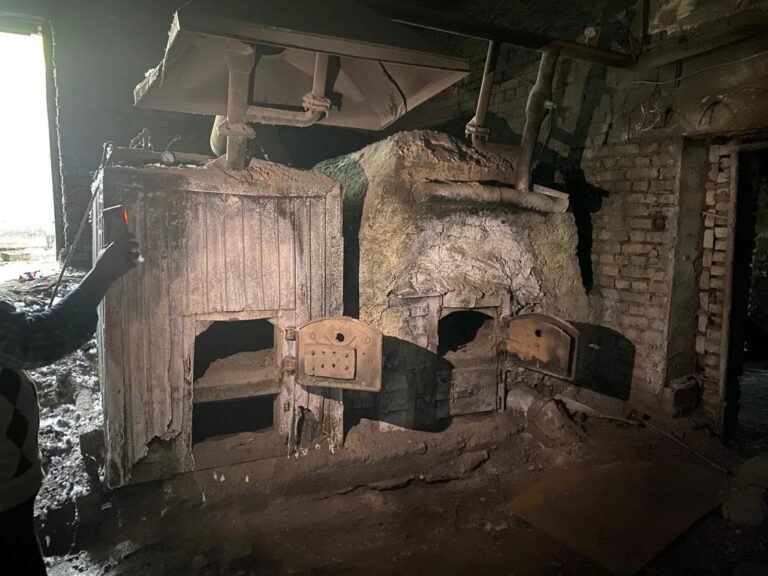
In secondary school No. 7 named after Tagay Tashmamatov, located in the village of Kara-dyikan, Uzgen district, Osh region, an innovative industrial ash filter for a coal furnace was installed, which retains up to 98% of harmful substances and carbon dioxide. Thanks to the introduction of these green technologies, schoolchildren, teachers and residents of nearby houses can be protected from the negative health consequences of emissions of harmful substances from coal furnaces during winter heating seasons.

In the process of monitoring the quality of the network Internet infrastructure, the project team paid attention to the heating systems in pilot schools. Almost all schools in rural areas are heated by coal furnaces installed 50-60 years ago, which are significantly inferior in energy efficiency and safety to modern coal furnaces and alternative heating methods. Particular attention was drawn to the coal furnace of the secondary school in the village of Kara-dyikan, Uzgen district, Osh region. This coal furnace was located in the basement under the floors where students study during the day. Even in the spring, it was difficult to enter and stay in this room due to the high content of harmful substances and the smell of coal ash. The team found it difficult to imagine how it works in the winter and how children study while smelling the ash that penetrated the classrooms through the floor and windows.

The school administration repeatedly contacted local government bodies and the leadership of the Ministry of Education of the Kyrgyz Republic. However, these issues remained open and were not a priority. About 1,500 students study at this school, and the total number of residents in the village of Kara-Dyikan, according to the census, was 7,700 people. During the same period in Kyrgyzstan, engineer Amantur Salymbaev invented an innovative filter for coal furnaces, which cyclone and electromagnetic filters trap 90% of harmful particles and do not allow 50% of carbon dioxide. The filter does not need electricity or water to operate. According to the Ministry of Natural Resources, its efficiency in air purification reaches 98%. At the time of the appeal, Salymbaev had a patent for a technical invention and began to offer implementation. The filter is designed for a service life of 5-6 years and does not require maintenance. This makes the device a sustainable and cost-effective solution. In this regard, this project financed the installation of this filter at the school. The initiative to install an innovative filter received support from the school administration and local government. The industrial filter was developed within a few days, and the installation took two days. We hope that this measure will contribute to the health of the residents of this village, students and teachers of the school, and also become an exemplary model for other schools in the Kyrgyz Republic.

You could learn more about innovative solution following the link: https://www.instagram.com/reel/DI3oZeNMBVY/ 

Результаты мониторинга интернет-подключения сельских школ (апрель 2025)

After the completion of software and conducting some advocacy campaigns with the stakeholders, we have travelled to pilot schools, tested existing quality of internet speed before and after upgrade with the new hardware.

The measurements were conducted in 10 pilot schools. The team used such measurement tools as fast.com, nPerf. The results demonstrated the average and peak speed and bandwidth capacity (download, upload, latency). In addition to this tests, the team had remotely installed GIGA Meters for constant monitoring of the interent quality. All installations had been made in accordance with the guidance of the GIGA Project.

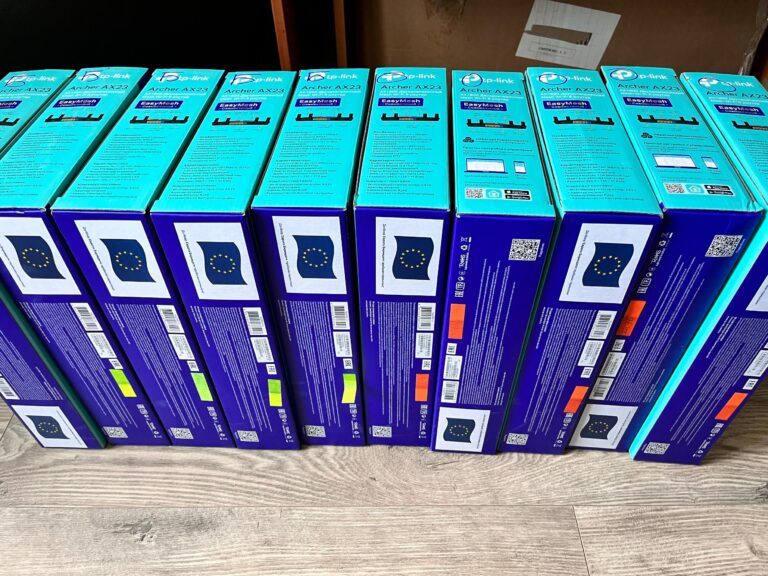
Apparently, all pilot schools had fiber optics cables up to schools that potentially could allow speed up to 1Gbps. The fiber optics were laid by the Kyrgyztelecom ISP with the financial support of the Digital CASA Project, project funded by the World Bank and implemented by the Project Implementation Unit under the Ministry of the Digital Development. However, the media converters and routers were outdated creating hardware constrains to benefiting from high speed Internet. The upgrade of routers to Wi-fi 6 standard ones allowed to increase connectivity speeds up to 30% in connection points. The upgrade of wifi hotspots allowed to have more simultaneous connections at the same time with no setback on quality of services.

The technical audit of the school network infrastructure revealed that there was no much progress from the authorities and school administrations over the last six months. However, some schools had installed videosurveillance system with the support of high quality video streaming and possibility to transmit data to the administraiton of the Ministry of Education and Sciences. Nevertheless, the outbound bandwidth capacity remained low. 
We also conducted measurements of the LAN infrastructure: existing topology, the needs and challenges of school principals, teachers and schoolchildren. As an outcome we have made preliminary assessment of required maintenance works to connect all STEM classes to the LAN Internet.
 
Why LAN not WiFi? Some schools had thick brick or sand block walls that effectively block wifi signals from routers installed in corridors or other rooms. In this context, the LAN infrastructure was the only possible option.

STEM-тренинги для учителей Лейлекского района Баткенской области

High in the mountainous terrain of Leylek district, the village of Chimgen became an unlikely epicenter of educational innovation on April 24, 2025. At the School named after Japarov, rural educators from across one of Batken Oblast’s most remote districts gathered for the culminating session of a three-day regional STEAM training initiative that had already energized teachers in Osh Oblast and the urban centers of Kadamzhay.
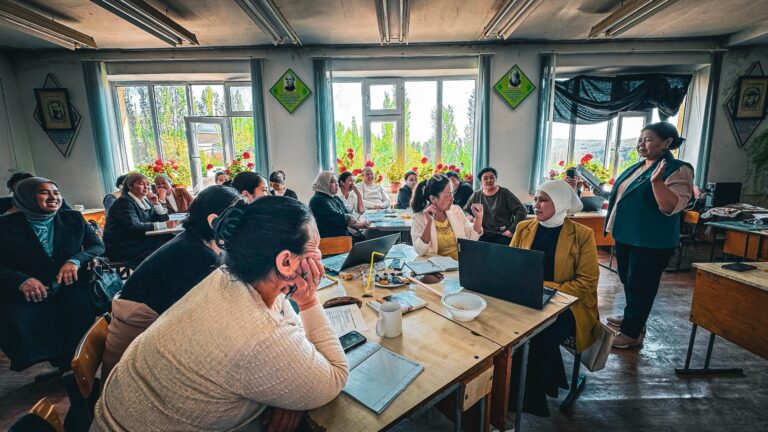
This final training session carried special significance, representing the program’s commitment to ensuring that geographical isolation never translates to educational isolation. The teachers who made the journey to Chimgen village embody the dedication that characterizes rural education—professionals who often serve as the sole representatives of their subjects in small schools, wearing multiple hats and serving entire communities as educational leaders.

The rural context demanded a uniquely adapted approach to STEAM methodology. While their urban colleagues in Kyzyl Kiya and Batken had access to varied resources and specialist teachers, Leylek district educators often work in schools where a single teacher might cover multiple grade levels or subjects. This reality shaped the training’s focus toward versatile, adaptable strategies that could function effectively in resource-constrained environments.

Master trainer Symbat Satybaldieva, completing her three-day journey across the region alongside co-trainers Ainaz Ysmailova and Gulmira Isakova, brought to Chimgen a refined understanding of how STEAM principles could be tailored to rural realities. The cumulative experience from Osh and Kadamzhay sessions informed adaptations that made the methodology even more accessible and practical for remote schools.

The 5E learning model took on particular relevance in this setting, where teachers recognized its potential to transform limited resources into rich learning experiences. A biology teacher shared how the «Engage» phase could begin with students’ direct observations of their mountain environment, while the «Explore» phase might involve investigating local ecosystems that urban students could only read about in textbooks.

Rural educators brought unique perspectives to Growth Mindset discussions, sharing stories of students who had overcome significant challenges to pursue education despite economic and geographical barriers. These real-world examples of resilience and determination provided powerful illustrations of neuroplasticity principles, demonstrating how belief in student potential can literally reshape neural pathways and academic outcomes.

The session’s emphasis on locally-sourced materials resonated deeply with participants who have long practiced the art of educational innovation born from necessity. Teachers shared creative solutions they had developed—using mountain stones for mathematics manipulatives, incorporating traditional crafts into engineering challenges, and utilizing agricultural cycles to teach scientific method. The training validated these approaches while providing theoretical frameworks that elevated intuitive practices to evidence-based methodologies.

PISA-aligned assessment strategies sparked particularly engaging discussions as teachers grappled with preparing students for global standards while honoring local knowledge systems. The session explored how traditional Kyrgyz problem-solving approaches could be integrated with international assessment frameworks, creating learning experiences that were both culturally grounded and globally relevant.

Artificial intelligence tools presented both opportunities and challenges in this rural context. While internet connectivity and technology access remain variable in remote areas, teachers learned to view AI as a planning and preparation tool that could enhance their instructional design even when classroom implementation might rely on more traditional methods.

The «Marshmallow Challenge» took on special meaning in Chimgen, where teachers recognized parallels to community problem-solving traditions. The activity’s emphasis on iteration, collaboration, and learning from failure mirrored approaches that rural communities have long used to address resource limitations and environmental challenges.

One of the day’s most powerful moments came during the «Food Print Puzzles» activity, when teachers connected observation and inference skills to traditional ecological knowledge that their students possess. A geography teacher noted: «My students can predict weather patterns by reading cloud formations and animal behaviors—this is scientific observation at its most sophisticated. Now I understand how to build on this foundation.»

The collaborative atmosphere was enhanced by the intimate setting, where teachers from scattered mountain schools had rare opportunities to connect with colleagues facing similar challenges. Professional isolation, a common experience in rural education, gave way to animated discussions about shared solutions and mutual support strategies.

Demo lesson presentations showcased remarkable creativity in adapting content to local contexts. A history teacher demonstrated how the 5E model could transform lessons about ancient Silk Road trade routes by having students physically map pathways through their own mountain passes, while a mathematics teacher showed how geometric principles could be explored through traditional yurt construction techniques.

The training’s rural focus highlighted the critical role that individual teachers play in their communities. Unlike urban settings where educational responsibilities are distributed among many professionals, rural teachers often serve as their schools’ primary innovators, technology coordinators, and community liaisons. The STEAM methodologies provided frameworks for managing these multiple roles more effectively.

Feedback from participants emphasized the training’s relevance to their daily realities. One teacher reflected: «Living in the mountains teaches you to be resourceful, but this training showed me how to be resourceful with purpose. Every stone, every plant, every traditional practice can become a pathway to scientific understanding.»

The Chimgen session completed a comprehensive regional initiative that demonstrated how innovative educational approaches can be successfully adapted across diverse contexts—from urban pilot schools in Osh Oblast to the busy cities of Kadamzhay region to the remote villages of Leylek district. Each setting contributed unique insights that enriched the overall understanding of STEAM implementation in Central Asian contexts.

As the three-day program concluded, the mountain setting provided a fitting metaphor for the journey these educators have undertaken. Like climbers who support each other in reaching new heights, these teachers have formed professional networks that transcend geographical boundaries, united by shared commitment to educational excellence regardless of their schools’ remote locations.

The success in Chimgen proves that transformative education is not dependent on urban resources or technological abundance, but on the creativity, dedication, and professional growth of educators who refuse to let geographical challenges limit their students’ potential. These rural teachers return to their mountain schools equipped not just with new methodologies, but with renewed confidence that they can provide world-class educational experiences in any setting.

The ripple effects of this rural training will extend far beyond individual classrooms, as these teachers serve as educational leaders in communities where their influence shapes not just student learning, but community attitudes toward education, innovation, and possibility.

STEAM тренинги для учителей в городе Кадамжай Баткенской области

In the bustling educational hub of Kadamzhay, a transformative day unfolded on April 23, 2025, as dedicated educators from three dynamic cities—Kyzyl Kiya, Bujum, and Batken—converged at School #17 named after Masalieva for an intensive STEAM training experience. This gathering represented the second phase of a comprehensive regional initiative that had begun in Osh Oblast the previous day, extending innovative pedagogical approaches across southern Kyrgyzstan’s educational landscape.

The single-day intensive format demanded a focused approach, concentrating the most impactful elements of STEAM methodology into actionable strategies that teachers could immediately implement. Unlike traditional professional development sessions, this training emphasized hands-on experimentation and peer collaboration, recognizing that educators from these three cities bring diverse perspectives shaped by their unique urban and semi-urban contexts.

Master trainer Symbat Satybaldieva, supported by co-trainers Ainaz Ysmailova and Gulmira Isakova, adapted the comprehensive STEAM curriculum to address the specific challenges faced by teachers working in resource-diverse environments. The educators gathered represented a cross-section of subjects and grade levels, united by their commitment to elevating student engagement and learning outcomes through scientific inquiry and integrated approaches.

The heart of the Kadamzhay session centered on the practical application of the 5E learning model—Engage, Explore, Explain, Elaborate, and Evaluate. Teachers worked in mixed-city groups, designing mini-lessons that transformed traditional content delivery into dynamic, student-centered experiences. The collaborative nature of these activities created natural opportunities for educators from different cities to share local innovations and adapt successful practices to their own contexts.

One particularly powerful moment emerged when a mathematics teacher from Kyzyl Kiya demonstrated how geometric concepts could be explored through architectural elements found in their city’s Soviet-era buildings, while a colleague from Batken showed how similar principles applied to traditional Kyrgyz construction techniques. This cross-pollination of ideas exemplified the program’s goal of making abstract concepts tangible through local relevance.

The training’s emphasis on Growth Mindset resonated strongly with participants who often face the challenge of motivating students in economically challenging environments. Teachers engaged with research on neuroplasticity, discovering how understanding the brain’s capacity for change could revolutionize their approach to student potential. This scientific foundation provided educators with evidence-based strategies for encouraging persistence and resilience in their classrooms.

PISA-aligned assessment strategies took on particular significance in this setting, as teachers grappled with preparing students for international standards while maintaining connection to local contexts. The session included practical workshops on developing critical thinking tasks that mirror global assessments while incorporating culturally relevant scenarios that students could relate to and engage with meaningfully.

The integration of artificial intelligence tools sparked considerable discussion among participants, many of whom had limited previous exposure to educational technology. Rather than viewing AI as a replacement for traditional teaching methods, educators learned to conceptualize these tools as collaborative partners that could enhance their ability to personalize instruction and provide immediate feedback to students.

Interactive demonstrations brought theoretical concepts to life through engaging activities. The «Marshmallow Challenge» revealed insights about teamwork, iteration, and learning from failure, while «Food Print Puzzles» developed observation and inference skills crucial for scientific thinking. These activities served dual purposes: modeling effective STEAM pedagogies while providing ready-to-use classroom activities.

Teachers from Bujum particularly appreciated the emphasis on resource optimization, learning how everyday materials could be transformed into powerful learning tools. The session included practical demonstrations of creating laboratory equipment from locally available materials, addressing a common challenge in schools where traditional science resources may be limited.

The collaborative atmosphere extended beyond formal sessions, with educators naturally forming professional networks that crossed city boundaries. Teachers exchanged contact information and began planning follow-up collaborations, recognizing that the challenges they face are often similar despite geographical differences.

Feedback from participants highlighted the value of the intensive format, with many noting that the concentrated learning experience created a sense of urgency and focus that enhanced retention and application. One educator commented: «This single day changed how I think about every lesson I teach. The 5E model isn’t just for science—it’s a way of thinking about all learning.»

The training’s success in Kadamzhay demonstrates the scalability of innovative educational approaches across diverse contexts. By bringing together educators from three different cities, the program created opportunities for knowledge sharing that extended far beyond the formal training hours. Teachers returned to their schools not just with new methodologies, but with expanded professional networks and renewed enthusiasm for educational innovation.

This Kadamzhay experience represents a crucial link in the broader regional transformation of education, connecting the pilot innovations tested in Osh Oblast with the rural implementations planned for Leylek district. The urban and semi-urban perspectives contributed by Kyzyl Kiya, Bujum, and Batken educators provide valuable insights for adapting STEAM approaches across the diverse educational landscape of southern Kyrgyzstan.

As these educators return to their classrooms, they carry with them not just new teaching strategies, but a shared vision of educational excellence that transcends city boundaries. The collaborative spirit fostered during this intensive day continues to ripple through professional conversations and classroom innovations, creating a sustainable foundation for long-term educational transformation in the region.

The success of the Kadamzhay training reinforces the importance of bringing high-quality professional development directly to educators in their regional contexts, recognizing that transformative change happens when teachers have immediate opportunities to collaborate, experiment, and implement new approaches within their familiar professional communities.