Тренинги по STEM для учителей из Ошской области

On April 22, 35 dedicated teachers from pilot schools across the Osh oblasty gathered in Osh city for an intensive one day mastercalls that would fundamentally transform how they approach teaching and learning.

The STEAM (Science, Technology, Engineering, Arts, and Mathematics) training program, conducted represents more than just professional development—it’s a cornerstone initiative supporting Kyrgyzstan’s ambitious transition to a 12-year Cambridge secondary education system. As the country on the way to the comprehensive education sector reforms, programs like these are crucial for ensuring that rural schoolchildren receive the same quality of innovative education as their urban counterparts.

These 35 educators from Osh Oblast pilot schools now equipped to lead the integration of modern pedagogical approaches that align with international standards while remaining rooted in local contexts.

Led by master trainer Symbat Satybaldieva alongside co-trainers Ainaz Ysmailova and Gulmira Isakova, the program introduced teachers to cutting-edge methodologies that transform passive learning into active discovery. The training centered on several revolutionary approaches: The 5E Learning Model became the foundation for reimagining lessons. Teachers learned to structure their classes around five key phases: Engage, Explore, Explain, Elaborate, and Evaluate. This model shifts the teacher’s role from information deliverer to learning facilitator, encouraging students to construct their own understanding through guided inquiry. Growth Mindset and Neuroplasticity sessions challenged teachers to reconsider how they view student potential. By understanding that intelligence isn’t fixed but can be developed through effort and strategy, educators gained tools to help every student, regardless of their starting point, achieve academic success. PISA-aligned Tasks brought international assessment standards into local classrooms, ensuring that students develop the critical thinking and problem-solving skills needed to compete globally while addressing local challenges.

The heart of the training lay in its practical application. Teachers didn’t just learn about new methodologies—they experienced them firsthand by designing and delivering their own demo lessons. From «Birds’ Classification» to «Historical Places of Uzgen,» educators crafted innovative lessons that brought abstract concepts to life. One particularly memorable demonstration involved Newton’s third law of action and reaction, taught through a «balloon car» experiment. Students watched in amazement as simple materials transformed into vehicles that perfectly illustrated complex physics principles. This hands-on approach exemplifies how STEAM education makes learning tangible, memorable, and genuinely exciting.

The training emphasized that STEAM education isn’t just about science and mathematics—it’s about developing the critical thinking, collaboration, and problem-solving skills that define 21st-century success. Through activities like the «Marshmallow Challenge» and «Food Print Puzzles,» teachers experienced firsthand how failure becomes a learning opportunity and how teamwork amplifies individual capabilities. The integration of artificial intelligence tools introduced educators to the reality that technology isn’t replacing teachers—it’s empowering them to focus on what they do best: inspiring, guiding, and mentoring young minds.

The impact of the training resonates in teachers’ own words: «After the training, I was encouraged to work more with groups and develop logical thinking, work with real-life examples, and think in a holistic way, not just about one subject in class.» Another educator noted: «5E model, PISA test based exercises, scientific methods. I will use them in laboratory work because I am a biology teacher.» These testimonials reflect a fundamental shift in educational philosophy—from subject-specific teaching to integrated, real-world learning that prepares students for the interconnected challenges they’ll face in their careers and communities.

With an impressive post-training survey result of 8-10, the training received overwhelmingly positive feedback. But perhaps more importantly, it sparked a broader conversation about educational equity and rural development. Teachers identified concrete needs—from laboratory facilities to STEAM camps—that highlight both the challenges and opportunities in rural education.

The program’s success demonstrates that geographic isolation doesn’t have to mean educational isolation. When rural teachers receive world-class training and support, they become catalysts for community transformation, inspiring students who might never have imagined careers in science, technology, or engineering.

Инструментарий для мониторинга школьной связи

Understanding the real quality of internet connectivity in educational institutions has become a critical challenge for policymakers and administrators across the globe. The Internet Society Kyrgyz Chapter recently recognized this urgent need and commissioned the development of specialized monitoring software to assess internet quality in pilot secondary schools throughout Kyrgyzstan. This initiative represents a significant step toward evidence-based decision-making in educational technology infrastructure, particularly in addressing longstanding concerns about service delivery quality.

The context surrounding this project reveals a troubling disconnect between contractual obligations and actual service delivery. Since 2021, Kyrgyztelecom has held an exclusive contract as the sole internet service provider for secondary schools across Kyrgyzstan, with agreements specifying 100 Mbps internet connectivity for educational institutions. However, the reality on the ground tells a different story. Schools consistently reported significant performance issues, slow speeds, and unreliable connections that made it virtually impossible to conduct modern digital education effectively.

The situation became so problematic that teachers began using their personal mobile data allowances, creating Wi-Fi hotspots from their smartphones to ensure their students could access online learning platforms and digital educational resources. This grassroots solution highlighted the severity of the connectivity crisis while simultaneously demonstrating the dedication of educators to providing quality instruction despite infrastructure challenges. The irony was stark — the Kyrgyz Government was paying for internet services that were essentially unusable, while teachers were subsidizing the education system with their personal resources.

This widespread practice of teachers sharing mobile data revealed the fundamental problem with existing service arrangements. Without objective measurement tools, schools had no concrete evidence to support their complaints about poor connectivity. Service provider claims about delivered bandwidth had no independent verification, creating an accountability gap that disadvantaged both educators and students. The lack of empirical data made it difficult for education officials to address the problem through formal channels or to justify contract modifications or provider changes.

The technical approach for addressing this challenge crystallized during project coordinator Aziz Soltobaev’s participation in the RIPE NCC conference, where he joined the Internet of Things working group. The discussions and insights gained from this engagement with the European network coordination community provided the inspiration for utilizing OpenWrt as the foundation for the monitoring solution. This connection to the broader internet infrastructure community proved instrumental in shaping the project’s technical direction and ensuring alignment with established best practices in network measurement and monitoring.

The project centers around creating a comprehensive measurement platform built on the OpenWrt framework, an open-source operating system designed primarily for embedded devices and network routers. This choice of foundation proves particularly strategic for educational environments, as OpenWrt provides a stable, customizable, and cost-effective solution that can be deployed across diverse hardware configurations commonly found in schools. The system transforms abstract complaints about internet quality into concrete, measurable data that can drive meaningful policy changes.

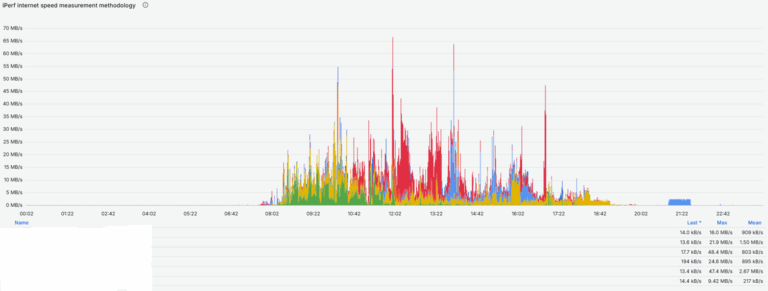
The monitoring system incorporates multiple measurement methodologies to provide a comprehensive view of internet performance. The implementation includes NDT7 (Network Diagnostic Tool version 7), which offers standardized speed testing capabilities developed by Measurement Lab. This protocol provides reliable throughput measurements that can be compared across different locations and time periods. Additionally, the system utilizes iPerf, a widely-recognized network testing tool that measures maximum achievable bandwidth on IP networks, supporting both TCP and UDP protocols for comprehensive performance analysis.

Beyond these core measurement tools, the platform integrates additional diagnostic capabilities including latency measurements, packet loss detection, and jitter analysis. These metrics collectively paint a detailed picture of network performance that goes far beyond simple download and upload speeds. The system continuously monitors these parameters throughout the school day, capturing variations in performance that correspond to different usage patterns and peak demand periods.

The data visualization capabilities of the system prove particularly valuable for decision-makers dealing with service provider accountability. Real-time dashboards display current network status while historical reporting functions reveal trends and patterns over extended periods. The screenshots demonstrate how the system presents upload and download performance data in clear, accessible formats that allow administrators to quickly identify periods when promised service levels are not being delivered. This creates an evidence base that can support formal complaints, contract renegotiations, or provider performance reviews.

One notable aspect of the implementation is its consideration of the unique challenges faced by educational institutions in service provider relationships. Schools typically experience highly variable internet usage patterns, with significant spikes during class transitions, lunch periods, and specific lesson times when multiple classrooms simultaneously access online resources. The monitoring system accounts for these patterns by providing detailed temporal analysis that helps administrators understand when and why network performance fails to meet educational needs, particularly in comparison to contracted service levels.

The open-source nature of the solution offers several advantages for government agencies and educational institutions operating under budget constraints while dealing with underperforming commercial relationships. Unlike proprietary monitoring solutions that often require expensive licensing fees and vendor-specific hardware, this OpenWrt-based approach can be deployed on commodity hardware or integrated into existing network infrastructure. This accessibility makes it particularly suitable for developing regions where cost-effectiveness remains a primary consideration in technology adoption decisions, especially when existing service contracts are not delivering promised value.

For the Ministry of Education and Sciences, this monitoring capability provides unprecedented visibility into the actual internet experience of students and teachers, contrasting sharply with the theoretical service levels outlined in government contracts with Kyrgyztelecom. Rather than relying on service provider assertions or anecdotal reports from schools, education officials can now access concrete performance data that reflects real-world conditions. This information proves invaluable when making decisions about service provider accountability, contract enforcement, or alternative arrangements that could better serve educational needs.

The Ministry of Digital Development benefits from having standardized measurement data across multiple educational institutions that can objectively assess whether government investments in educational connectivity are delivering promised results. This consistency enables meaningful evaluation of service provider performance across different regions and school types. Such comparative analysis can inform policy decisions about contract modifications, penalty enforcement, or the potential benefits of introducing competition in educational internet services.

For telecommunications regulatory bodies, the system provides an independent source of performance data that complements traditional regulatory monitoring efforts while offering insight into how monopolistic service arrangements perform in practice. The continuous measurement approach offers a more comprehensive view of service quality than periodic testing, potentially revealing systematic service degradation or improvement trends that might otherwise go unnoticed. This capability enhances regulatory oversight while providing objective data for discussions with service providers about network performance standards and contract compliance.

The practical implementation of the system reveals concerning patterns in educational internet delivery that validate teacher complaints about service quality. The monitoring data shows significant discrepancies between promised and delivered bandwidth, particularly during peak educational hours when reliable connectivity is most crucial. Understanding these patterns helps administrators document service failures while providing valuable evidence for accountability discussions with Kyrgyztelecom and government oversight agencies.

The bandwidth utilization analysis component of the system offers insights into how contracted internet resources are actually delivered versus consumed within educational environments. This information helps school administrators understand whether current service arrangements meet educational needs while providing data-driven justification for contract enforcement actions or alternative service arrangements when necessary. The system can identify specific periods when service falls below contractual obligations, enabling more informed decisions about remedial actions or penalty applications.

The project’s emphasis on open-source development ensures long-term sustainability and adaptability while reducing dependence on commercial monitoring solutions that might be influenced by service provider relationships. Educational institutions and government agencies can modify the software to meet specific local requirements without depending on commercial vendors for customization or potentially compromised monitoring tools. This independence proves particularly important in situations where service provider accountability is a primary concern.

The classification of this monitoring toolkit as a digital public good adds significant value to its development and deployment. Digital public goods are defined as «open-source software, open data, open artificial intelligence models, open standards and open content» that are intended to contribute to sustainable development. This classification promotes «open-source solutions for a more equitable world» and is «key to achieving the Sustainable Development Goals». By developing this internet monitoring solution as a digital public good, the Internet Society Kyrgyz Chapter ensures that the benefits extend far beyond the immediate pilot implementation.

The digital public goods framework means that other countries facing similar challenges with educational internet service delivery can adapt and deploy this monitoring solution without licensing restrictions or vendor dependencies. Digital public goods «offer the opportunity to counteract» digital divides «through their open access to information and technologies» while limiting «economic monopolies over digital solutions and knowledge». This is particularly relevant for developing nations where telecommunications monopolies may underdeliver on government contracts while lacking independent oversight mechanisms.

The toolkit’s status as a digital public good also facilitates international cooperation and knowledge sharing about internet quality monitoring in educational settings. Educational authorities in other countries can learn from Kyrgyzstan’s implementation experience while contributing their own innovations and adaptations back to the global community. This collaborative approach accelerates the development of effective solutions while reducing the individual costs and risks associated with developing monitoring capabilities from scratch.

Looking toward broader implications, this monitoring initiative represents a model that directly addresses accountability gaps in government service procurement while providing concrete tools for advocacy on behalf of educators and students. The combination of standardized measurement protocols, open-source implementation, and focus on decision-maker needs creates a framework that transcends specific national or regional contexts. The detailed performance data generated by such systems can inform evidence-based policy making at multiple levels of government and educational administration, particularly in situations where service providers may not be meeting contractual obligations.

The success of this pilot implementation in Kyrgyzstan’s secondary schools demonstrates the value of systematic internet quality monitoring in addressing service delivery problems that affect educational outcomes. By providing reliable, continuous measurement data through accessible open-source tools, the project enables informed decision-making about service provider accountability, contract enforcement, and alternative arrangements that could better serve educational needs. This approach transforms teachers’ personal sacrifices and student learning disruptions into concrete evidence that can drive systemic improvements in educational technology infrastructure.

The toolkit serves as a powerful advocacy tool that gives voice to educators and students who have been struggling with inadequate internet connectivity despite government investments in educational technology. Rather than continuing the cycle of paying for services that don’t meet educational needs while teachers subsidize the system with personal mobile data, this monitoring solution provides the evidence base necessary to demand accountability and drive meaningful improvements in educational internet service delivery.

The web platform is accessible to decision makers via link: https://mektepinternet.isoc.kg 

The Github repository of code located here: https://github.com/ISOCKG/internetqualitymonitoring 

#DigitalPublicGoods #OpenSource #InternetForEducation #DigitalEquity #OpenWRT #NetworkMonitoring #EducationTechnology #DigitalDivide #InternetRights #TechForGood #SDGs #DigitalInclusion #OpenData #CommunityTech #EducationAccess #NetworkTransparency #DigitalGovernance #TechPolicy #ConnectivityMatters 

Роль Интернета вещей в прогнозировании стихийных бедствий была презентована на ИИ Саммите

The recent AI Summit for Climate Action showcased an impactful discussion panel titled AI with a Focus on Sustainability Analysis, moderated by Dr. Sedef Akınlı Koçak, Director of Professional Development at the Vector Institute. The summit gathered notable experts, including Nick Beglinger, Co-founder of Cleantech21 Foundation; Saeed Valadbaygi, Executive Director of the Global Centre for Risk and Innovation; Iuliia Eyriay, Researcher at the Vector Institute; and Aziz Soltobaev, Co-founder of the Internet Society Kyrgyzstan Chapter.

Panel Insights: AI in Climate Emergencies and Extreme Weather Events

During the first round of the panel discussion, Aziz Soltobaev provided valuable insights into disaster management and resilience, particularly within Kyrgyzstan and the broader region known as the “third pole”—a region encompassing Central Asia’s mountainous areas that store significant glacial reserves and play a crucial role in global water supply.

Aziz discussed the research work his team has been conducting, focusing on the installation of IoT sensor networks in regions prone to natural disasters within Kyrgyzstan. This initiative has enabled the collection of high-grade, firsthand information crucial for training AI models to forecast natural disasters effectively. The insights gathered from these sensor networks have enhanced data accuracy and contributed to more reliable predictions, thereby improving disaster preparedness and response strategies.

Aziz highlighted how AI technologies can revolutionize the prediction, preparedness, and response phases of disaster management. Leveraging machine learning algorithms to analyze data from IoT sensors, satellite imagery, and climate models, AI has shown its potential to enhance early warning systems and facilitate timely evacuations, mitigating consequences. He cited successful examples where AI-driven tools have refined the forecasting of glacial melt and river flow patterns, reducing flood risks and supporting better regional resilience.

AI and Climate: Collaboration for Future Resilience

In the second round, the focus shifted to the importance of collaboration in deploying AI for climate solutions from regional and international perspectives. Aziz Soltobaev underscored the necessity for coordinated efforts among countries that share transboundary environmental challenges, such as water resource management. He emphasized that fostering alliances between governmental bodies, academic institutions, and tech innovators is paramount to advancing scalable AI applications that address climate resilience.

Aziz also shared his team’s vision to develop with the support of supported by Vector Institute scientists an AI model capable of forecasting the type and timing of natural disasters in high-altitude, mountainous countries such as Kyrgyzstan. This initiative aims to be scaled up to other countries representing the «third pole»— the region with the largest concentration of glacial ice outside the polar areas, which serves as a critical water source for billions of people.

Looking forward, Aziz expressed optimism about AI’s role in refining climate emergency responses through enhanced modeling and simulation capabilities. He called for increased cross-border collaborations that leverage shared data repositories and aligned policy frameworks to support sustainable progress.

The participation of experts like Aziz Soltobaev underscores the essential role AI plays in fostering resilience against climate challenges, marking a critical step forward for both Kyrgyzstan and global collaborative efforts in climate action.

The Global AI Alliance for Climate Action

This groundbreaking initiative brings together leading AI researchers from the Vector Institute and global climate organizations to develop long-term, innovative solutions to the climate crisis. The Global AI Alliance for Climate Action operates on the principle that combining AI’s potential with human ingenuity can unlock powerful innovations that equip frontline communities with the tools needed for a sustainable future.

The primary objective of the initiative is to source top talent, identify promising AI applications for complex climate challenges, and amplify their impact through strategic resource allocation and capacity building. The alliance centers on four key areas of impact:

  • Cities and Urban Planning
  • Agriculture and Biodiversity
  • Extreme Weather Events
  • Energy Efficiency and Resource Optimization

By focusing on these critical areas, the Global AI Alliance aims to foster long-term, scalable solutions that can benefit future generations.

Sponsors of the AI Summit for Climate Action

The summit’s success was supported by dedicated partners:

  • Anchor Partners: The Vector Institute and Be Node;
  • Fundraising Partner: Turkish Philanthropy Funds (TPF);
  • Policy Partner: The Center for AI and Digital Policy.

ISOC KG присоединился к Global AI Alliance for Climate Action

ISOC Kyrgyz Chapter is proud to join the Global AI Alliance for Climate Action. As part of the AI Alliance ISOC team lead by the Aziz Soltobaev and research partners from the Vector Institute and Başlangıç Noktası | Be Node will be developing innovative solutions for climate emergencies (natural disasters).

ISOC Kyrgyz Chapter will contribute datasets, expertise collected from the implementation of the Project on use of LoRaWAN-enabled internet of things for monitoring and forecasting natural disasters in mountainous countries such as Kyrgyzstan.

As a result of the project we expect developing new adapters, transformers or finetuning for existing AI models or develop absolutely new models.

AIforClimate, AIforGood, ClimateTech, SustainableTech, AIsolutions, TechForClimate, AIandClimateChange, GreenAI, ClimateInnovation, AIforSustainability

От гор к данным – инсайты с выступления на RIPE 89

The RIPE 89 Meeting, held in Prague, brought together a vibrant mix of technology enthusiasts and industry experts to share knowledge on data, networking, and innovation. Organized by the RIPE Network Coordination Centre (RIPE NCC), this annual gathering serves as a crucial forum for fostering collaboration and exchanging ideas within the global internet community. One of the standout sessions was “From Mountains to Data,” presented by Aziz Soltobaev under the RIPE Academic Cooperation Initiative (RACI). This talk illustrated the journey of turning raw natural data into valuable digital insights.
In his presentation, Aziz Soltobaev discussed how immense, raw data sourced from the natural world can be transformed into actionable information. This theme transcends theoretical discussion and dives into practical solutions for collecting, managing, and analyzing vast environmental data sets. The metaphor of mountains symbolized both the physical challenge of remote data collection and the inherent complexity of processing unrefined data.

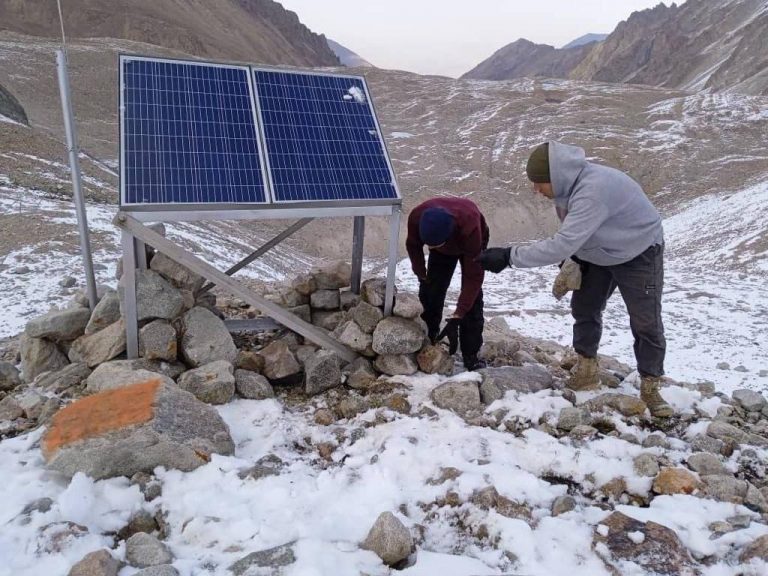
In his presentation at RIPE 89, Aziz Soltobaev emphasized the challenges of data collection in Kyrgyzstan’s mountainous regions, stating, «Deploying sensors in these remote areas is not just about technology; it’s about overcoming logistical hurdles and ensuring data reliability.»

Key Insights and Technological Challenges

Data Collection in Remote Areas: Soltobaev highlighted the difficulties encountered when gathering data in rugged, mountainous regions. Deploying sensors, ensuring reliable data transmission, and dealing with extreme conditions demand both creative problem-solving and technological ingenuity.
Advanced Data Processing: After collection, raw data must be processed to uncover valuable insights. Soltobaev underscored the importance of powerful computational tools like machine learning algorithms and high-performance computing to effectively analyze and interpret this data.
Transforming Data into Decisions: The ultimate aim of this data transformation is to support informed decision-making in areas such as environmental preservation, urban development, and disaster preparedness. Soltobaev provided examples where analyzed data was used to predict natural events and assess their potential impact on communities. «By transforming raw environmental data into actionable insights, we can make informed decisions in urban planning and disaster preparedness, ultimately benefiting our communities», Aziz said.

Relevance for Networking and Technology Experts
This topic holds significant relevance for the RIPE community. Soltobaev’s insights highlighted parallels between challenges in environmental data handling and the complexities of managing global network infrastructures. Both require scalable, resilient systems capable of adapting to varied and sometimes overwhelming data demands.

Future Perspectives
The presentation “From Mountains to Data” underscored a broader message: the convergence of data, technology, and environmental understanding can lead to innovative, cross-disciplinary solutions. By tackling complex data with the right tools and methodologies, what once seemed insurmountable can be turned into actionable knowledge that benefits multiple sectors.

This session at RIPE 89 emphasized that, with determination and the right technological strategies, even the most challenging data can be harnessed to pave the way for smarter, data-driven decision-making across environmental and technical landscapes.

Additional links:

  • https://ripe89.ripe.net/programme/meeting-plan/iot-wg/
  • https://ripe89.ripe.net/programme/blog/
  • https://ripe89.ripe.net/archives/video/1476/

Предварительные результаты мониторинга интернет подключения сельских школ

The initial monitoring of the school connectivity demonstrated lack of the promised speed by Internet Service Provider. The internal wired and wireless infrastructure were the other issue of low connectivity leaving teachers and schools an opportunity to benefit from Internet provided by authorities.
Methodology

To assess the technical condition of the Internet infrastructure of 10 pilot schools in the Osh and Batken regions of the Kyrgyz Republic, the following activities were carried out:

  • Video interviews with school principals and IT teachers were conducted in Kyrgyz to identify current challenges and needs of educational institutions.
  • Remote diagnostics of the condition of equipment, communication lines and current Internet connection speed.
  • Analysis of building plans to study the location of classes, network nod locations and used network equipment.
  • Collection of data on internet service providers and tariff plans, as well as technical network parameters.

Based on our previous research we learned that all networking and information technology issues delegated as additional responsibility to teachers of the informatics, computer science classes. Therefore, the teachers were important source of information providing preliminary insights about the state of connectivity.

The remote diagnostics had been conducting using video call and overview of the cabling to the schools, media converters, routers and switches as well as end devices such as computers, laptops, etc.

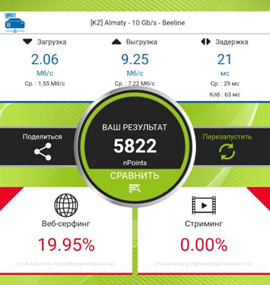
We have used different testing platforms to monitor school connectivity including such parameters as speed diagnostics, browsing, Quality of Service, latency rate to key data centers and internet exchange points, as well as compliance of existing infra to LAN cabling engineering standards. Some parameters were tested using such diagnostics services as Ookla Speedtest, fast.com focused on quality of streaming services, and nPerf that rely upon the mLab measurement protocol (NDT7). Note that the GIGA Daily Check Up App was not available to Kyrgyzstan therefore ignored in testing stage.

The buliding information modeling helped us to understand the quality of wireless signal, possibility of wireless mesh network across the school, existing capacity, needs and challenges for schools to be fully connected and enjoy the seamless digital education experience.

Findings

  • All of the secondary schools had low-bandwidth capacity routers from two vendors with a maximum speed of up to 300 Mbps, limited processor performance and memory capacity suitable for home or small office usage only. The routers haven’t been able to cope with all connections.
  • Pilot schools were utilizing combined internal connectivity infrastructure — LAN cable connecting computer classrooms and wifi connection for teachers. The actual internet speed ranged between 340Kbps to 16Mbps.
  • Based on the Cabinet of Ministry’s decision KyrgyzTelecom Joint Stock Company had been selected as the single supplier of the internet services for all 2200 secondary schools of Kyrgyzstan. The terms of the agreement were classified and not available publicly. According to the interview, the Ministry of Education paid roughly 2500 Kyrgyz soms monthly fee per school in duration from September to June, while summertime were unpaid.

Photo gallery of school connectivity monitoring results

From Mountains to Data Low-Cost Weather Stations in Kyrgyzstan’s Challenging Terrain

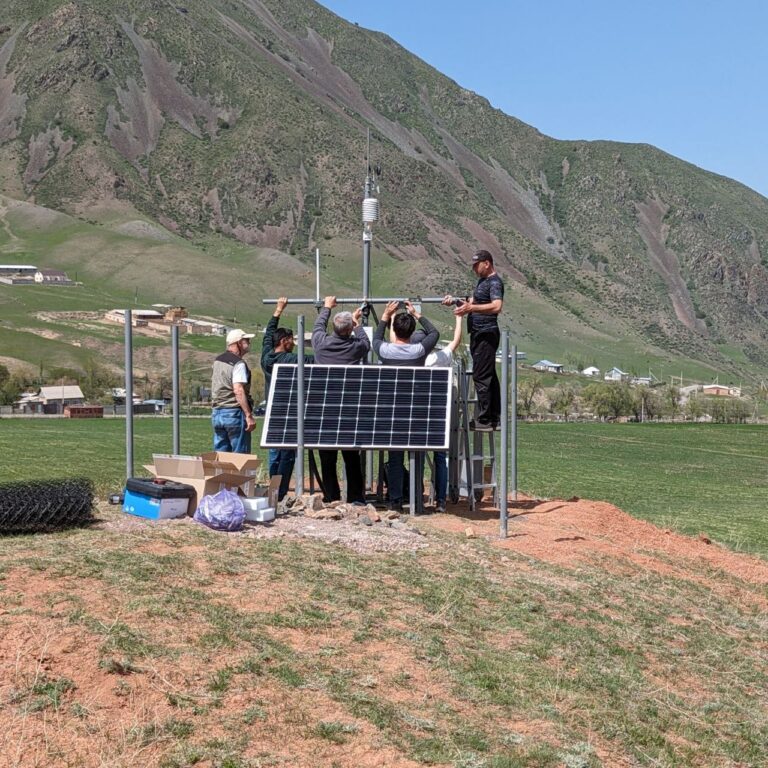
On behalf of the research team, I am very pleased to announce that our preprint of a research paper on the use of low-cost automatic weather stations, LoRaWAN technology and various IoT sensors has been published. “From Mountains to Data: Low-Cost Weather Stations in Challenging Conditions in Kyrgyzstan” describes the selection criteria for the equipment to be deployed and provides detailed information on the installation process at the pilot sites, as well as the challenges encountered during the project.

For me, one of the main conclusions of this research project is that there has been a significant breakthrough in the quality and availability of telemetry sensors over the past five years.

Our data analysis shows that two-tier automatic weather stations demonstrate similar results (daily, decadal, monthly averages) with a high degree of accuracy (95-98%) as the first-tier AWS. The only difference is that new technologies have reduced the cost of weather stations by 10-20 times. Instead of $50,000 worth of equipment, you can use $1,000-$5,000 weather stations and get identical results (subject to regular calibration and maintenance of the equipment).

The second important takeaway is the demonstration of the potential of LoRaWAN data transmission technology for rapid deployment and monitoring of climate change, creation of geoinformation models, forecasting future trends, and taking mitigating preventive measures.

The third important takeaway is the practical application of such an approach to data transmission as Delay-Tolerant Networks. With this approach, under adverse external conditions, data can be collected and transmitted later. In the conditions of the pilot project in Kyrgyzstan, DTN showed good performance in severe frost conditions in December 2023, when the temperature dropped to -23-28 degrees. As a result, some nearby cell towers were disconnected for a while, as were some of our sensors. However, data recording continued, and when the network was restored, the data was successfully transmitted to the central server.

The full version of this article will be published in the next issue of the scientific journal Sensors. This scientific work became possible during the implementation of the research project of the Internet Society Kyrgyz Chapter with the financial support of the Internet Society Foundation.

Рекогносцировка оползней в Жалал-абадской области

The initial deployment of a LoRa-enabled network to monitor natural disasters such as landslides and mudflows holds considerable promise. In response to positive feedback and a request from the Ministry of Emergency Situations, the ISOC team embarked on a journey to the southern region of Kyrgyzstan to assess potential pilot locations.
During the first weeks of December, the team visited two active landslides located in Jalal-Abad Oblasty of the republic. The first landslide is situated in Karamart (Kara-Mart), Suzak Rayon.

According to the Department of Monitoring of Natural Disasters under the Ministry of Emergency Situations, there is a high risk of landslide activation on the right bank of the river Kök-Art, in lateral valleys of Achy-Say, Karamart, and on the slopes between the Karamart, Urum-Bashy, and Kök-Art rivers.

The second location is a landslide near the village of Kichi-Ak-Jol in Suzak Rayon, along the strategic road connecting the region with the highway leading to Bishkek and Osh cities.

The reconnaissance was conducted using drones, topographic video, and photography. Initial contacts with local administration were established during this phase.

The gathered information will undergo thorough review and analysis, and a LoRa-enabled topology network will be proposed to effectively monitor and respond to these landslide-prone areas.

Семинар по коммуникации в экстремальных условиях для науки и устойчивого развития

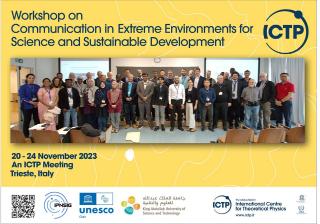
On November 2023 we had a privilege to participate in the Workshop on Communication in Extreme Environments for Science and Sustainable Development held in Trieste, Italy. The workshop had been organized by our partner organization Abdus Salam International Centre for Theoretical Physics (ICTP). The workshop brought together researchers and practitioners who shared insights and expertise on building sustainable communication networks, use of low power internet of things as well as learning advanced technologies and protocols for connecting unconnected. We have explored how 6G networks, new forms of sattelite connectivity, non-terrestrial networks and underground communications could help connect the unconnected. The Days of Delay Tolerant Network and Lora mesh Labs helped to gain practical skills and learn new tools to consider in the future communication projects.

We as Internet Society Kyrgyz Chapter shared our experience on using Internet of Things and LoRaWAN technologies for climate monitoring and early warning in mountainous areas. This 2-year project aimed to explore how LoRaWAN and Lora-enabled devices in conjuction with open source solutions could be utilized in extreme climate conditions, mountainous areas to monitor such natural disasters as mudflows, landslides, glacier lake outburst floods and help relevant decision makers to take mitigation actions.

Kyrgyz Republic has over 4000 lakes mostly caused by glaciers and located in altitude between 2500 and 4000 meters. Currently, there are about 5000 active landslides registered in the country. Over the last 30 years 593 landslide disaster events were recorded in Kyrgyzstan.

Our research project is funded by the Internet Society Foundation research grants component.

LoRawanCentralAsia climateresilience climatetech sustainabletech internetofthings 6GCentralAsia #spacecommunicationskyrgyzstan