Ilimbox devices installed in 20 schools without Internet

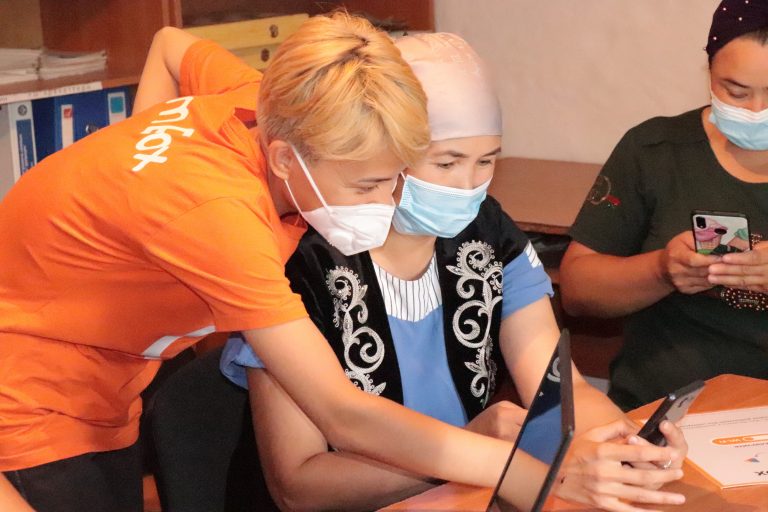
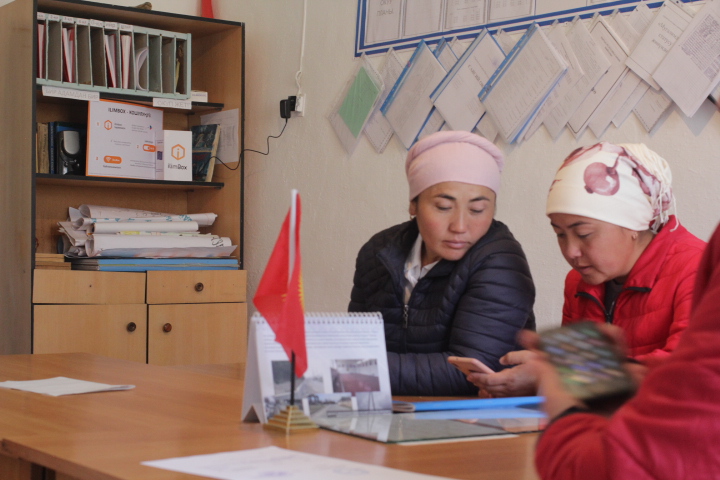
In October 2020, the ISOC team, within the framework of the European Union project “Promoting Inclusive Education in the Kyrgyz Republic”, installed Ilimbox devices in 20 schools without the Internet. The Ilimbox, also known as the Internet in a Box, contains basic educational materials available without an Internet connection.

To speed up the delivery of Ilimbox devices, the ISOC team traveled from Bishkek in 3 different directions: Jalal-Abad oblast (9 schools), Issyk-Kul and Naryn oblasts (7 schools), Osh and Batken oblasts (4 schools).

The first group of villages was located in the Ala-Buka district of the Jalal-Abad region, on the border with Uzbekistan. When visiting these schools, our team came across the expression “dwarf school”: due to the lack of teachers, 1st and 3rd grades are taught in one lesson at the same time.

Entrance to the schoolin Ala-Buka district, Jalal-Abad region

Entrance to the school named after E. Bakiev in Ala-Buka district, Jalal-Abad region

The main problems in the region are constant power outages and lack of roads, which is why children come to school on horseback from mountain villages. The following schools are located in Chatkal and Suzak districts: Chakmak-Suu, s. Achy, s. Markai and S. Ortok. Ortok village was remarkable for us. Most of all, the residents of this village complain about the lack of Kyrgyz television: they cannot watch the news and only show Uzbek channels. Teachers at the local school liked the Ilimbox device, and they especially liked the fact that a large amount of educational material can be found in one resource. They also liked our Android application and the ability to manage content without searching the entire phone.

First and third-grade students in one lesson in a dwarf school

In Bazar-Korgon region, we visited a school in the village of Zhaz-Kechuu. The road to the village lies through walnut forests and small passes; in winter, due to snow and the lack of a road, residents can only ride horses to the nearest village. Electricity in this village was carried out only this fall. Therefore, residents of Jaz-Kechuu are just getting used to using computers and printers, watching TV, and using a mobile device not only for communication. Despite low digital skills, local school teachers were actively learning to use Ilimbox. In total, the school has about 70 students.

New electricity meter in the village of Zhaz-Kechuu

In the Issyk-Kul region, Ilimboks devices were installed in the villages of Eңilchek and Ak-Shyirak. Eңilchek was a developed mining village in the past. Now only about 150 people live here permanently. The local school has 5 classes with about 20 children and 11 teachers. The village has a mobile connection, but there is no Internet, which is why the electronic library was met with great interest: the teachers liked the offline Wikipedia most of all, using which they can find out more useful information, which means they can prepare interesting and informative lessons.

Ak-Shyirak school stidents

The second village of the Issyk-Kul region, Ak-Shyirak, is located 5 hours drive from Karakol. Departure to the city is hampered by mudflows and snowfalls. The villagers rarely travel to the city. The number of students is more than 70, children from neighboring villages live in dormitories, warm houses have also been built for teachers from other cities. There is a mobile connection, but no more than 4 people can use it at the same time.

Next, Ilimboks devices were installed in the Nookat region in the villages: Kayyudy and Kichi Alai. Both villages are considered the most remote villages in the Osh region. The village of Kayindy begins with a birch grove and is surrounded by mountains. Nature here is indescribably beautiful. The school has about 30 students, but the village has no Internet, as well as mobile communications. In the village of Kichi Alai, there is a mobile connection, but the mobile Internet does not provide sufficient speed for children to fully watch video lessons.

Ilimbox connected to a TV in the village of Kara-Shoro in the Alai district of the Osh region

In the Kadamjai region, an electronic library was installed in the village of Shoro. The road to this village lies through the Shakhimardan enclave, through which only local residents are allowed. Therefore, the team members had to go through a bypass, which was 3 times longer. This school had a TV with Wi-Fi technology, so we were able to connect the Ilimbox device to the TV and demonstrate another way to use Ilimbox. In sunny weather, you can use the mobile 4G Internet, but in the rain, the network completely disappears.

The final was a school in the village of Zardaly in Batken oblast, which is located in a remote area and is not connected to electricity. Only on foot, the ISOC team walked about 3 hours 12 kilometers along narrow mountain trails. For the students and teachers of the village of Zardaly to use the Ilimbox device, electricity was required, for this, a solar panel, a battery, and a charge controller were purchased. The equipment was transported on donkeys. In some places, the equipment was carried by hand. Until they finally reached the village of Zardaly. The solar panel and Ilimbox were installed at the school, complemented by solar street lights donated by the team to the residents of Zardala. The school has about 11 children, 3 teachers work, including the director.

ISOC Team and Zardaly Villagers Carry Solar Panel Through Narrow Mountain Trails

Installation of ilimBox devices in border schools in Batken region

At the end of August, the “ilimBox” team, with the financial support of the European Union, installed 22 ilimBox devices in the border villages of Batken region.
 

Batken District


The first devices were installed in the schools of the Batken District, namely the villages of Chek, Zhagy-Zher, Dobo, and Buzhum. In the village of Dobo, the teachers treated us with melons right from their own garden. Therefore, talking about offline Wikipedia in Kyrgyz, we decided to search for the word “koon” (eng: melon) to show how this resource works. Residents of these border villages are mainly engaged in agriculture, planting watermelons, melons, pumpkins.


Photo: melon and ilimBox


The villages of Gaz, Tayan, Charbak, and Kyshtut are located in the north-east of the city of Batken on the border with the Sokh region, which is an exclave of Uzbekistan. Since the border with Uzbekistan was closed, we drove along the mountain bypass road. The road was not paved, and we could only observe the rocky slope of the mountains and dry fields from the car window. But the first impression was misleading: as soon as we descended the mountains and went to the first school, we were greeted by “Scandinavian” villages – mountain rivers, trees, winding roads, and cool transparent air. An interesting discovery for our team in this region was the village of Kyshtut, whose residents do not see the sun for 40 days of winter because this village is located between the mountains, which block the low sun in winter.


Photo: Map of villages on the border with Sokh region where ilimBox was installed

The last schools in the Batken district were the schools of the Samarkandyk aiyl okmotu, namely the villages of Samarkandek, Ak-Sai and Min-Oruk. All schools in this region are located on the border with Tajikistan. But, searching for the basic school named after Baba Gaipov in the village of Min-Oruk, we drove along the Tajik highway and for a long time could not find the right school. We were helped by the boys, who told us that the border here does not pass through the territory but through houses. So, side-by-side were the gates from the “Tajik” and “Kyrgyz” houses. Local residents shared, due to the staggered arrangement of houses in different countries, conflicts often arise, which sometimes lead to shootings.


Photo: school teacher of Min-Oruk downloads the book “The Psychology of Conflict”

Leilek and Kadamjai districts

Having completed the installation of devices in the Batken region, we went to Leilek. About 30% of the area of ​​the Leilek region belongs to the territory of high mudflow hazard. The weather in this region is colder than in the whole region, after the hot Batken days, Isfana greeted us with fog and cold rain.

In total, in Leilek region, we installed 6 ilimBox devices in the villages of Ak-Bulak, Kara-Bulak, Katyran and Leilek.

I remember the village of Katyran the most remote villages in the Leilek region. Despite the pouring rain, about 20 teachers patiently waited for our arrival. While waiting for the download of the ilimBox Android application, we asked the teachers’ opinions on how distance learning would affect the educational level of children. Most of the teachers were concerned that after school children from the villages usually graze cattle, work in the fields or do housework. If before the pandemic, teachers could oblige children to attend school and complete assignments, now the responsibility lies entirely on parents, who can higher prioritize the work in the field than education.


Photo: Children with books and ilimBox

Completing our trip to Batken, we installed 2 devices in the Kadamjai district, in the villages of Kara-Dobo and Kyzyl-Korgon.

Residents of the Kyzyl-Korgon village of the Akturpak aiyl okmotu are engaged in the cultivation of Batken rice, which is highly valued for its taste and useful properties. Most of the rice is exported to Uzbekistan and Tajikistan. We wondered how the Covid-19 pandemic affected their way of life. A teacher from the Kyzyl-Korgon school shared that they attracted Uzbek citizens from the Sokh region to work in the rice fields, but this spring, when work began in the fields, the borders had already closed. Therefore, they invited residents of neighboring aiyl okmotu who were left without work due to the Covid-19 pandemic. Thus, Akturpaksiy aiyl okmotu not only protected their crops but also provided neighboring villages with jobs.


Books in the library and electronic library ilimBox

When visiting schools, the participants were requested to install the ilimBox Android application. Some teachers used mobile Internet, and others the school’s wi-fi. Both options provided very low speed, which is why we waited 20-30 minutes for one 59 MB application to load. For comparison, pdf books on the site https://www.kitep.edu.gov.kg reach 600 MB.

22 ilimbox devices were installed in Batken region in the schools below:

INCOMPLETE SECONDARY SCHOOL DOBO – 131 students
INCOMPLETE SECONDARY SCHOOL B. GAYIPOVA – 180 students
BASIC SCHOOL “TASH-TUMSHUK” – 62 students
SECONDARY EDUCATIONAL SCHOOL NAMED AFTER V. LENIN – 1512 students
SCHOOL GYMNASIUM NAMED AFTER S. KOZHOBAEV – 326 students
SECONDARY EDUCATIONAL SCHOOL BUZHUN – 798 students
SCHOOL GYMNASIUM BUZHUN – 172 students
SECONDARY EDUCATIONAL SCHOOL GAS – 350 students
SECONDARY EDUCATIONAL SCHOOL KYSHTUT – 192 students
SECONDARY EDUCATIONAL SCHOOL ZHANYZHER – 244 students
SECONDARY EDUCATIONAL SCHOOL TAYA – 242 students
SECONDARY EDUCATIONAL SCHOOL CHECKS – 789 students
SECONDARY EDUCATIONAL SCHOOL ACCESS – 52 students
SECONDARY EDUCATIONAL SCHOOL NAMED AFTER A. TOPCHUEV – 77 students
SECONDARY EDUCATIONAL SCHOOL AKBULAK B.M – 84 students
SECONDARY EDUCATIONAL SCHOOL KARA-BULAK – 422 students
SECONDARY EDUCATIONAL SCHOOL “KATRAN” – 163 students
KOZUBAGLAN SECONDARY EDUCATIONAL SCHOOL – 608 students
SECONDARY EDUCATIONAL SCHOOL KOITASH – 146 students
SECONDARY EDUCATIONAL SCHOOL LEYLEK – 224 students
SECONDARY EDUCATIONAL SCHOOL BABUR – 327 students
SECONDARY EDUCATIONAL SCHOOL “KYZYL-KORGON” – 293 students

The ilimbox 2.0 project starts

ISOC Kyrgyzstan Chapter team has begun work on the ilimBox 2.0 project!

In this project, we are working on an online educational platform for teachers and schoolchildren that will meet the educational standards of Kyrgyzstan and will include additional educational video, audio and text resources.
This platform will be built on the Learning Management System (LMS), with the ability to use it through Android and iOS applications.

We also improved the ilimBox device by upgrading the chip to Raspberry pi 4 and making possible updating content remotely.

We hope that the ilimBox 2.0 platform will not only help schoolchildren to get education during the Covid-19 pandemic, but also become a source of new and exciting journeys into the world of knowledge!

Activists and philanthropists are interested in installing ilimBox in schools of Kyrgyzstan

Activists and philanthropists became interested in installing ilimBox in schools in Kyrgyzstan

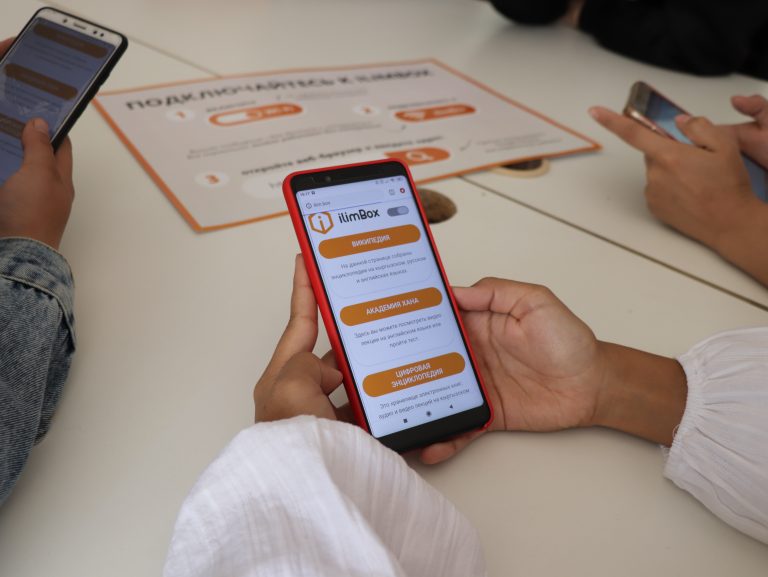
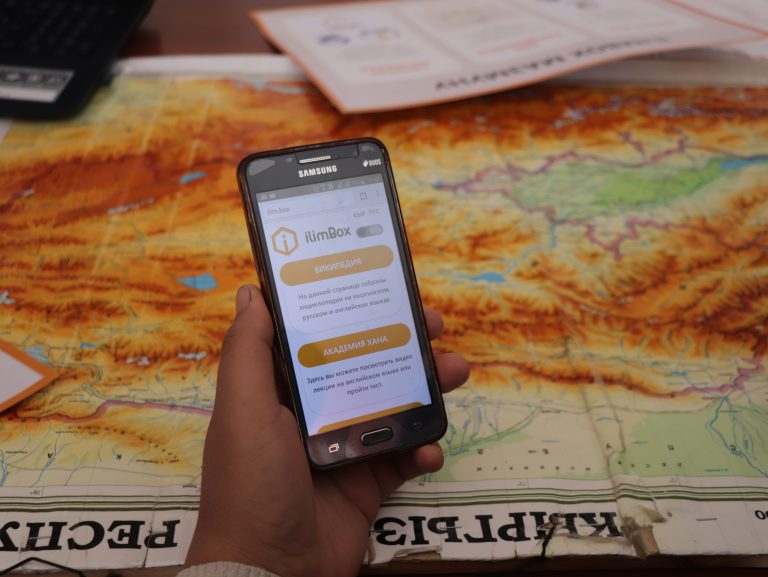
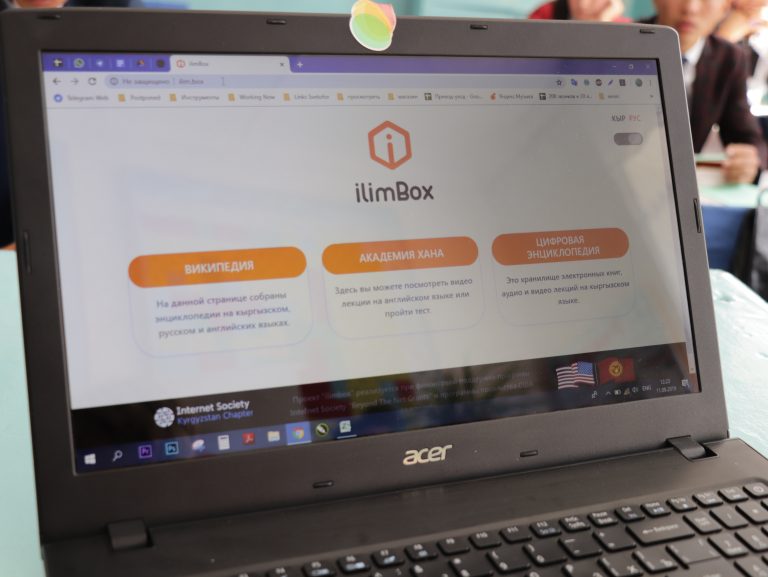
“IlimBox” is a digital library for schools and public libraries, containing Wikipedia in Kyrgyz, Russian and English, the Khan Academy electronic library in English, thousands of video lessons, audio and electronic books. All these digital training materials are available offline, in other words, they do not need access to the Internet. Access to Digital Libraries will be via smartphones, tablets, computers and any other personal devices with Wi-Fi technology.
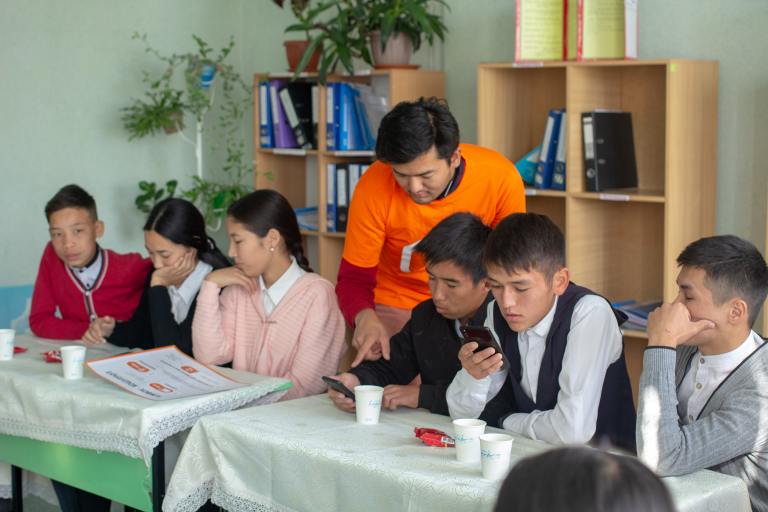
To date, about 100 schools in the regions of Kyrgyzstan have received and installed ilimBox to improve students’ access to online learning materials. Assistance in the distribution and installation of equipment in schools was provided not only by the project participants but also activists and philanthropists who see how significant help “ilimBox” can provide in improving students’ access to information.

IDEA youth organization helped establish 25 ilimBox in Naryn, Jalal-Abad, and Chui regions.

“According to the feedbacks of the students and teachers, we realized it was something new for them. They really liked that they had the opportunity to view training videos and audiobooks in Kyrgyz without access to the Internet. The additional advantage is you do not need a computer to use it, all information is available on each student’s smartphone,” says Bibinur Bolotkanova, IDEA project coordinator.

In her opinion, installing ilimBox in schools solves a number of existing problems and also makes the process of obtaining new information more accessible and mobile.

“Unfortunately, there is very little literature in the Kyrgyz language in the public domain, especially fiction. The presence of books is an opportunity for children to expand their horizons and knowledge base. Most of them do not read just because they simply do not know what books are. ilimBox helps them get a list of interesting literature sorted by genre, and the ability to download any book to their smartphone,” said Bibinur Bolotkanova.

Former Deputy Minister of Economics Eldar Abakirov also appreciated the importance of the ilimBox device and helped establish it in schools in the Chui region.
source adilettuukelechek

“ilimBox is very relevant in schools where the Internet is very weak or there is none at all. School leaders and teachers say they are very active in using the information stored on the device. Based on it, children prepare reports, essays and much more. The electronic library ilimBox contains more than an extensive amount of educational information necessary for students in schools,” said Abakirov.

He also stressed that in order to popularize the project, it is necessary to constantly monitor the use of the device.

Презентация устройства Эльдаром Абакировым
source adilettuukelechek

“Time will tell how actively teachers and students will use ilimBox. I believe that it would be good to conduct open lessons every 2-3 months using ilimBox, use the videos contained in the electronic library of the device, and conduct popularizing events,” said Eldar Abakirov.

ilimBox is an innovative solution to two pressing problems of the educational system of the Kyrgyz Republic, such as the lack of books and the lack of the Internet. limBox contains Wikipedia in Kyrgyz, Russian and English, the Khan Academy in English, thousands of video lessons, audio and electronic books. All these digital training materials are available offline, in other words, they do not need access to the Internet. Access to Digital Libraries will be via smartphones, tablets, computers and any other personal devices with Wi-Fi technology.

It is worth noting that all data is stored in the device itself, and for connection only the power supply and the box itself are necessary. The uniqueness of the innovative project is that students can access educational resources at school without an Internet connection.

The project is funded by the Alumni Engagement Innovation Fund 2018 (AEIF) as part of innovative solutions to global problems and the Beyond the Net ISOC program.

Презентация устройства Эльдаром Абакировым
источник adilettuukelechek

Installation of devices of ilimBox in Chui region

In October 2019, the ISOC team installed 9 (nine) ilimBox devices in the Chui region. 3 (three) devices were installed in Tokmok, another 6 (six) devices in schools in the Moskva and Panfilov districts.
Chui region is considered the most prosperous and developed region of Kyrgyzstan. According to data for 2018, the largest share of industrial production – 45% falls on this particular region. It would seem that schools in the Chuy valley should be better equipped technically, provided with Internet and textbooks in comparison with other regions. However, in reality the situation is completely different. In our visit to the region the first thing that struck was the old school buildings, poor furniture and outdated computers. In one of the schools, students said that they have to photograph the necessary pages of books on smartphones to do their homework. The problem would be solven by Internet , but students don’t have an internet access in schools, even if Chui region borders with Kazakhstan wich supplies 90% of Internet traffic to Kyrgyzstan. One of the reasons is the lack of funding for monthly Internet payments. The other is poor internet connection, our team got lost on the road several times trying to use Google Maps, because of low internet speed the application worked intermittently.

We randomly selected schools to install the ilimBox. When high school students from the village of Keper-Aryk found out about this, we were very happy that they were so lucky. They told that Ch. Aitmatov was incorporated in the school curriculum, but neither the textbooks nor the library contain his works. Now they can download and read at home the works by Ch. Aitmatov in electronic form.


Bringing digital education to remote village schools with Ilimbox

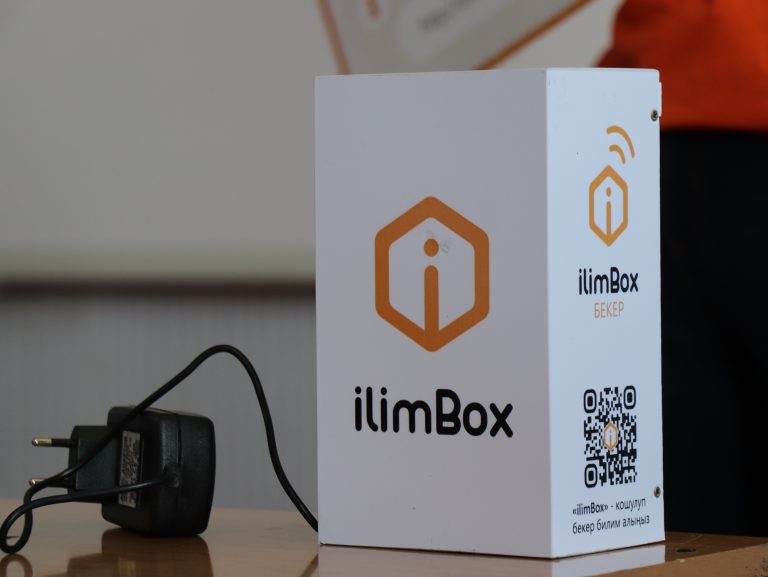
Ilimbox-digital source of knowledge-a product implemented on the basis of Orange Pi in order to provide access to students and teachers of remote secondary schools of the Kyrgyz Republic to textbooks in digital format, Wikipedia and resources of Khan Academy in offline mode.
The Ilimbox project is funded by the Beyond The Net program created by the Internet Society Foundation and AIEF2018. The project is implemented by the Kyrgyz Chapter of the Internet Society ISOC.

About ilimBox and other projects ISOC.KG, you can follow the links:

https://isoc.kg/ilimbox/

https://www.facebook.com/isockg/

Installation of devices of ilimBox in Talas district, Talas region

17 Sep 2019 team ISOC went to Talas to install ilimBox devices in schools. The first 5 (five) secondary schools were selected in Talas district: school of Tuitunova (Taldy-Bulak), school of R. Aydaraliev (Kopuro Bazar), school of A. Borubaev (Kara-Oh), school of  Zhumagul Alymkul (Sasyk-Bulak), school of G. Orozalieva (Kenesh).
Talas district is an administrative unit that occupies the East of Talas region, the administrative center is the village of Manas. This district was the largest in length in comparison with other districts of Talas region.

According to the reports of the Ministry of education and science, schools in Talas region are 100% covered by the global Internet, but on the ground, we saw a different picture. Despite the fact that there live active users who quickly respond to the new technical capabilities of mobile Internet, however, in all five schools of Talas district, it was revealed that children do not have access to the General Internet of the school. Moreover, in two schools of this area, in an office of administration use the mobile Internet, respectively, teachers are also compelled to prepare for occupations on books in library which as they admitted, catastrophically isn’t enough to children that are compelled to give one book on two and all academic year children divide it “in half”. Thus, there are three main reasons for choosing these schools: students do not have access to the Internet, there is a shortage of books and the number of students exceeds the permissible maximum.

The above situation motivated us to go there to present an interesting alternative to the Internet as a device – ilimBox. The project aims to address problems such as the lack of books and the lack of Internet in General education institutions. In these schools, it was conducted presentation of the project “ilimBox” and testing the device with students and teachers.

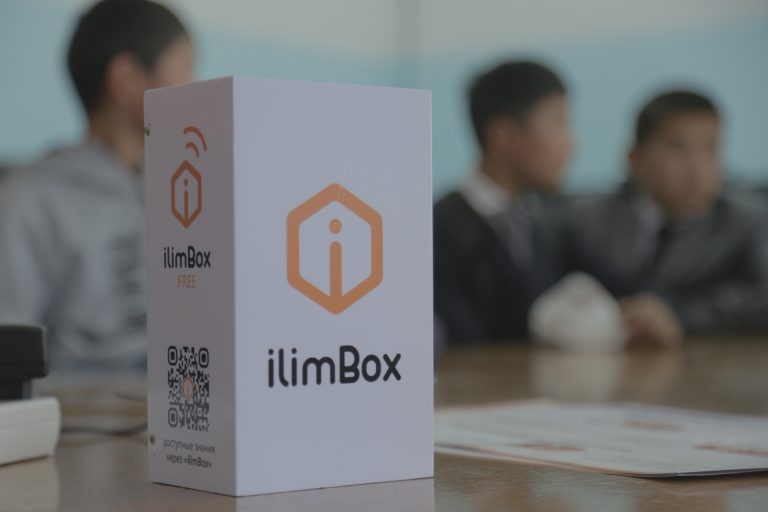
We explained that the digital library contains a Wikipedia in Kyrgyz, Russian and English, Khan Academy in English, thousands of video and audio lessons and e-books. The guys were surprised that the device allows you to access all educational resources without an Internet connection. The school administration gladly and gratefully accepted our gift, and left video reviews that are uploaded to the youtube channel ISOC.


Kyrgyzstan has developed a useful alternative to the Internet for schoolchildren

In recent years, the Internet has become increasingly accessible to Kyrgyz people. If about 5 years ago only residents of the capital could afford access to the world wide web, now it is quite a familiar thing for residents of the regions.
The Internet plays an important role in modern education. Problems such as the shortage of school textbooks could be addressed through quality Internet access. Given this fact, the Ministry of education of Kyrgyzstan has carried out a lot of work in this direction and for 2 years connected almost 2 thousand state and municipal schools to the Internet, which is almost 90% of all schools in the country. However, the analysis showed that schoolchildren still do not have access to the world wide web. Fearing that students will be distracted from lessons and use the Internet for other purposes, school authorities do not provide students with access.

Innovative solutions to two pressing problems such as the lack of books and the lack of Internet can be seen in the project digital library for schools and public libraries “Ilim Box”, which contains Wikipedia in Kyrgyz, Russian and English, Khan Academy in English, thousands of video lessons, audio and e-books. All these digital learning materials are available offline, in other words does not need Internet access. Access to Digital libraries will be carried out through smartphones, tablets, computers and any other personal devices with Wi-Fi technology.

“As you know, the Internet has a huge number of educational resources that would help our children to access the most advanced knowledge online. Unfortunately, now a lot of students can not watch educational videos, read online books and use all educational resources. In order to solve this problem, we launched a project Ilimbox”, – said the representative of the Internet community in Kyrgyzstan (ISOC) Talant Sultanov.
The device allows you to access all educational resources without an Internet connection, in other words offline.
“The content that is online, we downloaded to the hard drive, attached a small computer that also acts as a Wi-Fi router. Any user will be able to download the necessary information to your computer or smartphone. What is most important-the user gets access only to educational resources, he will not have access to social networks and other entertainment content”, – explained Talant Sultanov.
It is worth noting that all data is stored in the device itself, and only the power supply and the box itself are needed for connection. The uniqueness of the innovative project is that students can access educational resources at school without an Internet connection.
“This is a very useful device, because on the one hand it provides access to an extensive database of educational materials, and on the other – it does not have entertainment content that would interfere with students during lessons. We are very happy that we had the opportunity to IlimBox and use it for educational purposes”, – shared his impressions the Director of one of schools of Karakol Gulzat Soukouna.

It should be noted that the IlimBox device was installed in 66 schools of Issyk-Kul, Talas and Chui regions. In these schools was held a presentation of the project “Ilim box” then testing the device with students and teachers and handing the device. During the conversation, the importance of education and self-education were touched upon. The choice of schools was due to several factors: no access to the Internet for students, lack of books, as well as the number of students exceeded the permissible maximum, thereby increasing the likelihood of poor performance in schools without a network connection, as well as the choice of educational institutions influenced the list of proposed schools by the Ministry of education and science of the Kyrgyz REPUBLIC.
The project is planned to cover all regions of Kyrgyzstan and install IlimBox in a total of 100 devices in schools experiencing problems with Internet access. Every educational institution reggenie gets IlimBox free.

The project is funded by Alumni Engagement Innovation Fund 2018 (AEIF) as part of innovative solutions to global challenges and the Beyond the Net ISOC program.

A video about the project can be found here:

Russian language

Kyrgyz language

Video opinion about ilimBox. Babanov’s school-lyceum, Talas region

In Talas region the student considers it necessary to implement the project “ilimBox”.

ilimBox-digital source of knowledge-product, created based on Orange Pi. The aim of the project is to provide teachers and students of remote secondary schools of the Kyrgyz Republic with digital textbooks, Wikipedia and Khan Academy resources. The project” IlimBox “funded by the Internet Society Foundation and the program” Beyond The Net”, created AIEF2018.

The project is implemented by the Kyrgyz branch of the Internet society ISO.