Ferghana Valley IXP

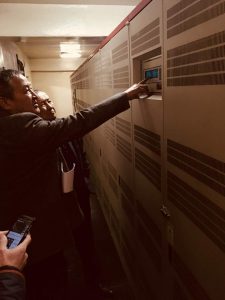
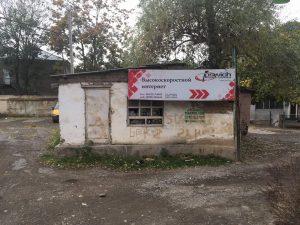
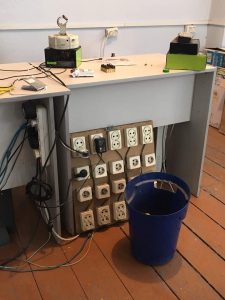
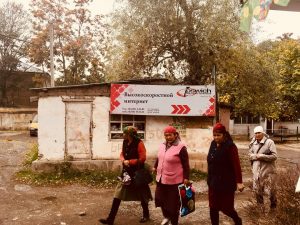
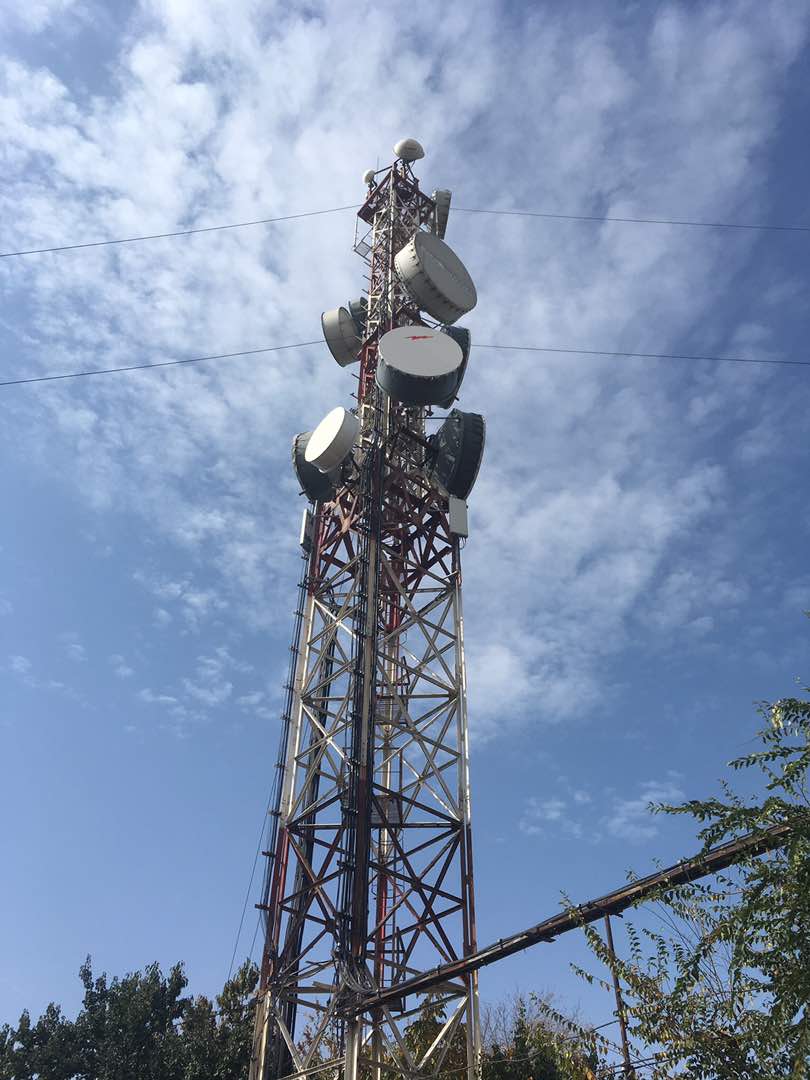
ISOC Kyrgyz Chapter is implementing one of its first major projects thanks to Beyond the Net grant from ISOC. Ferghana Valley Internet Exchange Point (FVIXP) Project will install an IXP in Osh city in the south of Kyrgyzstan, which will result in a much cheaper internet for all the residents of Ferghana Valley.

Ferghana Valley located on crossroads of three countries is the most populated area in Central Asia, the source of regional inter-ethnic tensions due to water and land irrigation disputes, poverty and lack of access to communication services. Internet Exchange Point Project with location in Osh city (Kyrgyzstan) is aimed to increase regional cross-border collaboration between stakeholders and communication of people through increase of Internet affordability by lowering internet tariff plans up to 3 times, multiply growth of Internet traffic exchange in region, increase Internet penetration rate due to price reduction, and improve latency for international and regional content sources.

Ferghana Valley located at the crossroads of three countries of Central Asia: Kyrgyzstan, Uzbekistan, and Tajikistan are in top 10 regions with highest population density in the world. Over 14 million people (2014) reside in 22,000 square kilometers (approximately 636 persons per square km). The region is known for land and water disputes, inter-ethnic conflicts. There is a huge income disparity between administrative capitals of the Stans and regional dwelling communities in Ferghana Valley.

Central Asia has one of the lowest internet penetration rates per capita in Europe and Central Asian region, according to ITU 2014. One of the key regions that illustrate state of the regional digital divide is Ferghana Valley. In regional perspective Internet prices for Ferghana valley dwellers are higher than for residents of other administrative districts. For example, Internet tariff plans in southern cities are 5 times higher (13USD) for the same traffic bandwidth than that in Bishkek located in the North of Kyrgyzstan. Tajikistan, which primarily depends on Internet transit of Russian content from Kyrgyzstan, has an even more severe situation. National ISP Tojnet provides 1Mb unlimited tariff for as low as 45USD. The situation in Uzbekistan is even worse. Uzbekistan ISP monopoly company provides Internet in cities located in Ferghana valley for the price of 59USD for 10GB of the daily Internet and unlimited night traffic.

Considering above mentioned situation we believe establishing Internet Exchange Point in the valley will alleviate the digital divide between the north and south of Kyrgyzstan as well as between the bordering countries by removing barriers for connectivity and stimulating better access.

Internet Exchange Point is a physical location where different stakeholders who have ASN meet to exchange local traffic via a switch. Kyrgyzstan is one of the countries where Ferghana Valley is spread. There are several closed IXPs based in Bishkek (ISP, banks). Unlike present IXPs that could not be neutral and open for new members by Charter, Ferghana Valley IXP (FVIXP) will follow principles of openness and neutrality by providing equal access to infrastructure to all stakeholders, including Government agencies, educational and healthcare institutions as well as commercial banks. IXP will help local small and medium ISP to minimize traffic costs, spend more on infrastructure rather than on internet traffic purchase.

Establishing IXP would greatly enhance the utility and value of the regional Internet and promote the growth of the digital economy. According to Terabit Consulting, “Improvement in ICT infrastructure yields: Increased demand for the output of other industries (demand multiplier), New opportunities for production in other industries (supply multiplier), new goods and services for consumers (final demand). It also increases firms’ innovation capabilities and increases the probability of new products, innovations, and organizations.”

 

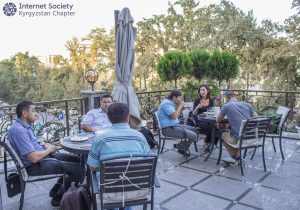
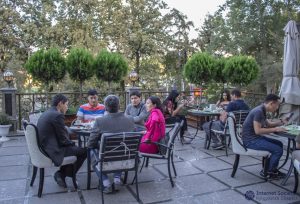
Members of the Internet Society Kyrgyz Chapter celebrated the 25th anniversary and discussed the future of the Internet.

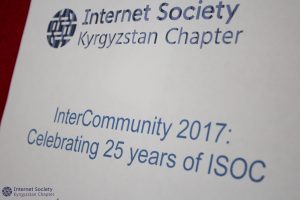
InterCommunity 2017: Celebrating 25 years of ISOC

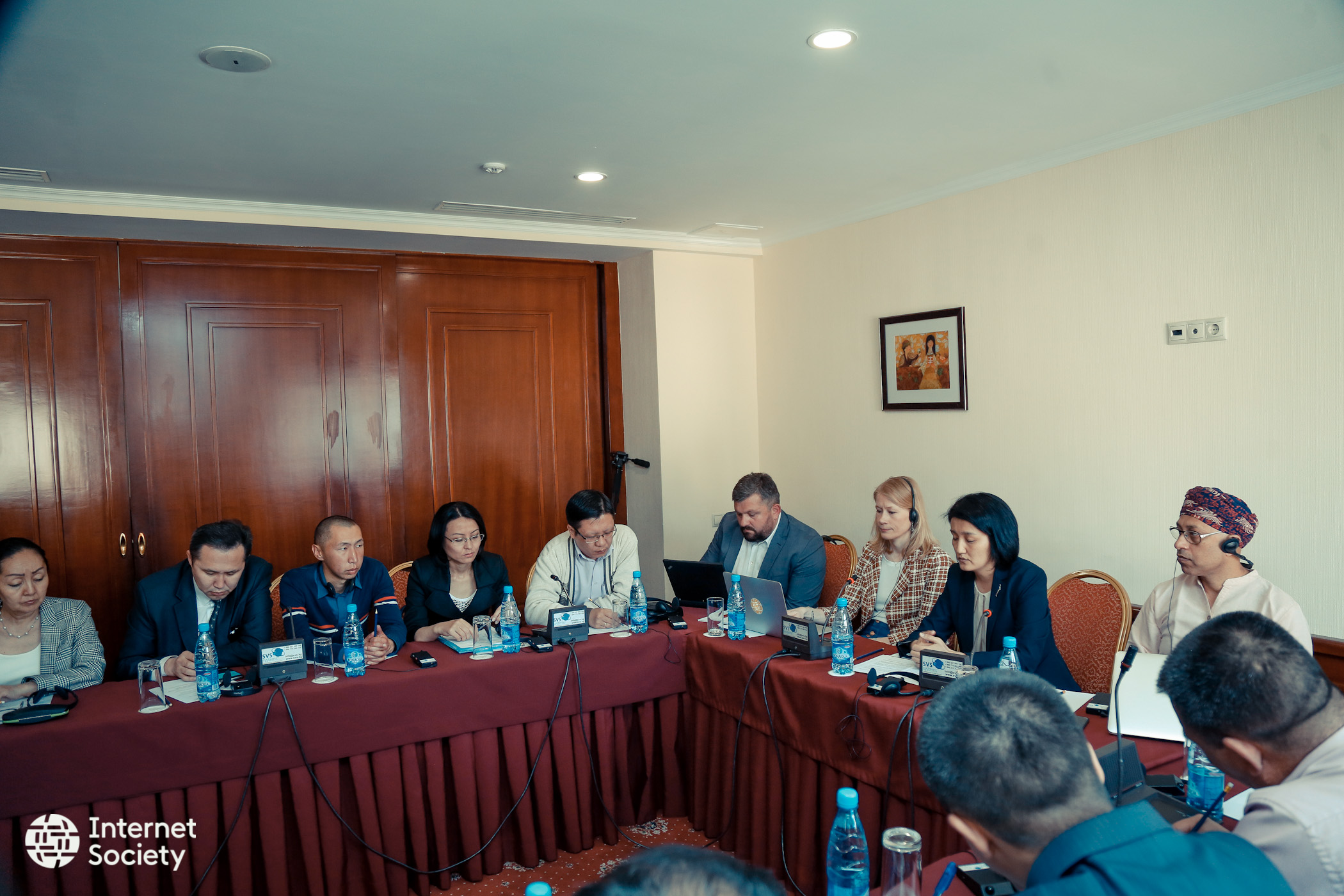
 Members of the Internet Society Kyrgyz Chapter celebrated the 25th anniversary and discussed the future of the Internet.

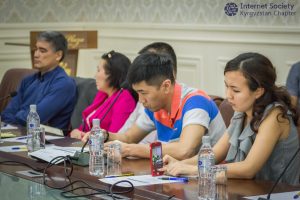
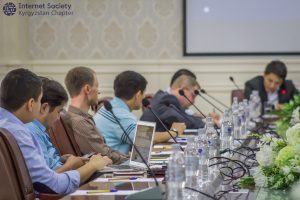
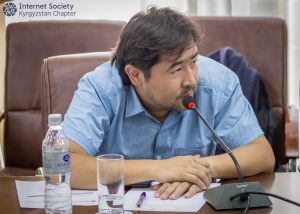
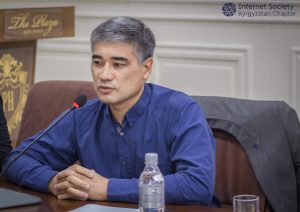
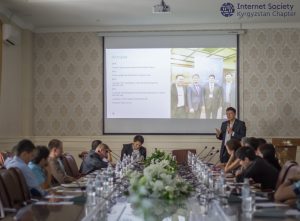
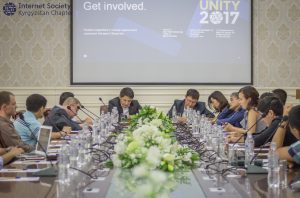
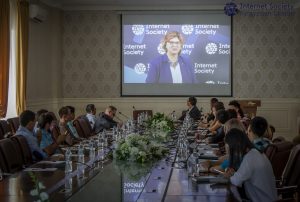
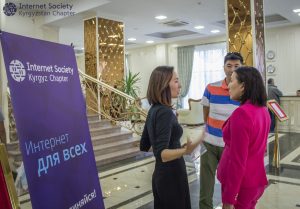
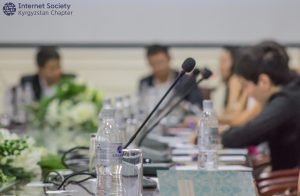
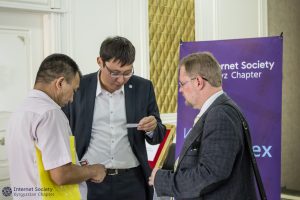
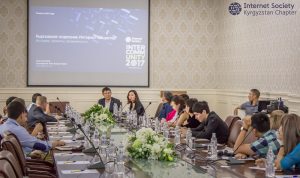
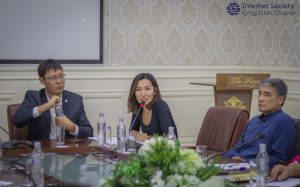
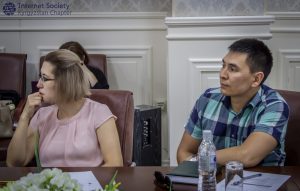
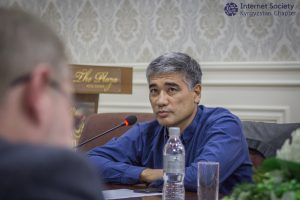
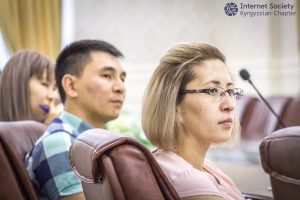
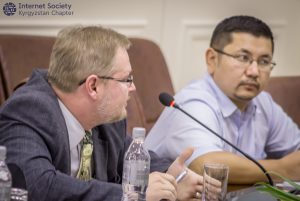
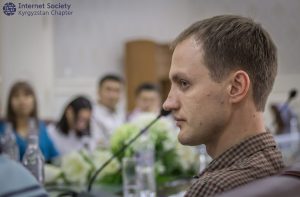
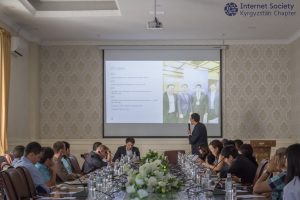
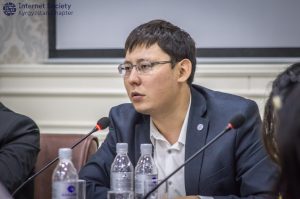
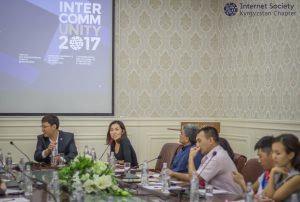
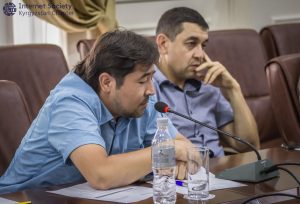
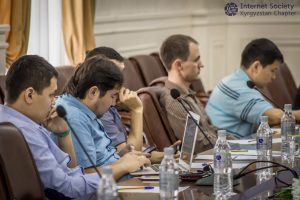
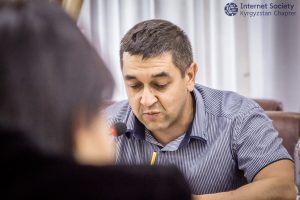
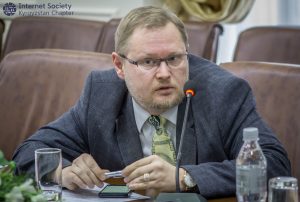
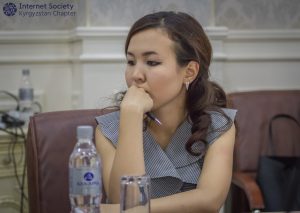
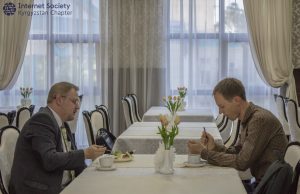
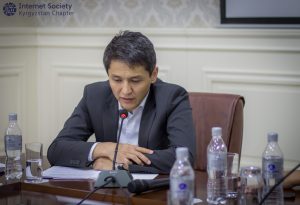
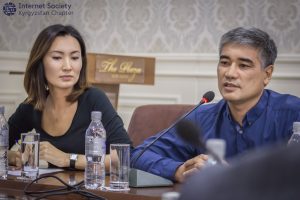
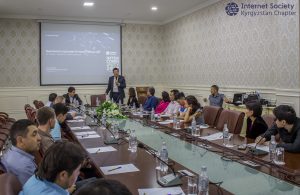
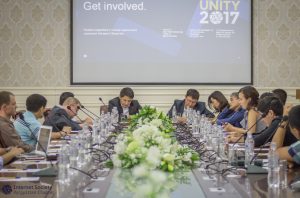
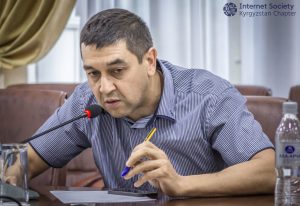
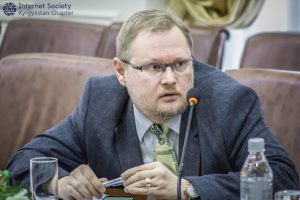
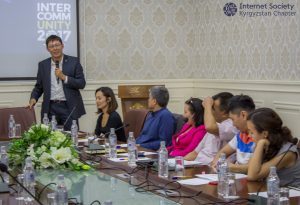
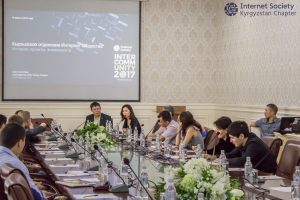
On September 19, 2017 in the city of Bishkek, Plaza Hotel, an event was held as part of the global celebration of “InterCommunity 2017: Celebrating 25 years of ISOC”. On this day, representatives of the Internet Society (ISOC) around the world exchanged ideas and talked about the future of the Internet. In Bishkek, the participants of the event focused on discussions on the current situation of the Internet in Kyrgyzstan, active policies in this field and new opportunities.

The event was attended by representatives of government bodies, non-governmental organizations, expert community, international organizations, members of the Kyrgyz ISOC Internet Society and the media.

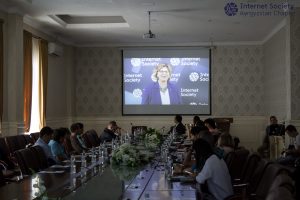
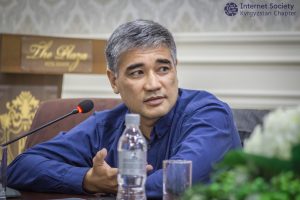
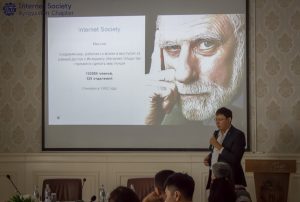
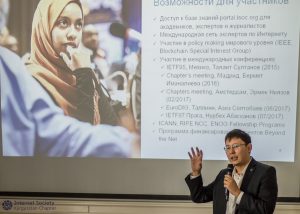
The event began with a video message from Kathy Brown, President of the Internet Society (ISOC), in which she talked about the mission of the organization, the history of creation, new goals and congratulated everyone on the 25th anniversary of the Internet Society. Then Aziz Soltobaev, co-founder of the Kyrgyz Chapter of ISOC, gave a welcoming speech and also made a presentation on the activities of the ISOC, the history of the ISOC in Kyrgyzstan, opportunities and projects being implemented.

One of the important values ​​of membership in the ISOC is access to a large array of materials and knowledge portal.isoc.org for academicians, experts and journalists. Moreover, thanks to participation in the ISOC, there is a unique opportunity to enter and expand the international network of experts on the Internet through participation in such global conferences as IETF95, EuroDIG, ICANN, RIPE NCC, and participation in a world-class policy making (IEEE, Blockchain Special Interest Group). There are also opportunities to participate in such financing programs as the ENOG Fellowship Programs and the Beyond the Net Project Financing Program.

According to Aziz Soltobaev, members of the Kyrgyz Internet Society have already participated in such programs:

• IETF95, Mexico City, Talent Sultanov (2015)

• European Chapter’s meeting, Madrid, Bermet Imanalieva (04/2016)

• European Chapters meeting, Amsterdam, Ermek Niyazov (02/2017)

• EuroDIG, Tallinn, Aziz Soltobaev (06/2017)

• IETF97 Prague, Nurbek Abaskanov (07/2017)

To date, the current projects of the Kyrgyz Chapter of the Internet Society, laid for 2017 are as follows:

Wireless Internet for mountainous and remote areas. The goal of this project is to reduce the digital divide between Bishkek and the regions. At the moment, the analysis and selection of a specific locality is carried out to launch a pilot project.

Ferghana Valley Internet Exchange Point (FVIXP). It is planned to launch the project at the traffic exchange point in the Fergana Valley with a presence in Osh. According to the project, it is planned to conduct wireless Internet for a remote settlement, where it is financially inexpedient to conduct mobile or broadband Internet.

Domain policy in the KG zone. Within the framework of this project, the goal is to reduce the cost of the domain in the kg area from $ 33, excluding VAT to $ 10.

In his speech, Aziz Soltobaev also called on the active members of ISOC to take part in such upcoming global events of 2018 as:

• Chapters meeting

• IETF 101, London, 17-23 March

• CAIGF

• ICANN

• EURODIG2018, Tbilisi, June

Nurbek Abaskanov, chairman of the State Committee for Information Technologies and Communications of the Kyrgyz Republic, spoke about the current situation of the Internet in Kyrgyzstan and its role in the digital transformation of the economy. According to him, the volume of Internet services for the first half of 2017 amounted to 2 013 628.34 thousand soms. As of September 19, 2017, the total number of granted licenses for data transmission is 116, of which 83 are Internet providers.

According to Nurbek Abaskanov, today the total number of active Internet users is 4,916,191, of which 88.5% (4,350,634 users) are mobile Internet subscribers, 11.5% (565,557 users) – fixed Internet subscribers.

In Kyrgyzstan, at the state level, the digital transformation program will be launched under the “Taza Koom” program, according to which the Internet will provide equal access to public services to all residents, including the poorest and most vulnerable. In order to achieve the set goals, according to Nurbek Abaskanov, it is planned “… to conduct broadband Internet in each village within the next couple of years within the framework of the regional interaction project” DigitalCASA. Kyrgyzstan “, which is the core of the digital transformation program” Taza Koom “. And it is also planned to increase cross-border capacity and diversify the sources of Internet access.

It should be noted that the objectives of the State Telecommunications Committee are in line with the goals and mission of the Kyrgyz Chapter of the ISOC, which plans to launch the project on the implementation of accessible internet in the remote areas of the country.

Also, N.Abaskanov noted about the improvement of the infrastructure components of communications, according to his data “the total length of the fiber optic link for the 1st quarter was 16 thousand 869 km, of which 8 thousand km are communication lines.” According to him, to date, there are such gigabit channels as Bishkek-Frankfurt, Dushanbe-Frankfurt, Bishkek-Dushanbe, which allow creating a circular connection that protects from communication breakages.
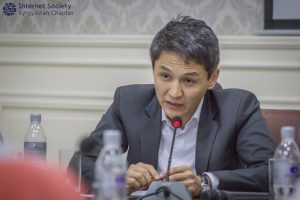
General Director of Saima Telecom Mukhamediyarov Muslim noted that the existing domain policy in Kyrgyzstan unfortunately does not contribute to the development of the Internet. The problem is a monopoly over the domain space and, accordingly, an unreasonably high price policy. To acquire foreign domains is much cheaper, accordingly they are acquired there, which in turn does not lead to the development of a Kyrnet. In addition, high Internet prices, given the low income of the population, also do not contribute to the development of the Internet and its widespread penetration. Extending the topic of domain policy, Kanat Mukanov noted that the Kyrgyz Republic has a strange situation when the administrator and registrar of the domain zone is one and the same company.

Legislative issues were also raised: the absence in legislative and normative documents of concepts such as Internet, web sites, that are elements of electronic commerece. Some participants noted the need to create legislative conditions, while others believe that regulation of online trade can be made in the existing trade law without creating new laws.

Abaskanov said that within the framework of updating and adopted new strategies, policies and programs, about 180 decrees are being prepared to bring the legislation in step with the times. The post of Deputy Minister for Information Technologies was introduced, the draft resolution was submitted for approval. Under the state telecommunication committee, a working group was formed to harmonize the architecture of IT infrastructures of all departments and services.

Connecting the unconnected – walking the talk in Central Asia

Access to an open and inclusive Internet has been widely discussed in the framework of the UN Sustainable Development Goals (SDGs) and the global Internet Governance Forum (IGF) over the last few months. The Internet Society’s Regional Bureaus work hard to put the good work and messages stemming from these global forums into practice in our respective regions.

Last week, the Internet Society’s European Regional Bureau (ERB) together with our local partners reached another milestone in our ongoing engagement in the Kyrgyz Republic. We launched our first report in Central Asia providing an assessment of the Internet environment in the Kyrgyz Republic during the Open Government Innovation Week in Bishkek, organized by the Kyrgyz government, the UN Development Program (UNDP) and the World Bank. The report touches on critical policy and technical issues in the context of Internet development, offering food for thought both for the government and the technical and business communities. You can read the full report in English or in Russian on our website!

Better yet, the ERB, with Tommi Karttaavi in the lead, formally launched the ISOC chapter in the Kyrgyz Republic. The newly created Kyrgyz chapter will focus on development of Internet infrastructure and content to improve national Internet adoption levels. The chapter also plans to organize open debates to discuss and popularize the Internet as a platform for social and economic progress. This is very exciting news for us, as national chapters are the foundation for a sustained ISOC engagement at the local level.

Finally, following various policy and technical discussions on the importance of a well-functioning Internet exchange point (IXP) with the local Internet community, Kurtis Lindqvist and Jane Coffin ran a two-day training workshop on IXPs and the Border Gateway Protocol (BGP). The training session was successful in many ways, but most strikingly it was the first time this group of qualified engineers from local ISPs met to discuss the peering environment and common challenges. The content and conclusions of this training will be made available on the IXP toolkit website.

So, what did we learn from this whirlwind of a week in the Kyrgyz Republic? By carrying out policy advocacy and technical capacity building in parallel we can approach the Internet connectivity challenge in a holistic way. Policy is often a long-term tool, whereas technical training can have an impact in a matter of days. Although ISOC believes in driving change through bottom-up processes, we also need to maintain dialogue with high-level decision-makers to have the right top-down messages. And finally, you cannot underestimate the value of building a community. After every event, training and discussion, our community is a little bit larger and more varied – a stronger team to connect the unconnected.

This is all part of an Internet Society philosophy for development – connectivity, community, and capacity development and the policies that sustain them. We believe strongly in this formula for development and look forward to continued engagement with our colleagues in the Kyrgyz Republic and the Central Asian region.

By Maarit Palovirta
Senior Manager, Regional Affairs Europe

Download full report

Video report about workshop on wireless internet

Video report on the workshop on network communities on creating access in remote and rural areas, organized by the Kyrgyz branch of the Internet community on April 25, 2017.

Thank you very much to our speakers:
Maarit Palovirta, senior Manager, regional issues of the Internet Community in Europe;
Osama Manzar, founder and Director of Digital Empowerment Foundation;
Ucha Seturi, Director of NGO “Association of small and medium business operators of Georgia”.

ISOC will help to introduce business model for sustainable internet in remote communities

The international Internet community intends to support local governments in remote regions of Kyrgyzstan in connection to the Internet. The seminars organized by ISOC in Bishkek were attended by foreign experts who shared their experience in solving such problems.

As part of the activities of the Kyrgyz branch of ISOC in Bishkek, a series of seminars on the provision of wireless Internet to villages was launched. Experts from India and Georgia shared their experience with Kyrgyz colleagues.

One step behind

Large-scale technological projects, which Kyrgyzstan undertook not so long ago, require primarily infrastructure changes. The implementation of many tasks will be impossible without high-quality Internet, which is not yet available in many areas of the Republic. Two thirds of Kyrgyzstan’s population still do not have access to the world wide web. This is especially true for regions and rural areas, where there is not only high-speed, but also a standard network connection.

ISOC representative in Kyrgyzstan Aziz Soltobayev said: “Despite the fact that many cities and towns are connected to the Network, the issue of providing remote rural areas is still relevant. Even at a distance of 20 km from the capital there are settlements in which there is no Internet at all. This is an issue that can be resolved by the local municipality and local communities.” Many regions do not have the ability to receive 3G and 4G signal. Laying fiber optic systems in remote mountainous areas requires capital-intensive investments, and mobile operators consider it unprofitable to install 3G and 4G transmitters in these areas.
“In the border villages of the southern region, bordering Tajikistan and Uzbekistan, the Internet is very weak, not in terms of providers, but in terms of the fact that cellular communication there is very bad catches. There is not that 3G does not work, there is still a GPRS connection, because mobile operators are unprofitable to put 3G and 4G transmitters in regions where mostly elderly people live, who are not their potential customers, ” – described the situation certified UN trainer on computer literacy
Internet as a necessity

The lack of Connectivity will lead to isolation and degradation of rural areas, said Osama Manzala, an expert from India who helped provide simple and cheap Internet connection technology to 7 districts of India with coverage of more than 120 thousand inhabitants. “Now the Internet is a modern route connecting the whole world. If remote regions do not have access to the Internet, they will be isolated and lag behind in development, the expert believes. – We have a similar situation with Kyrgyzstan: many remote areas that do not have access to the Internet, in addition, in India there are many mountainous areas where it is difficult to lay the Internet, as in Kyrgyzstan. I can share the results of how the situation has changed with the introduction of the Internet in remote villages. Three indicators have changed dramatically: the economic development of these areas has increased several times, there is a need for educational services, the level of education has increased, the inhabitants of these areas have become socially responsible and demanding, so that the dialogue between citizens and the state has been established»

The expert from Georgia noted that Kyrgyzstan has great prospects in addressing this issue and stressed that despite the development of Georgia, Kyrgyzstan in the provision of Internet is almost not far behind.

“I would like to note the close cooperation between the state and the private sector – such cooperation promises great success. However, for better implementation of the process, competition is needed. As far as I understand, all roads lead to Kyrgyztelecom, it is necessary to change it. I understand that this is a big company that owns a network, but it should allow other companies to compete with each other. It is even possible that Kyrgyztelecom will leave the market altogether and give way to others, as it was in England, ” Ucha Seturi believes.

There are prospects

Experts from India, Georgia and Europe visited several rural areas in Kyrgyzstan for a more detailed analysis of the situation. The representative of the international Internet Society ISOC Maarit Palovirta (Maarit Palovirta) noted the high interest of villagers and local governments in connecting wireless Internet.

“I also want to note that certain projects in this direction are already underway, initiatives have been launched jointly with local authorities and the private sector. Our meeting is important because the participants of the process who are engaged in this issue in the regions expressed their opinion. Based on this, we will analyze and decide what to do next. I would like to start implementing some projects in Kyrgyzstan, ” she said.

As a result of a series of seminars, as well as a number of events, ISOC representatives intend to develop business models, the implementation of which local communities and local governments will be able to provide themselves with the Internet at their own expense in the shortest possible time-from 3 months to six months.

“One of the problems today is that even if the Internet is held in some villages, it is available only to local governments or the richest residents of the village. Today we looked at a model in which we could make the Internet more accessible and faster with the available physical infrastructure. The result of this work will be that we will develop an action plan and choose a couple of pilot points, on the example of which we could show how it works,” Aziz Soltobayev summed up.

Source: https://digital Hm.report/isoc-pomozhet-provesti-internet-v-otdalennyie-regiony-kyirgyizstana/

Vicente Guayart, chief architect of Barcelona on May 13 at 14:00 in the large assembly hall of the KRSU

Modern technologies have a great impact on the development of cities, changing their physical appearance, social environment, ways of communication between people, types of mobility, as well as a city management system. Our way of life, approaches to urban planning and construction will be different. Which ones? How and where will these changes occur?

Vicente Guayart, the chief architect of Barcelona, will answer these and other questions at his lecture on May 13 at 14:00 in the large assembly hall of the KRSU (44, Kievskaya Street).

Members of ISOC Kyrgyzstan Chapter have the opportunity to travel to Buenos Aires this fall. How? Details under the link below.

Nomination for Fellowship to the WTDC- 17

Nomination for Fellowship To The ITU’s World Telecommunication Development Conference 2017 (WTDC-17) – Deadline June 30

The Internet Society invites expressions of interest from chapter members for fellowships to the ITU World Telecommunication Development Conference in Buenos Aires, Argentina on 9-20 October 2017.

The World Telecommunication Development Conference (WTDC) is a key development conference hosted by the ITU every four years. This conference sets the ITU’s telecommunication/ICTs development agenda for the next four-year period (2018-2021). The theme for the 2017 conference is “ICTs for Sustainable Development Goals.”

ISOC Objectives for WTDC 2017

  • ITU Development Sector remain focused on its core development activities that have been successful in expanding access to telecommunications/ICTs.
  • Solidify ISOC’s profile as a trusted collaborator, partner, and expert in the field of Internet Development.
  • Maintain scope of WTDC within ITU’s mandate e.g. BAP’s scope does not widen to include a role for ITU in Internet policy matters
  • Encourage governments to commit to multistakeholder principles to tackle some of the telecommunications/ICTs development challenges

About the Fellowship

The fellowship provides travel support to cover costs of the meeting in Buenos Aires, Argentina. It includes roundtrip economy class airline ticket, hotel for 12 days, visa expenses (if needed) and per diem for meals and ground transportation.

Internet Society Chapters are local communities that share an interest and belief in our principles and mission and who are committed to furthering our goals and objectives within your geographic or special interest area. Therefore, chapter members are a powerful voice locally to inform their national delegations about the importance of Internet access for everyone as well as providing voices during WTDC-17 to advance Internet Society positions in the several parallel sessions. In this spirit, the Internet Society would like to extend the opportunity to 4 members by supporting their attendance to WTDC-17. While all qualified candidates are welcome, we strongly encouraging members from currently under-represented areas to nominate candidates. In this light, nominations of candidates from Africa, Asia Pacific, Central and South America and women are encouraged.

Any chapter member interested to apply should review and fully understand the criteria and responsibilities outlined below. The selection process will take place as follows:

    • Interested applicants should send a letter of interest by June 30 outlining:
       – how their experience will contribute to the Internet Society efforts at WTDC-17. This could include active Chapter events on topics/issues relevant to ICT Development, and/or articles or previous participation at either national or regional or International ICT development conferences/events, etc.
       – how they fulfill the criteria set out below; and
       – Provide a referee, e.g. another Internet Society chapter or member.
    • A selection committee will review the applications based on the criteria below;
    • Selected chapter members will be announced by 10 July, 2017.
    • Please email applications to [email protected]

Criteria for Selection

Selected Chapter members will play a critical role in efforts to promote Internet Society principles and positions at WTDC-17. Selected individuals will be expected to be part of the preparations for WTDC-17 and participate fully in the work on the ground in Buenos Aires.

Commitment – Selection as an Internet Society representative entails commitment by the individuals to attend sessions, prepare assignments and assist in the overall accomplishment of objectives for the meeting.

Advocacy – for Internet Society agreed principles, mission and specific positions for each event so that anyone representing the Internet Society will be speaking and responding with the same context.

Preparation – delegates are responsible for delegation preparation, planning and specific assignments to develop Internet Society positions for the conference.

Empowerment – regional diversity is important. Delegates from developing countries or emerging economies will be preferred;

Expertise – clear and demonstrable awareness of ICT development issues either local, regional or global.  Specific expertise with the ITU Development Sector and issues on the WTDC-17 agenda is helpful.

Communication skills – working language is English and the candidate must have full professional proficiency in English.

Responsibilities of appointees

Serving on the Internet Society delegation is an important undertaking and will require significant commitment and effort by the representatives. Below you can find a non-exhaustive list of expected activities that will be required from selected candidates:

      • Active participation in Internet Society preparatory meetings both prior to and during WTDC-17;
      • Regular communication and updates to the Internet Society delegation regarding national/regional developments ahead of and at WTDC-17;
      • Full report highlighting the progress made and impact of the meeting results in your country/region;
      • Must adhere to and promote Internet Society principles and strategic objectives;
      • Cooperation with Internet Society staff and other Internet Society Chapter representatives to promote engagement and advocacy efforts on the ground; and
      • Must commit to being at the meeting on Monday, 9 October 2017.

Timeline

      • Call opens for applications: 1 June 2017
      • Call closes for applications: 30 June 2017
      • Selection announcement: 10 July 2017
      • WTDC-17 Period: 9 – 20 October 2017

For further information, please contact [email protected]

https://www.internetsociety.org/un/nomination-fellowship-wtdc-17