Картирование покрытия LoRa в Кыргызстане

In a pioneering initiative, the Internet Society Kyrgyz Chapter has embarked on a groundbreaking project to test and map LoRa-enabled gateway coverage in select pilot locations. This endeavor marks a significant leap forward in the realm of Internet of Things (IoT) technology, aiming to enhance connectivity, streamline data collection, and fortify research efforts.

Mapping LoRa-enabled gateway coverage is a crucial step in advancing IoT infrastructure of the country. LoRa (Long Range) technology, known for its extended range and low power consumption, is increasingly employed in diverse applications, including environmental monitoring, agriculture, and smart city solutions. The success of these applications relies heavily on the optimal placement and coverage of LoRa gateways.

The process of mapping LoRa-enabled gateway coverage involves a meticulous survey of the targeted area, considering topography, geographical features, and potential interference. The ISOC Kyrgyz Chapter, in collaboration with local partners, is employing cutting-edge techniques to identify strategic locations for LoRa gateways. These gateways serve as crucial communication hubs, facilitating the seamless transfer of data between IoT devices and the central network.

The benefits of mapping LoRa-enabled gateway coverage are manifold. Firstly, it ensures that IoT devices within the coverage area can efficiently communicate with the network, enabling real-time data transmission. This is particularly vital for research initiatives focused on environmental monitoring, where timely and accurate data is imperative for informed decision-making.

Secondly, the strategic placement of LoRa gateways optimizes network efficiency, reducing the chances of signal interference and packet loss. This, in turn, enhances the reliability and stability of IoT applications, making them more robust in challenging environments.

From a research perspective, the mapped data provides valuable insights into the performance and limitations of LoRa technology in specific geographic contexts. Researchers can analyze coverage patterns, identify potential dead zones, and fine-tune gateway placements for maximum efficacy. This iterative process of testing and mapping contributes to the continuous improvement of IoT infrastructure, fostering innovation and advancements in diverse fields.

In conclusion, the ISOC Kyrgyz Chapter’s initiative to test and map LoRa-enabled gateway coverage in pilot locations is a commendable stride towards harnessing the full potential of IoT technology. By strategically placing gateways and optimizing coverage, this effort not only enhances connectivity and data reliability but also lays the groundwork for transformative research endeavors that leverage the power of the Internet of Things for natural disaster monitoring and prediction.

Поход на высокогорное озеро Адыгене

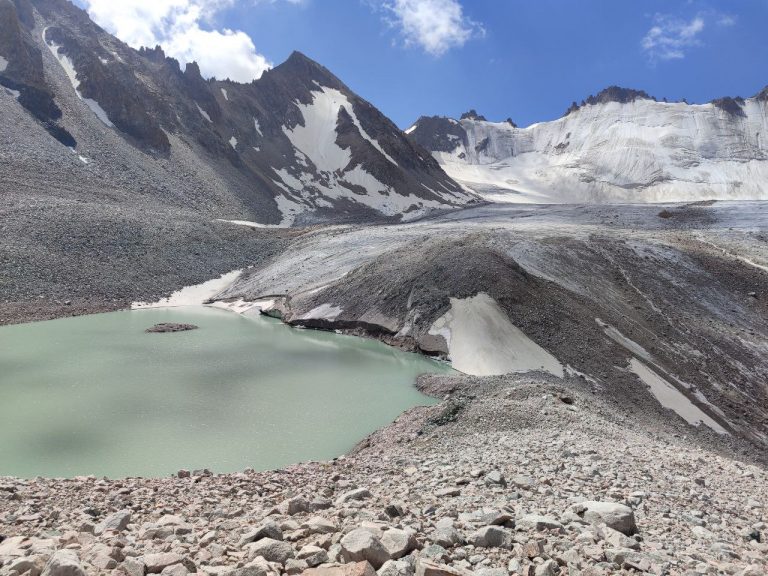
On July 21, the ISOC research team embarked on an expedition to Adygene Glacier Mountain Lake, strategically situated 60 km south-southwest of Bishkek. Nestled at an altitude of 3600m in the upper reaches of the Adygene river valley, a left-side tributary of the Ala-Archa river, this high glacier lake serves as a focal point for the deployment of IoT sensors aimed at monitoring glacial lake outburst floods.

The Adygene lake complex, positioned on the sea of the glacier, encompasses three additional lakes to the south and southeast. The southeasternmost lake, situated at an elevation of 3640 meters, was formed along the northern edge of the glacier, with its southern coast adjoined to the glacier itself. Measuring 188 meters in length and 70 meters at its widest point, the lake has a perimeter of 550 meters, covering an area of 17142 square meters. A stream flows from the northeastern side, eventually merging with a small moraine lake after a 330-meter journey. Additionally, the southern part of the lake houses ten more small moraine lakes.

Under the guidance of our partner, the Institute of Water Problems under the Academy of Sciences of the Kyrgyz Republic, Adygene glacier lake has been subject to monitoring using various technological means. The Adygene station, established in 2008, plays a pivotal role in studying high mountain lakes and glaciers while safeguarding the local population from potential outbursts. Adjacent to the station, a traditional meteorological station has been set up, where researchers manually collect daily data using sensors and retrieve information from an automatic station.

Initially, geostationary connectivity was employed due to the absence of mobile coverage. However, owing to budgetary constraints, this option was abandoned, given the exorbitant monthly costs ranging from 200 to 500 USD.

Recognizing the line of sight with Chuy valley base stations, the Research team of ISOC Kyrgyz Chapter and ICTP proposed the implementation of LoRaWAN connectivity, offering real-time 24/7 monitoring at a more affordable 3-dollar GSM connectivity monthly plan.

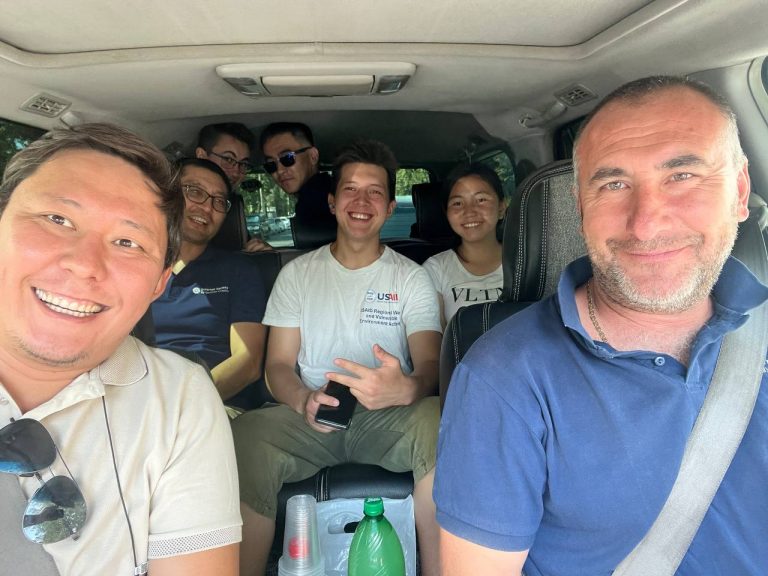
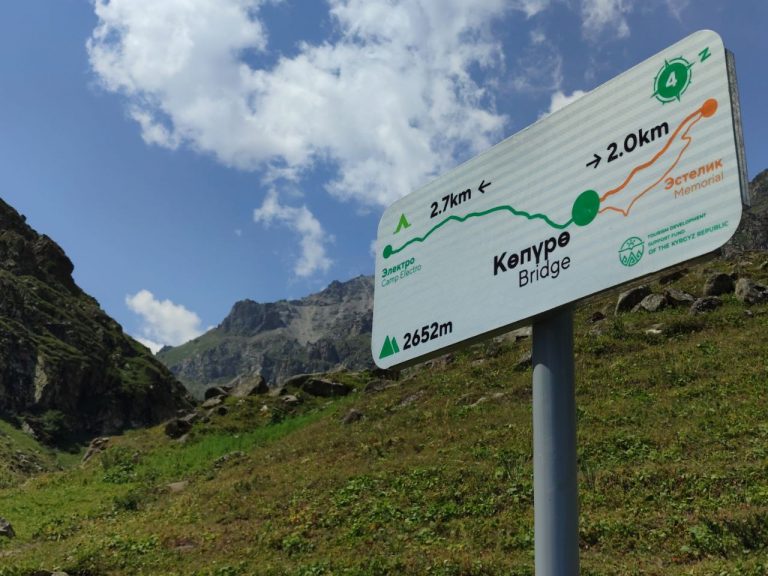
With this strategic rationale, the ISOC Kyrgyz Chapter members and interns from the Institute of Water Problems embarked on a strenuous six-hour hike to the location. The journey was characterized by challenging terrain, transitioning from hot summer conditions to rainy and windy weather, accompanied by temperature fluctuations of up to 20 degrees.

Upon reaching the destination, the team meticulously assessed connectivity, identified potential spots for setting up communication gateways, determined the types of measurements and sensors required, and outlined the necessary mast installations. Following an intense day, the team returned to the main road of Ala-Archa national park late at night. Armed with the collected data, a comprehensive working and logistics plan was formulated for the installation of the Internet of Things infrastructure at Adygene Glacier Lake.

Обеспечиваем регулярное техобслуживание LoRaWan сети и сенсоров

The ISOC Kyrgyz Chapter team has been actively engaging in routine maintenance visits to our pilot locations. Since the initial installation of LoRa-enabled sensors, certain units have necessitated additional on-site attention to ensure optimal performance.

In some instances, ensuring the proper functioning of sensors called for tasks such as excavation from the soil, recalibration, and subsequent reburial. In other cases, the effective operation of sensors demanded the application of specific, albeit previously undocumented, installation techniques. Additionally, challenges arose in certain cases due to inconsistent sensor quality from specific vendors.

To address these complexities, interns from the Institute of Water Problems were actively involved in the process. Their participation served a dual purpose – to offer hands-on training and education and to facilitate the exchange of expertise with students.

As we continue to progress through the data collection stage of our research project, these maintenance efforts remain instrumental in ensuring the accuracy and reliability of our LoRa-enabled sensors in diverse environmental conditions.

Панель данных LoraWan IoT Кыргызстан

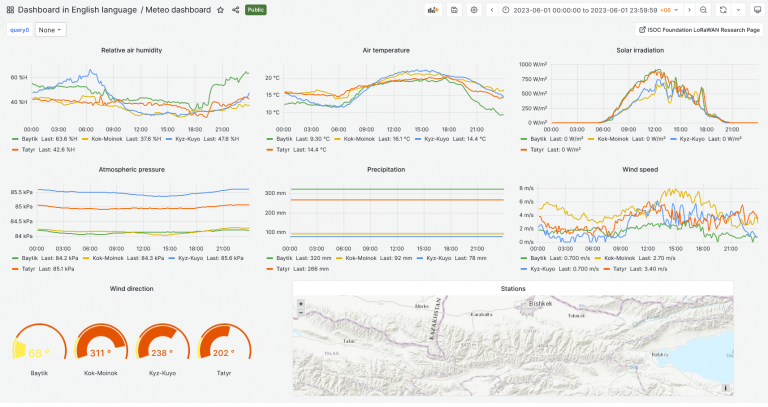
The team created beta version of the dashboard visualization of the project data collected from pilot locations.

The dashboard represents visualization of the following data: relative air humidity, air temperature, solar irradiation, atmospheric pressure, precipitation, wind speed, wind direction. The other dashboard represents visualization of the following data: soil moisture and precipitation, water level. Dashboards are available in Kyrgyz, English and Russian languages. Some dashboards are specially designed for local communities to use for the benefit of community.

We believe in open source solutions. That’s why we use Grafana — a multi-platform open source analytics and interactive visualization web application.The information gathered from Lora-enabled sensors through Lorawan communication gateways and transmitted to the central server via GSM network. Collected IoT telemetry data stored on servers and then visualized using Grafana software. Up-to date information is available via link: http://dashboard.isoc.kg

Note. Since its scientific project, some publicly available data may have wrong parameters or data due to internal experiments, settings, tuning, etc. Please consult before use in research purposes.