«Климаттын өзгөрүшүнө жана табигый кырсыктарга мониторинг жүргүзүүдө жана болжолдоодо инновациялык технологияларды колдонуу» форумунун пост-релизи.

Форум исследует инновационные технологии для мониторинга изменения климата и смягчения последствий стихийных бедствий

Бишкек, 12 декабря 2022 г. – В связи с острой необходимостью защиты жизни и имущества от климатических бедствий в г.Бишкек успешно прошел форум «Применение инновационных технологий в мониторинге и прогнозировании изменения климата и стихийных бедствий». В мероприятии приняли участие около 100 местных и международных экспертов, представителей правительства, политиков и заинтересованных сторон, чтобы обсудить инновационные информационные и коммуникационные технологии для устойчивого развития перед лицом тревожных прогнозов изменения климата.

Г-н Шаазадан Тюмонбаев, заместитель начальника Управления мониторинга и анализа Администрации Президента Кыргызской Республики, начал форум с наводящего на размышления вступления, подчеркнув неотложную задачу смягчения последствий изменения климата и его влияния на устойчивое развитие Кыргызской Республики. В ответ, эксперты, ученые и политики подчеркнули важность использования доступных технологий для смягчения последствий изменения климата.

Г-н Болот Молдобеков, содиректор Центрально-Азиатского института прикладных наук о Земле, выступил с презентацией «Опасные природные процессы и системы мониторинга», в которой рассказал об усилиях и инициативах, предпринятых страной для смягчения последствий стихийных бедствий. Кыргызстан, географически уязвимый регион, сталкивается с многочисленными опасностями, такими как землетрясения, оползни, наводнения, сели и лавины. В презентации обсуждается существующая инфраструктура мониторинга, наблюдаемые географические районы, специальные датчики, установленные в местах, и выводы из наблюдений за данными.

Талант Султанов, председатель и соучредитель кыргызского отделения Интернет Общества (Айсок), в своей презентации «ИКТ для устойчивости к стихийным бедствиям» отметил, как инициативы «снизу вверх» на примере кыргызского отделения ISOC помогли решить проблемы с подключением к Интернету для стран, не имеющих выхода к морю или не затронутых санкциями, на примере Кыргызстана.

На мероприятии была подчеркнута роль наблюдений, исследований и прогнозирования в предотвращении стихийных бедствий, подчеркнута важность данных, собранных с различных станций мониторинга. Среди множества обсуждаемых инновационных технологий особенно выделяется технология передачи данных LoRaWAN (Long Range Wide Area Network) для Интернета вещей (IoT). Эта технология позволяет «умным» датчикам отслеживать показатели в режиме реального времени, анализировать данные и передавать их на серверы для дальнейшей обработки.

Впечатляющей особенностью технологии LoRaWAN является ее способность работать автономно и без проводов до 10 лет без источника питания, что делает ее идеальным решением для станций мониторинга климата в удаленных или сложных местностях. Отсутствие проводки упрощает процесс внедрения, оставаясь экономически эффективным для широкого распространения. Эрманно Пьетроцемолли, эксперт Международного центра теоретической физики им. Абдуса Салама, подробно рассказал о технологии Lorawan для различных целей. Марко Зеннаро от имени ICTP продемонстрировал прошлые установки датчиков lorawan и то, как команда ICTP передавала данные с использованием традиционного нелицензируемого спектра на расстояние до 400 км.

Уважаемые докладчики из правительственных ведомств, исследовательских институтов и промышленности поделились ценными мыслями во время форума. Доклады охватывали широкий круг тем, включая мониторинг изменения климата, систему мониторинга ЦАИИЗ (Центрально-Азиатский институт прикладных наук о Земле), создание защищенной инфраструктуры IoT с использованием технологии LoRaWAN для предотвращения чрезвычайных ситуаций в горных районах Кыргызстана.

Участники имели возможность участвовать в оживленных дискуссиях и задавать вопросы экспертам во время специальных сессий вопросов и ответов. Были тщательно изучены такие темы, как беспроводные технологии для Интернета вещей, плюсы и минусы технологии LoRaWAN, что пролило свет на огромный потенциал и практические соображения этих новых решений.

Форум завершился всеобъемлющим подведением итогов и заключительными замечаниями, подчеркнув решающую роль инновационных технологий в мониторинге и предотвращении стихийных бедствий. Участники ушли с новым обязательством использовать возможности технологий для устойчивого развития и устойчивости к изменению климата. По просьбе МЧС две точки в Боомском ущелье были добавлены в список пилотных местностей, где должны быть установлены автоматические метеостанции и датчики.

Форум «Применение инновационных технологий в мониторинге и прогнозировании изменения климата и стихийных бедствий» послужил катализатором обмена знаниями, сотрудничества и продвижения эффективных стратегий борьбы с изменением климата и защиты жизни и имущества. Используя передовые технологии, такие как LoRaWAN, мировое сообщество может проложить путь к более безопасному и устойчивому будущему.

Для получения дополнительной информации о форуме и его результатах, пожалуйста,посетите https://isoc.kg или свяжитесь с координатором проектов Азизом Солтобаевым, [email protected]

Контактное лицо для прессы: Талант Султанов, председатель кыргызского отделения Интернет-общества, [email protected]

Нерселердин интернетин жана lorawan технологиясын колдонуу боюнча форумдун жарыясы

ISOC Kyrgyz Chapter is organizing forum "Application of innovative technologies in monitoring and forecasting of climate change and natural disasters" in Bishkek

Protecting people’s lives and property from disasters related to weather, climate and water has been and remains the most important task for ensuring global sustainable development.

Most of the results presented recently by climate scientists are alarming. The mass of greenhouse gases in the atmosphere is increasing faster than originally predicted. Scientists, economists and policy makers are calling for a reduction in emissions benchmarks. A number of positive steps have been taken to prevent the most adverse scenarios of climate change. Affordable new technologies that contribute to mitigation have become available, such as the use of solar and wind energy, electric vehicles and vehicles.  Thirty-two countries have successfully reduced their emissions in the last 15 years, and their economies continue to grow.

In the prevention of natural disasters, multiple methods have been developed: observation, research, forecasting, taking into account the receipt of data from various stations. The combination of devices and services that collect, transmit and display data and information electronically leads to easier work in forecasting. This includes personal computers (PCs) and their peripherals, broadband networks and telecommunication devices, as well as data processing centers.

One of such technologies is LoRaWAN data transfer technology for the Internet of Things IoT. The principle of operation is that smart sensors monitor indicators online, analyze them and transmit data to the server. Through the application, sensor data is displayed on the monitor. In general, the system is able to independently evaluate hundreds of indicators, which allows, for example, to unload responsible employees. Unskilled routine operations can now be safely entrusted to the machine, leaving employees more time for intellectual work.

All sensors work autonomously without power supply for up to 10 years without wires. This is especially true for stations that transmit data using electricity or panels.  The absence of wires also makes the process of implementing the technology as simple and convenient as possible. At the same time, the cost remains affordable for mass use.

Internet Society Kyrgyz Chapter in partnership with Central Asian Institute for Applied Geosciences is planning to conduct presentation forum “Application of innovative technologies in monitoring and forecasting of climate change and natural disasters” with key stakeholders on use of LoRaWAN technology and internet of things to monitor and predict natural disasters in the Kyrgyz Republic. The forum will be held on December 7, 2022 in Park Hotel, Bishkek.

Agenda

Presentation Forum

“Application of innovative technologies in monitoring and forecasting of climate change and natural disasters”

Moderator: Moldobekov Bolot Duishenalievich / Talant Isakovich Sultanov

13.30-14.00

Registration of participants /coffee break

14.00-14.30

Welcome words:

Mr. Shaazadan Akylbekovich Tyumonbaev – Deputy Head of the Monitoring and Analysis Department of the Administration of the President of the Kyrgyz Republic

Mr. Mazaripov A.A. – Deputy Minister of Emergency Situations of the Kyrgyz Republic

Mr. Beksultan Melisovich Ibraimov-Ministry of Natural Resources, Ecology and Technical Supervision of the Kyrgyz Republic

Mr. Bolot Duishenalievich Moldobekov – Co-Director of CAIAG

Mr. Talant Isakovich Sultanov – Chairman and Co-Founder of the Kyrgyz Internet Society ISOC

14.30-14. 50

“Monitoring and forecasting of climate change and natural disasters”

Mr. Bolot Duishenalievich Moldobekov – Co-Director of CAIAG

14.50-15.00

Q&A – Aziz Soltobaev

15.00 -15.15

” Environmental monitoring system “

Mr. Alexander Vladimirovich Zubovich – Head of Department No. 3, CAIAG

15.15 -15.25

Q&A – Aziz Soltobaev

15.25 – 16.00

Coffee break

16.00-16.30

“Creating an open and secure infrastructure of the Internet of Things using LoRaWAN technology for monitoring and preventing emergencies in the mountainous areas of Kyrgyzstan”

Mr. Talant Isakovich Sultanov – Chairman and Co-Founder of the Internet Society Kyrgyz Chapter

16.30 -16.40

Q&A – Aziz Soltobaev

16.40-17.15

“Wireless Technologies for IoT”, “Pros and Cons of Lorawan Technology”

Mr. Ermanno Pietrosemoli – Scientist at the Abdus Salam International Center for Theoretical Physics

17.15-17.25

Q&A – Aziz Soltobaev

17.25-18.00

Summing up /Concluding words

Discussing LoRaWAN spectrum with regulatory authority

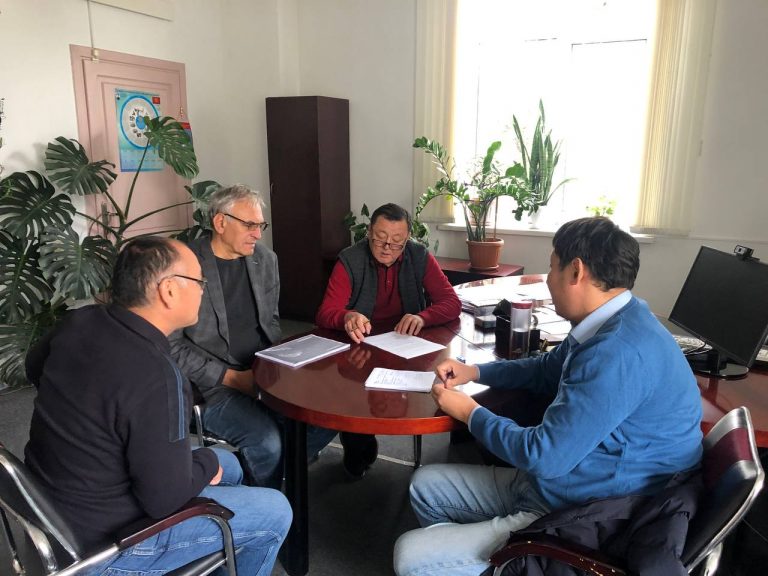
On November 22, 2022 the ISOC Kyrgyz Chapter Research Team had visited office of the State Telecommunications Regulatory Body and met representatives of the Spectrum allocation Monitoring Department.

ISOC team conducted introductory presentation about all activities of the chapter, its achievements and defined areas for cooperation with regulator to reach common goals in improving connectivity in the Kyrgyz Republic.

In particular, the research team made presentation about the project of using of the lorawan spectrum to monitor and predict natural disasters in country.

Kyrgyz Republic had reached good mobile connectivity in populated areas of the country. In some destinations there’s good connectivity in near populated areas that present such georisks as landslides, avalanches, mudflows.

Presently, in many of areas of potential natural disasters, authorities use geostationary satellite connectivity, gsm communication as well as old-fashioned manual observation tools. LoRaWAN had not yet been used for the given purposes so far.

The team explained the technology, learned about the regulatory environment and invited authority representatives to participate in upcoming forum to be held on December 7, 2022

Изилдөө тобу пилоттук жерлерди тандады

Research team held meeting to discuss potential locations for deployment of internet of things and lorawan technology to monitor and forecast natural disasters.

As a result of discussions, research team had selected Tatyr landslide, Baytik meteostation and Adygene lake. The pilot locations are based near Bishkek and easy to access and check the deployment and functionality of the internet of things and data transmission via LoRaWan technology.

Tatyr landslide is locatd in 30-40 km south of Bishkek The landslide formed on the slope of the northern exposure, which is 1510 meters long, 250 to 300 meters wide and 10-15 meters thick. The main factors of formation are the fallout of anomalous atmospheric precipitation in combination with the impact of groundwater wedging out in the form of springs, as well as a close predisposition to a tectonic fault. The last activation was in 2004. 

Adygene glacial lake located at an altitude of 3583 meters above sea level, on the northern slope of the Kyrgyz ridge, in the Adygen gorge, 43 kilometers south-west of the city of Bishkek in the Alamudun district of the Chui region.
The moraine lake is located 260 meters north of the Adygene glacier. The length of the lake from south-west to north-east is 371 meters, the greatest width in the central part of the lake is 170 meters. The perimeter of the lake is 1090 meters, the area is 34101 square meters.
The lake is located on the sea of the glacier. There are three more lakes in the south and southeast. The most southeastern lake, located at an altitude of 3640 meters above sea level, was formed along the northern edge of the glacier and its southern coast is the coast of the glacier.
The length of this lake is 188 meters, the maximum width is 70 meters. The perimeter of the lake is 550 meters, the area is 17142 square meters. A stream flows out of the northeastern side of Lake Adygene, which after 330 meters flows into a small moraine lake. In the southern part of the lake there are 10 more small moraine lakes.
In the southeastern side of the lake there is a hut for hydrologists and glaciologists. The lake poses an increased danger to the city of Bishkek, as it is prone to destruction of the banks and river bed and the formation of mudflows.

Baitik station (HM01) is located in Kyrgyzstan south of Bishkek on the river Ala-Archa. It’s good location to test equipment for water and snow measurements.

After initial pilot stage, team is intended to relocate communication equipment and sensors to Jalal-Abad and Naryn oblasty locations, where the most of natural disasters happen.

The European Union will help rural youth strengthen digital skills and be resilient to new challenges

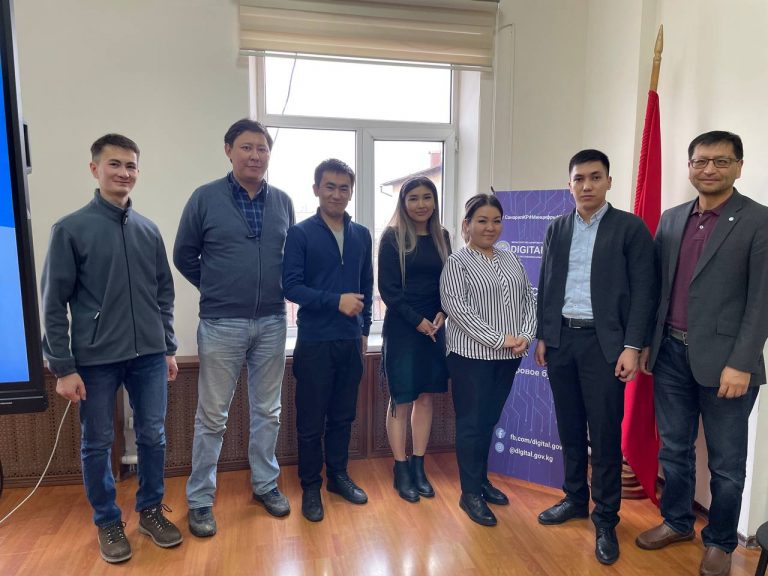
The project “Promoting Equal Economic Opportunities and Resilience of Youth” in the Kyrgyz Republic (Sanarip Insan (Digital Citizen) was launched with the financial support of the European Union.

The aim of the project is to provide knowledge of the work of the digital and green economy to young people and women living in rural regions of the Kyrgyz Republic. This project provides for holding information events to increase the level of digital literacy in cooperation with the media and social networks, adapting and developing educational and methodological materials with representatives of the education sector, as well as conducting joint initiatives with representatives of the digital economy and government agencies to train young people to work in digital platforms in the e-government, e-commerce and digital economy sectors.

Within the framework of the project, the involved representatives of youth and women will receive the necessary knowledge and skills to successfully start their activities on Kyrgyz and international digital platforms, digital wallets, marketplaces, and will receive advanced IT enabled entrepreneurial skills. As a result of passing the training, representatives of youth and women will be able to receive funding for the implementation of their IT start-ups.

The final result of the project is to improve the indicators of youth protection according to the Sustainable Development Goals and the protection of human rights.

The project is implemented by the European Neighbourhood Council (ENC) together with the Public Association “Internet Society Kyrgyzstan Chapter” with the support of the European Union Delegation in the Kyrgyz Republic. The duration of the project is 30 months.

Additional information about the project can be obtained: by phone +996 (755) 330335 and by e-mail: [email protected] or by phone +32 (0) 26465139 and by e-mail: [email protected].

‘This <website/account> was created and maintained with the financial support of the European Union. Its contents are the sole responsibility of the European Neighbourhood Council (ENC) / Public Association “Internet Society Kyrgyzstan Chapter” and do not necessarily reflect the views of the European Union’.