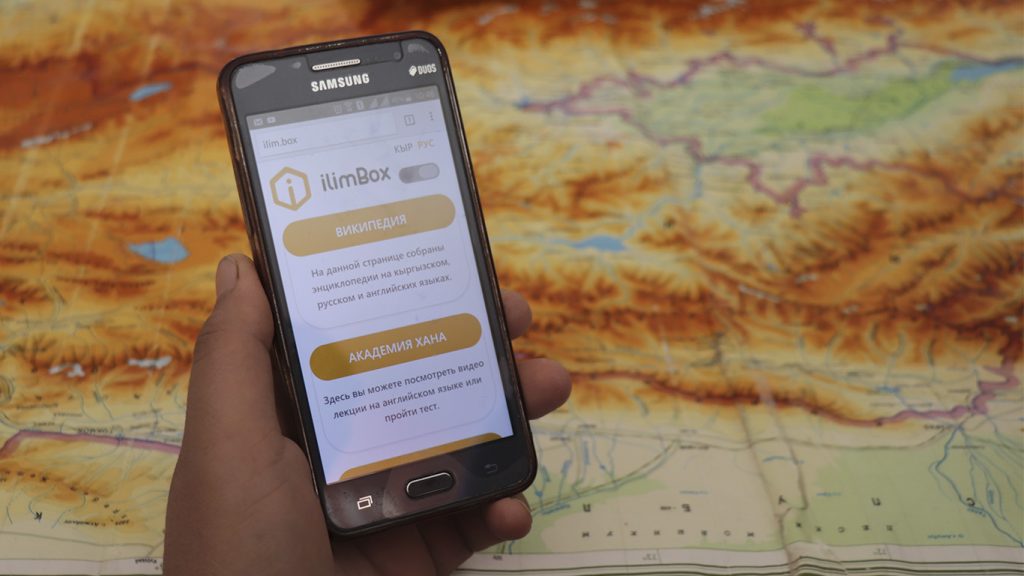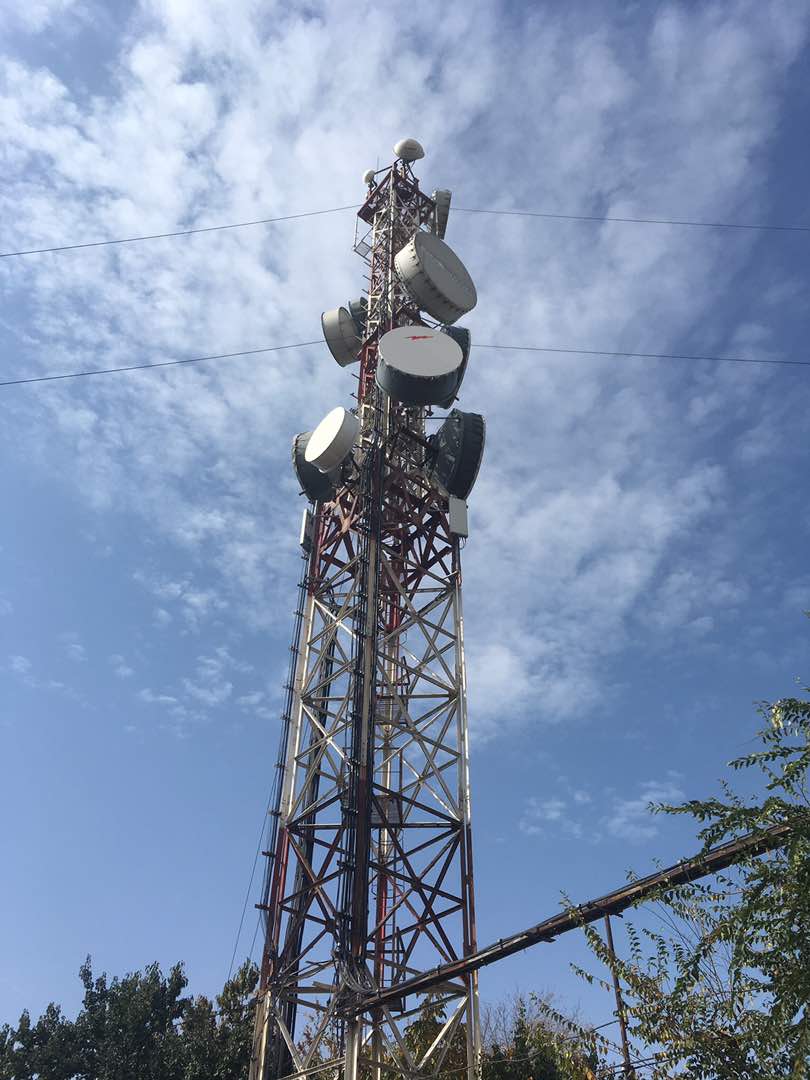
We provide accessible internet in remote villages in Kyrgyzstan. The project aims to install radio receivers for wireless internet, so residents of remote areas can utilize high-speed internet without effort. We started from Suusamyr, continued to Zardaly and plan to connect the villages of Kyzyl-Oi, Ak-Shyrak and Enilchek by building community Internet networks.
Author: kyrgyzisoc
Kyrgyz Republic National Digital Transformation Strategy «Taza Koom»
Kyrgyz Republic National Digital Transformation Strategy «Taza Koom», project led by Talant Sultanov.
Aziz Soltobaev and Talant Sultanov are the authors of the Strategy Vision 2040 and the five-year National Sustainable Development Strategy 2018-2023.
Taza Koom uses the power of data industry, technologies, digital infrastructure to improve the life of people. Therefore, it creates new economic opportunities and a stronger society where people, their values, and their capacity are in the center.
For more information please follow: http://tazakoom.kg/
Aziz Soltobaev
Aziz Soltobaev is an expert promoting tech entrepreneurship, fostering the digital economy, and building country-level capacity (infrastructure, legal framework, community). He has worked as the Policy Adviser to the Office of President, Office of the Prime Minister, as the Vice PM,as the Minister of Education, in the Ministry of Emergency Situations, the Office of Mayor. He is also the co-author of Vision of Bishkek city development 2014-2018, co-author of National Digital Transformation Strategy “TazaKoom”, contributor to National Sustainable Development Strategy “Vision 2018-2040”, member of working groups on issues related to Internet, connectivity, and digital entrepreneurship. Aziz holds a BA in Economics from the American University of Central Asia in Bishkek (1999) and is active in the AUCA Alumni Association.
Bermet Imanalieva

Bermet Imanalieva has been research officer at National Institute for Strategic Studies of Kyrgyz Republic over the last four years. She worked as Policy Adviser in different international organizations located in Bishkek. Ms. Imanalieva holds PhD from Academy of Management under the President of Kyrgyz Republic (2014), fellowship from Central European University (2012), and BA in World Economy from Kyrgyz Russian Slavic University (2008).
Talant Sultanov
Ferghana Valley Internet Exchange Point
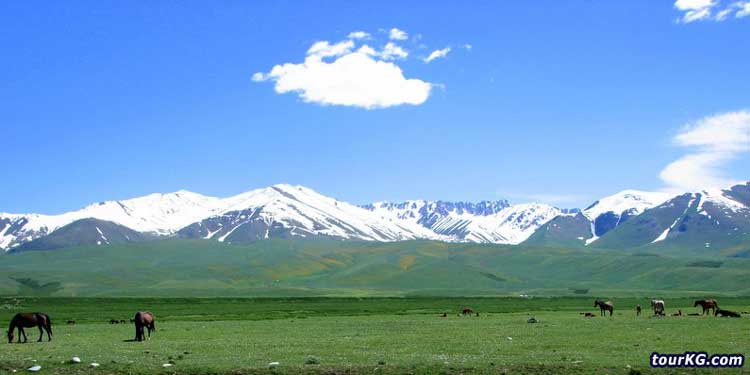
Ferghana Valley located in crossroads of three countries is the most populated area in Central Asia, source of regional inter-ethnic tensions due to water and land irrigation disputes, poverty and lack of access to communication services. Internet Exchange Point Project with location in Osh city (Kyrgyzstan) is aimed to increase regional cross-border collaboration between stakeholders and communication of people through increase of Internet affordability by lower internet service tariff plans up to 3 times, multiple growths of Internet traffic exchange in the region, increase Internet penetration rate due to price reduction, better latency for international and regional content sources.
IXP will help local small and medium ISP to minimize traffic costs, spend more on infrastructure rather than on internet traffic purchase. Establishing IXP would greatly enhance the utility and value of the regional Internet and promote the growth of the digital economy. According to Terabit Consulting, “Improvement in ICT infrastructure yields: Increased demand for the output of other industries (demand multiplier), New opportunities for production in other industries (supply multiplier), New goods and services for consumers (final demand), It also increases firms’ innovation capabilities and increases the probability of new products, innovations, and organizations”.
For more information please follow: https://www.internetsociety.org/ferghana-valley-internet-exchange-point
2020 European Chapters Workshop. Recordings
5-7 October 2020 / Venue: Online
“A bigger and stronger Community for a bigger and stronger Internet”
Internet Society European Chapters Workshops are interactive, collaborative spaces for Chapter members with the aim to share knowledge and experience, and to strengthen the capacities necessary to support our mission and vision. Workshops are open to Chapter members who wish to learn and contribute to the development of their local Chapter.
Past Chapter Workshops took place in a physical location within our European region. This year’s Workshop was held online due to Covid-19 restrictions with half-day sessions that included two topical issues each day.
Whether you missed the opportunity to participate or would like to review what you experienced, enjoy the recordings of the daily proceedings and presentations by clicking on the active links below:
5 October 2020 (11:00-15:00 UTC):
Topics:
Chapter Workshops Overview
Speaker: Christine Saegesser Baethge, Senior Director, Chapters and Individual Members
Encryption
Speaker: Ceren Unal, Regional Policy Manager Europe
The Internet Way of Networking
Speakers: Senior Policy Advisor Carl Gahnberg; Konstantinos Komaitis, Senior Director, Policy Strategy and Development; and Andrei Robachevsky, Senior Director, Technology Programmes
Audio-only version of all topics
6 October 2020 (11:00-15:00 UTC):
Topics:
Community Networks
Speakers: Max Stucchi, Regional Technical Advisor Europe, and Juan Peirano, Senior Policy Advisor
Trust and Traffic in the Covid-19 Era
Speakers: Robin Wilton, Director, Internet Trust and David Belson, Senior Director, Internet Research and Analysis
Video recording of both topics
Audio-only version of both topics
7 October 2020 (11:00-15:00 UTC):
Topics:
Internet Society Foundation
Speakers: Mabel Gunda, Communications Manager, and Brittany Piovesan, Program
Officer, Internet Society Foundation
Chapters – Sustainability
Speakers: Desiree Miloshevic, ISOC Serbia Belgrade Chapter; Frederic Taes, ISOC Belgium Chapter; and session participants
Video recording of both topics
Audio-only version of both topics
Links to the slide presentations given by our speakers:
• Chapter Workshops Overview presentation, Christine Saegesser Baethge
• Encryption presentation, Ceren Unal
• The Internet Way of Networking presentation, Carl Gahnberg
• Trust and Traffic in the Covid-19 Era presentation and presentation, David Belson
and Robin Wilton
• The Internet Society Foundation presentation, Mabel Gunda
• Chapter Business Case presentation, Frederic Taes, ISOC Belgium Chapter
• Chapter Sustainability presentation, Desiree Miloshevic, ISOC Serbia Belgrade
Chapter
Contact: Nick Hyrka, European Regional Community Engagement Manager, Internet Society
Installation of ilimBox devices in border schools in Batken region
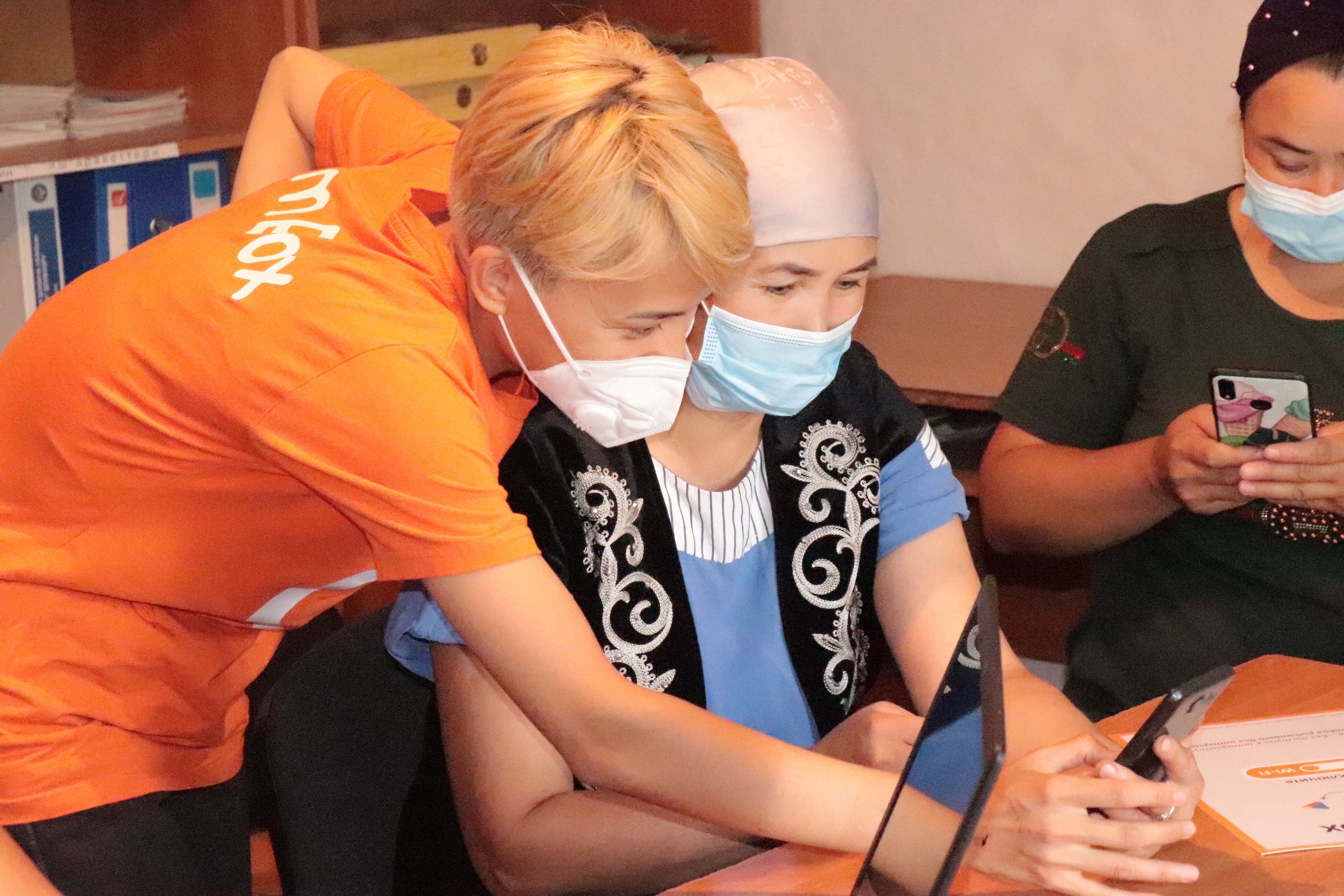
At the end of August, the “ilimBox” team, with the financial support of the European Union, installed 22 ilimBox devices in the border villages of Batken region.
Batken District
The first devices were installed in the schools of the Batken District, namely the villages of Chek, Zhagy-Zher, Dobo, and Buzhum. In the village of Dobo, the teachers treated us with melons right from their own garden. Therefore, talking about offline Wikipedia in Kyrgyz, we decided to search for the word “koon” (eng: melon) to show how this resource works. Residents of these border villages are mainly engaged in agriculture, planting watermelons, melons, pumpkins.
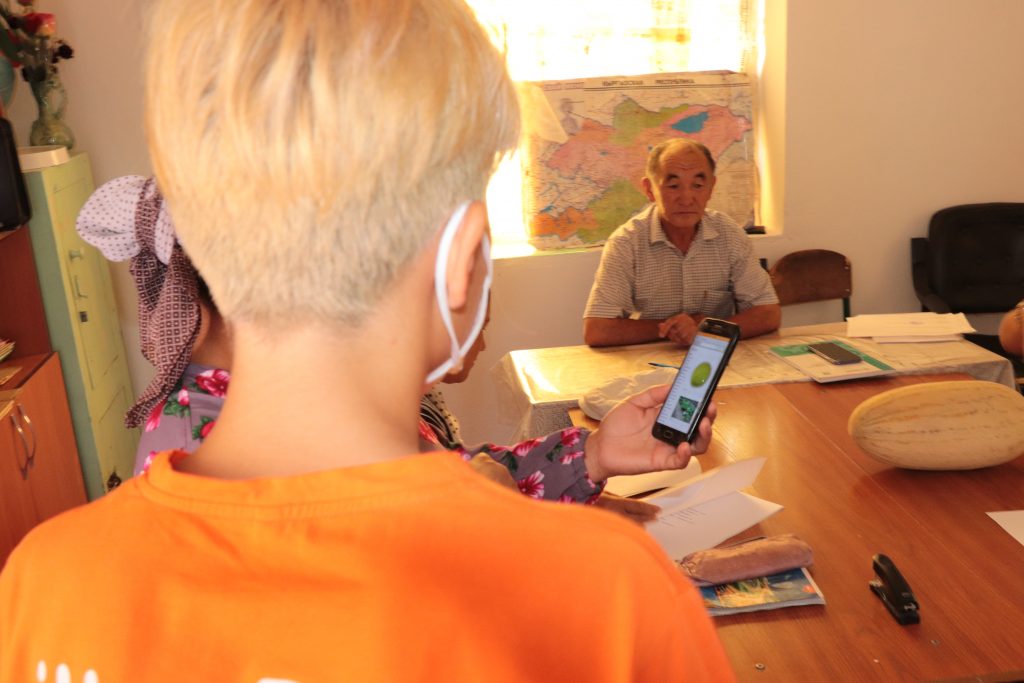
Photo: melon and ilimBox
The villages of Gaz, Tayan, Charbak, and Kyshtut are located in the north-east of the city of Batken on the border with the Sokh region, which is an exclave of Uzbekistan. Since the border with Uzbekistan was closed, we drove along the mountain bypass road. The road was not paved, and we could only observe the rocky slope of the mountains and dry fields from the car window. But the first impression was misleading: as soon as we descended the mountains and went to the first school, we were greeted by “Scandinavian” villages – mountain rivers, trees, winding roads, and cool transparent air. An interesting discovery for our team in this region was the village of Kyshtut, whose residents do not see the sun for 40 days of winter because this village is located between the mountains, which block the low sun in winter.
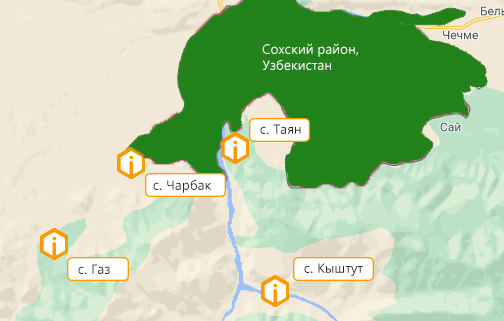
Photo: Map of villages on the border with Sokh region where ilimBox was installed
The last schools in the Batken district were the schools of the Samarkandyk aiyl okmotu, namely the villages of Samarkandek, Ak-Sai and Min-Oruk. All schools in this region are located on the border with Tajikistan. But, searching for the basic school named after Baba Gaipov in the village of Min-Oruk, we drove along the Tajik highway and for a long time could not find the right school. We were helped by the boys, who told us that the border here does not pass through the territory but through houses. So, side-by-side were the gates from the “Tajik” and “Kyrgyz” houses. Local residents shared, due to the staggered arrangement of houses in different countries, conflicts often arise, which sometimes lead to shootings.
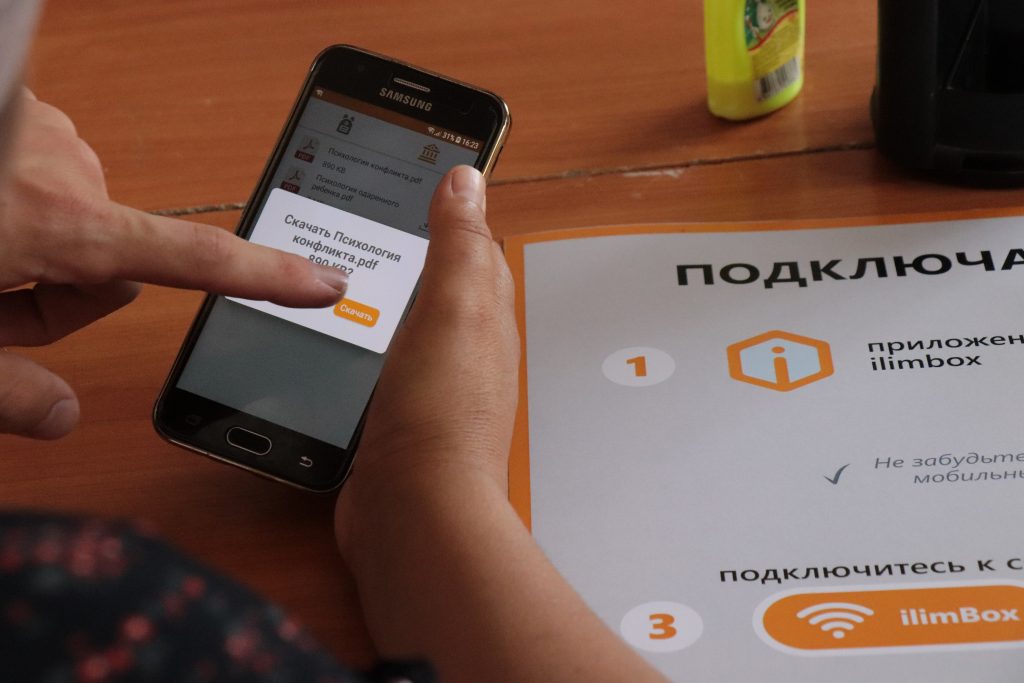
Photo: school teacher of Min-Oruk downloads the book “The Psychology of Conflict”
Leilek and Kadamjai districts
Having completed the installation of devices in the Batken region, we went to Leilek. About 30% of the area of the Leilek region belongs to the territory of high mudflow hazard. The weather in this region is colder than in the whole region, after the hot Batken days, Isfana greeted us with fog and cold rain.
In total, in Leilek region, we installed 6 ilimBox devices in the villages of Ak-Bulak, Kara-Bulak, Katyran and Leilek.
I remember the village of Katyran the most remote villages in the Leilek region. Despite the pouring rain, about 20 teachers patiently waited for our arrival. While waiting for the download of the ilimBox Android application, we asked the teachers’ opinions on how distance learning would affect the educational level of children. Most of the teachers were concerned that after school children from the villages usually graze cattle, work in the fields or do housework. If before the pandemic, teachers could oblige children to attend school and complete assignments, now the responsibility lies entirely on parents, who can higher prioritize the work in the field than education.
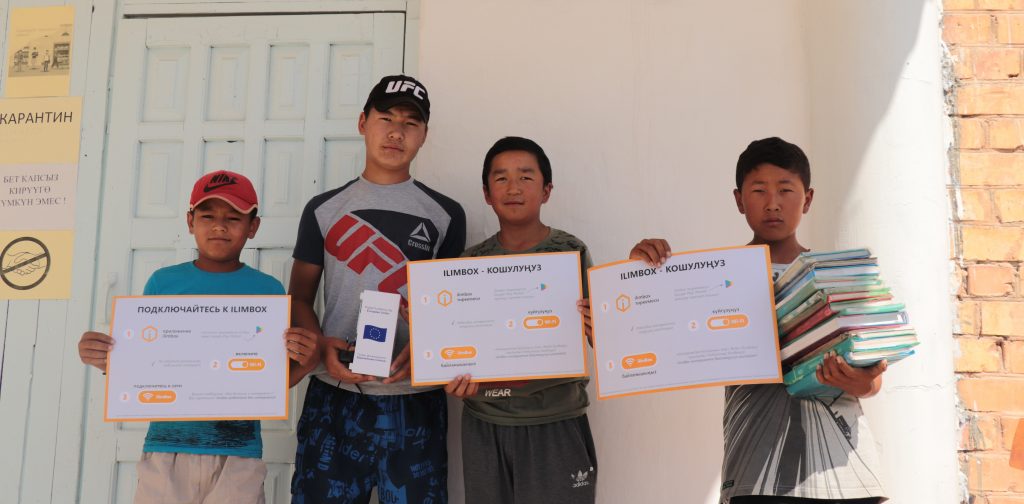
Photo: Children with books and ilimBox
Completing our trip to Batken, we installed 2 devices in the Kadamjai district, in the villages of Kara-Dobo and Kyzyl-Korgon.
Residents of the Kyzyl-Korgon village of the Akturpak aiyl okmotu are engaged in the cultivation of Batken rice, which is highly valued for its taste and useful properties. Most of the rice is exported to Uzbekistan and Tajikistan. We wondered how the Covid-19 pandemic affected their way of life. A teacher from the Kyzyl-Korgon school shared that they attracted Uzbek citizens from the Sokh region to work in the rice fields, but this spring, when work began in the fields, the borders had already closed. Therefore, they invited residents of neighboring aiyl okmotu who were left without work due to the Covid-19 pandemic. Thus, Akturpaksiy aiyl okmotu not only protected their crops but also provided neighboring villages with jobs.
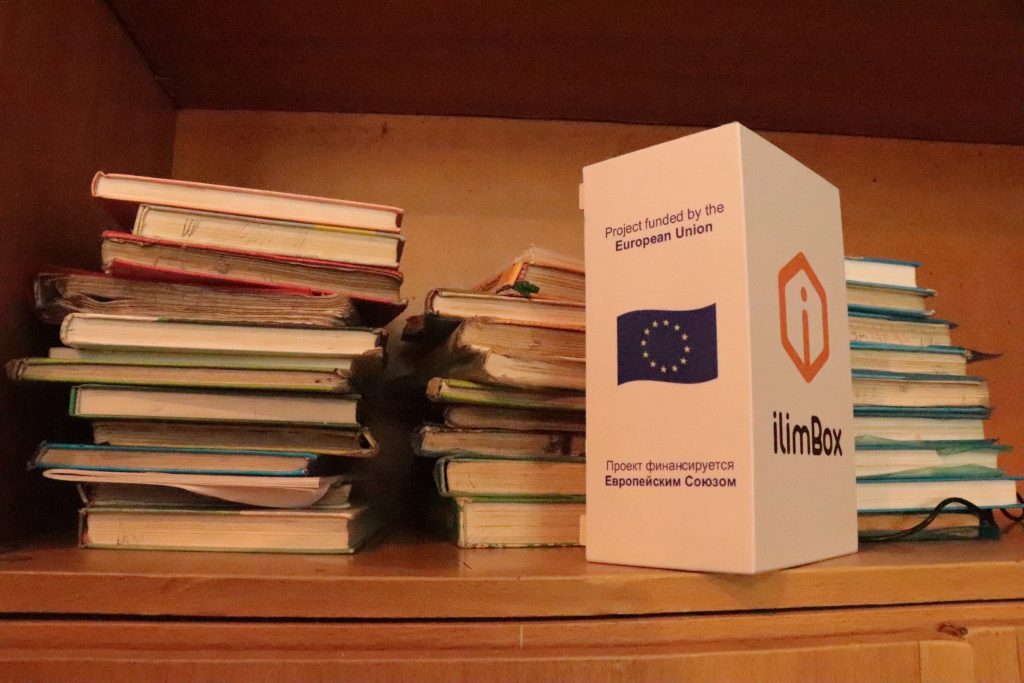
Books in the library and electronic library ilimBox
When visiting schools, the participants were requested to install the ilimBox Android application. Some teachers used mobile Internet, and others the school’s wi-fi. Both options provided very low speed, which is why we waited 20-30 minutes for one 59 MB application to load. For comparison, pdf books on the site https://www.kitep.edu.gov.kg reach 600 MB.
22 ilimbox devices were installed in Batken region in the schools below:
INCOMPLETE SECONDARY SCHOOL DOBO – 131 students
INCOMPLETE SECONDARY SCHOOL B. GAYIPOVA – 180 students
BASIC SCHOOL “TASH-TUMSHUK” – 62 students
SECONDARY EDUCATIONAL SCHOOL NAMED AFTER V. LENIN – 1512 students
SCHOOL GYMNASIUM NAMED AFTER S. KOZHOBAEV – 326 students
SECONDARY EDUCATIONAL SCHOOL BUZHUN – 798 students
SCHOOL GYMNASIUM BUZHUN – 172 students
SECONDARY EDUCATIONAL SCHOOL GAS – 350 students
SECONDARY EDUCATIONAL SCHOOL KYSHTUT – 192 students
SECONDARY EDUCATIONAL SCHOOL ZHANYZHER – 244 students
SECONDARY EDUCATIONAL SCHOOL TAYA – 242 students
SECONDARY EDUCATIONAL SCHOOL CHECKS – 789 students
SECONDARY EDUCATIONAL SCHOOL ACCESS – 52 students
SECONDARY EDUCATIONAL SCHOOL NAMED AFTER A. TOPCHUEV – 77 students
SECONDARY EDUCATIONAL SCHOOL AKBULAK B.M – 84 students
SECONDARY EDUCATIONAL SCHOOL KARA-BULAK – 422 students
SECONDARY EDUCATIONAL SCHOOL “KATRAN” – 163 students
KOZUBAGLAN SECONDARY EDUCATIONAL SCHOOL – 608 students
SECONDARY EDUCATIONAL SCHOOL KOITASH – 146 students
SECONDARY EDUCATIONAL SCHOOL LEYLEK – 224 students
SECONDARY EDUCATIONAL SCHOOL BABUR – 327 students
SECONDARY EDUCATIONAL SCHOOL “KYZYL-KORGON” – 293 students
The ilimbox 2.0 project starts
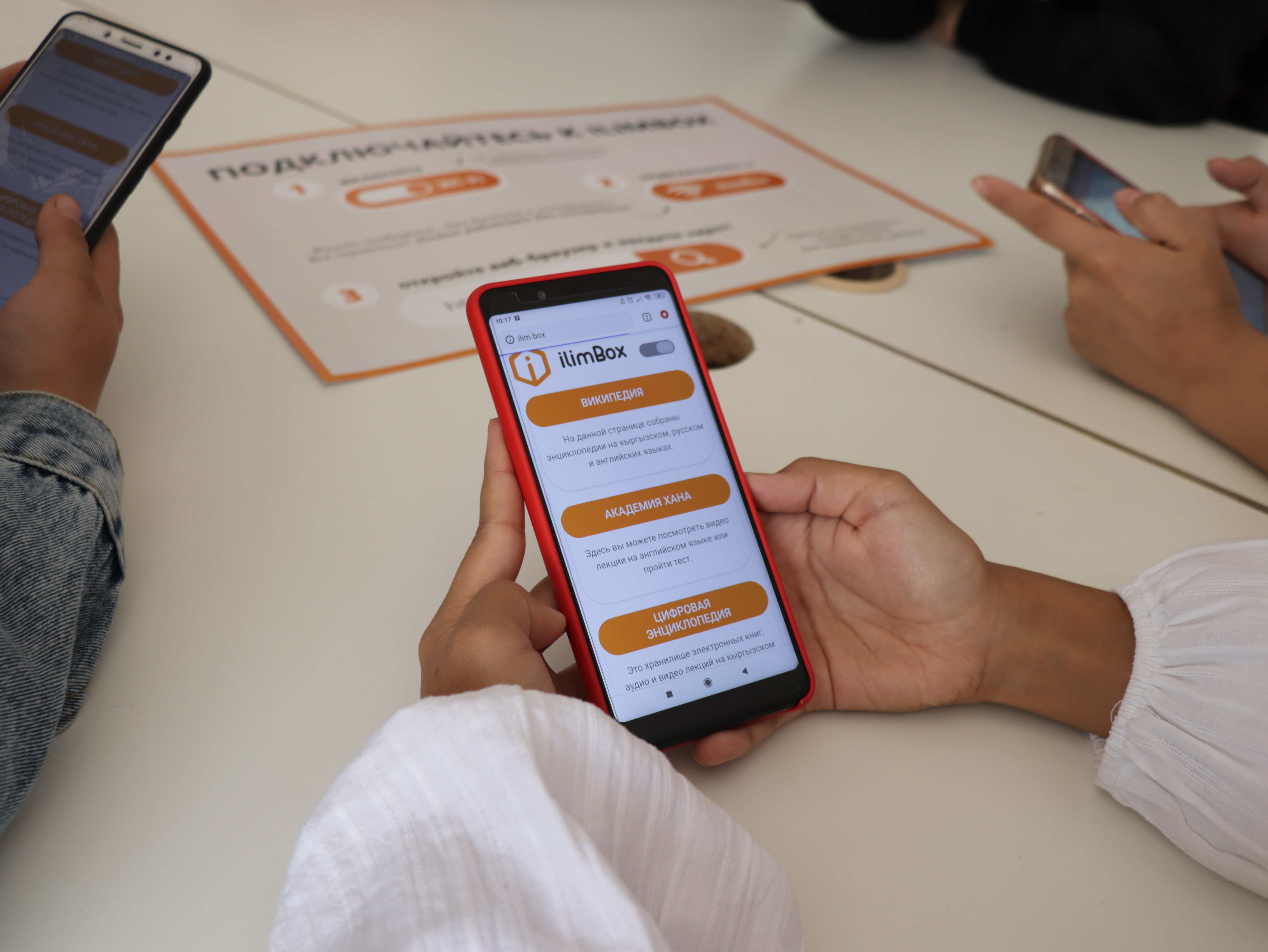
ISOC Kyrgyzstan Chapter team has begun work on the ilimBox 2.0 project!
In this project, we are working on an online educational platform for teachers and schoolchildren that will meet the educational standards of Kyrgyzstan and will include additional educational video, audio and text resources.
This platform will be built on the Learning Management System (LMS), with the ability to use it through Android and iOS applications.
We also improved the ilimBox device by upgrading the chip to Raspberry pi 4 and making possible updating content remotely.
We hope that the ilimBox 2.0 platform will not only help schoolchildren to get education during the Covid-19 pandemic, but also become a source of new and exciting journeys into the world of knowledge!